









Table of Contents
- Why Smart Thermostats Matter for Older Homes
- Smart Thermostat for Old Boiler: What Changes You Need to Know
- Smart Thermostat Without a C-Wire: Your Wiring Options
- Smart Thermostat for Radiators: Room-by-Room Control
- Using a Smart Thermostat Compatibility Checker
- Installation and Professional Support for Older Properties
- Frequently Asked Questions
Last Updated: October 12, 2026
Why Smart Thermostats Matter for Older Homes
Installing a smart thermostat in an older home can transform how you manage heating in period properties. Older homes often have outdated boiler systems, unconventional wiring, and unique heating layouts that make temperature control challenging. The right smart thermostat solves these problems by offering precise control, energy savings, and compatibility with legacy heating infrastructure.
At Apex Gas & Heating Ltd, we work with homeowners across Sussex and Surrey who want to upgrade their heating control without replacing their entire system. Many older properties have boilers from the 1990s or early 2000s that work perfectly well but lack modern controls. A smart thermostat bridges that gap.
The key difference between standard thermostats and smart models is automation and remote access. You can adjust your heating from your phone, set schedules that learn your habits, and receive alerts if something goes wrong. For older homes with less efficient insulation, this level of control directly reduces wasted energy.
Before buying any smart thermostat, check whether your boiler is compatible. Many older boilers use different control signals than modern systems. We’ll cover compatibility checkers below, but this step prevents costly mistakes.
Smart Thermostat for Old Boiler: What Changes You Need to Know
Installing a smart thermostat for an old boiler requires understanding how your current heating system communicates. Older boilers often use simple on/off controls rather than the modulating signals that newer smart thermostats expect.
Most boilers installed before 2010 operate on basic switching logic: the thermostat tells the boiler to fire up or shut down. Newer smart thermostats are designed for boilers that can adjust their output in response to gradual temperature changes. This mismatch doesn’t mean you can’t use a smart thermostat, it means you need one designed for older systems.
The best approach is to choose a smart thermostat explicitly rated for legacy boiler compatibility. These models include relay switches that convert modern control signals into the simple on/off commands older boilers understand. Your installer should verify your boiler model before proceeding.
Common older boiler brands like Baxi and Worcester still work well with the right thermostat setup. Apex Gas & Heating Ltd has installed smart controls on hundreds of older Worcester and Baxi boilers across the region. The installation process is straightforward when you match the thermostat to your boiler’s control type. If your boiler needs attention before a thermostat upgrade, our boiler repair and boiler servicing teams can ensure it’s in good working order first.
Never assume your old boiler will work with any smart thermostat. Forcing incompatible equipment together can damage your boiler’s control board or create safety issues. Always confirm compatibility first.
Smart Thermostat Without a C-Wire: Your Wiring Options
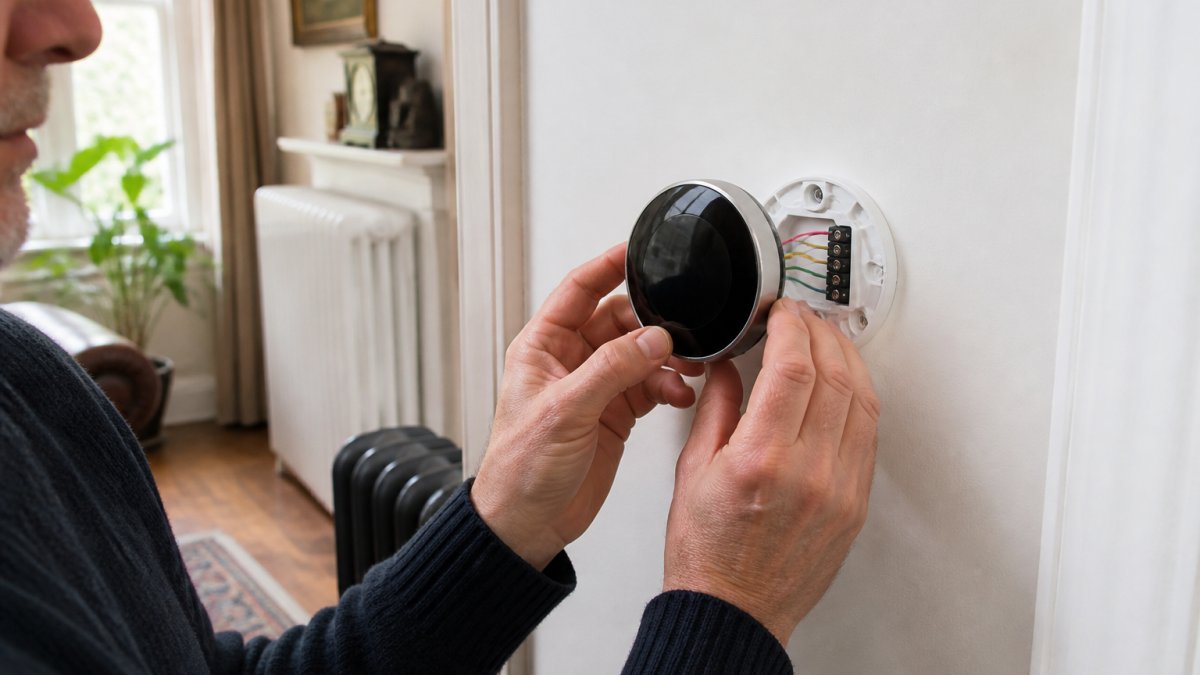
Many older homes lack a C-wire (common wire), which powers modern smart thermostats. This is one of the biggest obstacles when upgrading heating controls in period properties.
Your existing thermostat likely uses just two wires: one to call for heat and one to complete the circuit. Smart thermostats need continuous power, which a C-wire provides. Without it, the thermostat batteries drain quickly or the device fails to function properly.
You have three practical solutions:
Run a new C-wire. This is the most reliable fix. An electrician can run a fourth wire from your boiler’s control board to your thermostat location. It costs more upfront but eliminates power problems permanently. For homes with accessible lofts or underfloor spaces, this is often the cheapest option.
Use a wireless thermostat. Some smart models work entirely on batteries and communicate with a wireless receiver near your boiler. These avoid wiring altogether but require battery changes every 1-2 years. They’re ideal for rented properties or situations where running new wire is impractical.
Install a power bridge. This small device sits at your boiler and generates the C-wire power from your existing heating circuit. It’s cheaper than running new wire and works with most boilers, though it adds another component to your system. Reliability is generally good, but some older boilers don’t generate enough power for this method.
The C-wire issue affects roughly half the smart thermostats in older homes we work with. Your installer should assess your specific setup before recommending a solution. Don’t let this barrier prevent you from upgrading, solutions exist for nearly every wiring configuration.
Smart Thermostat for Radiators: Room-by-Room Control
A smart thermostat for radiators works differently than central heating systems with underfloor pipework. Traditional radiator systems use a single thermostat to control the entire house temperature, which wastes energy in unused rooms.
Modern smart thermostats can work with radiator systems by controlling individual radiator valves (thermostatic radiator valves or TRVs). This lets you set different temperatures in different rooms. Your bedroom stays cool at night while your living room stays warm during the day.
The setup requires smart radiator valves paired with a central smart thermostat. The valves mount directly onto your existing radiators and communicate wirelessly with the main unit. You control everything through an app, setting schedules and temperatures for each room.
This approach is particularly effective in older homes with poor insulation. You can heat only the rooms you’re using, significantly reducing energy consumption. Many homeowners report reductions in heating bills after installing zone control.
Room-by-room control transforms how efficiently you use your heating. Stop heating empty bedrooms and rarely-used spaces. Focus warmth where people actually are.
Installation typically takes a few hours and doesn’t require major structural changes. Your existing radiators stay in place, only the valves swap out. Apex Gas & Heating Ltd can assess your radiator layout and recommend which rooms benefit most from individual control.
The main consideration is whether your boiler can handle multiple zones. Older boilers sometimes struggle with the demand signals from multiple smart valves. Your installer should verify this before proceeding.
Using a Smart Thermostat Compatibility Checker
Before purchasing any smart thermostat, compatibility checker tools can save you time and money. Most manufacturers provide online tools that identify whether their products work with your specific boiler model.
To use a compatibility checker, you’ll need your boiler’s make and model number. This information is usually on a label inside your boiler or on the original installation paperwork. If you can’t find it, a heating engineer can identify it during a site visit.
Enter your boiler details into the manufacturer’s checker tool. It will instantly tell you whether the thermostat is compatible, what additional equipment you might need, and whether professional installation is required. This free step prevents buying incompatible equipment.
Some checkers also ask about your wiring setup. They’ll flag whether you need a C-wire solution or if a wireless model is better for your situation. The more accurate information you provide, the better the recommendation.
Most major thermostat brands maintain compatibility databases for older boilers. Worcester, Baxi, and other common systems are usually well-represented. If your boiler is particularly old or uncommon, the checker might not have data, in that case, professional assessment is worth the investment.
Homeowners with older boilers from established manufacturers. If your boiler is from a major brand, the compatibility checker will likely have data. Obscure or very old systems may need professional evaluation instead.
Installation and Professional Support for Older Properties
Installing a smart thermostat in an older home often requires professional help. While some newer installations are straightforward, older heating systems have quirks that DIY approaches can’t handle safely.
The main reasons to hire a professional:
Safety verification. Your installer checks that your boiler operates safely before and after thermostat installation. This is especially important with older equipment, where hidden problems can emerge during changes to the control system.
Proper wiring. If you need a new C-wire or a power bridge, installation must be done correctly. Poor electrical work can damage your boiler or create fire hazards. A qualified installer ensures everything meets current standards.
Boiler-specific setup. Different boiler models require different thermostat configurations. Your installer knows how to set up the device specifically for your equipment, ensuring optimal performance and preventing damage.
Warranty protection. Most boiler warranties require professional installation of new controls. Installing a thermostat yourself might void your warranty, leaving you unprotected if something fails.
Apex Gas & Heating Ltd provides professional installation and support for smart thermostats across Sussex and Surrey. We assess your existing system, recommend the right thermostat for your boiler, and handle the complete installation. Our team also provides follow-up support if you have questions about using your new controls.
The cost of professional installation can be offset by energy savings. Older homes with poor insulation benefit most, precise temperature control prevents the constant heating cycles that waste fuel.
Upgrading your heating control doesn’t mean replacing your boiler. A smart thermostat for older homes brings modern convenience and efficiency to period properties. Whether you’re dealing with a C-wire issue, an old radiator system, or compatibility concerns, solutions exist that work with your existing infrastructure.
Get a quote from Apex Gas & Heating Ltd and let our team assess your specific setup. We’ll recommend the right smart thermostat for your boiler, handle professional installation, and ensure your system operates safely and efficiently. Our approved Worcester and Glowworm installers have experience upgrading heating controls in older homes throughout Sussex and Surrey.
Frequently Asked Questions
Will a smart thermostat work with an old boiler?
Yes, most smart thermostats work with older boilers, but compatibility depends on your boiler type and wiring setup. Combi boilers, system boilers, and conventional boilers all support smart thermostats. The key is checking whether your existing wiring matches the thermostat’s requirements. Older homes often lack a C-wire (common wire), which some models need for power. Battery-powered or wireless smart thermostats bypass this issue entirely. Before purchasing, verify your boiler model against the manufacturer’s compatibility list or use a smart thermostat compatibility checker.
Do smart thermostats need a C-wire?
Not all smart thermostats require a C-wire, though many traditional models do. A C-wire provides continuous power to the thermostat. Older homes frequently lack this wire, making battery-powered or wireless smart thermostats the better choice. Many modern smart thermostats use rechargeable batteries or harvest power from your heating system itself. If your home has limited wiring and you want to avoid installation disruption, battery-powered options eliminate the need for rewiring entirely. Check your thermostat’s power requirements before purchasing.
Can smart thermostats control heating in different rooms?
Smart thermostats with radiator valves can control temperature room-by-room. These systems use individual smart radiator valves paired with a central smart thermostat, allowing you to set different temperatures for each room. This works particularly well in older homes with traditional radiator systems. However, homes with underfloor heating or zoned systems may have different requirements. A smart thermostat for radiators gives you granular control without replacing your entire heating system, making it ideal for period properties where you want comfort without major renovation.
Is professional installation needed for a smart thermostat?
Many smart thermostats are designed for DIY installation, especially wireless or battery-powered models. However, if your older home requires wiring modifications, C-wire installation, or boiler-specific configuration, professional installation is advisable. A qualified installer ensures your thermostat integrates correctly with your boiler and heating system, avoiding compatibility issues that could affect performance or safety. For older properties with complex heating setups, professional support provides peace of mind and guarantees proper commissioning.