







Last Updated: October 23, 2026
Quick Summary
Central heating problems often have simple fixes you can do yourself, such as bleeding radiators to release trapped air, checking your boiler pressure is between 1 and 2 bar, resetting your boiler after a power cut, or ensuring your thermostat is switched to heating mode. If these checks don’t work, you’ll need a Gas Safe registered engineer to diagnose faults like a failed pump, internal leaks, or blockages in the system.
- Check your thermostat is set to heating mode and the correct temperature before calling an engineer
- Bleed radiators by slowly opening the valve at the top until water drips out to release trapped air
- Your boiler pressure should read between 1 and 2 bar when cold; below 1 bar means the system has lost water
- Try resetting your boiler by switching it off for 30 seconds if it shows an error code or red light
- Call a Gas Safe registered engineer if pressure keeps dropping, radiators stay cold after bleeding, or you see water leaking
Table of Contents
- What to Check Before You Call an Engineer
- Central Heating Not Working: Diagnosis and Quick Fixes
- Radiators Not Heating Up: Why and What to Do
- Boiler Losing Pressure: Causes and Solutions
- Understanding Boiler Error Codes
- When to Call a Gas Safe Registered Engineer
- Frequently Asked Questions
What to Check Before You Call an Engineer
Before you ring a Gas Safe registered engineer, there are several quick checks you can do yourself. Many central heating problems have simple fixes that take just a few minutes.
Start with your thermostat. Check it’s set to the temperature you want and switched to heating mode.
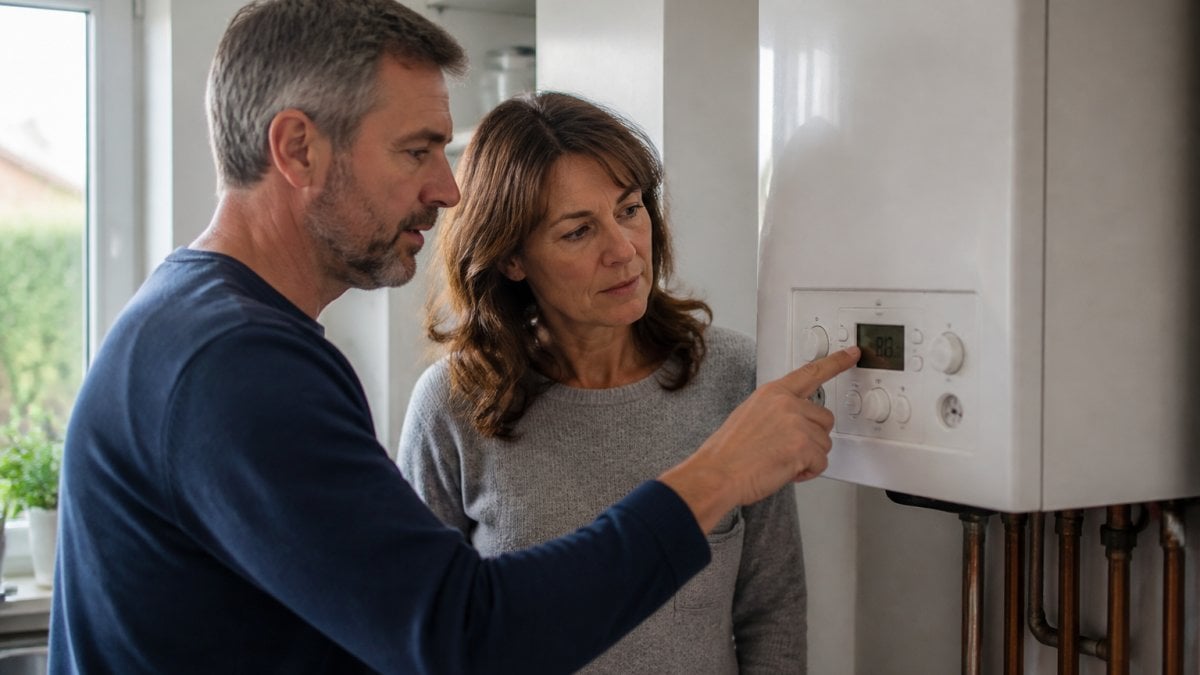
Next, check your boiler’s control panel. Most boilers have a reset button or a power switch.
Look at your radiators too. Feel them from top to bottom. If the top is cold but the bottom is warm, you likely have air trapped inside.
Check your boiler’s pressure gauge. Most boilers have a small dial on the front showing the system pressure. The needle should sit between 1 and 2 bar when the system is cold.
Finally, make sure your heating is actually switched on. Check that your timer or programmer isn’t set to a time when heating is off. It sounds obvious, but it happens more often than you’d think.
Central Heating Not Working: Diagnosis and Quick Fixes
If your central heating has stopped working entirely, start by checking whether the problem is with your boiler or your system controls.
Is your boiler showing any lights or a display? If there’s no sign of power at all, check that the boiler’s isolation switch is on. It’s usually a red switch on the pipe near the boiler. Make sure it’s in the on position.
Listen to your boiler. A working boiler makes a humming sound and you’ll hear it fire up. If you hear nothing and the display is blank, the boiler may have no power. Check your electrics, is the boiler plugged in? Is the circuit breaker switched on?
If your boiler is on but your heating still isn’t working, the problem might be with your pump or your system controls. Your heating system uses an electric pump to push hot water around your home.
Try this: turn your heating off at the thermostat, wait 10 minutes, then turn it back on. Listen for the pump to start. You should hear a faint humming sound from the pump, which is usually located near the boiler. If you hear nothing, the pump may need attention from a professional.
Check your system pressure again. If it’s dropped below 1 bar, your boiler may have shut down as a safety measure. Low pressure usually means the system has lost water, either through a leak or through the automatic air vent.
Radiators Not Heating Up: Why and What to Do
Cold radiators are one of the most common heating complaints. The good news is that the cause is often simple and fixable.
Bleeding radiators
If the top of your radiator is cold but the bottom is warm, you have air trapped inside. Air stops hot water flowing through the radiator, so it can’t heat up. This is called an airlock, and you can fix it by bleeding the radiator.
Bleeding a radiator means letting the trapped air out. Every radiator has a small valve at the top, usually a square nut or a small bleed key slot. Here’s how to do it:
- Turn off your heating and let the system cool for 15 minutes
- Place a cloth or small container under the valve to catch any water
- Using a radiator bleed key (you can buy one for a few pounds), slowly turn the valve anticlockwise
- You’ll hear a hiss as air escapes. Keep the valve open until water starts to drip out
- Close the valve by turning it clockwise. Don’t over-tighten it
- Check your boiler pressure. If it’s dropped below 1 bar, you’ll need to repressurise the system
Bleeding radiators is straightforward, but if you’re not confident doing it yourself, learn the best way to bleed radiators efficiently with our step-by-step guide. This improves heating performance and can help with energy savings.
Checking the pump and circulation
If all your radiators are cold, not just one or two, the problem is likely with circulation. Your heating pump pushes water around the system. If it’s not working, nothing heats up.
Listen near your boiler for the pump. You should hear a quiet humming sound when the heating is on. If you hear nothing, the pump may have stopped.
Try this: locate the pump (it’s usually a cylindrical unit near the boiler) and gently tap it with a wooden spoon a few times. Sometimes a stuck pump will start again. If it doesn’t, the pump needs professional replacement.
Another common cause of poor circulation is a blockage in the system. Sludge and debris can build up inside the pipes and radiators over time, restricting water flow. If your radiators are only slightly warm and the pump sounds normal, a blockage might be the culprit. A professional can perform a system flush to clear this.
Common radiator faults and their causes often have straightforward fixes you can try yourself.
| Problem | Cause | Fix |
|---|---|---|
| Top cold, bottom warm | Air trapped inside radiator | Bleed the radiator with a bleed key |
| All radiators cold | Pump not working | Listen for humming; tap pump gently or call engineer |
| All radiators cold | Blockage in system | Professional system flush needed |
| Radiators only slightly warm | Sludge and debris buildup | Professional system flush to clear |
| Water dripping from radiator | Leak from valve or pipe joint | Turn off heating; call Gas Safe engineer immediately |
Boiler Losing Pressure: Causes and Solutions
Your boiler pressure is critical. When it drops too low, the boiler shuts down as a safety measure.
A healthy system sits at 1-2 bar of pressure when cold. If your pressure gauge shows below 1 bar, your boiler won’t fire up. If it keeps dropping, you have a leak somewhere.
The most common cause is a leak from a radiator valve or a pipe joint. Walk around your home and check under radiators and behind pipes for drips or wet patches.
Another common cause is the automatic air vent. This small valve at the top of your boiler lets air out of the system automatically. If it’s faulty, it can let too much air out and reduce pressure.
If you can see water dripping, turn off your heating immediately and call a professional. Do not attempt to repair a leak yourself, it needs a Gas Safe registered engineer.
If you can’t see a leak but pressure keeps dropping, the problem is likely internal. Water might be escaping through a failed component inside the boiler. This also needs professional attention.
To temporarily restore pressure, you can repressurise the system yourself. Most boilers have a filling loop, a small pipe with two valves that lets you add water back into the system. Follow step-by-step instructions to safely repressurise your boiler.
Understanding Boiler Error Codes
Modern boilers display error codes when something goes wrong. These codes tell you what the boiler has detected.
Common codes include:
- E119 or similar lockout codes: The boiler has shut down because it can’t ignite. This often happens after a power cut or if the gas supply is interrupted. Try resetting the boiler by switching it off for 30 seconds
- Low pressure codes: Your system pressure is below the safe minimum. Check your pressure gauge and repressurise if needed
- Fan error codes: The boiler’s fan isn’t working. This usually needs professional repair
- Sensor error codes: One of the boiler’s sensors has failed. This requires a professional replacement
Your boiler manual will explain what each code means. If you don’t have the manual, you can usually find it online by searching for your boiler model number.
Some codes are temporary and clear themselves. Others indicate a fault that needs professional repair. If a code keeps coming back after you’ve reset the boiler, note down the exact code and call a professional.
When to Call a Gas Safe Registered Engineer
You can handle many heating issues yourself, checking thermostats, bleeding radiators, and resetting the boiler. But some problems need professional attention.
Call an engineer if:
- Your boiler won’t ignite or keeps shutting down after you’ve tried resetting it
- You can see water leaking from pipes or radiators
- Your system pressure keeps dropping below 1 bar
- Your radiators stay cold even after you’ve bled them and checked the pump
- Your boiler is displaying an error code that doesn’t clear after a reset
- You smell gas, this is a safety emergency; turn off the boiler and call immediately
- Your boiler is over 10 years old and breaking down frequently
Gas Safe registered engineers have the training and tools to diagnose faults safely. They can also spot problems you might miss, like a failing pump or a blocked system, that need professional repair.
At Apex Gas & Heating Ltd, our Gas Safe registered engineers can diagnose and fix most heating problems quickly. We offer fixed-price quotes so you know the cost upfront, and we’re available for emergency call-outs 24/7. Get your free boiler repair and service quote and we’ll send an engineer to assess the problem.
If you need help finding a reliable heating engineer, discover how to find a reliable 24/7 heating engineer with the right qualifications and experience.
Most central heating problems have straightforward causes, a stuck pump, trapped air, low pressure, or a simple reset needed. The key is knowing which checks to do yourself and when to call a professional. When you do need help, make sure you’re calling a Gas Safe registered engineer who can diagnose the fault safely and fix it properly.
Frequently Asked Questions
Why is my central heating not working when the boiler is on?
Several issues can stop central heating from working despite the boiler running. Check your thermostat is set to heat mode and the temperature setting is above room temperature. Verify the pump is operating (you should hear a faint hum). If the boiler has power but no heating, the problem may be a blocked pipe, air in the system, or a faulty pump. Low boiler pressure also prevents heating. If these checks don’t help, a Gas Safe registered engineer should diagnose the issue.
Why are my radiators not heating up even though the boiler is working?
Cold radiators usually indicate air trapped in the system or a circulation problem. Try bleeding your radiators to release trapped air, starting with those furthest from the boiler. Check that all radiator valves are fully open. If only some radiators are cold, the problem may be a blocked pipe or failed thermostatic radiator valve. If all radiators stay cold despite these steps, the circulation pump may have failed and needs professional inspection.
What should I do if my boiler keeps losing pressure?
Boiler pressure dropping gradually is normal, but repeated pressure loss indicates a leak. Check for visible water drips around the boiler, pipes, and radiators. If you find no obvious leak, the problem may be inside the boiler or in hidden pipework. Leaking expansion vessels and faulty pressure relief valves are common causes. Repressurising temporarily restores heat, but a Gas Safe registered engineer must find and fix the underlying cause to prevent damage and ensure safety.
When should I call a Gas Safe registered engineer instead of troubleshooting myself?
Call an engineer immediately if you smell gas, suspect a carbon monoxide leak, or see flames or unusual colours in the boiler. Do not attempt repairs involving the gas supply, burner, or internal boiler components yourself. If your boiler displays an error code you don’t recognise, pressure won’t stay above 1 bar, or heating fails after basic checks, professional help is needed. A Gas Safe registered engineer has the training and equipment to diagnose and safely repair faults that affect safety or performance.
