








Last Updated: October 22, 2026
Quick Summary
A heat pump for your home is a heating system that transfers warmth from outside air or ground into your property, making it significantly more efficient than traditional boilers in many situations. The two main types are air source and ground source systems, each suited to different properties and budgets.
- Air source heat pumps suit most properties and cost roughly £8,000-15,000 for a typical home
- Ground source systems reach efficiency ratings of 4.0 to 5.0 COP but typically cost £15,000-25,000
- Professional heat loss calculation determines the correct system size for your specific property
- Upgrading insulation before installation improves efficiency dramatically and reduces operating costs
- Installation typically takes 2-5 days depending on system type and your home’s condition
Table of Contents
- Understanding Heat Pump Types for Your Home
- Air Source Heat Pump Sizing for Your Property
- Heat Pump Efficiency Ratings Explained
- Heat Pump Suitability for Older Homes
- Key Factors to Consider Before Installation
- Heat Pump Installation Checklist
- Getting Your Heat Pump Installed
- Frequently Asked Questions
Understanding Heat Pump Types for Your Home
A heat pump for your home is a heating system that transfers warmth from outside air or ground into your property. Rather than generating heat directly, heat pumps move existing thermal energy, making them significantly more efficient than traditional boilers in many situations. At Apex Gas & Heating Ltd, we help homeowners across Sussex and Surrey understand which type suits their property best.
Two main types dominate the residential market: air source and ground source systems. Each has distinct advantages depending on your home’s layout, age, and available space.
Air Source Heat Pumps
Air source heat pumps extract warmth from outside air, even in cold weather. They work like a refrigerator in reverse, compressing refrigerant to release heat indoors. Installation is straightforward since you only need outdoor wall or ground space for the external unit.
These systems suit most properties. They’re particularly effective for newer homes with good insulation and work reasonably well in older properties when combined with upgraded windows and loft insulation. The external unit is typically a box roughly 1 metre wide mounted on a wall or placed on the ground.
Common advantages include lower installation costs than ground source alternatives and minimal disruption during setup. They require less space than ground source systems and can be retrofitted to existing homes without extensive groundwork.
The main limitation is performance in extremely cold climates, though modern units perform better than older generations. You’ll also hear the external unit operating, though modern models are quieter than predecessors.
Ground Source Heat Pumps
Ground source systems extract heat from the earth, where temperatures remain stable year-round. Installation requires either a borehole drilled deep into the ground or horizontal pipes laid in trenches across your garden. This approach demands significant space and disruption during installation.
These systems deliver excellent efficiency because ground temperature is consistently warmer than winter air. They’re ideal for properties with large gardens and new builds where installation can be planned during construction.
The trade-off is higher upfront cost and longer installation timescales. You’ll need space to accommodate either a deep borehole or extensive trenching. Once installed, however, they typically offer the lowest running costs of any heating system.
Air Source Heat Pump Sizing for Your Property
Choosing the correct size prevents inefficiency and discomfort. An undersized system struggles to heat your home adequately, whilst an oversized unit cycles on and off too frequently, wasting energy.
Professional installers calculate size based on your home’s heat loss. They assess insulation levels, window quality, air tightness, and room dimensions. A typical three-bedroom detached house might need a 10-15 kW system, whilst a semi-detached property could require 8-12 kW.
The calculation accounts for your local climate and how well your home retains heat. Older properties with single-glazed windows and poor insulation need larger systems than well-insulated modern homes. Many installers use heat loss calculations following industry standards to determine the exact requirement.
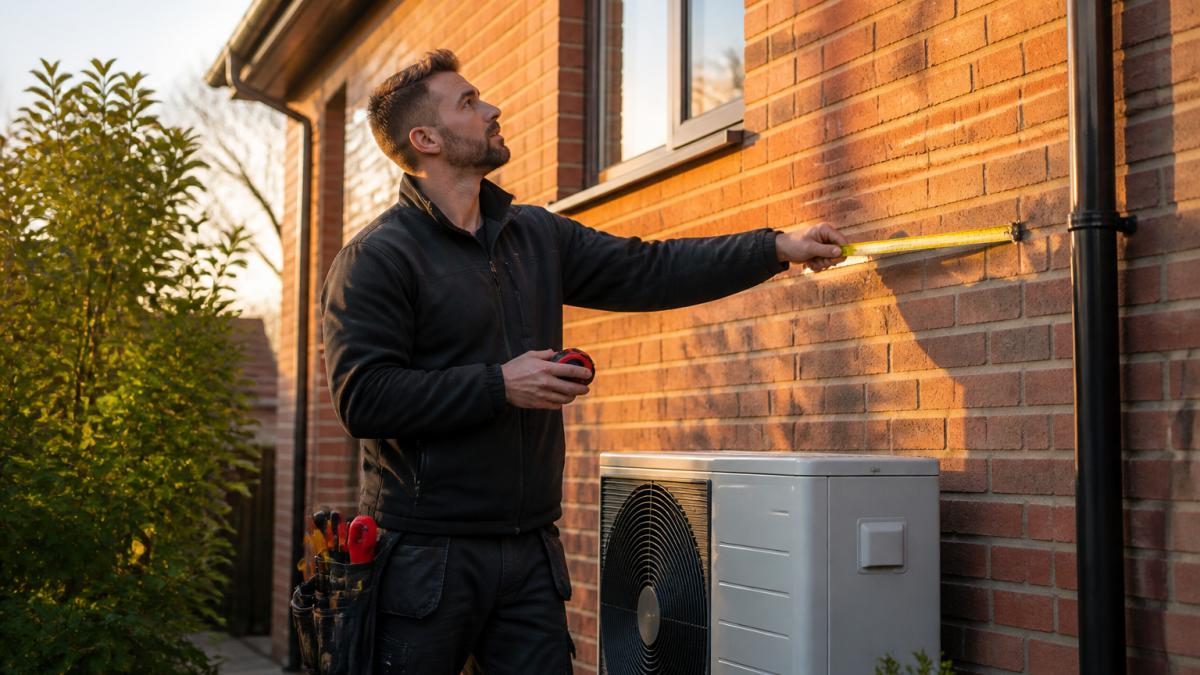
Oversizing is tempting but counterproductive. A system larger than necessary operates below capacity, reducing efficiency and increasing running costs. Undersizing creates cold spots and forces the system to work harder during peak winter demand.
Getting this right matters for both comfort and expense. This is where working with experienced installers becomes valuable; they’ll assess your specific property rather than applying generic estimates.
Heat Pump Efficiency Ratings Explained
Heat pump efficiency is measured by the Coefficient of Performance (COP). This figure shows how much heat output you get for each unit of electrical energy input. A COP of 3.0 means the system delivers three units of heat for every unit of electricity consumed.
Modern air source systems typically achieve COP ratings between 2.5 and 4.0, depending on outdoor temperature and system design. Ground source systems often reach 4.0 to 5.0 because ground temperature is more stable than air temperature.
Higher COP ratings translate directly to lower running costs. A system with COP 4.0 uses roughly half the electricity of one with COP 2.0 to deliver the same heating output. This difference compounds over years of operation.
Seasonal Coefficient of Performance (SCOP) provides a more realistic picture than single-point COP measurements. SCOP averages performance across an entire heating season, accounting for varying outdoor temperatures throughout winter. Look for SCOP ratings when comparing systems, as these reflect real-world performance better than peak COP figures.
Energy efficiency standards now require new heat pump installations to meet minimum SCOP thresholds. Better-rated systems cost more initially but deliver genuine savings on heating bills over their 15-20 year lifespan.
Heat Pump Suitability for Older Homes
Older properties present challenges for heat pump installation, but they’re far from unsuitable. The key factor is insulation level rather than building age.
A Victorian terraced house with modern insulation, double glazing, and draught-proofing works well with a heat pump. The same property with single-glazed windows, poor loft insulation, and draughty gaps will struggle. Heat pumps work by moving warmth efficiently, so they perform best when your home retains that warmth effectively.
Upgrading insulation before installing a heat pump improves efficiency dramatically. Adding loft insulation, cavity wall insulation, or draught sealing reduces the size system you need and lowers operating costs. Many homeowners find this preparation investment pays for itself through energy savings within a few years.
Older homes often have radiators designed for high-temperature water from traditional boilers. Heat pumps typically deliver lower-temperature water (around 35-45°C versus 60-70°C from boilers). Larger radiators or underfloor heating systems work better with this lower temperature output.
The decision to install a heat pump in an older property depends on insulation quality and your willingness to upgrade heating distribution. With proper preparation, older homes can achieve excellent results.
Key Factors to Consider Before Installation
Several practical considerations should guide your decision:
Space availability – Air source units need outdoor wall or ground space. Ground source requires either a large garden for trenches or permission to drill a borehole. Check you have suitable locations before committing.
Insulation level – Assess your home’s current insulation. Poor insulation means larger systems and higher running costs. Budget for insulation upgrades alongside heat pump installation.
Radiator compatibility – Existing radiators may need upgrading or supplementing with underfloor heating. Oversized radiators or underfloor systems work better with heat pump temperatures.
Noise tolerance – Air source units produce 40-50 decibels during operation. Ground source systems are silent once installed but create noise during the drilling or trenching process.
Budget constraints – Air source systems cost roughly £8,000-15,000 for a typical home. Ground source systems typically cost £15,000-25,000 depending on ground conditions and borehole depth.
Future heating needs – Consider whether you’ll add electric heating, hot water cylinders, or other systems. Plan installations to accommodate future upgrades.
Grid electricity supply – Heat pumps run on electricity, so rising electricity costs affect operating expenses. Consider pairing with solar panels to offset running costs.
These factors interact, so weigh them together rather than focusing on any single element.
Heat Pump Installation Checklist
Before installation begins, confirm these items:
- Professional heat loss calculation completed
- System size determined based on your specific property
- Insulation upgrades planned or completed
- Suitable outdoor location identified for external unit
- Radiators assessed for compatibility or upgrade planned
- Electrical supply checked and upgraded if necessary
- Building control approval obtained
- Installer qualifications verified
- Warranty terms understood in writing
- Installation timeline agreed in writing
- Access arrangements confirmed for engineer visits
- Commissioning date scheduled
Completing this checklist prevents surprises during installation and ensures your system is sized and configured correctly from day one.
Getting Your Heat Pump Installed
Installation typically takes 2-5 days depending on system type and your home’s condition. Air source installation is faster, usually 2-3 days. Ground source systems require longer, particularly if boreholes are needed.
The process involves removing your old heating system, installing pipework and the new unit, connecting controls, and testing the system thoroughly. Your installer should commission the system properly, ensuring all settings are optimised for your specific property.
When selecting an installer, verify their qualifications and experience with your chosen system type. Ask for references from recent installations in similar properties. Confirm they’ll handle building control certification and provide comprehensive warranties on their workmanship.
At Apex Gas & Heating Ltd, our Gas Safe registered engineers can guide you through choosing the right heat pump for your home and explain how installation works for your specific property. We provide fixed-price quotes so you know costs upfront. We offer a 2-year workmanship guarantee and full public liability insurance on all installations. If you’re transitioning from an existing boiler system, our boiler repair and plumbing services teams can help with any necessary adjustments to your heating pipework and system configuration during the changeover.
The transition from traditional boilers to heat pumps represents a significant shift in how homes are heated. Understanding your options, assessing your property’s suitability, and working with experienced installers ensures you make the right choice for your circumstances.
Frequently Asked Questions
How do I choose the right heat pump for my home?
Start by assessing your home’s size, insulation quality, and current heating system. Consider whether an air source or ground source heat pump suits your property layout and budget. Check your home’s heat loss using a thermal survey, then match a heat pump capacity to that requirement. Factor in your climate, available space, and whether you want to replace or supplement your existing heating. A professional survey helps confirm the best choice for your circumstances.
What size heat pump does my home need?
Heat pump sizing depends on your home’s heat loss, measured in kilowatts. A typical three-bedroom semi-detached house might need 8-12 kW, whilst a larger detached property could require 12-15 kW or more. An undersized unit won’t heat efficiently; an oversized one wastes energy and money. A heating engineer calculates the correct size by assessing insulation, window quality, room dimensions, and your desired indoor temperature. Professional sizing prevents costly mistakes and ensures optimal performance.
Are air source heat pumps suitable for older homes?
Air source heat pumps work in older homes but perform best when the property has good insulation. Older properties often have higher heat loss, requiring larger units and potentially higher running costs. Installing extra insulation, loft, wall, or floor insulation, improves efficiency significantly. Older homes with solid walls may benefit more from ground source heat pumps if space allows, though air source units remain viable with proper sizing and upgrades to the building fabric.
What should I check before installing a heat pump?
Verify adequate outdoor space for the unit, sufficient indoor room for pipework and controls, and that your electrical supply supports the system. Check whether your radiators are compatible or need replacement with larger models. Ensure your home’s insulation meets minimum standards; poor insulation reduces efficiency. Confirm you have access to a suitable outdoor location away from windows and neighbours’ boundaries. A pre-installation survey identifies any obstacles and confirms feasibility before work begins.
Choosing a heat pump involves balancing efficiency, cost, and suitability for your specific home. The right system delivers reliable heating whilst keeping energy bills manageable for years to come. When you’re ready to explore options for your property, Apex Gas & Heating Ltd can provide expert advice tailored to your home’s needs. Get a Quote today and discover which heat pump system works best for your Sussex or Surrey home.