






Table of Contents
- What Affects the Cost of a Professional Carbon Monoxide Inspection
- What to Expect During a Carbon Monoxide Inspection
- How Long Does a Carbon Monoxide Inspection Take
- Boiler Carbon Monoxide Safety Check: What’s Included
- Carbon Monoxide Alarm Going Off: What to Do
- Why Professional Testing Matters More Than DIY Checks
- Getting a Quote for Your Carbon Monoxide Inspection
- Frequently Asked Questions
Last Updated: October 19, 2026
What Affects the Cost of a Professional Carbon Monoxide Inspection
The cost of professional carbon monoxide inspection depends on several factors specific to your home and heating system. At Apex Gas & Heating Ltd, we understand that homeowners want to know what drives the price before they book an appointment.
The main factors that influence cost include the type of boiler you have, the number of appliances needing testing, and whether you need additional safety checks alongside the inspection. A straightforward inspection of a single boiler costs less than testing multiple gas appliances or investigating a suspected leak.
Your location within Sussex and Surrey can also affect pricing, as can whether you book during peak heating season or quieter months. Emergency call-outs naturally cost more than routine appointments scheduled in advance.
The complexity of your heating system matters too. A simple combi boiler inspection takes less time than testing a system boiler with a separate hot water cylinder. If your engineer discovers issues during the inspection, additional diagnostic work may be needed.
Book your inspection during autumn, before winter demand peaks. You’ll have more appointment flexibility and faster response times compared to the coldest months.
What to Expect During a Carbon Monoxide Inspection
A professional carbon monoxide inspection involves systematic testing of your boiler and gas appliances using calibrated equipment. Your Gas Safe registered engineer will use a dedicated CO detector to measure emissions and ensure they fall within safe limits.
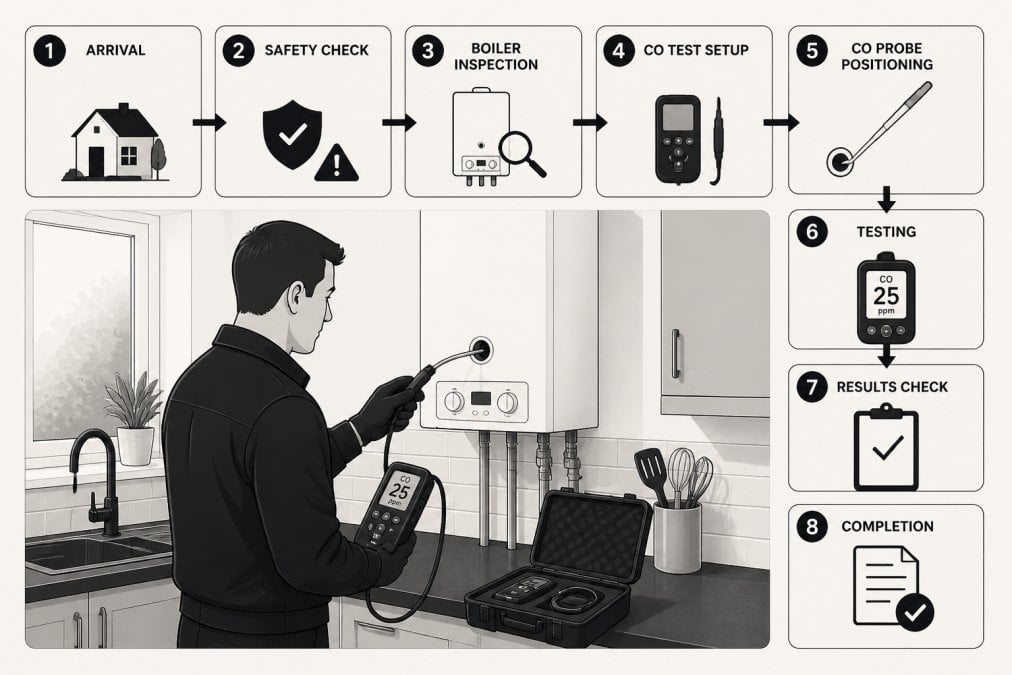
The engineer starts by visually inspecting your boiler for signs of damage, corrosion, or poor ventilation. They’ll check the flue to confirm it’s clear and properly sealed. This visual assessment takes just a few minutes but catches obvious problems early.
Next comes the actual CO testing. The probe is placed at specific points on your boiler to measure carbon monoxide levels. Your engineer will record these readings and compare them against the safety thresholds set by UK regulations.
A thorough inspection also includes checking your heating system’s combustion efficiency and examining any other gas appliances in your home, such as cookers or fires. If you have concerns about a specific appliance, mention this when booking so your engineer can prioritise it.
Your engineer will explain the findings in plain language and provide a written report. If levels are safe, you’ll receive confirmation. If issues are found, they’ll recommend next steps, which might include repairs or further investigation.
How Long Does a Carbon Monoxide Inspection Take
A standard carbon monoxide inspection typically takes between 30 and 45 minutes, depending on the complexity of your heating system and the number of appliances being tested.
For a single boiler with straightforward access, you’re looking at the shorter end of this range. If your engineer needs to test multiple gas appliances or investigate ventilation issues, the appointment may run closer to an hour.
The inspection time doesn’t include any repairs or follow-up work. If problems are discovered, additional time and separate appointments may be needed to address them.
Weather and access can affect duration too. In winter, your engineer might need extra time if the boiler is in a cold garage or loft. Poor access or cluttered spaces around the heating system can also extend the appointment.
Plan for a 45-minute window to be safe. This gives your engineer unhurried time to test thoroughly and explain findings without rushing.
Boiler Carbon Monoxide Safety Check: What’s Included
A boiler carbon monoxide safety check is more comprehensive than a basic inspection. It combines CO testing with a full safety assessment of your entire heating system.
This check includes testing for gas leaks around pipe joints and connections. Your engineer will inspect the boiler’s internal components for wear or damage that could affect safe operation. The flue and ventilation system receive detailed attention to confirm exhaust gases are venting safely outside.
Your engineer will also check the boiler’s ignition and combustion process. They’ll verify that the appliance is burning fuel efficiently and not producing excess carbon monoxide as a sign of underlying problems.
A safety check typically covers:
- Carbon monoxide emissions testing
- Gas tightness testing on all connections
- Flue integrity and ventilation checks
- Boiler combustion efficiency measurement
- Visual inspection of all components
- Written safety report
If your boiler is due for its annual service, many homeowners combine the service with a CO safety check. This approach is cost-effective and ensures your heating system receives thorough attention.
Carbon Monoxide Alarm Going Off: What to Do
If your carbon monoxide alarm sounds, treat it as a genuine emergency. Do not ignore it or assume it’s a false alarm.
Your first step is to turn off your boiler immediately. Stop using any gas appliances and open all windows to ventilate your home. Get everyone outside into fresh air, including pets.
Call the National Gas Emergency service or your local fire service. They can send engineers to test the air in your home and confirm whether CO is actually present. Do not re-enter the property until it’s been declared safe.
While waiting for help, stay outside. Symptoms of carbon monoxide poisoning include headache, dizziness, nausea, and confusion. If anyone feels unwell, tell the emergency responders immediately.
Do not assume the alarm is faulty. Modern alarms are reliable and rarely give false alarms without cause. They may sound if:
- Your boiler is malfunctioning
- The flue is blocked
- Ventilation is inadequate
- A gas pipe has a leak
Once the emergency team has checked your home, you’ll need a Gas Safe registered engineer to inspect and repair the problem before you can safely use your heating again. Apex Gas & Heating Ltd offers 24/7 emergency call-outs for situations like this.
Never use your boiler again after a CO alarm sounds until a Gas Safe registered engineer has inspected it and confirmed it’s safe. Continuing to use a faulty boiler risks serious harm.
Why Professional Testing Matters More Than DIY Checks
Portable carbon monoxide detectors you can buy for home use are helpful as an early warning system, but they’re not a substitute for professional testing. Professional engineers use calibrated equipment that’s far more accurate and sensitive than consumer-grade devices.
A Gas Safe registered engineer has the training to interpret readings correctly and spot problems that a basic alarm might miss. They understand how boilers work, what normal CO levels should be, and how to investigate the cause if levels are elevated.
Professional testing also generates an official record. If you’re a landlord, you’re legally required to provide a gas safety certificate that documents professional testing. DIY checks don’t satisfy this requirement.
Many homeowners discover problems during professional inspections that their home alarms never flagged. A boiler might be producing slightly elevated CO that doesn’t trigger a consumer alarm but still indicates a developing fault. Catching these early prevents emergencies.
Professional engineers can also test appliances you might not think about, like cookers or fires. They’ll check your entire heating system, not just the boiler. This comprehensive approach catches problems at multiple points.
| Aspect | Professional Testing | DIY Alarms |
|---|---|---|
| Accuracy | Calibrated equipment | Basic sensors |
| Interpretation | Trained engineer analysis | Simple on/off trigger |
| Legal compliance | Satisfies landlord requirements | No official record |
| Problem diagnosis | Identifies root causes | Alerts only to danger |
| System coverage | Tests all gas appliances | Single-room detection |
Getting a Quote for Your Carbon Monoxide Inspection
When you contact Apex Gas & Heating Ltd for a quote, we’ll ask a few questions to give you an accurate price. We need to know about your boiler type, whether you have other gas appliances, and whether this is a routine inspection or a follow-up to a concern.
Our team provides fixed-price quotes so you know exactly what you’ll pay before the work begins. We don’t add hidden charges or surprise fees. Our Gas Safe registered engineers arrive on time and complete the work efficiently.
To get a quote, contact us with details of your heating system. We’ll discuss your needs and provide a transparent estimate. We offer 24/7 emergency appointments if you have an urgent concern, and routine appointments can often be scheduled within a few days.
Many homeowners book their inspection as part of annual boiler servicing. This approach is practical and ensures your heating system receives full attention. If you need both services, we can arrange them together.
We’re based in Crawley and serve homes across Sussex and Surrey. Whether you need a routine inspection or emergency testing after a CO alarm, our team is ready to help.
Frequently Asked Questions
How much does a professional carbon monoxide inspection cost?
The cost of a professional carbon monoxide inspection depends on several factors, including whether it’s a standalone test or part of your annual boiler service, the complexity of your heating system, and your location. Rather than quoting a fixed price, reputable engineers provide transparent quotes based on your specific needs. Contact us for a free quote tailored to your home.
What does a carbon monoxide inspection include?
A professional carbon monoxide inspection includes visual checks of your boiler and flue for damage or blockages, testing of appliance combustion efficiency, measurement of carbon monoxide levels at the appliance and in your home, and inspection of ventilation and air supply. The engineer will also advise on any remedial work needed and provide you with a detailed report of findings.
Can a Gas Safe registered engineer test for carbon monoxide?
Yes. Gas Safe registered engineers are trained and qualified to carry out carbon monoxide testing as part of boiler servicing and safety inspections. They use calibrated testing equipment to measure carbon monoxide levels and identify potential hazards in your heating system. Always ensure any engineer working on your gas appliances is Gas Safe registered.
What should I do if my carbon monoxide alarm goes off?
If your carbon monoxide alarm sounds, immediately open windows and doors to ventilate your home, turn off your boiler and any other gas appliances, leave the property, and call the Gas Emergency Service on 0800 111 999. Do not re-enter until a Gas Safe registered engineer has inspected your system and confirmed it is safe. Never ignore a carbon monoxide alarm or assume it’s a false alert.
If your boiler has been making unusual sounds or your heating isn’t working as it should, a professional inspection gives you peace of mind. At Apex Gas & Heating Ltd, our Gas Safe registered engineers provide thorough testing and honest advice about what’s needed to keep your home safe and warm. Get a quote today and find out exactly what your heating system needs.