








Table of Contents
- How to Dry Out a Room After Water Damage: First Hour Checklist
- Step-by-Step: How to Dry Out a Room After Water Damage
- How to Dry Wet Walls After a Leak
- How Long Does It Take to Dry Out a Room After a Leak?
- Choosing the Best Dehumidifier for Water Damage
- Signs of Hidden Water Damage in Walls
- When to Call a Gas Safe Registered Plumber
- Frequently Asked Questions
Last Updated: 15 October 2026
How to Dry Out a Room After Water Damage: First Hour Checklist
The first hour after a leak decides how much damage you keep. Water spreads fast through carpets, under skirting boards and into plaster, so the sooner you act, the less you replace. This guide from Apex Gas & Heating Ltd walks you through how to dry out a room after water damage, step by step, in the order that actually works.
Before you touch a towel, deal with safety. Water and electricity do not mix.
Make the Room Safe Before You Start
- Cut the power to the affected room at the consumer unit if water is anywhere near sockets or appliances.
- Turn off the water at the stopcock if the leak is still running.
- Check for sagging ceilings. Wet plasterboard gets heavy and can come down without warning.
- Keep children and pets out until the floor is dry.
- Photograph everything before you move it, for your insurance claim.
Never stand in standing water near a live socket or extension lead. If you cannot safely reach the consumer unit, call a Gas Safe registered plumber or electrician before you do anything else.
Once the room is safe, the clock is running. Mould can start to take hold within 24 to 48 hours on damp plaster and timber.
Step-by-Step: How to Dry Out a Room After Water Damage
Drying a room properly comes down to three things: remove the water, move the air, and control the moisture. Skip any one of them and you will be dealing with damp patches and smells for months.
Clear the Water and Lift What You Can
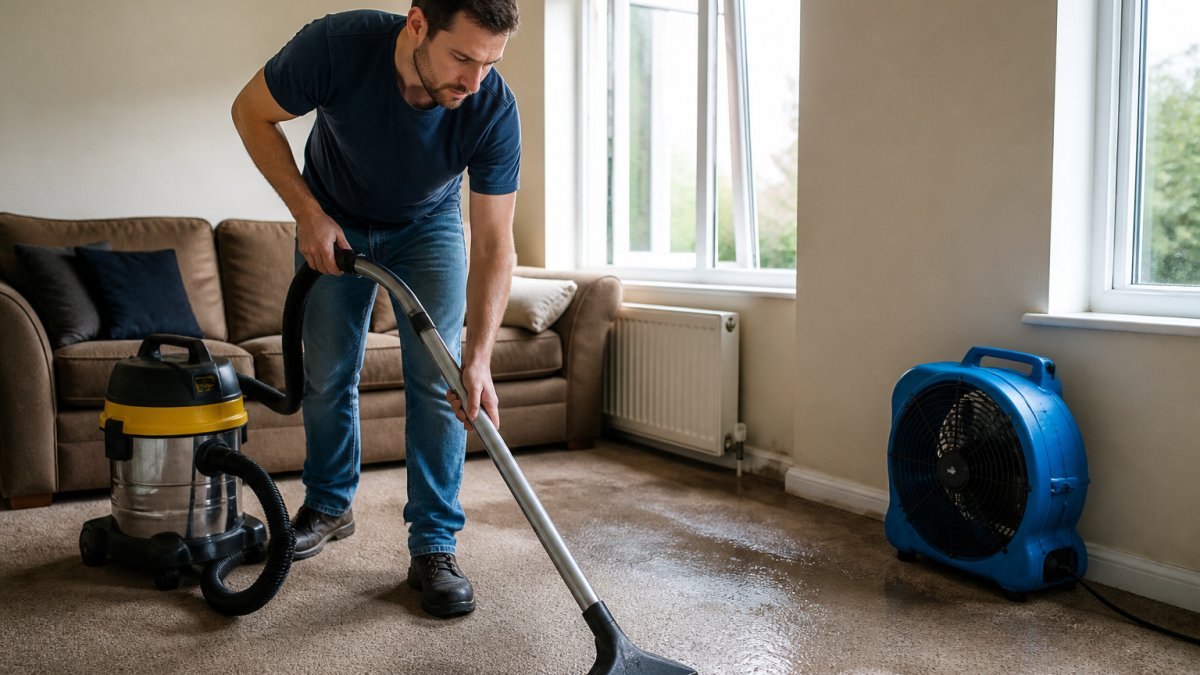
Start by getting the bulk of the water out. A wet vacuum or mop and bucket handles most of it.
- Soak up standing water with towels, then wring them out.
- Lift rugs, mats and loose carpets so air can reach the floor underneath.
- Move furniture off the wet floor. Place foil or plastic under legs to stop stains.
- Pull up the carpet edges if the underlay is soaked. Wet underlay rarely dries in place.
- Open windows and doors to start cross-ventilation.
Get Air Moving Through the Room
Still air keeps moisture trapped. You need movement.
- Set up fans to push air across the wet surfaces, not just into the room.
- Aim one fan at the floor and one at the walls.
- Keep windows open during the day if the weather is dry.
- Run a dehumidifier to pull moisture out of the air (see below).
- Leave internal doors open so damp air can escape.
Point fans at an angle across the floor rather than straight down. Air that moves across a wet surface carries moisture away far faster than air that just blows onto it.
How to Dry Wet Walls After a Leak
Wet walls need different handling from wet floors. Plaster and paint trap moisture, and if you dry the surface too fast the wall can crack. The aim is steady, even drying.
- Wipe down the wall with a dry cloth to remove surface water.
- Run a dehumidifier close to the wall, not in the middle of the room.
- Keep a fan running on low, aimed along the wall face.
- Do not use direct heat like a fan heater on plaster. It dries the surface and leaves the core damp.
- Check for bubbling paint or soft patches. These mean water has got behind the plaster.
If a wall stays damp after several days, the source may still be leaking. A slow drip behind a wall is easy to miss and hard to dry out. That is a job for a plumber, not a fan.
How Long Does It Take to Dry Out a Room After a Leak?
Most rooms take three to five days to dry fully with good airflow and a dehumidifier. Small spills on hard floors can dry in a day. Soaked carpets, plaster and timber take longer.
A few things decide the timeline:
- How much water got in. A burst pipe soaks more than an overflowed bath.
- What got wet. Tiles dry fast. Carpet, underlay and plasterboard hold water.
- Airflow and ventilation. Still rooms take twice as long.
- The weather. Warm, dry days help. Cold, damp ones slow everything down.
Check progress daily. Touch the floor and walls. If they still feel cold and damp after a week, something is holding moisture.
Choosing the Best Dehumidifier for Water Damage
The best dehumidifier for water damage is a refrigerant model with a high extraction rate, usually measured in litres per day. For a single flooded room, look for one that pulls at least 10 to 20 litres a day.
What to look for:
- Extraction rate. Higher litres per day means faster drying in a soaked room.
- Tank size. A bigger tank means fewer empties. A drain hose is even better.
- Placement. Put it near the dampest wall, not in a corner.
- Run time. Keep it running day and night until surfaces feel dry.
| Situation | Best approach | Why |
|---|---|---|
| Small spill on hard floor | Towels and open windows | Dries in hours |
| Soaked carpet and underlay | Wet vacuum, fans, dehumidifier | Water sits deep |
| Wet plaster walls | Dehumidifier plus low fan | Even drying avoids cracks |
| Whole room flooded | High-extraction dehumidifier, 24/7 | Removes litres per day |
A dehumidifier removes moisture from the air, which lets wet surfaces keep releasing water. Without one, a soaked room can stay damp for weeks even with the windows open.
Signs of Hidden Water Damage in Walls
Some water damage hides behind paint and plaster. Spot it early and you avoid a bigger repair bill.
- Musty smell that will not clear, even with the windows open.
- Paint that bubbles or flakes away from the wall.
- Soft or spongy patches when you press the plaster.
- Dark or brown stains spreading on ceilings and walls.
- Warped skirting boards or lifting floorboards.
- Peeling wallpaper with damp behind it.
If you spot any of these, the wall is likely still wet inside. Drying the surface will not fix it. You need to find where the water is coming from.
When to Call a Gas Safe Registered Plumber
Call a plumber when the leak will not stop, when you cannot find the source, or when water has reached pipework, a boiler or a heating system. A slow leak behind a wall or under a floor needs proper diagnosis.
At Apex Gas & Heating Ltd, our Gas Safe registered engineers handle leaks, burst pipes and wet heating systems across homes in Sussex and Surrey. We offer a 24/7 emergency call-out service, fixed-price quotes and a 2-year workmanship guarantee.
Here is when to pick up the phone:
- The leak is still running and you cannot shut it off.
- Water has reached your boiler or radiators.
- The room still smells damp after a week of drying.
- You see signs of hidden water damage in walls or ceilings.
- You are a landlord and need the issue sorted quickly for tenants.
If water has touched your boiler or heating system, do not switch it back on yourself. A Gas Safe registered engineer should check it first. For plumbing and leak repairs, see our plumbing services, and for boiler faults caused by water, our boiler repair service is a call away.
Frequently Asked Questions
How long does it take for a room to dry after a leak?
Most rooms dry in three to five days with good ventilation and a dehumidifier running. Dense materials like plaster and timber can take longer, so keep equipment running and check readings daily rather than judging by touch alone. If the room still smells damp after a week, or you notice new tide marks on the walls, there is likely trapped moisture that needs professional attention.
Should you use a dehumidifier after water damage?
Yes. A dehumidifier pulls moisture out of the air so wet surfaces release their water faster. Choose a refrigerant model for warm rooms and empty the tank regularly so it keeps working. Run it alongside open windows and fans, not instead of them, and keep doors and windows closed while it runs so it is not fighting incoming damp air.
Can you dry a water-damaged room with the windows open?
Open windows help only when the air outside is drier than the air inside. On a warm, breezy day, cross-ventilation clears humid air quickly. On a damp or rainy day, open windows let more moisture in and slow the drying process, so keep them shut and rely on a dehumidifier instead. Check the forecast before deciding, and switch between the two approaches as conditions change.
When should you call a professional after a room has flooded?
Call a professional if the water came from a burst pipe, if it reached electrical sockets or the boiler, if the room still smells damp after a week, or if you can see signs of hidden water damage in walls such as bubbling paint and soft plaster. A Gas Safe registered engineer can trace the source, check any gas appliances affected by the leak, and confirm the room is genuinely dry before you redecorate.
Water damage rarely waits for a convenient moment, and a slow leak can undo a week of drying in a single night. If the source is still running or your boiler and pipework have taken on water, guessing is not worth the risk. Apex Gas & Heating Ltd offers 24/7 emergency call-outs, fixed-price quotes and a 2-year workmanship guarantee, with Gas Safe registered engineers covering homes across Sussex and Surrey. Get a quote and let us find the leak, stop it, and get your home dry and safe again.