








Table of Contents
- 1. Schedule Your Annual Boiler Service Before Winter Arrives
- 2. Check and Manage Boiler Pressure Regularly
- 3. Bleed Your Radiators to Improve Heat Distribution
- 4. Protect External Pipes and Condensate Lines from Freezing
- 5. Test Your Boiler and Heating Controls Before Peak Winter
- Common Winter Boiler Issues and When to Call a Professional
- Frequently Asked Questions
Last Updated: September 17, 2026
1. Schedule Your Annual Boiler Service Before Winter Arrives
Following the top 5 boiler maintenance tips for winter, an annual boiler service is the single most important step you can take to prevent winter breakdowns. This preventative maintenance catches problems before they become emergencies, keeps your heating system running efficiently, and maintains your boiler’s warranty coverage.
A professional engineer will inspect your heat exchanger, check your flue, test your pilot light, and verify all safety systems are functioning correctly. This comprehensive check takes around an hour and should happen every year, ideally in autumn before demand peaks.
At Apex Gas & Heating Ltd, we recommend booking your boiler servicing in September or October. Our Gas Safe registered engineers carry out a full system safety inspection, providing complete documentation for your peace of mind.
Delaying servicing until something breaks means paying for emergency repairs instead of preventative maintenance, a professional service costs significantly less than an emergency call-out.
Book your annual service early in autumn. Winter call-outs are busier, and you risk being without heating during the coldest weather if you wait until December.
2. Check and Manage Boiler Pressure Regularly
Boiler pressure is one of the easiest things to monitor yourself, yet many homeowners ignore it entirely. Low boiler pressure is the most common reason heating systems fail during winter, and it’s often something you can fix without calling an engineer.
Your boiler has a pressure gauge on the front panel. The needle should sit between 1 and 1.5 bar when the system is cold. If it drops below 1 bar, your heating will struggle to reach all radiators, leaving you with cold spots and uneven warmth throughout your home.
Understanding Your Pressure Gauge
The pressure gauge shows how much water is circulating through your heating system. A slow drop over weeks is normal; a sudden drop suggests a leak in your pipework or radiators.
Check your pressure gauge weekly during winter. If pressure is consistently dropping, you have a leak needing professional attention. If it’s simply low but stable, you can repressurize the system yourself.
When to Repressurize Your System
Most modern boilers have a filling loop (a flexible hose with two small valves) underneath or behind the unit. Opening both valves allows mains water to flow into your heating system, raising pressure to the correct level.
Close the valves once pressure reaches 1.2 bar. Never over-pressurize your boiler. If you’re unsure how to use your filling loop, your boiler manual will have clear instructions, or you can ask your engineer during your annual service to show you how.
If pressure drops again within days of repressurizing, you have a leak. Do not keep topping up the pressure yourself, contact a professional to locate and repair the leak. Continuing to add water will eventually cause damage to your boiler’s heat exchanger.
3. Bleed Your Radiators to Improve Heat Distribution
Air trapped inside radiators prevents hot water from circulating properly, leaving you with cold spots at the top while the bottom stays warm. Bleeding radiators removes this trapped air and restores full heat output.
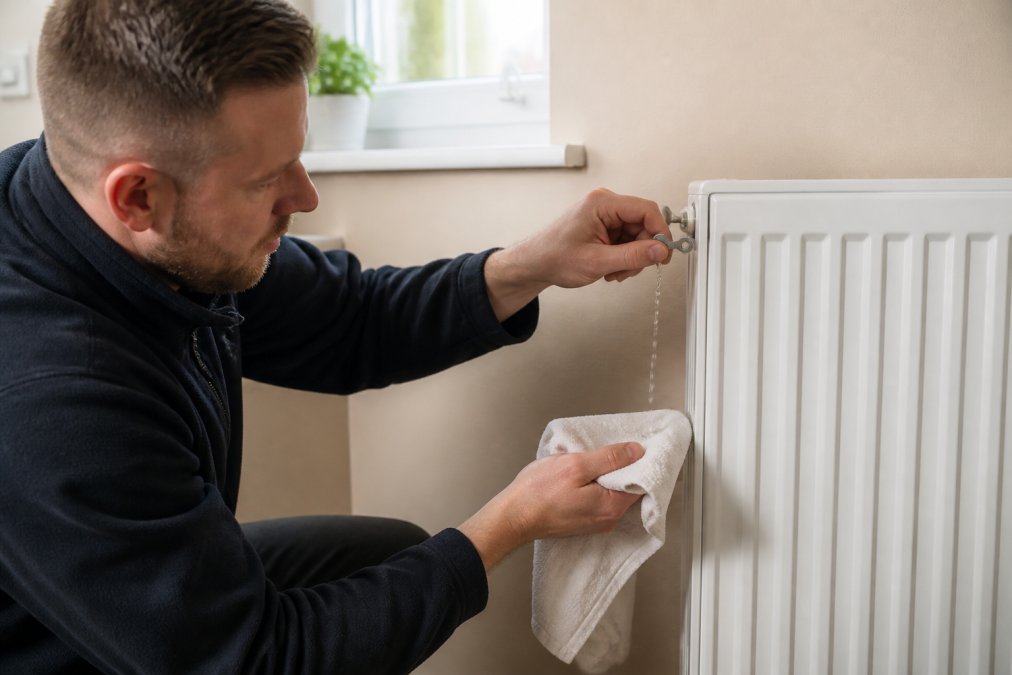
You’ll notice radiators needing bleeding when the top stays cold while the bottom is hot, or entire radiators produce no heat. Bleeding is a simple DIY task taking 10 minutes per radiator.
Step-by-Step Radiator Bleeding Process
What you’ll need:
- A radiator bleed key (available from any hardware shop for a few pounds)
- A cloth or small container to catch water
- Your boiler system switched off and cooled slightly
The process:
-
Turn off your boiler and wait 15 minutes for the system to cool.
-
Locate the small valve at the top corner of your radiator.
-
Place your cloth underneath to catch water drips.
-
Insert the bleed key and turn it anticlockwise slowly until water flows steadily (not air).
-
Turn the key clockwise to close the valve firmly.
-
Turn your boiler back on and check your boiler pressure.
Bleed all cold radiators, starting with those furthest from your boiler. After bleeding, check your boiler pressure and repressurize if needed.
If radiators remain cold after bleeding, the problem is likely insufficient boiler pressure or a blockage deeper in your heating circuit. Contact a professional heating engineer to diagnose the issue.
4. Protect External Pipes and Condensate Lines from Freezing
Frozen pipes are one of the most common winter heating emergencies. When water inside external pipes freezes, it expands and can crack the pipe, causing leaks that damage your property and leave you without heating.
Your boiler’s condensate pipe runs from the heat exchanger to an external drain and is vulnerable to freezing. A frozen condensate pipe stops your boiler from operating, leaving you without heating or hot water.
Insulate all external pipes with foam pipe lagging, paying particular attention to pipes in unheated spaces like lofts, under porches, or on external walls.
Book a boiler repair or service →
For your condensate pipe, consider installing a specialist condensate pipe heater or insulation jacket. These are designed specifically for boiler condensate lines and prevent freezing without damaging the pipe.
Check external pipes weekly during winter for frost or ice. If frozen, wrap the pipe in warm towels or use a heat gun on a low setting, never pour boiling water on it.
Lagging your pipes in autumn takes an hour and costs very little. It’s far cheaper than emergency repairs for burst pipes or a boiler that won’t start because the condensate line is frozen.
5. Test Your Boiler and Heating Controls Before Peak Winter
As part of the top 5 boiler maintenance tips for winter, test your entire heating system in late autumn to catch any issues before winter peaks.
Turn your thermostat up to trigger the boiler. Listen for the fan starting, then a click as ignition lights the pilot light. Heat should build in your radiators within a few minutes.
If your boiler makes unusual noises, fails to ignite, or produces no heat, contact a professional immediately. Do not wait until December when engineers are busiest and response times are longer.
What to Check on Your Thermostat and Timer
Check that your thermostat responds correctly by setting it higher than your current room temperature. Your boiler should fire up within seconds.
Check your timer or programmer by manually triggering heating at an unusual time and confirming it responds.
Smart heating controls like Tado thermostats detect open windows and prevent heat loss. If upgrading, autumn is ideal before winter demand peaks.
Check that your boiler’s fault code display is clear. If you see any error codes, consult your manual or contact a professional. Fault codes are your boiler’s way of telling you something needs attention before it becomes a breakdown.
Common Winter Boiler Issues and When to Call a Professional
Some boiler problems you can address yourself; others require a qualified Gas Safe engineer. Knowing the difference saves time and money.
Use this decision matrix to determine whether to troubleshoot yourself or contact a professional:
Low Boiler Pressure
Symptom: Pressure gauge reads below 1 bar; heating is weak or absent.
DIY action: Check your pressure gauge. If it’s below 1 bar, try repressurizing using your filling loop (the flexible hose underneath or behind your boiler with two small valves).
Cold Radiators
Symptom: Top of radiator is cold, bottom is warm; or entire radiator produces no heat.
Boiler Won’t Ignite
Symptom: You hear the fan start but no click or ignition; no heat or hot water.
Strange Noises
Symptom: Kettling sounds (like a kettle boiling inside pipes); banging or clunking from the boiler or pipework.
No Hot Water But Heating Works
Symptom: Your radiators are warm but your taps produce only cold water.
Visible Leaks
Symptom: Water dripping from your boiler, pipework, or radiators; wet patches on walls or ceilings.
Decision Summary
Call a professional immediately if:
- Your boiler won’t ignite and reset doesn’t work
- You see any visible leak
- Pressure drops repeatedly after repressurizing
- You smell gas
- Your boiler locks out repeatedly
- You’re unsure whether a fault is safe to address
Safe to attempt yourself:
- Repressurizing (one attempt only)
- Bleeding radiators
- Checking thermostat and timer settings
- Tightening loose pipe clips
When in doubt, contact a professional. At Apex Gas & Heating Ltd, our Gas Safe registered engineers diagnose issues quickly and provide transparent advice on whether boiler repair or replacement is the most cost-effective option. We serve Crawley and surrounding areas with 24/7 emergency support, so you’re never left without heating during winter.
Frequently Asked Questions
Should a boiler be serviced every 12 months?
Yes, annual boiler servicing is essential for safety, efficiency, and warranty compliance. A Gas Safe registered engineer checks the heat exchanger, flue, pilot light, and pressure during servicing. This prevents carbon monoxide risks and catches problems before they develop into costly breakdowns during winter. Most boiler warranties require annual servicing to remain valid.
How do I know if my boiler pressure is too low?
Check your boiler’s pressure gauge, usually located on the front panel. The needle should sit between 1.0 and 1.5 bar when the system is cold. If it drops below 1.0 bar, your heating system won’t work efficiently and radiators may stay cold. Common causes of low boiler pressure include small leaks, a faulty expansion vessel, or air in the system. You can repressurize manually using the filling loop, but persistent pressure loss requires professional inspection.
How do I bleed radiators to remove trapped air?
Use a radiator bleed key to open the small valve at the top corner of each radiator. Hold a cloth underneath to catch water, then turn the key slowly anti-clockwise until air hisses out, then water flows. Close the valve immediately. Start with radiators furthest from the boiler and work backwards. Bleeding radiators improves heat distribution and eliminates cold spots. If radiators remain cold after bleeding, the issue may be system pressure or circulation problems requiring professional attention.
What temperature should I set my boiler to in winter?
Set your boiler flow temperature between 60-80°C for most modern condensing boilers. Lower settings (around 60°C) improve efficiency and reduce energy consumption, while higher settings provide faster heat-up times. Your thermostat should be set to your comfort level, typically 18-21°C. Using a smart thermostat or timer allows you to programme heating schedules, reducing waste during periods when you’re away or asleep. Check your boiler manual for manufacturer recommendations.