








Table of Contents
- Signs Your Central Heating Needs a Power Flush
- How Power Flushing Works and Why It Can Be Risky on Old Radiators
- Power Flush vs Chemical Flush: Which Is Safer for Old Radiators?
- How Long Does a Power Flush Take?
- Radiator Material Compatibility: What You Need to Know
- DIY vs Professional Power Flushing: The Risks You Shouldn’t Ignore
- Post-Flush Maintenance: Protecting Your System After a Power Flush
- Frequently Asked Questions
Last Updated: September 14, 2026
Signs Your Central Heating Needs a Power Flush
Is it safe to power flush old radiators? Often yes, but it depends on the condition of your system when you power flush old radiators. A power flush on a sound but sludged-up system is routine; on a corroded, ageing system it can turn a slow radiator into a leaking one. At Apex Gas & Heating Ltd, we assess the system before connecting a flushing machine, because the risk lies in the state of the pipework, not the method.
A power flush is a process that removes sludge, magnetite and scale from a central heating system by circulating cleaning chemicals at high velocity through the heating circuit.
- Cold spots at the bottom of radiators while the top stays hot
- Radiators that need bleeding repeatedly through the season
- A boiler that reaches temperature slowly or cuts out early
- Noisy pipework or a pump that sounds like it is straining
- Discoloured water when you bleed a radiator
- Uneven heating between upstairs and downstairs
If two or more of these sound familiar, sludge is likely restricting flow. The next question is whether your radiators can take the pressure of clearing it.
How Power Flushing Works and Why It Can Be Risky on Old Radiators
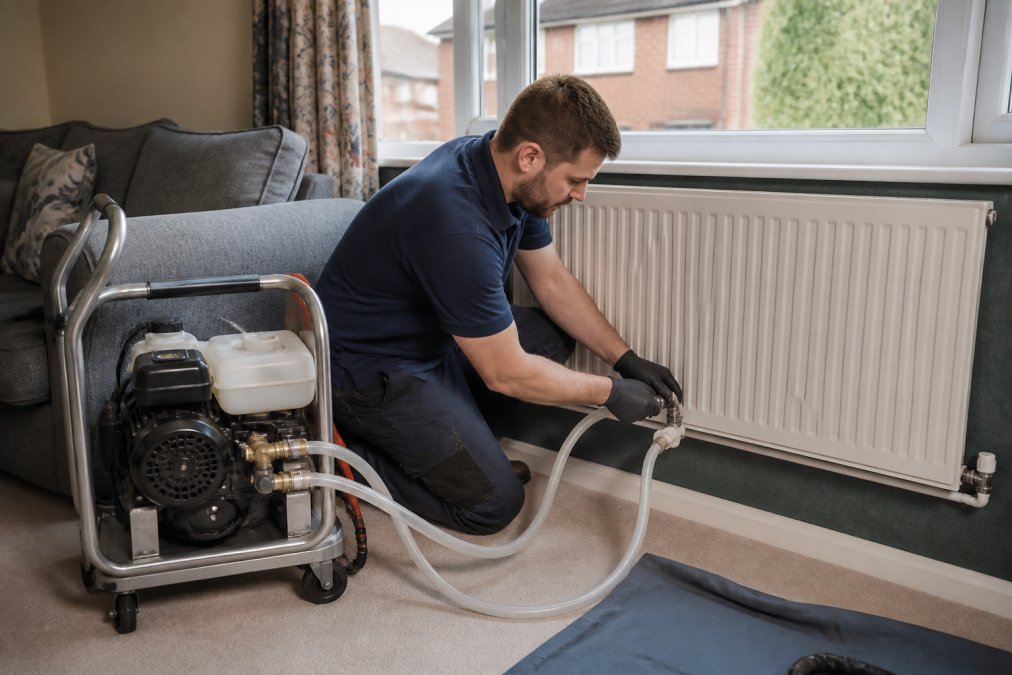
A power flush connects a pumping unit to the heating circuit and forces water and cleaning chemicals through at a higher velocity than the boiler’s own pump can manage. The flow is reversed repeatedly to lift debris from radiator bases and pipe runs, and contaminated water goes to a waste pipe rather than back around the circuit.
The Power Flushing Process
- A heating engineer isolates the boiler and connects the flushing machine to the system
- Cleaning chemicals are circulated and the flow is reversed to dislodge sludge
- Debris is flushed out through a waste pipe until the water runs clear
- The system is rinsed, then dosed with inhibitor and checked for leaks
Why Older Systems Are More Vulnerable
Older heating circuits have thinner pipe walls and more joints. Corrosion weakens metal from the inside and scale hides the damage, so when a flush removes that debris, a joint sealed only by sludge can start to weep. Microbore pipework, common in older properties, is especially prone to blocking and damage from aggressive flushing, which is why an inspection and pressure check come before any machine is connected.
Flushing a system with existing leaks or heavily corroded pipework can turn a weeping joint into a burst one. If a system has not been checked first, the cost of the flush is nothing next to the cost of the repair that follows.
Power Flush vs Chemical Flush: Which Is Safer for Old Radiators?
A chemical flush is gentler on old radiators; a power flush is more thorough. The right answer depends on your system’s condition, your radiator material, and how much sludge you are dealing with.
A chemical flush relies on cleaning chemicals circulating at normal pump pressure, loosening sludge over days or weeks before the system is drained and refilled. With no reversing flow or high-velocity agitation, there is far less stress on ageing joints, making it safer for microbore pipework, thin-walled radiators or a history of leaks. It is slower, though, and may not clear heavy magnetite deposits, especially in cast iron radiators where debris collects in the base sections.
A power flush pushes water through at speed, clearing more debris but straining the heating circuit. For a sound but badly sludged system it is faster and more complete; for microbore pipework, thin-walled radiators or a history of leaks, a chemical flush is often safer.
| Flush Type | How It Works | Best For | Main Risk |
|---|---|---|---|
| Chemical flush | Chemicals circulate at normal pump pressure | Older systems, microbore pipework, aluminium radiators | Slower, may not clear heavy debris |
| Power flush | Machine pumps water at high velocity, reversing flow | Sound systems with heavy sludge, steel panel radiators | Can expose weak joints and thin pipe walls |
| Combination | Chemical soak, then power flush | Mixed-age systems after inspection, cast iron radiators | Needs a careful pre-check and longer timescale |
Radiator material matters more than most guides admit. Steel panel radiators handle a power flush well when the system is otherwise sound. Aluminium radiators are sensitive to the pH of cleaning chemicals and can corrode with the wrong product, so a chemical flush with a neutral pH cleaner is often safer. Cast iron radiators hold far more debris and need longer flushing plus a proper inhibitor dose afterwards.
The mix matters too. A system with steel radiators, aluminium components and mixed pipe materials is more prone to galvanic corrosion, where dissimilar metals react and accelerate sludge formation. If your system has been extended over the years with different radiator types, that is a reason for a careful assessment before flushing, not a reason to skip it.
Never use a power flush on a system with aluminium radiators unless the engineer has confirmed the cleaning chemical is compatible. The wrong product can pit the aluminium from the inside, and the damage will not show until the radiator fails.
This is where the DIY versus professional question becomes critical. DIY power flushing is possible with hired equipment, but the risks are real and mostly invisible until something fails: over-pressurising a system that cannot take it, and failing to neutralise cleaning chemicals properly. Residual chemical attacks the boiler’s heat exchanger and any aluminium components, with damage showing up months later. A professional flush includes a pre-check for leaks, a pressure test and a proper inhibitor dose, and if a joint fails mid-flush an engineer can isolate and repair it.
For landlords with multiple properties, this is also a compliance question: heating and gas work needs to be handled by a qualified engineer, and the paperwork matters. Apex Gas & Heating Ltd handles gas safety and CP12 checks alongside heating work, which keeps the record clean across a portfolio.
Ask what inhibitor will be used and whether a magnetic filter will be fitted at the same time. A flush without inhibitor protection is a temporary fix; sludge returns within a few heating seasons.
If you are in Crawley, Horsham or anywhere across Sussex and Surrey, a pre-flush assessment will confirm whether a power flush, chemical flush or combination is safest before anyone connects a flushing machine.
How Long Does a Power Flush Take?
A power flush typically takes four to eight hours for an average home, but the range is wide because the job is not fixed. Time depends on three things: radiator count, pipework bore, and how much magnetite and scale the circuit holds.
See our boiler repair and servicing →
For a standard-bore system with six to eight radiators in a Crawley home, a straightforward flush can be finished in a single day, including isolating the boiler, connecting the machine, circulating and reversing flow, flushing to a waste pipe, rinsing, adding inhibitor and testing pressure and flow rate. Rushing that final stage leaves airlocks or under-dosed inhibitor, which is why a proper job takes the time it takes.
Microbore pipework changes the picture. The narrow internal diameter common in older Sussex properties restricts flow, so the machine works at lower pressure for longer to shift debris without stressing the pipe walls. A microbore system with heavy sludge can run into a second day, and some engineers combine an overnight chemical soak with a power flush the next morning, slower overall but gentler on ageing joints.
Larger properties with ten or more radiators, or systems never previously flushed, can also run into a second day. Cast iron radiators hold far more debris than steel panels and need longer flushing. If a magnetic filter is fitted at the same time, add roughly half an hour.
The time is not just flushing: it includes a pre-flush inspection and pressure check. If a weak joint is found before the machine is connected, the job can be paused and the repair planned; if it is found mid-flush, the day gets longer and more expensive.
Ask for a written estimate that breaks down the expected time by radiator count and pipework type. A quote that says ‘one day’ without asking about your system is a quote that has not been thought through.
If you are in Crawley, Horsham or anywhere across Sussex and Surrey, a pre-flush assessment will give you a realistic timescale and confirm whether a power flush, chemical flush or combination is the right route.
Radiator Material Compatibility: What You Need to Know
The mix matters too. A system with steel radiators, aluminium components and mixed pipe materials is more prone to galvanic corrosion, where dissimilar metals react and accelerate sludge formation. If your system has been extended over the years with different radiator types, that is a reason for a careful assessment before flushing, not a reason to skip it.
Ask what inhibitor will be used and whether a magnetic filter will be fitted at the same time. A flush without inhibitor protection is a temporary fix; sludge returns within a few heating seasons.
DIY vs Professional Power Flushing: The Risks You Shouldn’t Ignore
For landlords with multiple properties, this is also a compliance question: heating and gas work needs to be handled by a qualified engineer, and the paperwork matters. Apex Gas & Heating Ltd handles gas safety and CP12 checks alongside heating work, which keeps the record clean across a portfolio.
Post-Flush Maintenance: Protecting Your System After a Power Flush
What happens after the flush decides whether it was worth doing. The single most effective step is fitting a magnetic filter, which captures magnetite before it settles in radiators and the heat exchanger. Combined with a correct dose of inhibitor, it is what keeps a flushed system clean.
A practical maintenance routine looks like this:
- Check system pressure monthly and top up if it drops
- Bleed radiators at the start of each heating season
- Have the system checked annually alongside the boiler service
- Top up inhibitor every few years, or when the system is drained
- Keep the magnetic filter cleaned at each service
Without inhibitor and filtration, sludge returns. A flush buys you a clean system; maintenance is what keeps it that way.
The real question is not whether power flushing works, it is whether your particular system can take it. Guessing wrong is expensive. Apex Gas & Heating Ltd inspects the system first, advises honestly on whether a power flush, chemical flush or radiator replacement is the right call, and backs the work with transparent pricing and full public liability insurance. As approved Glowworm and Worcester installers, our team covers boiler servicing, boiler repair and central heating work across Sussex and Surrey, with a 24/7 emergency call-out when something fails at the worst moment. Get a quote from Apex Gas & Heating Ltd and find out exactly what your system needs before anyone connects a flushing machine.
Frequently Asked Questions
What are the disadvantages of power flushing?
Power flushing can disturb years of corrosion and sludge, potentially causing leaks in already weakened pipes or radiators. It may also be unsuitable for microbore pipework or very old systems where the risk of damage outweighs the benefits. Additionally, if not performed correctly, it can leave debris behind or introduce airlocks. For these reasons, a professional assessment is essential before power flushing old radiators.
How much does it cost to power flush radiators?
The cost of a power flush varies depending on the number of radiators, system size, and accessibility. For a precise quote tailored to your property in Sussex or Surrey, contact Apex Gas & Heating Ltd. They offer transparent pricing and can advise whether a power flush or chemical flush is more cost-effective for your system.
Is a chemical flush a safer alternative to power flushing for older systems?
Yes, a chemical flush is often gentler on older systems. It involves adding a cleaning chemical to the central heating system, which circulates to break down sludge and scale without the high-pressure water and reversing flow of a power flush. This reduces the risk of dislodging large debris that could block narrow pipes or cause leaks. However, it may not be as thorough for heavily contaminated systems.
Can power flushing cause leaks in old pipework?
Power flushing can cause leaks if the pipework is already corroded or weakened. The process uses high-velocity water and reversing flow, which can dislodge rust and scale that may have been sealing small holes. If your system has microbore pipework or is over 20 years old, a chemical flush or targeted repairs might be safer. A heating engineer can pressure-test your system first to assess the risk.