








Table of Contents
- What a Smart Heating Controller Does
- Smart Thermostat Energy Savings You Can Actually Achieve
- Smart Thermostat Benefits for Your Home Comfort
- Smart Thermostat Compatibility with Boilers
- Zoned Heating Controls and Room-by-Room Management
- Remote Control and Smartphone Access
- Is a Smart Heating Controller Worth the Upgrade?
- Frequently Asked Questions
Last Updated: October 8, 2026
What a Smart Heating Controller Does
A smart heating controller is a device that automatically manages your home’s heating system based on your preferences, schedules, and behaviour. Unlike traditional thermostats that require manual adjustment, a smart heating controller learns your routine and adjusts temperature settings without intervention.
These systems connect to your boiler and central heating network. They communicate via your home’s Wi-Fi, allowing remote access from your smartphone or computer. The core function is straightforward: maintain your desired temperature while minimising wasted energy.
At Apex Gas & Heating Ltd, we’ve installed smart heating controllers for homeowners across Sussex and Surrey who wanted better control over their comfort and energy use. The technology pairs well with modern boilers, particularly Glow-worm and Worcester models that support smart integration.
Most smart heating controllers offer scheduling features. You can set different temperatures for different times of day, lower settings when you’re away or asleep, higher settings when you’re home. Some systems go further, offering room-by-room control and learning algorithms that adapt to your household’s patterns.
Smart heating controllers work best when paired with a well-maintained boiler. Before upgrading to a smart controller, ensure your heating system is serviced and in good working order. A poorly performing boiler won’t deliver the efficiency gains a smart controller can offer.
Smart Thermostat Energy Savings You Can Actually Achieve
Energy savings from a smart heating controller depend on your current habits and how actively you use the system’s features. Many homeowners find that simply scheduling heating around their daily routine reduces energy consumption noticeably.
The most significant savings come from avoiding unnecessary heating. If your home is heated all day when no one is there, switching to scheduled heating cuts wasted energy immediately. Homeowners who heat their homes only when occupied typically see improvements within the first month.
Zoned heating, controlling temperature in specific rooms rather than heating your entire house uniformly, offers additional savings. You can heat occupied rooms to your preferred temperature whilst keeping unused spaces cooler. This targeted approach reduces the overall energy your boiler consumes.
Learning algorithms in some smart controllers adapt to your behaviour over time. The system recognises when you’re typically home and adjusts heating automatically. Whilst these savings vary by household, many users report that letting the system learn their routine produces better results than manual scheduling alone.
Remote access prevents another common waste: heating your home before you arrive. You can turn on heating from your smartphone just before you get home, rather than leaving it running all day. This flexibility, combined with scheduling, typically delivers noticeable reductions in heating costs.
The real savings from a smart heating controller come from matching heating to your actual occupancy, not from the technology itself. The device is a tool, how you use it determines whether you save energy or simply gain convenience.
Smart Thermostat Benefits for Your Home Comfort
Consistent temperature is the primary comfort benefit. A smart heating controller maintains your chosen temperature more precisely than manual adjustments. You set your preference once, and the system keeps your home stable without temperature swings.
Scheduling means your home reaches your desired temperature exactly when you need it. Wake up to a warm house without manually turning on the heating. Return home to comfort without waiting for your boiler to catch up. The system works silently in the background.
Remote access adds flexibility to your routine. If your plans change and you’re staying out longer, lower the temperature from your phone. If you’re leaving work early, increase heating so your home is comfortable when you arrive. This responsiveness improves daily comfort without requiring physical adjustments.
Room-by-room control lets different household members maintain their preferred temperatures. One person might prefer a cooler bedroom whilst another wants a warmer living room. Zoned heating accommodates these preferences without compromise.
Many smart controllers provide notifications and insights. You receive alerts if your boiler experiences problems. Some systems show you which rooms consume the most heating energy, helping you understand your home’s behaviour. This visibility supports better decisions about comfort and efficiency.
Smart Thermostat Compatibility with Boilers
Not all smart heating controllers work with every boiler. Compatibility depends on your boiler’s age, model, and whether it supports smart integration. Modern boilers, particularly Glow-worm and Worcester systems, are designed with smart controllers in mind.
Older boilers may lack the necessary connections or communication protocols. If your boiler is more than 10 years old, check whether it supports smart integration before purchasing a controller. Some older systems require additional hardware to enable compatibility.
Worcester and Glowworm boilers typically integrate seamlessly with major smart heating controllers. These manufacturers build smart functionality into their systems as standard. When you’re planning an upgrade, choosing a boiler with built-in smart support simplifies installation and maximises compatibility.
Installation requirements vary. Some smart controllers work as standalone replacements for your existing thermostat. Others require integration with your boiler’s control system. Apex Gas & Heating Ltd can assess your boiler and recommend compatible smart controllers that work with your specific model.
If your boiler is nearing the end of its life, combining a boiler replacement with a smart heating controller upgrade makes sense. A new boiler with integrated smart support provides better efficiency and control than retrofitting a smart controller to an ageing system.
Installing a smart heating controller on an incompatible boiler may void your warranty or cause the system to malfunction. Always verify compatibility with your boiler’s manufacturer before purchasing. When in doubt, consult a qualified heating engineer who can confirm your system supports smart integration.
Zoned Heating Controls and Room-by-Room Management
Zoned heating divides your home into separate temperature zones, each controlled independently. Rather than heating your entire house to one temperature, you set different temperatures for different areas. Bedrooms, living spaces, and unused rooms can be managed separately.
This approach reduces energy waste significantly. Heating a spare bedroom to the same temperature as your living room when it’s never occupied is inefficient. Zoned controls let you heat only the spaces you use regularly.
Implementing zoned heating requires either multiple smart controllers or a system that supports zone management. Some smart heating controllers can control multiple zones through your boiler’s zone valves. Others work with smart radiator thermostats that control individual radiators.
Smart radiator thermostats are small devices installed on individual radiators. Each one can be controlled separately via your smartphone or a central hub. You can set your bedroom to 16°C whilst keeping your living room at 20°C. This granular control is impossible with a single thermostat.
The setup process depends on your system. If your boiler supports zone management, a smart controller can activate this feature directly. If your boiler doesn’t have built-in zone support, smart radiator thermostats offer an alternative. Both approaches deliver room-by-room flexibility.
Remote Control and Smartphone Access
Smartphone access to your heating system offers convenience and control. Most smart heating controllers include a mobile app that displays your current temperature, heating schedule, and energy usage. You can adjust settings from anywhere with an internet connection.
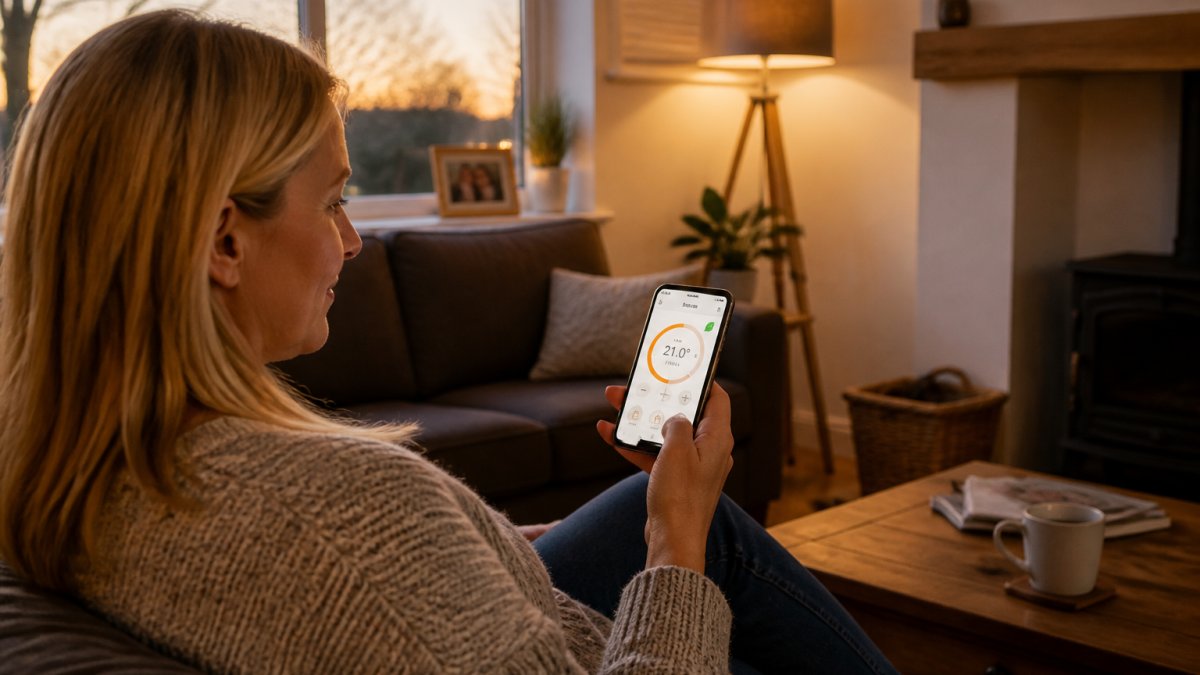
This capability prevents unnecessary heating. If you’ve left home and realised you left the heating on, you can reduce it remotely. If you’re running late, you can increase heating so your home is warm when you arrive. These small adjustments compound into meaningful energy savings.
Voice control integration is available on many systems. If you use Amazon Alexa or Google Home, you can adjust your heating by voice command. “Increase the temperature to 21 degrees” requires no smartphone interaction. This hands-free control suits busy households.
Notifications keep you informed about your heating system’s status. Some smart controllers alert you if your boiler experiences a fault or if heating isn’t reaching your target temperature. Early warnings help you address problems before they become expensive repairs.
Historical data and insights help you understand your heating patterns. Many apps show you daily, weekly, and monthly energy usage. You can see which times of day consume the most energy and adjust your schedule accordingly. This visibility supports informed decisions about comfort and costs.
Is a Smart Heating Controller Worth the Upgrade?
The answer depends on your current system and how you use heating. If you’re manually adjusting your thermostat throughout the day, a smart controller will improve both convenience and efficiency. If you already have a programmable thermostat and use it effectively, the upgrade may offer modest additional benefits.
Households with inconsistent routines benefit most. If your schedule changes week to week, remote control prevents wasted heating. Families with multiple properties find smart controllers particularly valuable, managing heating across several homes becomes straightforward.
Older boilers present a consideration. If your boiler is unreliable or approaching replacement, upgrading to a smart controller alone won’t solve underlying problems. A new boiler with integrated smart support delivers better results than adding smart control to an ageing system.
The installation process is typically straightforward. Most smart controllers replace your existing thermostat without major work. However, if your boiler doesn’t support smart integration, additional installation may be required. Apex Gas & Heating Ltd can assess your system and provide a clear picture of what’s involved.
Long-term value extends beyond energy savings. Smart controllers make your home more comfortable and responsive to your needs. If you value convenience, flexibility, and the ability to manage your heating remotely, the upgrade is worthwhile. If energy savings alone drive your decision, calculate whether your typical usage patterns will deliver returns that justify the investment.
Upgrading to a smart heating controller transforms how you manage your home’s warmth and comfort. The real value comes from matching heating to your actual occupancy rather than heating your entire home continuously. Apex Gas & Heating Ltd installs and supports smart heating controllers throughout Sussex and Surrey, ensuring your system integrates properly with your boiler and works reliably. If you’re considering an upgrade, contact us for a free assessment of your current heating system and recommendations for smart controllers that suit your home and routine. Our team can discuss boiler servicing options to ensure your system is ready for smart integration.
Frequently Asked Questions
Will a smart heating controller work with my existing boiler?
Most smart heating controllers are compatible with standard boilers, but compatibility depends on your boiler’s age and type. Worcester and Glow-worm boilers typically integrate seamlessly with modern smart controllers. Before upgrading, check your boiler’s specifications or contact a qualified installer who can confirm compatibility. Apex Gas & Heating can assess your current system and recommend the right smart controller for your setup.
Can a smart heating controller really reduce my energy bills?
Yes. Smart controllers learn your heating patterns and adjust temperatures automatically, preventing unnecessary heating when you’re away or asleep. By heating only when needed and to precise temperatures, most households see measurable reductions in energy consumption. The exact savings depend on your current heating habits, home insulation, and how actively you use the controller’s features.
Can I control my heating from my phone with a smart controller?
Yes. Smart heating controllers connect to your home Wi-Fi and send data to a mobile app, letting you adjust temperature and schedules from anywhere. This means you can warm your home before arriving on a cold day or reduce heating while you’re away, adding convenience and helping you manage energy use more effectively.
Do smart heating controllers need Wi-Fi to work?
Smart controllers need Wi-Fi to send data to your phone and access remote features. However, most models have a local control option, so your heating will continue to operate using pre-set schedules even if your Wi-Fi drops temporarily. This ensures your home stays warm regardless of connectivity issues.