








Last Updated: October 25, 2026
Quick Summary
Common plumbing issues older properties stem from outdated materials like cast iron and lead pipes, combined with decades of corrosion, mineral buildup, and modern water usage demands. Early warning signs include visible corrosion, discoloured water, persistent drips, and banging noises in pipes, which require professional assessment to prevent costly water damage.
- Copper pipes develop blue-green patina normally, but white chalky deposits or dark brown staining indicate internal corrosion
- Low water pressure in older homes is usually caused by mineral buildup and corrosion narrowing the pipe interior
- Old clay and cast iron drain pipes are prone to root intrusion at joints, causing blockages and structural damage
- Pinhole leaks in copper pipes result from aggressive water chemistry and can go undetected for months
- A professional plumbing assessment identifies whether repair or full replacement is the better investment for your system
Table of Contents
- Why Older Properties Face Unique Plumbing Challenges
- Old Pipework Warning Signs You Shouldn’t Ignore
- Low Water Pressure in Older Homes: Causes and Solutions
- Leaking Pipes in Older Properties: Detection and Repair
- Blocked Drains in Older Homes: Why They Happen and How to Fix Them
- Corrosion and Mineral Buildup in Ageing Systems
- Getting Your Plumbing Assessed and Repaired
- Frequently Asked Questions
Why Older Properties Face Unique Plumbing Challenges
Homes built decades ago were constructed with materials and standards that simply don’t exist anymore. The pipework that worked fine in 1960 faces very different demands today, and it shows its age.
Common plumbing issues in older properties stem from three main sources: the materials used at the time, the sheer age of the system, and how homes are used differently now. Cast iron and lead pipes were standard decades ago. Copper was considered premium. Today, we know these materials have significant limitations. They corrode, they accumulate mineral deposits, and they don’t cope well with modern water usage patterns.
The challenge is that many of these problems develop gradually. You might not notice them until something fails completely. That’s why understanding what to look for, and when to call in a professional, matters so much for homeowners in older properties.
Old Pipework Warning Signs You Shouldn’t Ignore
The best way to catch problems early is to know what old pipework actually looks like when it’s failing. Several visible and audible warning signs tell you the system is in trouble.
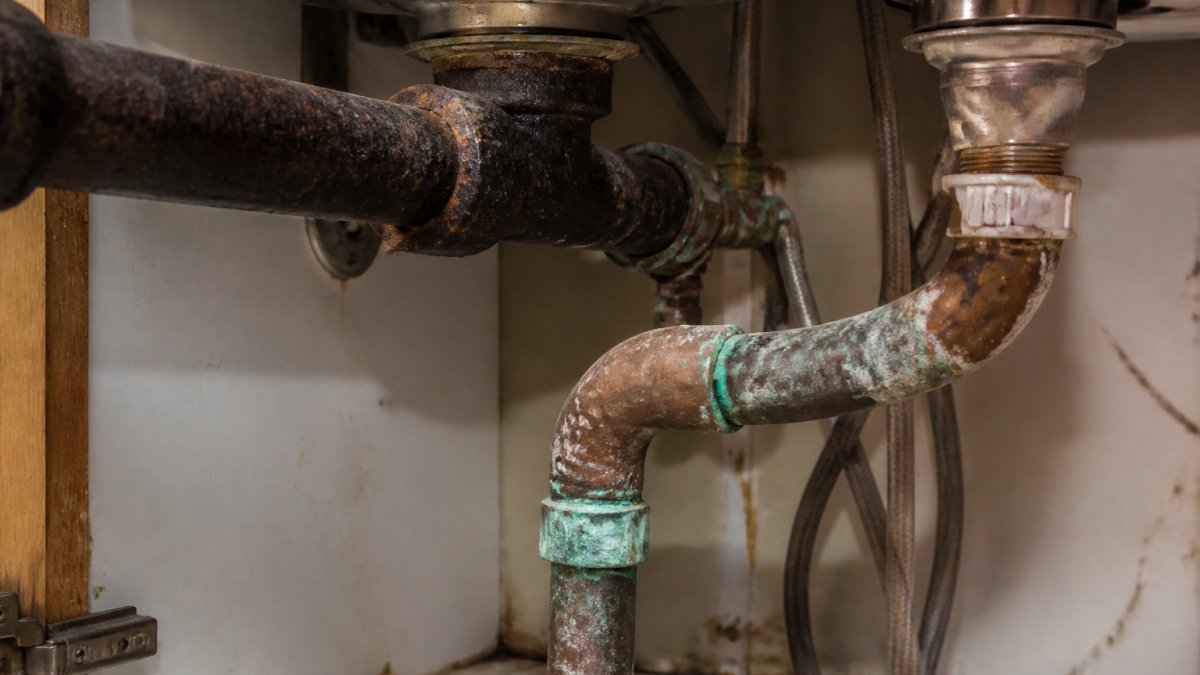
Visible corrosion and discolouration is the clearest signal. Copper pipes develop a blue-green patina over time, that’s normal oxidation. But if you see white, chalky deposits or dark brown staining, the pipes are corroding from the inside. Cast iron pipes show rust streaks and flaking. These signs mean the pipe walls are thinning and failure is likely.
Staining on walls and ceilings indicates slow leaks inside the structure. Water seeping through plasterboard leaves brown or yellowish marks. If you spot these, moisture is already damaging the building fabric behind the visible surface.
Discoloured water coming from taps, especially when you first turn them on, suggests corrosion inside the pipes. Rust particles and sediment enter the water supply. Older properties sometimes deliver brown or orange water for the first few seconds after the tap runs.
Persistent drips and small leaks are early warnings. A drip that seems minor now will worsen. The joint or fitting is failing, and water pressure will eventually force a bigger leak.
Banging or whistling noises in the pipes point to loose fittings, air pockets, or pressure changes. These sounds often come from water hammer, a shock wave created when water suddenly stops flowing. It damages fittings and joints over time.
Watch out: ignoring these signs leads to water damage inside walls and under floors, which costs far more to repair than replacing the pipework early.
Several visible and audible warning signs indicate that old pipework is failing and needs attention.
| Warning Sign | What It Indicates | Action |
|---|---|---|
| Blue-green patina on copper pipes | Normal oxidation, no immediate concern | Monitor for further changes |
| White, chalky deposits or dark brown staining | Pipes corroding from inside, walls thinning | Call a professional plumber |
| Rust streaks and flaking on cast iron | Internal corrosion, failure likely | Arrange assessment and repair |
| Brown or yellowish marks on walls and ceilings | Slow leaks inside the structure | Address immediately to prevent damage |
| Discoloured water from taps | Corrosion inside pipes, rust particles present | Have system assessed |
| Persistent drips and small leaks | Joint or fitting failing, worse leaks coming | Repair early to prevent water damage |
| Banging or whistling noises in pipes | Water hammer, loose fittings, air pockets | Professional inspection recommended |
Low Water Pressure in Older Homes: Causes and Solutions
Low water pressure is one of the most common plumbing issues in older properties, particularly in homes built before the 1980s. The cause is usually not a single problem but a combination of age-related issues working together.
Mineral buildup inside pipes is the primary culprit. Hard water deposits accumulate on the interior walls of old copper and steel pipes, narrowing the space water can flow through. Over decades, this restriction becomes severe. You notice it most at the kitchen tap and shower, where flow is noticeably weaker than it should be.
Corrosion also reduces internal diameter. Cast iron pipes rust from the inside, creating rough surfaces where sediment collects. The pipe becomes like a blocked straw, water struggles to pass through.
Practical steps to diagnose the problem:
- Check if low pressure affects the whole house or just one room. If it’s everywhere, the issue is likely in the main supply or the primary pipework. If it’s one tap or shower, the blockage is in that branch line.
- Run cold water from different taps. If cold pressure is normal but hot water is weak, the problem is in the hot water system, often the cylinder or its pipework.
- Look for visible leaks or damp patches. These suggest the system is losing water before it reaches your taps.
For detailed solutions tailored to your home, explore low water pressure in your shower to understand specific fixes for different scenarios.
Many older properties benefit from a full system assessment. A professional can identify exactly where pressure is being lost and recommend whether cleaning, repair, or replacement is the right choice.
Leaking Pipes in Older Properties: Detection and Repair
Leaks in old pipework can hide for months before you notice them. By then, significant water damage may already be done to walls, floors, and the structure itself.
Early detection saves money. Small leaks are cheap to fix. Major water damage is not.
The most obvious sign is visible water pooling or dripping. But many leaks happen inside walls or under floors. Watch for these subtler indicators: soft or spongy patches on walls or ceilings, musty smells, mould growth in corners, or a sudden spike in your water bill with no obvious reason.
Older pipework fails at joints and fittings more often than along the pipe itself. Solder joints weaken over time. Compression fittings lose their seal. Threaded connections corrode and loosen.
What to do if you suspect a leak:
- Turn off the water supply immediately to prevent further damage
- Dry the area thoroughly and monitor it for 24 hours to confirm the leak has stopped
- Document the location and take photos
- Call a professional plumber to assess the damage and plan repairs
The decision between patching and replacing depends on the pipe’s age and condition. A single leak in a 50-year-old system is often a sign that other failures are coming. A professional assessment will tell you whether a repair buys you time or whether full replacement is the better investment.
Plumbing services are available to handle emergency leaks and plan longer-term solutions.
Blocked Drains in Older Homes: Why They Happen and How to Fix Them
Blocked drains are particularly common in older properties. The causes are different from modern homes and often harder to clear.
Old clay and cast iron drain pipes are prone to root intrusion. Tree roots seek moisture and nutrients, and they’re attracted to the joints where these pipes connect. Over decades, roots work their way inside the pipe, causing blockages and structural damage to the pipe itself.
Mineral and grease accumulation also builds up over time. Limescale coats the interior walls of pipes, narrowing the channel. Grease from cooking hardens inside drain lines, especially in older kitchens where pipes run at shallower angles.
Pipe collapse is another issue. The ground around old pipes settles and shifts. Clay pipes are brittle and crack under pressure. Cast iron corrodes from the outside as well as inside. A collapsed section blocks everything downstream.
Signs of a blocked drain:
- Slow drainage from multiple fixtures (sink, shower, toilet) at the same time
- Gurgling sounds from drains
- Unpleasant smells from the drain
- Water backing up into the shower or bath when the toilet flushes
Corrosion and Mineral Buildup in Ageing Systems
Corrosion is the silent killer of old plumbing systems. It happens continuously, and by the time you notice it, significant damage is already done.
Copper pipes corrode when exposed to aggressive water chemistry. Very soft water or water with high acidity eats through copper from the inside. This process is called “pinhole leaks”, tiny perforations appear in the pipe, causing slow seepage that can go undetected for months.
Cast iron corrodes from both sides. Moisture and oxygen attack the surface. Rust develops inside the pipe, flaking off and creating sediment that clogs downstream fixtures.
Mineral buildup, limescale in hard water areas, accumulates on pipe interiors. It starts as a thin layer but thickens over years. The buildup restricts flow and traps sediment, creating conditions for bacteria to grow.
The interaction between corrosion and mineral buildup accelerates both problems. Rough corroded surfaces trap more mineral deposits. Mineral layers protect some areas while exposing others to corrosion. The system degrades faster than either problem alone.
Getting Your Plumbing Assessed and Repaired
The best approach to managing plumbing in an older home is a professional assessment. Learn about annual plumbing maintenance plans to prevent future issues in older properties. You need to know what you’re dealing with before deciding on repairs or replacement.
Frequently Asked Questions
What plumbing problems are most common in older homes?
Older properties typically experience corroded pipework, low water pressure, recurring blockages, and leaking pipes. Cast iron drains deteriorate over decades, copper pipes develop pinhole leaks, and mineral deposits clog supply lines. These issues stem from age, water chemistry, and the original materials used when the property was built.
How can I tell if old pipes need replacing?
Signs that old pipework needs replacement include persistent low water pressure, discoloured water, frequent leaks, visible corrosion or green staining on copper pipes, and recurring blockages despite regular clearing.
Why do older homes have low water pressure?
Low water pressure in older homes usually results from mineral buildup inside pipes, corrosion narrowing the pipe diameter, or outdated supply systems designed for fewer outlets. Sediment accumulates in old pipework over decades, restricting flow. Sometimes the mains stopcock or internal valves are partially closed.
When should I call a plumber about a plumbing problem?
Call a plumber immediately if you notice active leaks, no water supply, sewage smells, or water backing up from drains. Schedule a visit soon if you spot discoloured water, hear banging in pipes, experience persistent low pressure, or notice damp patches on walls or ceilings. For older properties, an annual inspection helps catch problems early. Apex Gas & Heating offers plumbing services.
Older properties need plumbing systems that match their age and condition. The pipes in a 1950s house have different challenges than a modern one, and they need different solutions. Apex Gas & Heating Ltd assesses plumbing in older homes across the region, identifies what needs attention, and handles repairs with the care these properties deserve. Get a quote for a plumbing assessment, and we’ll show you exactly what’s happening in your system and what comes next.
