








Table of Contents
- What Causes Low Water Pressure in Shower
- How to Check if the Problem is Internal or External
- Is Low Water Pressure a Sign of a Leak
- How to Increase Shower Water Pressure
- When to Call a Plumber for Shower Issues
- Maintaining Your Plumbing System
- Conclusion
Last Updated: August 27, 2026
What Causes Low Water Pressure in Shower
Low water pressure in your shower can turn a relaxing morning routine into a frustrating experience. Understanding what causes low water pressure in shower issues is the first step toward fixing them. At Apex Gas & Heating Ltd, we’ve diagnosed and resolved countless pressure problems across Sussex and Surrey properties, and the causes often fall into two broad categories: issues within your home’s plumbing system or problems with the mains supply itself.
The good news is that many causes are straightforward to identify and address. Some require only basic maintenance, whilst others need professional intervention. Before calling a plumber, it’s worth understanding what you’re dealing with, this knowledge helps you communicate the problem clearly and avoid unnecessary costs.
Common internal causes
Your home’s internal plumbing system is often where low water pressure originates. The most frequent culprits are mineral buildup, blocked pipework, faulty valves, and corroded pipes.
Limescale and mineral deposits accumulate inside pipes and fixtures over time, particularly in areas with hard water. This buildup restricts water flow, reducing pressure throughout your system. Shower heads are especially vulnerable because water passes through small holes that clog easily. A shower head that once delivered a powerful spray may dribble after months of mineral accumulation.
Blockages in your pipework can develop from debris, corrosion particles, or sediment. If only your shower has low pressure whilst other taps flow normally, the blockage likely sits between the main supply and your bathroom. If multiple outlets are affected, the problem may be further upstream in your system.
Isolation valves and stopcocks control water flow to different sections of your home. A partially closed valve restricts flow significantly. Check whether someone may have adjusted these without your knowledge, it’s a surprisingly common cause in rental properties or shared homes.
Galvanized pipes, common in older properties, corrode from the inside over decades (gov.uk). This corrosion narrows the pipe diameter and reduces flow rate substantially. Replacing corroded pipework is expensive but necessary for restoring pressure and preventing leaks.
Faulty ball valves or pressure reducing valves (PRVs) can malfunction and limit flow. A PRV that’s set too low deliberately restricts pressure, sometimes this is correct, but occasionally it’s misconfigured.
External supply problems
Sometimes the issue lies beyond your property boundary, with the mains water supply or your water utility’s infrastructure. If your entire home has low pressure, especially during peak hours, the problem is likely external.
Your water utility may be carrying out maintenance work or repairs on the mains. Contact your local water company to check for known issues in your area. Burst pipes in the street reduce pressure across multiple properties simultaneously.
Distance from the water treatment facility affects pressure (ofwat.gov.uk). Properties at the end of long supply lines or at higher elevations may experience naturally lower pressure than those closer to the source. This is particularly relevant in certain areas of Crawley and other elevated parts of Sussex.
A faulty water meter can restrict flow (ofwat.gov.uk). Meters sometimes develop internal blockages or mechanical faults that mimic low pressure symptoms. Your water company can inspect or replace a faulty meter.
How to Check if the Problem is Internal or External
Determining whether your low water pressure in shower issue originates inside your home or with the external supply narrows down your next steps significantly. A simple diagnostic process takes just a few minutes.
Start by checking all the taps in your home. Turn on the kitchen tap, bathroom basin tap, bath tap, and outdoor tap if you have one. Note whether pressure is low everywhere or only in specific locations. If only the shower has low pressure, the problem is definitely internal to your plumbing system. If multiple taps have low pressure, the issue could still be internal (affecting a main supply line) or external (affecting your entire property).
Next, locate your stopcock, usually found under the kitchen sink, in the airing cupboard, or near the front of the property where the mains enters. The stopcock is a valve that controls water supply to your entire home. Turn it fully open (rotate anticlockwise until it stops naturally; don’t force it). Sometimes a stopcock is partially closed, restricting pressure throughout the property. If pressure improves after opening it fully, you’ve found your problem.
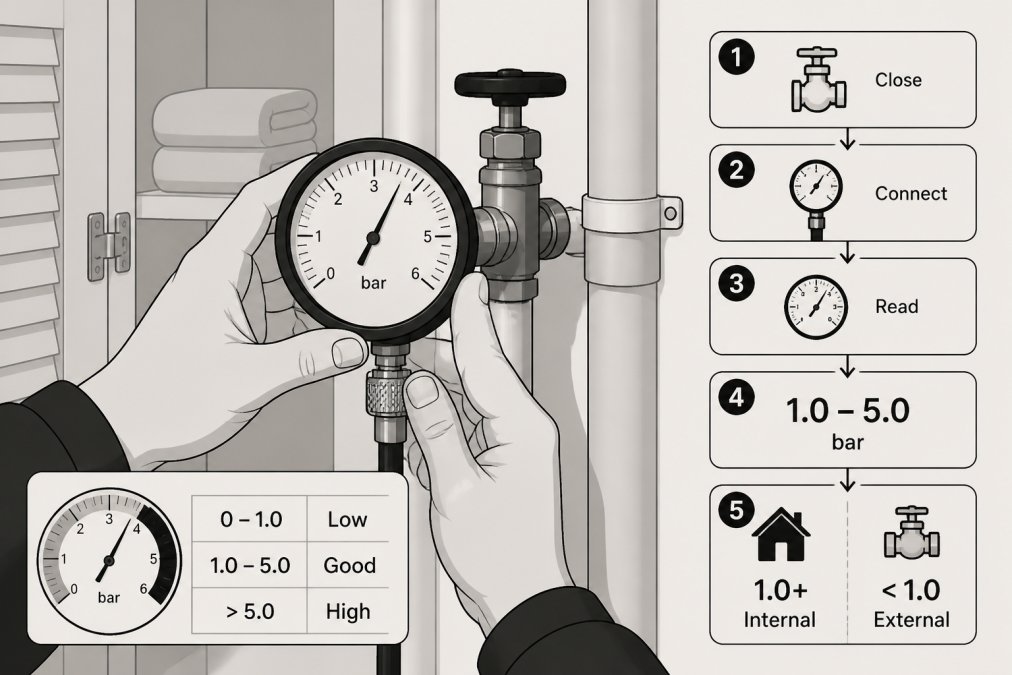
Check for visible leaks under sinks, in the airing cupboard, and around the water heater. Even small leaks indicate internal pipework problems. If you notice water pooling or damp patches, you likely have a leak reducing pressure.
Call your water utility and ask whether they’re aware of mains pressure issues in your area. Provide your postcode. They can confirm whether external supply problems are affecting your neighbourhood.
If pressure improves when you open the stopcock fully, or if your water company confirms mains issues, you’ve identified the source. Internal problems require further investigation or professional diagnosis.
Is Low Water Pressure a Sign of a Leak
Low water pressure can indeed signal a hidden leak, though it’s not the only cause. Understanding the connection helps you decide when to investigate further.
A leak anywhere in your pipework reduces the volume of water reaching your outlets. Water escapes through the breach instead of flowing to your taps and shower. The larger the leak, the more noticeable the pressure drop. A pinhole leak in a pipe behind a wall might reduce pressure slightly; a burst pipe creates dramatic pressure loss.
Hidden leaks are particularly problematic because you can’t see them immediately. Signs include damp patches on walls or ceilings, unusually high water bills, the sound of running water when no taps are open, or soft patches in your garden where the ground is unusually wet. Any of these combined with low pressure suggests a leak.
Not all low pressure indicates a leak, however. Mineral buildup, closed valves, and faulty fixtures cause pressure loss without any water escaping. This distinction matters because leak repairs require different expertise than cleaning or valve adjustment.
If you suspect a leak, monitor your water meter. Turn off all taps and don’t use water for an hour, then check whether the meter has moved. Movement indicates a leak. Contact a plumber immediately, leaks worsen over time and can cause structural damage to your property.
How to Increase Shower Water Pressure
Several straightforward approaches can restore low water pressure in shower systems. Many require only basic tools and minimal cost, whilst others benefit from professional expertise.
Cleaning and unblocking shower heads
Your shower head is the most accessible component to inspect and clean. Mineral deposits clog the small holes that direct water, reducing flow dramatically.
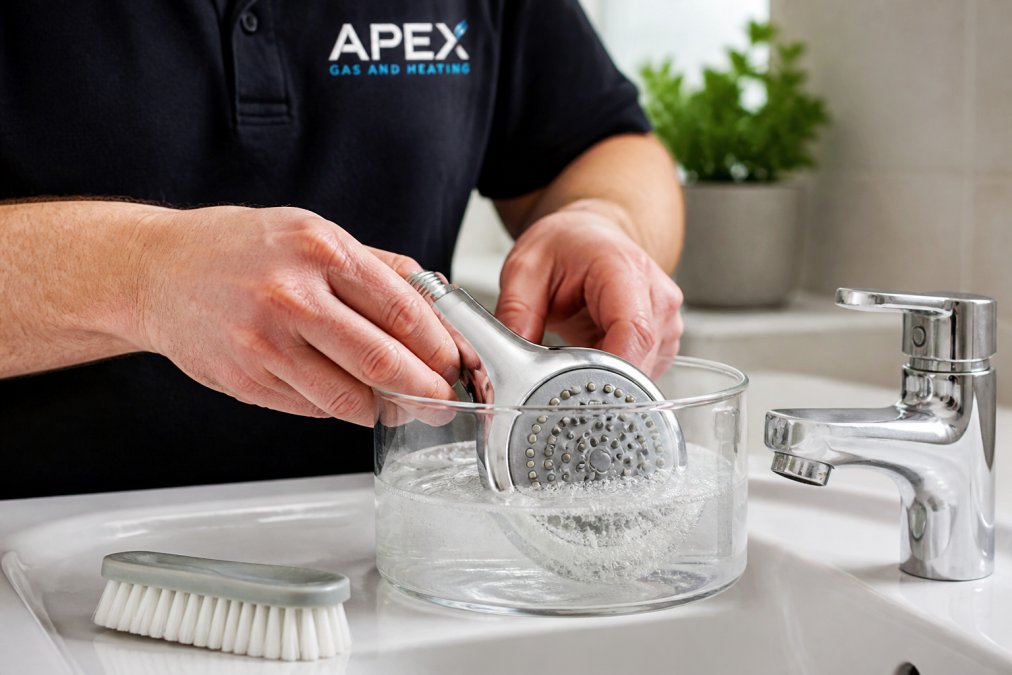
Unscrew the shower head from the hose. Soak it in white vinegar for 30 minutes to dissolve limescale. Use an old toothbrush to scrub the holes gently. Rinse thoroughly under running water. This simple process often restores pressure significantly.
If vinegar doesn’t fully clear the blockage, soak for longer or use a specialist descaling product. For stubborn buildup, use a small needle or paperclip to gently clear individual holes, be careful not to enlarge them.
Some shower heads include a flow restrictor, a small disc designed to reduce water consumption. Removing this component increases pressure, though it increases water usage. Check your shower head’s design before attempting removal.
Checking stopcocks and isolation valves
Verify that your stopcock and any isolation valves are fully open. A stopcock or valve that’s even slightly closed restricts pressure throughout your home or to a specific section.
Locate your stopcock and turn the handle anticlockwise until it stops naturally. Don’t force it, stop when you feel resistance. If it’s stiff from disuse, apply penetrating oil and wait 30 minutes before trying again.
Isolation valves control water to individual rooms or fixtures. Check under sinks and near your water heater. These valves should be fully open (handle aligned with the pipe). If any are partially closed, open them fully.
Addressing limescale and mineral buildup
Hard water deposits accumulate throughout your plumbing system, not just in shower heads. Descaling pipes and fixtures restores flow.
For accessible pipework, wrap affected sections with cloth soaked in vinegar and leave overnight. This softens deposits without damaging pipes. Rinse thoroughly with clean water.
Install a water softener if limescale is persistent. Softeners remove minerals from incoming water, preventing future buildup and protecting your entire plumbing system. This is a more significant investment but eliminates the root cause in hard water areas.
For internal pipe deposits that you can’t access directly, a plumber can flush your system with descaling solution. This process clears blockages throughout your pipework and restores pressure.
When to Call a Plumber for Shower Issues
Some situations require professional expertise. Knowing when to call saves time and prevents damage.
Contact a plumber if low pressure affects your entire home and you’ve confirmed the stopcock is fully open and the water utility has ruled out mains problems. Internal main supply issues or corroded pipes need professional diagnosis and repair.
If you suspect a hidden leak, indicated by damp patches, high water bills, or soft ground, call a plumber immediately. Leaks worsen rapidly and cause structural damage. A plumber can locate hidden leaks using specialist equipment and repair them before they cause expensive damage.
Pressure issues in older properties with galvanized pipes often indicate corrosion. Replacing corroded pipework requires professional work. A plumber can assess whether replacement is necessary or whether cleaning will suffice.
If your shower has low pressure but other outlets don’t, the problem likely lies in the supply line to your bathroom. Tracing and fixing this requires plumbing knowledge. Apex Gas & Heating Ltd offers comprehensive plumbing services across Sussex and Surrey, including pressure diagnostics and repairs with full public liability insurance.
Boiler-related pressure issues, such as low pressure in a combi boiler system, require specialist knowledge. Combi boilers rely on mains pressure to function properly. If your boiler shows low pressure readings, contact a qualified heating engineer.
Maintaining Your Plumbing System
Regular maintenance prevents many pressure problems from developing. Simple habits protect your system and keep water flowing freely.
Clean your shower head monthly if you live in a hard water area. This prevents mineral buildup before it becomes problematic. A five-minute soak in vinegar maintains optimal flow.
Check your stopcock annually to ensure it operates smoothly. Turn it fully open and closed a few times. This prevents it from seizing, ensuring you can shut off water supply quickly in an emergency.
Inspect under sinks and around pipes for early signs of leaks. Catching small leaks before they worsen prevents damage and maintains pressure. Look for water stains, damp patches, or mineral deposits that indicate slow leaks.
Monitor your water bill. A sudden increase often signals a hidden leak. Compare usage between months, winter months typically use less water than summer for most households.
Descale your entire system periodically if you have hard water. Annual descaling prevents buildup throughout your pipes and maintains consistent pressure. Many homeowners combine this with annual boiler servicing to address both heating and water systems together.
Consider installing a water softener if limescale is persistent. Softeners protect your entire plumbing system, extend the life of appliances, and improve water quality. The investment pays dividends through reduced maintenance needs.
Low water pressure in shower issues frustrate countless homeowners, but most are preventable or easily resolved with basic maintenance. If you’ve worked through these diagnostics and your pressure remains low, or if you suspect internal pipework problems, professional help ensures the job is done correctly. Apex Gas & Heating Ltd provides expert plumbing services with transparent pricing and 24/7 emergency call-outs across Sussex and Surrey. Our team can diagnose pressure issues accurately, repair leaks and corroded pipes, and install water softeners if needed. Get a quote today and restore your shower pressure with confidence.
Frequently Asked Questions
Why is my shower water pressure suddenly low?
Sudden pressure loss usually points to a blockage, leak, or closed valve. Check your stopcock and isolation valve are fully open. Limescale buildup in the shower head or pipework can restrict flow significantly. If only your shower is affected, the problem is likely internal; if multiple taps have low pressure, contact your water utility or call a plumber to rule out a mains supply issue or leak in your pipework.
Is low water pressure a sign of a leak in my plumbing?
Low pressure across multiple taps often indicates a leak, especially if your water bill has risen unexpectedly. Check under sinks, around boilers, and in airing cupboards for damp patches or dripping pipes. If you suspect a leak, contact a qualified plumber immediately, early detection saves money and prevents water damage to your property.
How can I increase shower water pressure myself?
Start by cleaning your shower head by unscrewing it and soaking it in white vinegar for an hour to dissolve limescale. Check your stopcock and isolation valve are fully open. If your property has a combi boiler, ensure it's set to the correct pressure (usually between 1 and 1.5 bar). For persistent low pressure, a pressure-reducing valve may be fitted incorrectly, or your gravity-fed system may need a booster pump installed by a professional.
When should I call a plumber for low shower water pressure?
Call a plumber if pressure remains low after cleaning the shower head and checking valves, if the problem affects multiple taps, if you suspect a leak, or if your combi boiler pressure gauge reads below 1 bar. Professional plumbers can diagnose faults in your pipework, test for leaks using specialist equipment, and install booster pumps if needed. A 24/7 emergency service is essential if pressure loss is sudden or widespread.
Leave a Reply