








Table of Contents
- Why Carbon Monoxide Detection Matters in Apartments
- Carbon Monoxide Alarm Placement in Flats
- Plug-in Carbon Monoxide Detectors vs Battery-Powered Models
- Understanding Carbon Monoxide Alarm Lifespan
- Carbon Monoxide Alarms for Landlords
- What to Do When Your Alarm Sounds
- Frequently Asked Questions
Last Updated: October 10, 2026
Why Carbon Monoxide Detection Matters in Apartments
Carbon monoxide is a silent, invisible threat that poses genuine danger to anyone living in a flat. This colourless, odourless gas is produced by faulty boilers, blocked flues, and malfunctioning heating systems, all common problems in residential properties. The reason the best carbon monoxide detectors for apartments are essential is straightforward: they give you early warning before carbon monoxide accumulates to dangerous levels.
At Apex Gas & Heating Ltd, we work with homeowners and landlords across Sussex and Surrey who understand that carbon monoxide safety isn’t optional. When a boiler develops a fault or a flue becomes obstructed, carbon monoxide can seep into living spaces without any obvious sign. A detector catches this threat in minutes, triggering an alarm before harm occurs.
The British Standard BS EN 50291 sets the detection thresholds for carbon monoxide alarms in residential properties. Having the best carbon monoxide detectors for apartments means choosing models that meet this standard and positioning them correctly throughout your home.
Most flats need at least one detector, but larger properties benefit from multiple units placed strategically. The choice between plug-in and battery-powered models depends on your living situation, the layout of your flat, and whether you want permanent monitoring or portable flexibility.
Carbon Monoxide Alarm Placement in Flats
Where you position the best carbon monoxide detectors for apartments matters more than most people realise. A detector in the wrong location won’t protect you effectively, even if it’s a high-quality model.
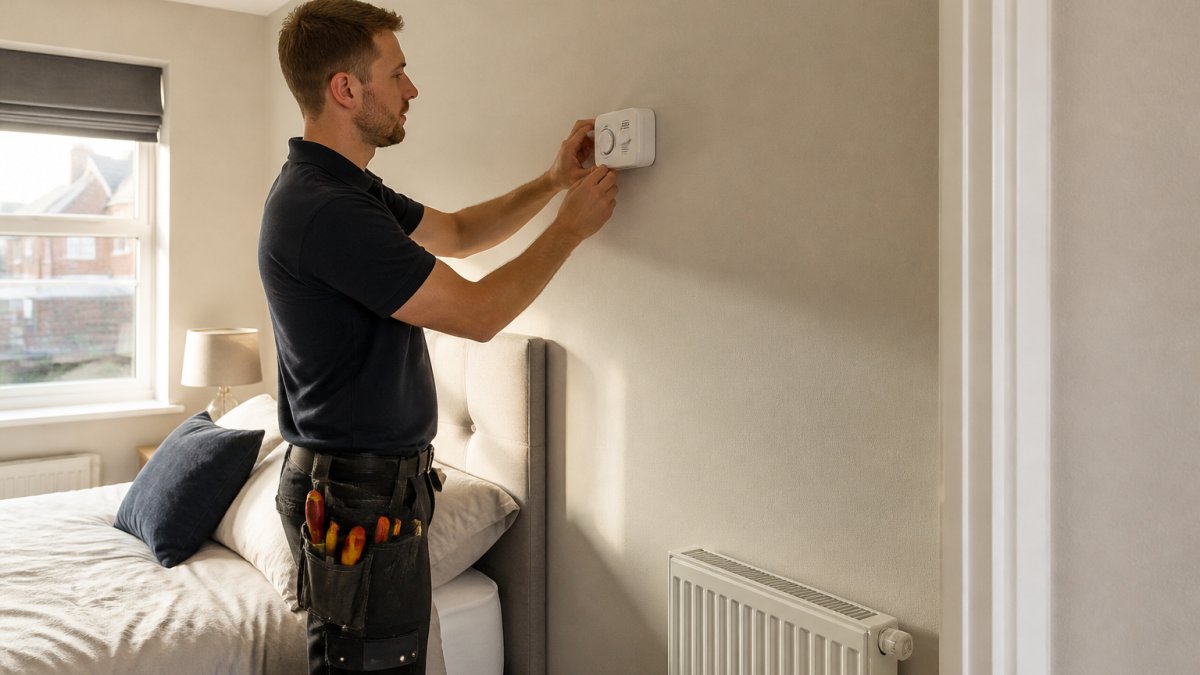
The best location for a carbon monoxide alarm is in the bedroom or sleeping area, mounted on the wall between 1.5 and 2.7 metres high. This placement ensures you’ll hear the alarm during the night, when carbon monoxide exposure is most dangerous because you’re asleep and unable to notice symptoms. Install a second detector in the living room or main occupied space, particularly if your flat has multiple bedrooms.
Avoid placing detectors in kitchens where cooking fumes can trigger false alarms, or in bathrooms where steam and moisture can damage the sensor. Keep detectors away from external walls, windows, and doors where draughts can interfere with carbon monoxide detection. Never place a detector directly above or below a potential source like a boiler or gas fire, the alarm needs to sample air from the breathing zone, not concentrated emissions.
For flats with a boiler in a cupboard or enclosed space, position one detector outside that space rather than inside it. This catches problems before carbon monoxide spreads into living areas. If your flat has multiple heating appliances or a complex layout, a third detector near the kitchen provides additional protection.
Test your detectors monthly by pressing the test button. Most models produce an audible alarm that lasts several seconds, confirming the device is working. Replace batteries annually if you’re using battery-powered units, even if the low-battery warning hasn’t triggered yet.
Plug-in Carbon Monoxide Detectors vs Battery-Powered Models
The choice between plug-in and battery-powered best carbon monoxide detectors for apartments comes down to your priorities and flat layout.
Plug-in detectors offer continuous power and don’t require battery changes. They’re ideal for permanent installation in fixed locations like bedrooms or living rooms. Many plug-in models include a battery backup, so the alarm continues working if the power fails. The downside is that you’re limited to locations near electrical sockets, and you need to ensure the socket isn’t controlled by a light switch that might be turned off.
Battery-powered detectors offer flexibility. You can place them anywhere in your flat without worrying about socket availability. They’re portable, so if you move house or want to relocate the detector, it’s straightforward. The trade-off is that you must remember to replace batteries annually, and some models may not alert you to low battery status until it’s too late.
For most flats, a combination approach works best: a plug-in detector in your bedroom for primary protection, and a battery-powered unit in the living room or second bedroom as backup. This ensures you have continuous monitoring in the most critical sleeping area while maintaining flexibility elsewhere.
When choosing between models, check that whichever type you select meets BS EN 50291. Look for detectors with a visual indicator light that confirms normal operation, and ensure the alarm sound is at least 85 decibels, loud enough to wake you from sleep.
Understanding Carbon Monoxide Alarm Lifespan
Your best carbon monoxide detectors for apartments have a finite lifespan, and replacing them at the right time is crucial for continued protection.
Most carbon monoxide detectors have a finite lifespan before the sensor degrades and becomes unreliable. Check the manufacturer’s label or manual for the specific expiry date of your model. Mark this date on your calendar or set a phone reminder, because an expired detector won’t alert you to danger.
The sensor inside a carbon monoxide alarm gradually loses sensitivity over time. Even if the device still produces a sound when you press the test button, an old sensor may not detect carbon monoxide effectively. This is why age matters as much as functionality.
Keep records of when you installed each detector and when you last replaced batteries. If you’re renting your flat, ask your landlord when the current detectors were installed. If they’re more than 5 years old, request replacements. As a landlord managing properties in Sussex or Surrey, Apex Gas & Heating Ltd can advise on detector replacement schedules as part of your gas safety certification and routine maintenance.
Replace your detector immediately if it stops responding to the test button, produces a chirping sound (which usually indicates low battery), or shows any sign of damage. Don’t attempt to repair a faulty detector, replacement is the only safe option.
Carbon Monoxide Alarms for Landlords
If you’re a landlord, carbon monoxide alarm provision is a legal responsibility, not an optional extra. The Gas Safety (Installation and Use) Regulations require that every rental property must have a carbon monoxide detector fitted in any room used as living accommodation which contains a fixed combustion appliance (excluding a gas cooker).
For most flats, this means at least one detector near the boiler or in the main living area. Larger properties or those with multiple heating appliances may need additional units. You’re responsible for ensuring the detector is in working order and accessible for testing.
Many landlords pair carbon monoxide alarm checks with their annual gas safety certification. When Apex Gas & Heating Ltd carries out a CP12 gas safety check, we can inspect your carbon monoxide detectors, test them, and advise on replacement if needed. This combined approach ensures your property meets all legal requirements and your tenants are protected.
Provide tenants with clear instructions on how to test the detector and what to do if it sounds. Include this information in your tenancy agreement or a welcome pack. If a detector is triggered, tenants should immediately leave the property, call the emergency services, and contact you. Document all detector checks and replacements in your property maintenance records, this protects you if a safety issue ever arises.
For landlords managing multiple properties across Sussex and Surrey, arranging regular servicing and detector checks with a trusted local provider eliminates the administrative burden and ensures consistent compliance across your portfolio.
What to Do When Your Alarm Sounds
A carbon monoxide alarm sounding is not a false alarm to ignore, it’s an emergency signal that requires immediate action.
If your carbon monoxide detector sounds, assume carbon monoxide is present in your flat. Don’t wait to see if the alarm stops or investigate the source yourself. Leave the property immediately, taking everyone with you, and close doors behind you as you exit. Move to fresh air outside and call the emergency services (999).
Once you’re outside, stay there until the emergency services have checked your property and confirmed it’s safe to re-enter. They’ll use professional equipment to measure carbon monoxide levels and identify the source. Common causes include a blocked flue, a cracked heat exchanger in your boiler, or a faulty gas fire.
Never assume the alarm is faulty or that you’re imagining the danger. Carbon monoxide poisoning can cause confusion, dizziness, nausea, and unconsciousness, symptoms that might make you doubt what’s happening. Trust your detector and treat every alarm as a genuine emergency.
After the emergency services have cleared your property, contact a qualified gas engineer to inspect and repair the faulty appliance. Don’t use the heating system again until it’s been professionally checked and certified as safe. If you’re renting, contact your landlord immediately and provide details of the emergency call-out.
If your detector has sounded and you later discover it was a false alarm, still have a qualified engineer inspect your boiler and heating system.
Carbon monoxide safety in your flat depends on having the right detectors in the right locations and maintaining them properly. Early detection gives you the time you need to escape danger and get professional help. If you’re concerned about your boiler or heating system, or if you need advice on carbon monoxide detector placement and maintenance, Apex Gas & Heating Ltd offers comprehensive boiler servicing and gas safety checks across Sussex and Surrey. Our team can inspect your heating appliances, verify your detectors are working correctly, and ensure your property meets all safety standards. Contact us for a quote on our boiler servicing and gas safety certification services.
Frequently Asked Questions
Where should a carbon monoxide alarm be placed in a flat?
Install alarms in bedrooms and main living areas, near potential carbon monoxide sources such as boilers, cookers, and fireplaces. Mount detectors on walls or shelves, avoiding corners where air circulation is poor. Avoid kitchens where cooking fumes can trigger false alarms. For flats with multiple rooms, install at least one alarm per level and one in each bedroom to ensure early warning during sleep.
How long do carbon monoxide detectors last?
Most carbon monoxide alarms have a finite lifespan before requiring replacement. Check the manufacturer’s expiry date and replace the entire unit when it reaches the end of its lifespan, not just the batteries. Many modern detectors have a built-in end-of-life alert that sounds when replacement is due. Replacing alarms on schedule ensures they remain effective and reliable for detecting dangerous carbon monoxide levels.
Are plug-in or battery-powered carbon monoxide alarms better for apartments?
Plug-in detectors offer continuous power and no battery maintenance, making them ideal for permanent installation in living spaces. Battery-powered models provide flexibility for renters or temporary placement. For apartments, plug-in detectors in main areas combined with battery-powered units in bedrooms offer the best coverage. Ensure plug-in models have battery backup for power cuts, and test all alarms monthly regardless of type.
Do landlords have a legal responsibility for carbon monoxide alarms in rental flats?
Yes. Landlords must ensure gas appliances are safe and maintained annually, and are legally required to install carbon monoxide alarms in properties with fixed combustion appliances. A professional gas safety inspection (CP12 certificate) ensures gas appliances are safe. Landlords should install carbon monoxide alarms in properties with gas boilers or appliances and ensure tenants understand how to use them. Regular servicing by qualified engineers helps identify hazards before they become dangerous.