








Table of Contents
- What Smart Home Plumbing Monitoring Systems Do
- Quick Comparison Table
- How We Evaluated These Systems
- Smart Water Leak Detector Options
- Automatic Water Shut-Off Valve Systems
- Smart Water Usage Monitor Features
- Which System Should You Choose?
- Frequently Asked Questions
Last Updated: 10 October 2026
What Smart Home Plumbing Monitoring Systems Do
Smart home plumbing monitoring systems are devices designed to detect water leaks, monitor water usage, and in some cases, automatically shut off your water supply when problems are detected. These systems give homeowners and landlords real-time visibility into what’s happening inside their pipes, often through a smartphone app or web dashboard.
The core value is simple: catch leaks early before they cause thousands of pounds in damage. A small leak behind a wall can go unnoticed for weeks, causing structural damage, mould, and costly repairs. Smart monitoring systems alert you the moment water is where it shouldn’t be, or when usage spikes unexpectedly.
At Apex Gas & Heating Ltd, we understand how critical it is to protect your home from water damage. Our team has helped homeowners and landlords across Sussex and Surrey address plumbing emergencies before they escalate.
There are two main categories: whole-home systems that monitor your entire water supply, and point-of-leak detectors that sit in vulnerable areas like under sinks or near water heaters. Some systems include automatic shut-off valves that cut water flow instantly when a leak is detected. Others simply alert you so you can respond manually.
Quick Comparison Table
| System Type | Best For | Key Feature | Typical Use Case |
|---|---|---|---|
| Whole-Home Water Leak Detection | Comprehensive protection | Monitors entire water supply | Prevent major water damage across property |
| Point-of-Leak Detectors | Targeted protection | Alerts for specific areas | Protect high-risk zones like bathrooms, kitchens |
| Automatic Shut-Off Valves | Emergency response | Cuts water supply automatically | Stop flooding before damage spreads |
| Smart Water Usage Monitors | Conservation & detection | Tracks consumption patterns | Identify hidden leaks through usage spikes |
How We Evaluated These Systems
We assessed smart home plumbing monitoring systems based on several practical criteria. Installation complexity matters; a system requiring professional setup costs more upfront and takes longer to deploy. Reliability is non-negotiable; false alarms waste time, while missed leaks defeat the purpose entirely.
We looked at how each system alerts you and whether the app interface is actually usable on a daily basis. Some platforms send notifications to your phone within seconds; others have clunky interfaces that make it hard to understand what’s happening. We also considered whether you need a hub, how many sensors come included, and whether you can expand the system later as your needs change.
Compatibility with existing smart home ecosystems matters too. If you already use Apple Home, Google Home, or Alexa, a system that integrates seamlessly saves frustration. Finally, we weighed the total cost, not just the hardware price, but any subscription fees for monitoring or cloud storage.
Smart Water Leak Detector Options
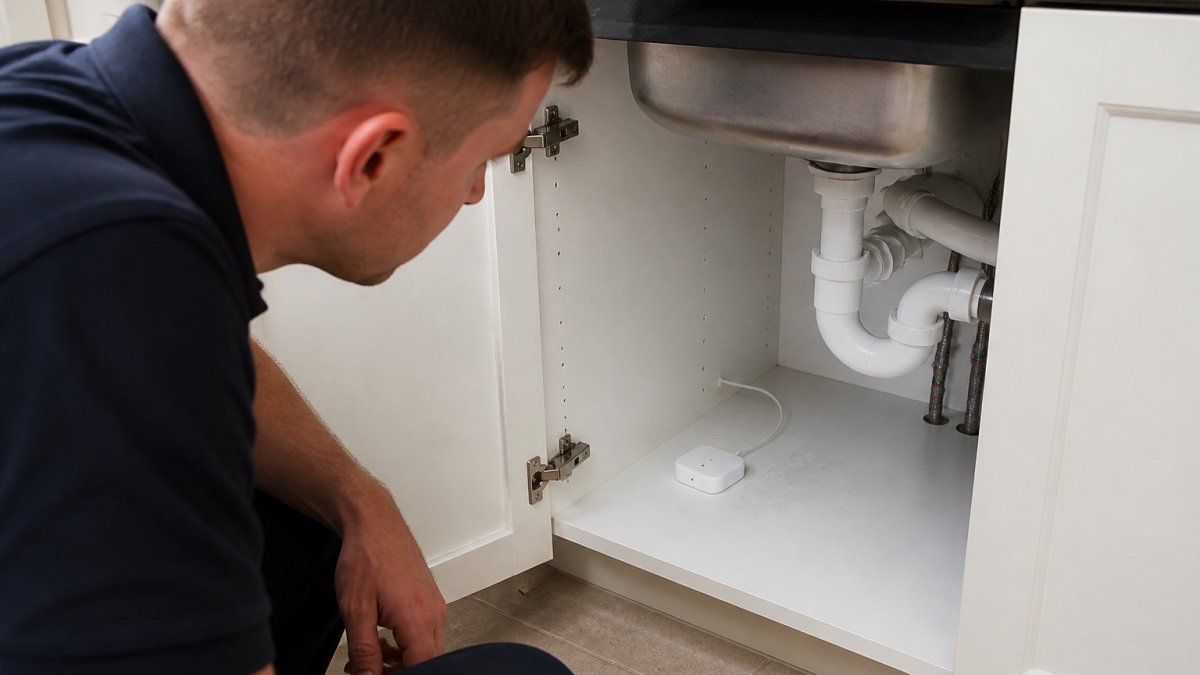
A smart water leak detector is a sensor that sits in vulnerable areas and sends an alert the moment it detects moisture. These are point-of-leak solutions, meaning they protect specific locations rather than your entire water supply. They’re affordable, easy to install, and require no plumbing work.
Whole-Home Water Leak Detection Systems
Whole-home water leak detection systems monitor your main water supply line, giving you visibility into the entire plumbing network. These systems use pressure sensors or flow monitoring to detect leaks anywhere in your home, even inside walls where you can’t see them.
Whole-home systems require installation at your main water shut-off point. If you’re not comfortable with plumbing work, budget for a professional installer. The upfront cost is higher, but the protection covers your entire property, not just individual areas.
Point-of-Leak Detectors
Point-of-leak detectors are standalone sensors you place under sinks, near water heaters, around washing machines, or anywhere water damage is a risk. They’re wireless, battery-powered, and don’t require any installation beyond placing them in the right spot.
Point-of-leak detectors only protect the areas where you place them. A sensor under your kitchen sink won’t detect a leak in your upstairs bathroom or inside a wall. Consider placing multiple sensors in high-risk areas for comprehensive coverage.
Automatic Water Shut-Off Valve Systems
Automatic water shut-off valves are the most aggressive form of protection. When a leak is detected, these systems physically close a valve to stop water flow, preventing flooding before it starts. They’re installed at your main water supply line and work in tandem with leak detection sensors.
The advantage is clear: you can be away from home when a leak starts, and the system stops water flow automatically without waiting for you to respond. The downside is that if the system malfunctions or triggers a false alarm, you’ll have no water until you manually reopen the valve. Most systems include a manual override for this reason.
Smart Water Usage Monitor Features
Smart water usage monitors track how much water your household consumes, breaking it down by time of day, by fixture, or by appliance. This data helps you spot leaks that might not trigger traditional alerts, like a slow drip that wastes water but doesn’t create visible damage.
Usage monitoring is particularly valuable for landlords managing multiple properties. Instead of waiting for tenants to report problems, you can monitor water consumption remotely and spot issues early. It’s also useful for homeowners who want to reduce their water bills and environmental impact.
Smart water usage monitors work best when combined with leak detection. Usage spikes often reveal leaks before physical sensors detect them, giving you a two-layer protection strategy.
Which System Should You Choose?
Protecting your home from water damage is one of the smartest investments you can make. If you’re concerned about plumbing vulnerabilities or want expert advice on the best approach for your property, the team at Apex Gas & Heating Ltd can help. We provide comprehensive plumbing services across Sussex and Surrey, including leak detection and emergency repairs. Our 24/7 call-out service means you’re never left without support when problems arise. Get a quote from Apex Gas & Heating Ltd today and let our approved installers help you protect your home.
Frequently Asked Questions
How do smart water leak detectors actually work?
Smart water leak detectors use sensors to identify moisture. Point detectors sit on floors or under pipes and sound an alert when they sense water. Whole-home systems monitor water pressure and flow rates across your entire property, detecting even small leaks that develop slowly. Many connect via Wi-Fi to send mobile alerts, so you know about problems immediately, whether you’re at home or away.
What’s the difference between a smart water leak detector and a whole-home water leak detection system?
A smart water leak detector is typically a single sensor you place in high-risk areas like under sinks or near water heaters. A whole-home water leak detection system monitors your entire plumbing network, tracking pressure and usage across all pipes. Whole-home systems offer broader protection and can detect slow leaks you’d miss with point detectors alone, making them better for preventing major water damage.
Can a smart water usage monitor automatically shut off the water supply?
Some advanced systems include an automatic water shut-off valve that closes the supply when a leak is detected. Not all smart water usage monitors have this feature, so check the specifications. Systems with automatic shut-off provide the best protection because they stop water damage before it starts, whereas monitors without shut-off only alert you to problems you then need to address manually.
Where should I place smart leak sensors in my home?
Install sensors in areas most likely to leak: under kitchen and bathroom sinks, near water heaters, around washing machines, in basements, and by external walls where pipes might freeze. Place them on the floor where water would naturally pool. For whole-home systems, the main shut-off valve is the typical installation point. Multiple point detectors give better coverage than relying on a single sensor.