









Table of Contents
- Is a Landlord Gas Safety Certificate Worth It?
- Landlord Gas Safety Certificate Requirements
- How Often Must You Arrange a Landlord Gas Safety Check?
- What Does a Landlord Gas Safety Check Include?
- Gas Safety Records for Tenants: Your Legal Obligation
- Risks of Skipping the Gas Safety Certificate
- Frequently Asked Questions
Last Updated: October 8, 2026
Is a Landlord Gas Safety Certificate Worth It?
A landlord gas safety certificate is not optional, it’s a legal requirement in the UK. If you rent out a property, you must have a valid gas safety certificate before tenants move in and every 12 months after that. The question isn’t whether it’s worth it. The question is what happens if you skip it.
At Apex Gas & Heating Ltd, we help landlords across Sussex and Surrey understand their obligations. The certificate proves your gas appliances are safe. It protects your tenants. It protects you from fines, prosecution, and liability claims. Getting one is straightforward. Not getting one can cost you thousands.
Here’s what you need to know.
Landlord Gas Safety Certificate Requirements
Your legal obligation is clear. Every gas appliance in a rental property must be checked by a Gas Safe registered engineer. This includes boilers, cookers, fires, heaters, and pipework. The engineer issues a landlord gas safety certificate, officially called a CP12, if everything passes inspection.
You must obtain this certificate before tenants occupy the property. You must renew it every 12 months. You must keep records for at least two years. You must give a copy to your tenants within 30 days of the check.
Failure to comply carries serious consequences:
- Fixed penalty notice
- Prosecution: unlimited fines and up to six months in prison
- Tenant claims: compensation for breach of statutory duty
- Invalidated insurance: your landlord insurance may not cover incidents involving unserviced gas appliances
The regulation is set out in the Gas Safety (Installation and Use) Regulations 1998. It applies to all rental properties in England, Scotland, Wales, and Northern Ireland. There are no exemptions for small rentals, furnished lets, or short-term lets. The law treats every property the same.
Skipping the certificate to save money almost always costs more. A single incident, a gas leak, carbon monoxide poisoning, or a fire, can result in claims worth tens of thousands of pounds, plus criminal liability. The certificate costs far less than the risk.
How Often Must You Arrange a Landlord Gas Safety Check?
You must arrange a gas safety check every 12 months. Not every 18 months. Not every two years. Every year, without fail.
The 12-month cycle starts from the date of the previous check. If your last certificate was issued on 15 March 2025, your next check must be completed by 15 March 2026. If you miss the deadline, you are in breach of the law immediately.
Timing matters because:
- Tenants need the certificate within 30 days of the check
- You need time to fix any defects before the deadline passes
- Booking engineers in peak seasons (winter) can take weeks
Many landlords book their check in the month before the anniversary. This builds in a safety buffer. If the engineer finds a fault, you have time to arrange repairs and a follow-up inspection before the 12-month period expires.
Set a calendar reminder three months before your certificate expires. Contact your engineer in advance, don’t wait until the last week. Winter is busy, and you may not get an appointment in time.
If you own multiple properties, keep a spreadsheet with each property’s expiry date. Losing track of even one property can mean an unplanned breach.
What Does a Landlord Gas Safety Check Include?
A landlord gas safety check is a thorough inspection of every gas appliance and the pipework that connects them. The engineer uses specialist equipment to test for leaks, faults, and safety hazards. Here’s what they examine:
Boilers and heating systems:
- Visual condition and age
- Combustion performance
- Flue integrity
- Safety controls
- Gas supply pressure
Gas cookers:
- Burner operation
- Ignition systems
- Grilling function
- Gas supply connection
Other gas appliances:
- Gas fires
- Heaters
- Water heaters
- Any other gas-powered equipment
Pipework and fittings:
- Visible pipework for corrosion or damage
- Connections for leaks
- Ventilation to the outside
Carbon monoxide detection:
- The engineer checks that the property allows carbon monoxide to escape safely
- They do not install detectors (that’s your responsibility as a landlord)
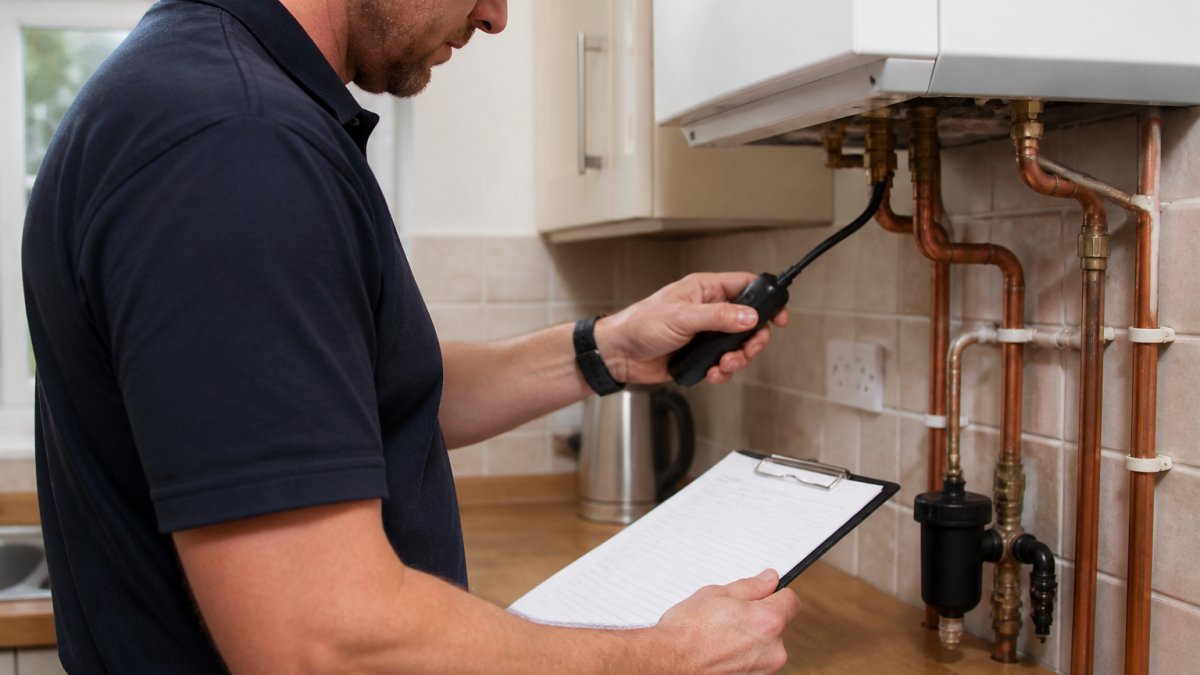
The check typically takes 30-60 minutes, depending on the number of appliances. If the engineer finds a fault, they mark it on the certificate as “Not to Current Standards” or “Immediately Dangerous.” You must not allow tenants to use that appliance until it’s repaired and re-tested. If your boiler needs attention, boiler repair or boiler servicing can be arranged promptly to bring it back into compliance.
If everything passes, the engineer issues a CP12 certificate valid for 12 months. This is the document you must give to your tenants and keep on file.
The check is not a repair service. The engineer inspects and certifies safety, they don’t fix faults unless you ask them to. Budget separately for any repairs they identify.
Gas Safety Records for Tenants: Your Legal Obligation
Once you have a landlord gas safety certificate, you must share it with your tenants. This is not optional. The law requires you to give a copy within 30 days of the check.
You must also:
- Keep a copy on file for at least two years
- Provide a copy to any new tenant before they move in
- Display the certificate in a prominent place, or provide it in writing
Many landlords email a PDF copy to tenants. Others print it and post it to the property. Either method is acceptable as long as the tenant receives it within the deadline.
If you use a letting agent, they often handle this on your behalf. But you remain legally responsible. If a tenant never receives the certificate and a gas incident occurs, you cannot claim the agent’s failure as a defence.
Tenants have a right to see this record. If they ask for it and you cannot provide it, they can lodge a complaint with the local authority. The council can issue a compliance notice forcing you to arrange an inspection. If you still don’t comply, they can prosecute.
Risks of Skipping the Gas Safety Certificate
The cost of not having a valid landlord gas safety certificate far exceeds the cost of getting one. Here are the real risks:
Legal liability:
If a tenant is injured or dies in a gas-related incident and you have no valid certificate, you face criminal prosecution. The Sentencing Council guidelines allow for custodial sentences in cases of gross negligence manslaughter.
Financial penalties:
A local authority can issue a fixed penalty notice per property. If prosecuted in court, fines are unlimited. You may also face compensation claims from tenants for breach of statutory duty.
Invalidated insurance:
Most landlord insurance policies require a valid gas safety certificate. If you make a claim and the certificate is out of date or missing, the insurer can refuse to pay. A fire or carbon monoxide incident could leave you uninsured.
Tenant disputes:
Tenants can withhold rent if the property is unsafe or in breach of statutory requirements. They can also apply to a tribunal for compensation. Once a dispute starts, it’s costly and time-consuming to resolve.
Difficulty selling or remortgaging:
Lenders and buyers will ask for proof of compliance. Without a valid certificate, you may not be able to sell the property or refinance your mortgage.
Reputational damage:
If your property is involved in a gas incident and you have no certificate, local media will report it. Your reputation as a landlord suffers, and future tenants may avoid your properties.
The cost of a gas safety check is available on our website. The cost of not having one is potentially catastrophic.
Carbon monoxide is odourless and colourless. A tenant could be poisoned without knowing it. A valid gas safety certificate and regular maintenance are your only defence against this silent hazard. Skipping the check puts lives at risk and exposes you to criminal liability.
Getting a landlord gas safety certificate is not a burden, it’s the foundation of safe, compliant lettings. At Apex Gas & Heating Ltd, we arrange Gas Safety & CP12 checks for landlords across Sussex and Surrey. We work with you to schedule inspections at convenient times, identify any faults early, and provide the documentation you need to stay compliant. Our Gas Safe registered engineers complete the check thoroughly and issue your certificate on the day. If repairs are needed, we can handle those too. Get a Quote today and protect your property, your tenants, and your peace of mind.
Frequently Asked Questions
Do landlords need a gas safety certificate for a small rental?
Yes. Under the Gas Safety (Installation and Use) Regulations 1998, every landlord must obtain a landlord gas safety certificate for any rental property with gas appliances. This applies regardless of property size. The certificate, formally called a CP12, must be issued by a Gas Safe registered engineer and covers all gas appliances, pipework, and flues in the property.
How often must a landlord arrange a gas safety check?
You must arrange a gas safety check at least once every 12 months. The check must be completed before the previous certificate expires. If you fail to renew it on time, you’re in breach of regulations and could face enforcement action, fines, or prosecution. For small rentals with regular occupancy, annual checks are the standard requirement.
What must be included in a landlord gas safety check?
A CP12 inspection covers all gas appliances (boilers, cookers, fires, heaters), gas pipework, flues, and ventilation. The engineer tests for safety, checks for leaks, and verifies that appliances are safe to use. The certificate confirms whether each appliance is safe or unsafe. If any appliance is unsafe, it must be repaired or removed before the property can be legally let.
What happens if I don’t have a valid gas safety certificate?
Letting a property without a current landlord gas safety certificate is illegal. You face fines per breach, potential prosecution, and civil liability if a tenant is harmed due to unsafe gas appliances. Tenants can also withhold rent or claim compensation. For small rentals, the cost and effort of an annual check is far outweighed by legal protection and tenant safety.