







Table of Contents
- Act Immediately When a Pipe Bursts
- How to Find the Main Stopcock
- Turning Off the Main Water Supply
- How to Drain Down a Plumbing System
- Protecting Your Home After Shutting Off Water
- When to Call an Emergency Plumber
- Conclusion
Last Updated: August 21, 2026
Act Immediately When a Pipe Bursts
A burst pipe is one of the most urgent plumbing emergencies you’ll face as a homeowner (the CDC). Water floods into your property at alarming speed, causing structural damage, mould growth, and electrical hazards within hours (hse.gov.uk). The key to minimising damage is knowing how to shut off water during a pipe burst before calling an emergency plumber.
Your first action must be to locate and turn off the main water supply. This single step stops the flow of water and prevents further damage to your home. Every second counts in this situation, the faster you act, the less water escapes into your walls, floors, and foundations.
At Apex Gas & Heating Ltd, we’ve responded to countless burst pipe emergencies across Sussex and Surrey. What we’ve learned is that homeowners who know where their stopcock is and how to operate it recover far more quickly than those who don’t. This guide walks you through the exact steps to take when a pipe bursts, from finding your main stopcock to protecting your property while you wait for professional help.
How to Find the Main Stopcock
The main stopcock (also called the main water shut-off valve) is the control point for your entire water supply. Finding it quickly during an emergency can mean the difference between a contained incident and catastrophic water damage.
Common stopcock locations
Most stopcocks are located inside your property, usually in one of these places:
- Under the kitchen sink, the most common location in modern homes
- In a cupboard near the front door, often in the hallway or under the stairs
- In the bathroom, sometimes under the sink or behind the toilet
- In the basement or cellar, if your property has one
- Outside the property, in a small pit or chamber in your front garden or driveway, marked with a cover
If you haven’t located your stopcock before an emergency, check these areas methodically. Look for a small brass or plastic tap, usually with a handle or oval knob. In older properties, you might find a gate valve (a larger, square-topped valve) instead of a modern quarter-turn stopcock.
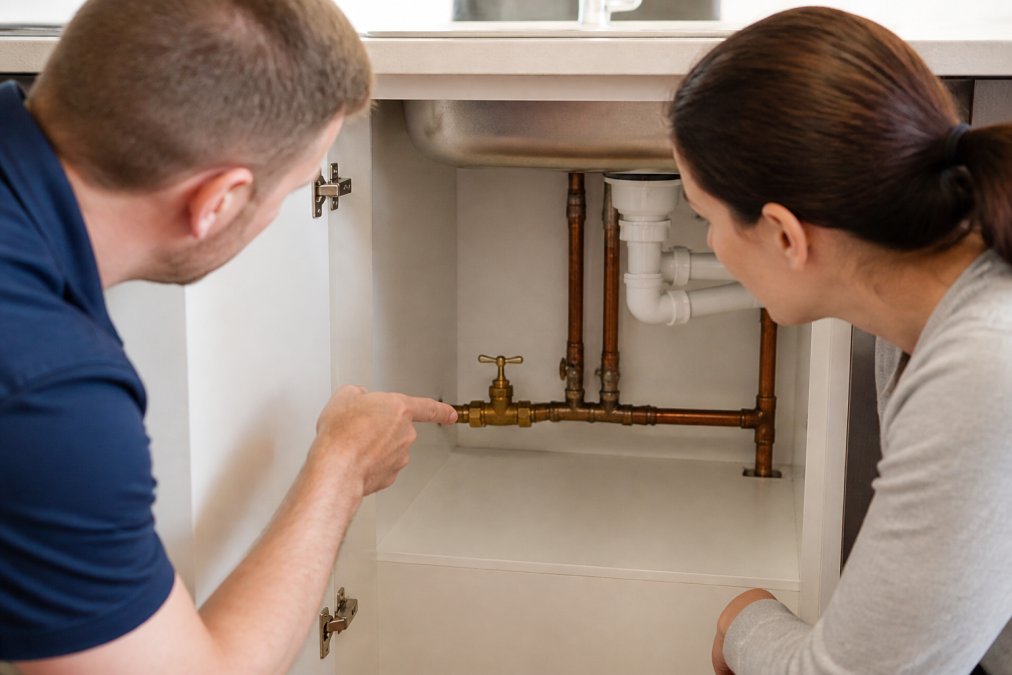
Once you’ve found it, mark its location clearly or take a photo on your phone. During an emergency, you won’t have time to search. If you can’t locate your stopcock before a burst occurs, contact your water supplier, they can tell you exactly where it is, and some will send someone to help you access it.
Identifying different valve types
Not all stopcocks look the same, and understanding what you’re looking at prevents costly mistakes during an emergency.
Quarter-turn ball valves are the modern standard. They have a small handle or lever perpendicular to the pipe. These are quick to operate, a 90-degree turn shuts off the water completely. You’ll feel a definite resistance when the valve is fully closed.
Gate valves are older and larger, with a square or rectangular knob on top. These require multiple full rotations (usually 4-6 turns) to close completely. They’re slower to shut off but equally effective once fully closed.
Screw-down stopcocks have a round handle that you turn clockwise to close. These are less common in modern homes but still found in older properties. They require continuous turning until you feel resistance.
Whichever type you have, never force it. If a valve feels stuck or seized, stop immediately and call an emergency plumber. Forcing a stuck valve can break the handle or damage the valve mechanism, making the situation worse.
Turning Off the Main Water Supply
Once you’ve located your stopcock, the actual process of shutting off the water is straightforward, but precision matters.
Quarter-turn valves versus gate valves
For quarter-turn ball valves: Turn the handle a quarter-turn (90 degrees) so it sits perpendicular to the pipe. The handle should move from parallel (open) to perpendicular (closed). You’ll feel a slight resistance as you reach the closed position. Don’t over-tighten, a quarter-turn is all that’s needed.
For gate valves: Turn the handle clockwise slowly and steadily. Count the rotations as you go, typically 4-6 full turns will close the valve completely. Stop when you feel resistance; don’t force it past that point. Forcing a gate valve can damage the internal gate mechanism.
For screw-down stopcocks: Turn the handle clockwise until you feel firm resistance. This indicates the valve is fully closed. Again, don’t force it.
The direction matters: clockwise always closes, counter-clockwise opens. If you’re unsure, turn the handle slowly in one direction while watching the water flow from a nearby tap. When the water stops, you’ve closed it correctly.
What to do if the stopcock is stuck
A seized stopcock is a common problem in older homes, especially if the valve hasn’t been used in years. Mineral deposits and corrosion lock the mechanism in place.
If your stopcock won’t turn, stop immediately. Forcing it risks breaking the handle or the valve body itself, which could make the emergency worse.
Try these steps before giving up:
- Apply penetrating oil, spray WD-40 or a similar penetrating lubricant around the valve handle and let it sit for 10-15 minutes. This can help loosen mineral deposits.
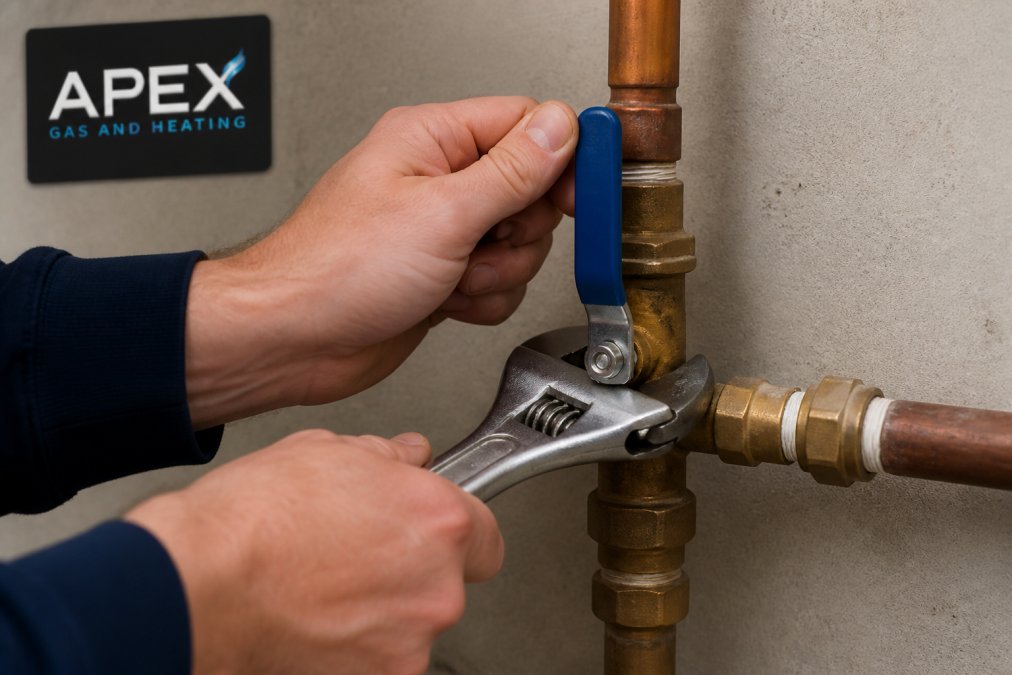
- Use a wrench or adjustable spanner, grip the handle firmly with a wrench to increase leverage. Turn slowly and steadily, not with sudden jerks.
- Tap gently with a hammer, sometimes a light tap on the valve body (not the handle) can dislodge corrosion. Tap gently, then try turning again.
- Apply heat, in cold weather, a burst pipe might be frozen. Warm water (not boiling) poured carefully around the stopcock can help it move.
If none of these work, call an emergency plumber immediately. They have specialist tools to open stuck valves without damage. In the meantime, if water is still flowing, try to contain it by placing buckets or towels under the burst and turning off individual taps in affected areas.
How to Drain Down a Plumbing System
Shutting off the main stopcock stops new water entering your system, but your pipes still contain water under pressure. This water will continue to leak from the burst until you release the pressure and drain the system.
Opening taps throughout your home allows air into the pipes and lets remaining water drain out. Start with the lowest tap in your property (usually the kitchen sink or an external tap) and work upwards.
Step-by-step drainage:
- Open the lowest tap fully and let water run until it stops
- Move to the next highest tap and open it completely
- Continue working upwards through your home, bathroom taps, shower, upstairs taps
- Leave all taps open for at least 5-10 minutes to ensure the system is fully drained
- If you have a boiler or heating system, turn it off before draining (see below)
This process relieves the water pressure throughout your plumbing system and prevents further water loss from the burst.
Opening taps to relieve water pressure
Water pressure in a plumbing system can be 40-60 psi (pounds per square inch) when the main stopcock is closed (fema.gov). This pressure forces water out of any break or weak point in your pipes.
Opening taps breaks this pressure seal. As you open each tap, you’ll hear air rushing in and water draining out. This is exactly what you want, the air replaces the water and stops the pressure building up again.
Start with taps nearest to the burst if you know where it is. This drains water from that section first, reducing the flow from the damaged pipe. Then work systematically through the rest of the house.
Don’t close the taps again until you’ve had the burst repaired. Leaving them open prevents pressure from building if any water somehow enters the system before the repair is complete.
Protecting Your Home After Shutting Off Water
Once the water is off and the system is drained, your immediate emergency is contained. But water damage continues even after the flow stops. Quick action in the first few hours prevents mould, structural damage, and costly repairs.
Immediate steps:
- Remove standing water, use towels, mops, or a wet vacuum to remove water from floors and carpets. The faster you dry the area, the less damage occurs.
- Increase ventilation, open windows and doors to dry out the affected area. Turn on any available fans or dehumidifiers.
- Move furniture and belongings, lift items away from wet areas to prevent water absorption and staining.
- Document the damage, take photos and videos of all affected areas for insurance purposes.
- Contact your insurance company, report the burst immediately. Most policies cover burst pipe damage, but you need to report it promptly.
- Turn off your boiler, if the burst is near your heating system or boiler, turn it off to prevent damage to the appliance.
If water has entered electrical circuits or appliances, don’t touch them. Turn off the electricity at the consumer unit (fuse box) if water is near any electrical installations, and call a qualified electrician.
When to Call an Emergency Plumber
Knowing when to call a professional is as important as knowing how to shut off the water yourself. Some bursts you can manage temporarily; others require immediate professional intervention.
Call an emergency plumber immediately if:
- You cannot locate or access your main stopcock
- Your stopcock is stuck or broken and won’t turn off
- The burst is in an inaccessible location (inside walls, under floors, in the roof)
- Multiple pipes have burst or you have widespread water damage
- The burst is near your boiler, heating system, or electrical installations
- Water is entering your electrics or you smell gas
- You have a burst in an external pipe or water meter
You can wait a few hours if:
- The burst is in a visible, accessible location (under a sink, for example)
- You’ve successfully shut off the water and drained the system
- The damage is contained to one room
- You’ve documented everything for insurance
Apex Gas & Heating Ltd operates a 24/7 emergency call-out service for burst pipes and other plumbing services across Sussex and Surrey, including areas like Crawley. Our team can locate and repair the burst, and advise on water damage mitigation. If you’re dealing with a burst near your boiler or heating system, we can assess whether your appliance has been damaged and arrange boiler repair or replacement if needed.
Don’t delay calling if you’re unsure. The cost of an emergency call-out is far less than the cost of water damage spreading through your property over several hours.
Conclusion
A burst pipe demands immediate action, but you’re not helpless. Finding your main stopcock, turning it off, and draining your plumbing system are skills any homeowner can master in minutes. These steps stop the emergency and give you time to call professional help.
The difference between a contained incident and a disaster is how quickly you act. Knowing where your stopcock is before an emergency happens means you can shut off the water in seconds, not minutes. Practise locating it now, while there’s no pressure. Take a photo. Tell your family where it is.
When a burst does occur, and for many homeowners, it will, you’ll be ready. Shut off the water, drain the system, protect what you can, and call Apex Gas & Heating Ltd. Our emergency plumbers are available 24/7 to repair the burst, assess any damage to your boiler or heating system, and get your home back to normal.
Frequently Asked Questions
Q: Where is the main stopcock usually located in a home?
A: The main stopcock is typically found under the kitchen sink, in the bathroom, or in a cupboard near the external water meter. Some properties have it in the garage, utility room, or outside in a pit beneath a metal cover. Check your water meter documentation or contact your water supplier if you cannot locate it. Knowing this location before an emergency means you can act fast when a pipe bursts.
Q: How do I turn off the water supply if the stopcock is stuck?
A: If the stopcock won't turn, do not force it as you may damage the valve. Wrap a cloth around it for better grip, then apply gentle, steady pressure. For a severely seized valve, use a pipe wrench or adjustable spanner to increase leverage. If it remains stuck, locate your water meter's service valve as a backup shut-off point. Call an emergency plumber immediately if neither option works, as you need the water off quickly during a burst pipe emergency.
Q: What should I do immediately after a pipe bursts?
A: First, shut off the water at the main stopcock by turning it clockwise until it stops. Then open all taps to drain remaining water from the system and relieve pressure. Turn off your boiler and heating system to prevent damage. Move furniture and belongings away from the burst area, and place towels or buckets under the leak. Contact an emergency plumber straight away. Document the damage with photos for your insurance claim.
Q: Should I turn off the electricity if a pipe bursts?
A: If water is near electrical sockets, switches, or appliances, turn off the electricity at the consumer unit as a precaution. Do not touch electrical equipment if it is wet. If water has entered the boiler or heating system, switch off power to those units immediately. Once you have shut off the water at the main stopcock and drained the system, the electrical risk reduces, but always prioritise safety and contact a qualified engineer if you are unsure.
If you’re facing a burst pipe right now or need professional plumbing assistance, Apex Gas & Heating Ltd provides rapid emergency response across Sussex and Surrey. Our qualified plumbers can locate and repair burst pipes, assess damage to your heating system, and provide transparent advice on what comes next. Get a Quote or call our 24/7 emergency line to speak with a plumber today.
Leave a Reply