







Table of Contents
- Immediate Safety Steps During a Boiler Breakdown
- Check Your Boiler Troubleshooting Checklist
- How to Repressurise a Boiler
- When to Call a Gas Safe Registered Engineer
- Staying Warm While Your Boiler Is Down
- Emergency Repair vs. Replacement: What You Need to Know
- Your Rights as a Tenant or Homeowner
- Conclusion
Last Updated: August 18, 2026
Immediate Safety Steps During a Boiler Breakdown
When your boiler stops working, stay calm and follow a clear sequence of safety checks before anything else.
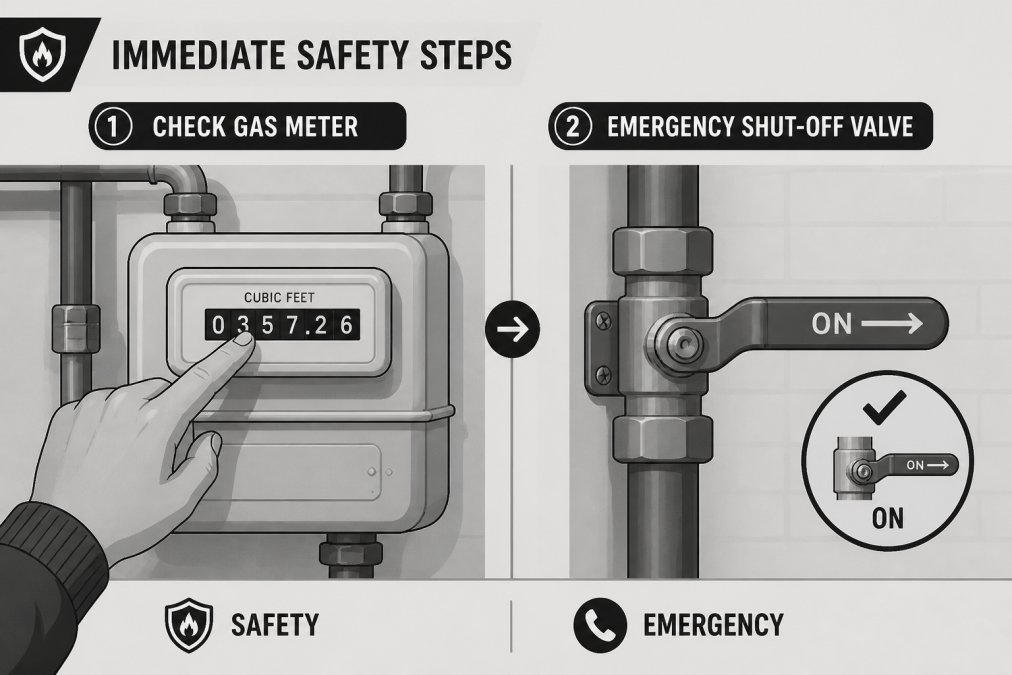
Start by checking for gas leaks. If you smell gas (a distinctive rotten-egg odour), do not attempt repairs yourself. Open windows and doors immediately, leave the property, and call your gas supplier’s emergency number from outside.
Next, locate your emergency shut-off valve, typically found near your boiler or where gas enters your property. If you suspect a leak, turn this valve clockwise to stop the gas supply.
Check your boiler’s pressure gauge. Normal pressure is typically between 1 and 2 bar. If the needle has dropped to zero, your system may have lost pressure, one of the most common reasons for a boiler breakdown.
Ensure the area around your boiler is clear and well-ventilated. Boilers need adequate airflow to operate safely. If your boiler is in a cupboard, check that vents are not blocked.
Do not attempt to disassemble or repair your boiler yourself. Modern boilers contain complex components and working on them without proper training can be dangerous and may invalidate your warranty. Gather information instead: note any error codes on the control panel, check whether the pilot light is lit, and record when the problem started.
Check Your Boiler Troubleshooting Checklist
Before assuming you need an emergency repair, work through this systematic checklist. Many boiler breakdown situations resolve with simple checks that take minutes.
Check the thermostat and control panel
Confirm your thermostat is set to the desired temperature and heating mode is switched on. If your thermostat has a battery, check it’s not dead and replace if needed.
Look at your boiler’s control panel. Most modern boilers display error codes when something is wrong. Write down any code you see, it’s a diagnostic tool engineers use to identify the exact problem. Your boiler’s manual or the manufacturer’s website can help you decode these.
Check that the boiler’s power switch is turned on. The switch is usually a simple on/off button near the base of the unit. If it’s off, turn it on and wait 30 seconds for the boiler to initialise.
Inspect the pilot light
The pilot light is a small flame inside your boiler that ignites the main burner. Look through the boiler’s inspection window to see if the pilot light is burning. It should be a steady, blue flame about the size of a pea.
If the pilot light is out, some boilers have a reset button (usually marked with an "r" or spark symbol) that you can press to reignite it. Press and hold this button for 10-15 seconds while listening for a clicking sound. If the pilot light reignites, hold the button for another 30 seconds before releasing it. If it goes out again immediately, do not keep trying, this suggests a faulty thermocouple or ignition system that needs professional repair.
Check for tripped switches or blown fuses
Your boiler’s electrical supply is protected by a switch or fuse. Check your home’s fuse box or circuit breaker panel for any switches in the "off" position or fuses that appear blackened or damaged. If you find a tripped switch, flip it back to "on". If a fuse has blown, replace it with one of the same amperage.
After resetting a tripped switch, wait a minute for the boiler to restart. If the switch trips again immediately, this indicates an electrical fault requiring professional diagnosis.
Some boilers also have a reset button on the electrical control box. Press this button once and wait 10-15 seconds for the boiler to ignite. If it doesn’t restart or restarts but stops again within minutes, you have a persistent fault needing professional attention.
How to Repressurise a Boiler
A loss of pressure is one of the most common reasons for a boiler breakdown, and it’s one of the few issues you can often resolve yourself.
Before you repressurise, identify whether you have a slow leak. Check under your boiler and around radiators for drips or damp patches. If you find active leaking, do not repressurise, call a [heating engineer for boiler repair](https://apexgasandheating.com/services/boiler-repair-service/).
If there’s no visible leak, you can repressurise using the filling loop, a flexible pipe with shut-off valves at each end, usually located beneath the boiler. Open both valves slowly and watch the pressure gauge on your boiler as it rises. Stop when the pressure reaches 1 to 1.5 bar. Do not exceed 2 bar, as this can damage seals.
Close both valves on the filling loop, then wait 10 minutes. Check the pressure gauge again. If the pressure has dropped, you have a leak needing professional repair. If it holds steady, your system is repressurised and should work normally.
Some older boilers have a screw-down valve rather than a filling loop. If you’re unsure which type you have, consult your boiler’s manual or contact a heating engineer.
When to Call a Gas Safe Registered Engineer
Knowing when to stop troubleshooting and call a professional is crucial. A Gas Safe registered engineer has the training, tools, and legal authority to work on gas appliances safely.
You must call a Gas Safe registered engineer immediately if you suspect a gas leak, smell gas, see carbon monoxide warning signs (dizziness, nausea, headaches), notice the pilot light won’t stay lit after multiple reset attempts, see water leaking from your boiler or pipes, or if your boiler displays an error code you cannot resolve.
You should also call an engineer if your boiler has lost pressure multiple times within a short period, if it keeps shutting down unexpectedly, or if you’ve completed all troubleshooting steps and the boiler still won’t start.
Gas Safe registration is a legal requirement. Any engineer working on a gas boiler must be registered with Gas Safe Register. You can verify an engineer’s credentials by asking for their Gas Safe ID card or checking the register at Gas Safe Register’s online verification tool. Never allow an unregistered person to work on your boiler.
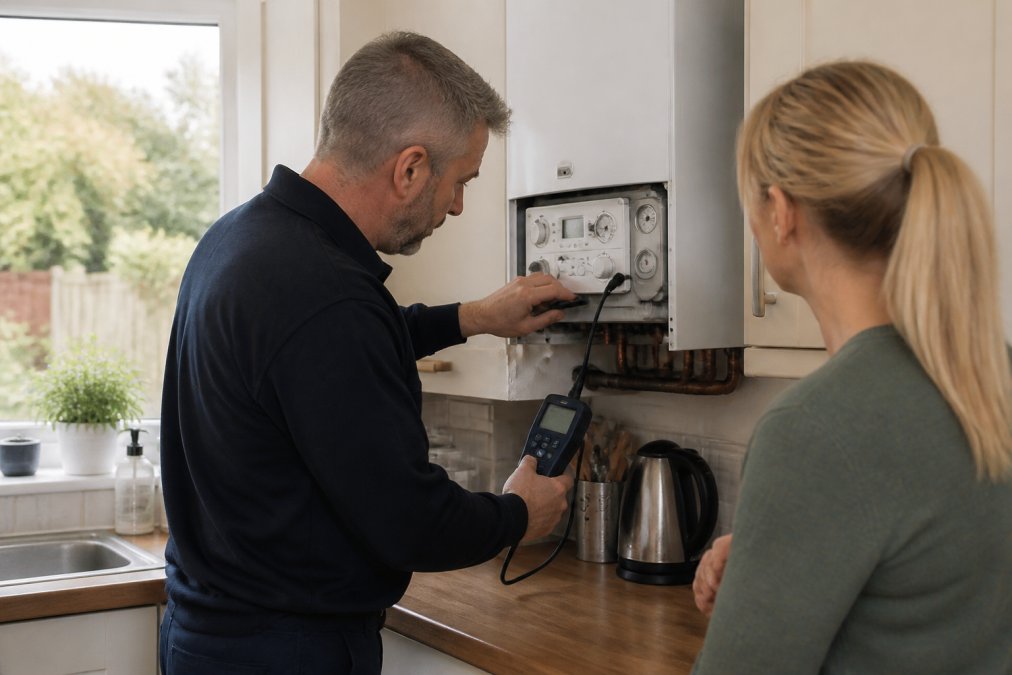
Apex Gas & Heating Ltd employs Gas Safe registered engineers trained to diagnose and repair all common boiler faults. With 24/7 emergency call-out availability across Sussex, including Crawley and surrounding areas, you won’t be left without heat for long. A professional engineer can also identify whether your boiler needs boiler repair or new boiler installation.
Staying Warm While Your Boiler Is Down
A broken boiler in winter is uncomfortable and stressful. While you wait for an engineer, you need to keep your home warm and safe.
Use portable heaters as a temporary measure, but do so carefully. Electric fan heaters are safe when placed on a flat surface away from flammable materials. Gas heaters should only be used in well-ventilated spaces and never in bedrooms. Never use your oven or stovetop as a heating source; this is a fire and carbon monoxide hazard.
Insulation is your best friend during a breakdown. Close doors to unused rooms to concentrate warmth in living areas. Hang heavy curtains or blankets over windows at night to reduce heat loss. Wear layers and use blankets on sofas and beds.
If you have friends or family nearby, consider staying with them temporarily. This is especially important if you have young children, elderly relatives, or anyone with health conditions that make cold exposure risky.
Run hot water from your taps regularly. This keeps pipes from freezing and prevents additional damage to your heating system.
If your boiler breakdown occurs during winter and you’re a tenant, your landlord is legally required to provide adequate heating. If they fail to do so, contact your local authority’s environmental health team.
Emergency Repair vs. Replacement: What You Need to Know
When an engineer assesses your boiler, they’ll recommend either repair or replacement. This decision depends on the boiler’s age, repair cost, likelihood of future breakdowns, and your budget.
Boilers typically last 10-15 years. If your boiler is over 12 years old and the repair cost exceeds 50% of a new boiler‘s price, replacement is usually more economical. Older boilers are also less efficient, costing more to run each year.
If your boiler is younger than 10 years and the repair is straightforward, repair makes sense. Consider the boiler’s repair history. If it has broken down multiple times in the past two years, it’s showing signs of age-related wear.
New boilers come with warranties, typically 5-10 years depending on the model and installer. This warranty covers parts and labour, giving you peace of mind. Older boilers have no warranty.
Apex Gas & Heating Ltd can assess your boiler and give you an honest recommendation. If repair is viable, they’ll do it quickly. If replacement is the better choice, they’ll explain the options and help you select a new boiler suited to your home’s size and heating needs.
Your Rights as a Tenant or Homeowner
Your rights during a boiler breakdown depend on whether you own your home or rent it.
As a homeowner: You are responsible for maintaining your boiler and paying for repairs or replacement. You have the right to choose any qualified engineer you wish. If you have a boiler service plan or insurance, check your policy to see what’s covered.
As a tenant: Your landlord is legally required to provide a safe, habitable home with adequate heating. They must repair or replace a broken boiler promptly. You have the right to request repairs in writing, and your landlord must respond within a reasonable timeframe. If they do not, contact your local authority or seek legal advice.
Landlords must also provide a Gas Safety Certificate (CP12) annually. This certificate proves the boiler and gas appliances have been inspected by a Gas Safe registered engineer. If your landlord cannot produce a current CP12, they are breaking the law.
If your landlord is unresponsive to repair requests, document everything: dates you reported the problem, temperatures in your home, any communication.
For landlords: You are legally required to have all gas appliances, including boilers, inspected annually by a Gas Safe registered engineer. You must provide tenants with a copy of the Gas Safety Certificate within 30 days of the inspection. Failure to do so can result in significant fines. Emergency repairs must be addressed promptly to avoid tenant disputes and legal issues.
Apex Gas & Heating Ltd provides Gas Safety & CP12 certification and landlord and letting agent services across Sussex. They understand the legal requirements and can help landlords maintain compliance whilst keeping tenants warm and safe.
Frequently Asked Questions
What should I do first if my boiler breaks down?
First, check for safety hazards. If you smell gas, turn off the gas supply at the meter and leave the property immediately, call the National Gas Emergency Service on 0800 111 999. If there's no gas smell, check your thermostat settings, pilot light, and whether the boiler has lost pressure. Look for error codes on the control panel. If basic checks don't restore heating, contact a Gas Safe registered engineer for a professional diagnosis.
Can I repressurise my boiler myself during a breakdown?
You can repressurise a boiler yourself if the pressure has simply dropped below the minimum (usually around 1 bar). Locate the filling loop, a flexible pipe with isolation valves beneath the boiler, and slowly open both valves to increase pressure to 1.5 bar. Close the valves once complete. However, if pressure drops repeatedly, this signals an internal leak requiring a professional engineer. Never attempt to fix anything beyond repressurising; other repairs need Gas Safe certification.
When should I call a Gas Safe registered engineer instead of trying DIY fixes?
Call a Gas Safe registered engineer immediately if you smell gas, see water leaking, the boiler won't ignite after you've checked the pilot light, error codes persist after a reset, or pressure keeps dropping. Gas Safe registration is a legal requirement for anyone working on gas appliances, attempting repairs without certification is dangerous and may invalidate your boiler warranty. Engineers are trained to diagnose faults safely and ensure your heating system meets safety standards.
Can I use my heating system at all if the boiler is broken?
No, if the boiler is broken, you cannot use central heating or hot water from that system. You can use an immersion heater if your property has one (usually in the hot water cylinder), which provides hot water independently. For heating, use portable heaters in occupied rooms, but ensure they're kept away from curtains and furniture. Landlords must provide a working heating system; tenants should report breakdowns to their landlord immediately, as this may qualify as an emergency repair.
A boiler breakdown is stressful, but most issues can be resolved quickly with the right approach. Start with safety checks, work through the troubleshooting checklist, and call a Gas Safe registered engineer if the problem persists. Whether you need emergency repair or are considering replacement, Apex Gas & Heating Ltd offers fast, professional service with transparent pricing and a 24/7 emergency call-out line. Get a quote today and ensure your home stays warm and safe year-round.
Leave a Reply