








Table of Contents
- Quick Energy-Saving Wins You Can Start Today
- Boiler Efficiency Tips That Lower Your Heating Costs
- How to Bleed Radiators and Improve Heat Distribution
- Smart Thermostat Benefits and Temperature Control
- Draught-Proofing and Insulation to Stop Heat Loss
- Understanding Your Smart Meter and Energy Tariffs
- Appliance Usage Habits and Standby Power Management
- Government Grants and Financial Support for Energy Efficiency
Last Updated: August 19, 2026
Quick Energy-Saving Wins You Can Start Today
The fastest way to reduce home energy bills is to fix what’s broken right now, not wait for a full system overhaul. Most homeowners waste money on habits they could change in an afternoon.
Start with the obvious: turn off appliances at the wall instead of leaving them on standby. Standby power drains money silently, a television left on standby uses roughly the same energy as watching it for an hour each week. Next, check your hot water cylinder. If it’s uninsulated, wrapping it in a cheap insulation jacket cuts heat loss by up to 75%. Finally, seal obvious draughts around doors and windows with weatherstripping or foam excluders. These three steps typically cost under £50 combined and show results on your next energy bill.
At Apex Gas & Heating Ltd, we recommend tackling these quick wins first because they require no engineer visits and deliver immediate savings. The psychological win matters too, seeing your bills drop motivates you to tackle the bigger projects.
| Quick Win | Cost | Time | Estimated Saving |
| — | — — — |
| Standby power elimination | £0 | 30 mins | £10-20/year |
| Hot water cylinder jacket | £15-25 | 1 hour | £20-40/year |
| Door and window sealing | £20-40 | 2 hours | £30-60/year |
| LED bulb replacement | £30-50 | 1 hour | £15-30/year |
The real energy drain, though, lives in your heating system. That’s where the serious savings happen.
Boiler Efficiency Tips That Lower Your Heating Costs
Your boiler accounts for roughly 60% of your annual energy bill. A poorly tuned boiler wastes thousands of pounds over its lifetime. The good news is that three simple adjustments can reclaim much of that waste without replacing the unit.
Flow Temperature and Boiler Settings
Flow temperature is the temperature of the water leaving your boiler into the radiators. Most boilers ship with a default flow temperature of 80°C, which is excessive for modern homes with decent insulation. Reducing it to 60°C or even 55°C cuts fuel consumption noticeably whilst maintaining comfort.
Here’s why this works: lower flow temperature means your boiler runs more efficiently because it doesn’t waste energy pushing water hotter than necessary. The trade-off is that your radiators take slightly longer to warm up, but in a well-insulated home, you won’t notice the difference. Test it by lowering the flow temperature by 5°C and living with it for a week. If the house stays warm, lower it another 5°C.
Check your boiler’s control panel for the flow temperature setting. Many modern boilers display it on the screen. Older models may require a manual adjustment, consult your boiler manual or contact a qualified engineer. This single adjustment typically saves 8-10% on heating costs annually.
Regular Servicing and Maintenance
A boiler service is the difference between a system that limps along and one that runs at peak efficiency. During a service, an engineer cleans internal components, checks for carbon monoxide leaks, and ensures all safety features work properly.
Boilers lose efficiency gradually. After five years, an unserviced boiler can lose 15% of its efficiency compared to a newly serviced one. The cost of an annual service (typically £120-200) pays for itself within months through reduced fuel consumption. For landlords, an annual boiler service is also a legal requirement under Gas Safety Regulations, you must have a CP12 certificate to prove it.
At Apex Gas & Heating Ltd, our boiler servicing helps maintain your boiler’s efficiency and safety. A properly maintained boiler keeps your home warm reliably whilst protecting your energy budget.
How to Bleed Radiators and Improve Heat Distribution
Radiators with trapped air refuse to heat properly, forcing your boiler to work harder and longer. Bleeding radiators, releasing trapped air, is a five-minute job that restores full heating performance.
You’ll need a radiator bleed key (about £3 from any hardware shop). Start with the radiator furthest from the boiler. Turn off your heating system. Locate the small bleed valve at the top of the radiator, usually a small square socket. Insert the key and turn it anticlockwise slowly. Air hisses out. Once water starts trickling, stop immediately and close the valve. Move to the next radiator and repeat.
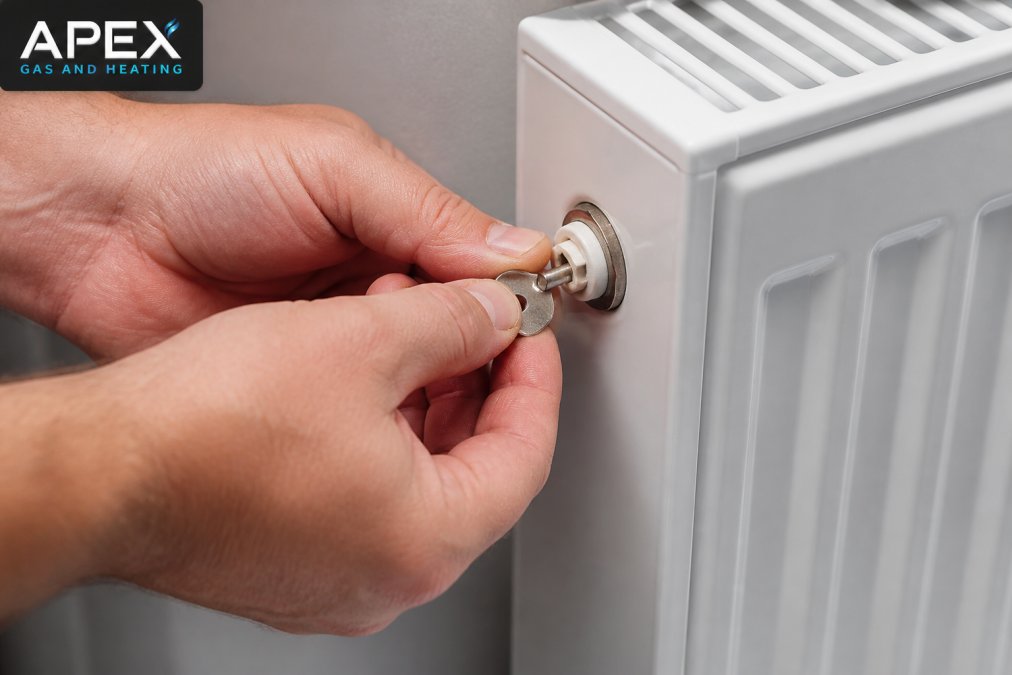
Do this once a year, ideally before winter. Many homeowners never bleed radiators and wonder why some rooms stay cold whilst others overheat. Trapped air creates uneven heat distribution, forcing your boiler to compensate by running longer cycles. Bleeding radiators typically improves heat distribution by 20-30%, meaning your boiler reaches the target temperature faster and uses less fuel.
If radiators require bleeding more than once yearly, you likely have a water leak or a problem with the system’s air release valve. Contact a heating engineer to investigate. For rental properties, this is a maintenance issue the landlord must address, tenants shouldn’t need to bleed radiators repeatedly.
Smart Thermostat Benefits and Temperature Control
A smart thermostat learns your schedule and adjusts heating automatically, eliminating the guesswork of manual control. Unlike a basic thermostat that simply turns the boiler on or off at a set temperature, a smart thermostat can lower the temperature when you’re away and restore it before you arrive home.
The benefit is measurable: households using smart thermostats typically reduce heating energy consumption by 10-15% annually. The device costs £150-400 upfront, but the energy savings often cover the cost within three years. Beyond savings, you gain convenience, adjusting your heating from your phone whilst at work or on holiday removes the temptation to leave the system running unnecessarily.
Look for models that offer:
- Scheduling by day and time
- Geolocation awareness (adjusts based on whether you’re home)
- Radiator-level control (some systems let you heat only occupied rooms)
- Integration with your energy supplier’s data (shows real-time consumption)
Set your thermostat to 19-20°C during the day when occupied and 15-16°C at night or when away. Each degree of reduction saves roughly 3% on heating costs. A family reducing their daytime temperature from 21°C to 19°C saves approximately £80-120 annually on heating alone.
Draught-Proofing and Insulation to Stop Heat Loss
Heat escapes through gaps and poor insulation. Draught-proofing seals the gaps; insulation slows the heat loss through walls, lofts, and floors.
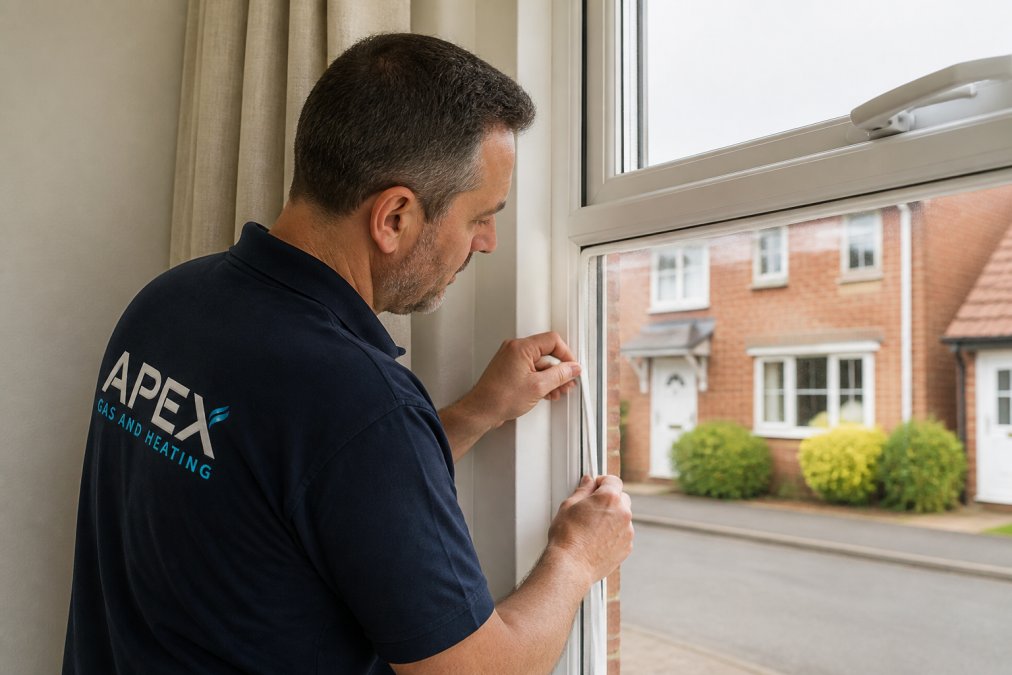
Draught-proofing targets visible air leaks: gaps around doors, windows, letterboxes, and pipework. Foam excluders, weatherstripping, and caulk cost little and work immediately. A gap of just 3mm around a door frame loses as much heat as leaving a window open. Seal all gaps and your heating system doesn’t fight a losing battle against cold air pouring in.
Insulation is the bigger project. Loft insulation is the highest priority, heat rises, and an uninsulated loft loses 25% of your home’s warmth. Upgrading loft insulation from 100mm to 250mm costs £300-600 and saves £150-250 annually. Wall insulation and floor insulation follow in priority, depending on your home’s construction.
Get a fixed-price boiler installation quote →
The Government’s energy efficiency schemes sometimes fund insulation upgrades. Check whether you qualify for support through current programmes. Even without grants, the payback period for loft insulation is typically three to four years.
Understanding Your Smart Meter and Energy Tariffs
A smart meter measures your energy consumption in real time and sends readings to your supplier automatically. This removes the guesswork from billing, you pay for what you actually use, not estimates.
Most importantly, a smart meter shows you how your consumption changes hour by hour. This data reveals your energy habits. You might discover that your morning routine uses more energy than you thought, or that certain appliances drain far more than expected. Armed with this insight, you can shift usage to off-peak hours if your tariff offers cheaper rates during specific times.
Time-of-use tariffs charge different rates depending on when you consume energy. Heating water, running the washing machine, or charging devices during off-peak hours (typically 9pm-7am) costs significantly less than during peak times. Families with flexibility can reduce their bills by 10-20% simply by shifting usage to cheaper hours.
Check your supplier’s tariff options. Some offer fixed rates (same price all day), others offer time-of-use rates (cheaper at night), and some offer economy-7 rates (seven hours of cheap electricity nightly). The best tariff depends on your consumption pattern. A smart meter’s data helps you choose the right one.
Appliance Usage Habits and Standby Power Management
Appliances on standby consume power even when off, televisions, microwave ovens, computer monitors, and chargers all draw electricity waiting for you to use them. Collectively, standby power accounts for 5-10% of a typical household’s energy bill.
The fix is simple: switch appliances off at the wall or use power strips. A power strip lets you cut standby power to multiple devices with one switch. This is especially effective for entertainment systems (television, sound system, streaming device) and home office equipment.
Larger appliances demand attention too. Tumble dryers are energy-intensive, a typical cycle uses as much electricity as running a refrigerator for two days. Air-drying clothes saves £40-80 annually per household. Washing machines should run full loads only; two full loads use less energy than three half-loads. Dishwashers are efficient if full, but wasteful if half-empty.
Refrigerators and freezers run continuously. Ensure they’re set to the correct temperature (3-5°C for fridges, -18°C for freezers). A fridge set to 0°C uses roughly 25% more energy than one at 5°C. Defrost manual-defrost freezers regularly, ice buildup forces the compressor to work harder.
Government Grants and Financial Support for Energy Efficiency
The Government offers several schemes to help homeowners improve energy efficiency. Eligibility depends on your income, property type, and current energy performance.
The Energy Company Obligation (ECO) scheme requires energy suppliers to fund energy efficiency improvements for eligible households. Typical support includes loft insulation, wall insulation, boiler upgrades, and heating controls. You don’t repay this support, it’s a grant. Contact your energy supplier to ask about ECO eligibility and available improvements.
The Warm Home Discount scheme provides a one-off payment (typically £140-150) on your winter energy bill if you’re on a low income or over 60. Application opens in autumn each year. Check the Government’s website for current eligibility criteria and application deadlines.
For landlords, the Minimum Energy Efficiency Standards (MEES) require rental properties to achieve an Energy Performance Certificate (EPC) rating of E or above. Properties below this rating cannot be let legally. If your property falls short, you must upgrade insulation, heating, or controls to meet the standard. Some grants exist for landlords making these improvements, check your local authority’s website.
At Apex Gas & Heating Ltd, we can assist landlords in understanding MEES compliance and recommend suitable solutions. Our approved boiler installations and heating controls can help ensure your rental properties meet legal standards whilst potentially reducing tenant energy bills.
Reducing home energy bills doesn’t require expensive technology or major renovations. Start with boiler efficiency, lower your flow temperature and schedule annual servicing. Bleed radiators, seal draughts, and upgrade insulation in stages. Use a smart thermostat to automate temperature control based on your schedule. Shift appliance usage to off-peak hours if your tariff allows it. These steps, taken together, typically reduce annual energy bills by 20-30%.
If your boiler is over 15 years old or requires frequent repairs, replacement becomes more cost-effective than ongoing fixes. Get a quote from Apex Gas & Heating Ltd for a new boiler installation, our Worcester and Glowworm approved engineers deliver reliable, efficient systems with transparent pricing and 24/7 support. A modern boiler, combined with the habits above, maximises your savings and ensures your home stays warm and comfortable through winter.
Frequently Asked Questions
What appliances run up your electric bill the most?
Tumble dryers, electric showers, and space heaters consume the most kilowatt-hours. Older fridges and freezers left running 24/7 also add significantly to bills. Switching to air-drying clothes and reducing shower time can cut consumption noticeably. Checking your appliance rating labels helps identify which items drain the most energy.
How can regular boiler servicing help lower energy bills?
A well-maintained boiler burns fuel more efficiently, converting more of it to heat rather than waste. During servicing, engineers clean internal components, check the burner, and verify the boiler is running at the correct flow temperature. A boiler running inefficiently can waste 10-15% of fuel. Annual servicing catches problems early and keeps your heating system operating at peak efficiency, directly reducing your utility bills.
What impact does smart thermostat installation have on heating costs?
Smart thermostats learn your heating patterns and adjust temperatures automatically, preventing unnecessary heating when you're away or asleep. Many users report 10-15% reductions in heating costs by managing peak demand more effectively. They provide real-time energy consumption data, helping you understand which behaviours drive up bills. Remote control via smartphone also means you can avoid heating an empty property.
Are there government grants available for home energy efficiency improvements?
The Energy Company Obligation (ECO) and various regional schemes offer support for insulation, heating upgrades, and draught-proofing. Eligibility depends on your property type, income, and energy performance certificate rating. Grants may cover cavity wall insulation, loft insulation, or boiler replacements. Contact your local council or visit the government's energy support pages to check what schemes apply to your situation and property.
How does insulation affect long-term energy expenditure?
Proper insulation reduces heat loss through walls, roofs, and floors, meaning your heating system works less hard to maintain thermal comfort. Homes with good insulation can save 20-30% on heating costs annually. The initial investment in loft or cavity wall insulation typically pays for itself within 5-10 years through lower bills. Better insulation also improves comfort in winter and reduces reliance on peak demand heating periods.
What is the best way to reduce energy costs at home?
A combination of quick wins and long-term investments works best. Start by adjusting thermostat settings, bleeding radiators, and checking for draughts around windows and doors. Then move to draught-proofing and insulation upgrades. Install a smart thermostat to automate heating control. Finally, upgrade to a modern, efficient boiler if yours is over 15 years old. Monitoring your smart meter and understanding your energy tariff also helps identify peak-cost periods to avoid.
What is the 4pm rule on heating?
The 4pm rule refers to avoiding peak demand periods when electricity rates are highest. Shifting energy use away from 4-9pm (when demand peaks) to off-peak hours can reduce bills if you're on a time-of-use tariff. This means running appliances like washing machines, dishwashers, and tumble dryers outside peak times. Smart meters make it easier to track when you're using most energy and adjust habits accordingly to lower your overall costs.
Leave a Reply