








Table of Contents
- Why Plumbing Maintenance Matters for Renters
- Basic Plumbing Tools for Renters You Should Keep at Home
- How to Unblock a Sink Drain Without Damaging Pipes
- Preventing Frozen Pipes and Water Damage
- Tenant Plumbing Responsibilities UK: What You Must Know
- Reporting Plumbing Repairs to Landlords: The Right Way
- Common Plumbing Issues and When to Call a Professional
- Frequently Asked Questions
Last Updated: September 20, 2026
Why Plumbing Maintenance Matters for Renters
Keeping your rental property’s plumbing in good condition protects your deposit and prevents costly emergency repairs. Learning DIY plumbing maintenance tips for renters helps you understand what you can maintain yourself and what requires professional help, protecting both your home and your finances.
Basic Plumbing Tools for Renters You Should Keep at Home
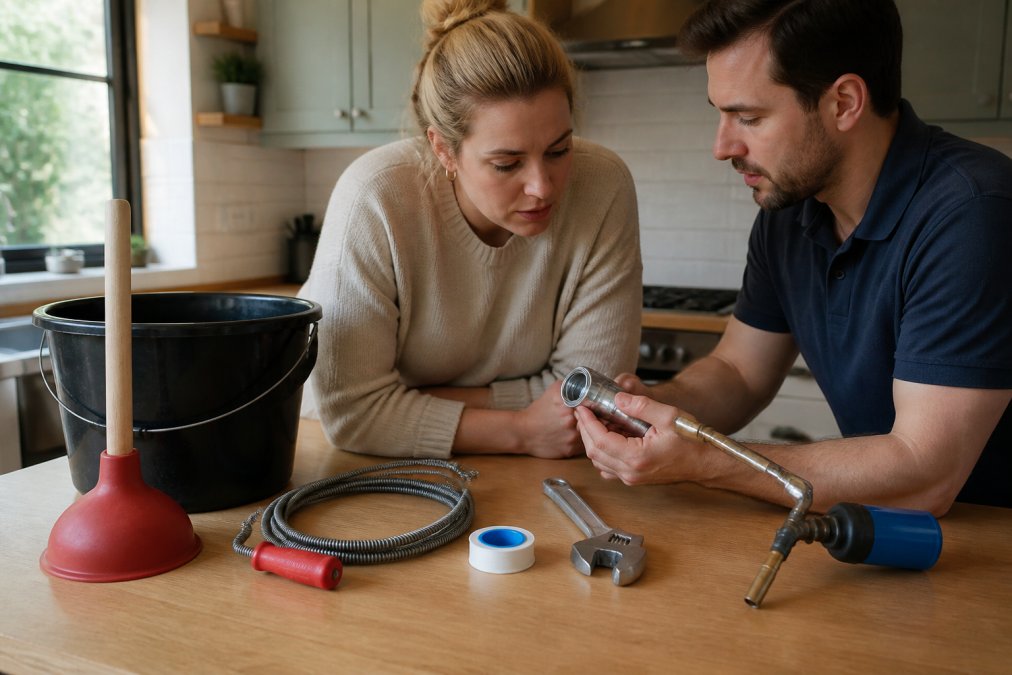
Essential tools every renter should own:
- Plunger, The most important tool. A standard cup plunger clears blocked sinks and toilets quickly.
- Adjustable wrench, Tightens or loosens nuts on pipes and fittings. Buy one around 20-25cm model.
- Pipe wrench, Grips round pipes firmly. Useful for minor leaks at connections.
- Drain snake, A flexible tool that removes hair and debris from drain blockages without harsh chemicals.
- Bucket, Catches water during repairs and prevents spills on your floors.
- Plumber’s tape, Seals threaded connections to stop minor leaks.
- Torch or headlamp, Helps you see pipes under sinks and in dark cupboards.
How to Unblock a Sink Drain Without Damaging Pipes
Step-by-step drain clearing method:
-
Fill the sink with 10cm of water, This creates pressure needed to dislodge the blockage.
-
Place the plunger over the drain hole, Make sure it covers the opening completely. Block the overflow hole with a wet cloth if your sink has one.
-
Push down and pull up rapidly 15-20 times, Use firm, quick movements. You should feel resistance as the plunger works.
-
Check if water drains, If it does, run hot water for 30 seconds to flush debris. If not, repeat the plunging process.
-
Use a drain snake if plunging fails, Insert the snake into the drain and turn the handle clockwise. The spiral end catches hair and debris. Pull it out and rinse the drain with hot water.
-
Try baking soda and vinegar, Pour 100g of baking soda down the drain, followed by 250ml of white vinegar. Cover the drain for 15 minutes, then flush with hot water. This eco-friendly method works for minor blockages and mineral buildup.
What NOT to do:
- Don’t use chemical drain cleaners. They damage old pipes and can burn your skin.
- Don’t force a blocked pipe with excessive pressure. You risk cracking fittings.
- Don’t ignore slow drains. They worsen quickly and become harder to clear.
If the drain remains blocked after trying all steps, contact your landlord or call a professional plumber. Document the issue with photos and a written message.
Preventing Frozen Pipes and Water Damage
Frozen pipes are a serious winter risk. When water freezes inside pipes, it expands and can crack them, causing water damage to your property.
How pipes freeze and why renters are vulnerable:
Prevention steps for winter months:
-
Insulate exposed pipes, Wrap foam pipe insulation around any pipes visible in unheated areas like under sinks, in lofts, or along external walls. Pay special attention to the water shut-off valve and the main incoming water pipe.
-
Keep cabinet doors open, If pipes run under kitchen or bathroom sinks, open the cabinet doors during freezing weather. Warm air from your home circulates around the pipes and keeps them above freezing point. This is especially important if your sink is on an external wall.
-
Maintain steady heating, Keep your heating on at least 15°C even when you’re away for a few days. If you’re away for more than a week during winter, ask your landlord about leaving heating on or draining the system.
-
Drip taps slightly during freezing nights, If temperatures drop below -5°C, let cold taps drip slowly. Moving water is harder to freeze than still water. A single tap dripping overnight uses minimal water but can prevent a burst pipe.
-
Check your boiler pressure, If pressure is below 1 bar on the gauge, your landlord needs to know immediately, as this often indicates a leak.
-
Address hard water mineral buildup, In areas with hard water, mineral deposits reduce water flow and increase freeze risk. Run hot water for 30 seconds each morning during winter. If your showerhead or tap aerator is clogged, soak it overnight in white vinegar and rinse thoroughly.
Signs of frozen pipes:
- No water comes from one or more taps
- Water pressure drops suddenly across the whole house
- You hear banging, clanking, or gurgling sounds in pipes when you turn on a tap
- Visible frost on exposed pipes, fittings, or the water shut-off valve
- Water pooling or dripping from pipes in unheated spaces
What to do if you suspect frozen pipes:
Tenant Plumbing Responsibilities UK: What You Must Know
What you’re responsible for as a tenant:
- Basic maintenance, Cleaning aerators on taps, unblocking drains caused by your use, and reporting leaks promptly.
- Fixture care, Not damaging taps, shower heads, or toilet seats through negligence.
- Preventative action, Keeping pipes insulated in winter and reporting issues before they worsen.
- Prompt reporting, Telling your landlord about any plumbing problems within 24 hours of discovering them.
What your landlord must handle:
- Structural repairs, Burst pipes, cracked pipework, or damage to the water shut-off valve.
- Major leaks, Water damage to walls, ceilings, or floors caused by faulty plumbing.
- Boiler and hot water cylinder issues, These are the landlord’s responsibility under UK law.
- Gas safety, Any problems with gas pipes or connections must be handled by a Gas Safe registered engineer.
Your tenancy agreement matters. Some agreements place more responsibility on tenants than others. Read your agreement carefully and ask your landlord to clarify any unclear points before signing.
Reporting Plumbing Repairs to Landlords: The Right Way
Proper documentation protects your deposit. Many renters lose deposits because they didn’t create a clear paper trail proving they reported problems promptly.
The correct reporting process:
-
Report in writing within 24 hours, Send an email or text message to your landlord or letting agent. Include the date, time, and specific description of the problem.
-
Be specific and factual, Write “the kitchen sink drains slowly and water pools around the base of the tap. I first noticed this on [date] at [time].” Include which room and which fixture.
-
Take photos and videos immediately, Photograph any visible damage, leaks, water stains, or pooling water from multiple angles. Include the date stamp. Store copies in cloud storage so you have a backup.
-
Keep copies of everything, Save all emails, text messages, photos, videos, and repair requests in a labelled folder.
-
Request a response timeline, Ask when the repair will be done. Landlords must carry out repairs within a reasonable time, usually 7-14 days for non-emergency issues, 24-48 hours for emergencies.
-
For emergencies, call immediately and follow up in writing, Phone your landlord right away, then send a follow-up email the same day with the time you called and what you reported.
Template for your first report:
Copy and adapt this for your situation:
“Hi [Landlord/Agent name],*
Thank you.
[Your name]
[Property address]
*[Your phone number]”
Building your deposit-protection evidence file:
- Move-in photos: Take photos of plumbing fixtures on your first day to prove their condition when you arrived.
- Maintenance log: Keep a simple list with dates and descriptions of any plumbing work you do.
- Repair request copies: Save every email or message reporting a problem.
- Before-and-after photos: If you fix something minor yourself, photograph the problem first, then after the fix.
Protecting yourself at the end of your tenancy:
Common Plumbing Issues and When to Call a Professional
DIY plumbing maintenance tips for renters, issues you can handle yourself:
- Slow drains caused by hair or soap buildup
- Dripping taps (usually just needs a new washer)
- Running toilets (often a faulty fill valve)
- Blocked overflow holes on sinks or baths
- Mineral buildup on aerators or showerheads
Issues requiring a professional:
- Burst or cracked pipes, Water damage spreads quickly. Call your landlord immediately.
- Water pressure problems, If all taps have low pressure, there’s a problem with the main water shut-off valve or the water supply itself.
- Leaking pipes under floors or in walls, You can’t access these safely. Water damage gets worse if ignored.
- Boiler or hot water cylinder faults, These need a qualified engineer. Never attempt DIY repairs.
- Gas-related issues, Any problem involving gas pipes must be handled by a Gas Safe registered engineer.
- Sewage or drainage smells, This indicates a problem with the main drain. Professional equipment is needed to diagnose and fix it.
Frequently Asked Questions
What plumbing maintenance are tenants responsible for?
Tenants are typically responsible for minor, non-structural maintenance that prevents damage. This includes clearing minor drain blockages, checking for leaks under sinks, cleaning aerators on taps, and ensuring exposed pipes aren’t damaged. However, your rental agreement defines your exact responsibilities. Major issues like burst pipes, boiler faults, or structural water damage are your landlord’s responsibility. Always check your tenancy agreement and report any significant problems to your landlord promptly to protect your deposit.
Are renters allowed to perform DIY plumbing repairs?
Most renters can perform basic maintenance tasks like using a plunger, cleaning drains with baking soda and vinegar, or tightening loose connections. However, check your rental agreement first, as some landlords prohibit DIY repairs. Never attempt work that affects water pressure systems, boiler pressure, hot water cylinders, or structural pipes. If you’re uncertain whether a repair is within your scope, contact your landlord or request a certified professional. Unauthorised work that causes damage could result in deposit deductions.
How can I prevent blocked drains in a rented property?
Prevent drain blockage by using drain strainers to catch hair and debris, avoiding pouring grease down drains, and regularly flushing pipes with hot water. Once monthly, pour baking soda followed by vinegar down drains to clear mineral buildup naturally. Don’t use harsh chemical drain cleaners, as they can damage older pipes and violate some rental agreements. If blockages persist despite preventative maintenance, document the issue and report it to your landlord, as it may indicate a structural problem requiring professional drain maintenance.
When should a renter call a professional plumber?
Contact a professional immediately if you notice a leaking faucet that won’t stop, running toilet that wastes water continuously, frozen pipes, water pressure issues affecting multiple fixtures, or signs of water damage on walls or ceilings. Also call if a drain remains blocked after using a plunger and drain snake, or if you suspect a leak inside walls or under floors. Never delay reporting these issues to your landlord, as water damage can spread quickly and affect structural integrity. Professional assessment prevents costly damage claims against your deposit.