







Last Updated: November 2, 2026
Quick Summary
The signs of frozen pipes in walls include reduced or no water flow from one tap or one side of the house, a cold patch on the wall with condensation, and gurgling, banging or whistling noises. Damp patches, water stains or puddles mean a frozen pipe may have already split and is leaking as it thaws.
- Weak or dribbling flow from a single tap often points to a frozen section feeding that outlet.
- A cold patch with condensation on plasterboard can mean a frozen pipe sits just behind it.
- Gurgling, banging or whistling during a cold snap is a warning, not background noise.
- Never drill or cut into a wall to find a frozen pipe.
- Thaw gently with a hairdryer on low, held at least 150 mm away.
Table of Contents
- Early Signs of Frozen Pipes in Walls
- Noises, Smells and Damp That Point to a Pipe Freeze
- How to Tell a Frozen Pipe From a Burst Pipe
- How to Thaw Frozen Pipes in Walls Safely
- Preventing Frozen Pipes in Winter
- What to Do When a Pipe Bursts
- Get a Plumber to Check Hidden Pipework
- Frequently Asked Questions
Early Signs of Frozen Pipes in Walls
Spotting the signs of frozen pipes in walls early can save you from a burst and a flooded home. The warning signs are often subtle at first.
Frozen pipes in walls rarely announce themselves. Water inside the pipe expands as it freezes, which puts pressure on the pipe wall. That pressure is what eventually causes a split. Catching the problem before the thaw is the whole game.
Here is what to watch for.
Reduced or No Water Flow From Taps
The first clue is usually at the tap. Turn on the cold tap and the flow may be weak, spluttering, or nothing at all. Reduced water flow from one tap often points to a frozen section of pipe feeding that outlet.
A common mistake is assuming a low-pressure problem is the supplier’s fault. If only one tap or one side of the house is affected while others run fine, suspect a pipe freeze.
- Weak or dribbling flow from a single tap
- No water from taps on one side of the house
- Normal flow elsewhere, which rules out a wider supply issue
Frost, Condensation and Cold Patches on Walls
Look at the walls themselves, especially on outside walls and in unheated areas. Frost on an exposed pipe is obvious. Inside a wall, the clues are colder.
A cold patch on a wall is an area of plaster that feels noticeably colder than the surrounding surface, often with condensation forming on it. That chill can mean a frozen pipe is sitting just behind the plasterboard.
Check these spots:
- Walls on the north-facing or outside edge of the house
- Behind kitchen units and under sinks
- In the attic, garage and other unheated areas
Noises, Smells and Damp That Point to a Pipe Freeze
Sound and smell often give the game away before water does.
Gurgling, Banging and Whistling Sounds
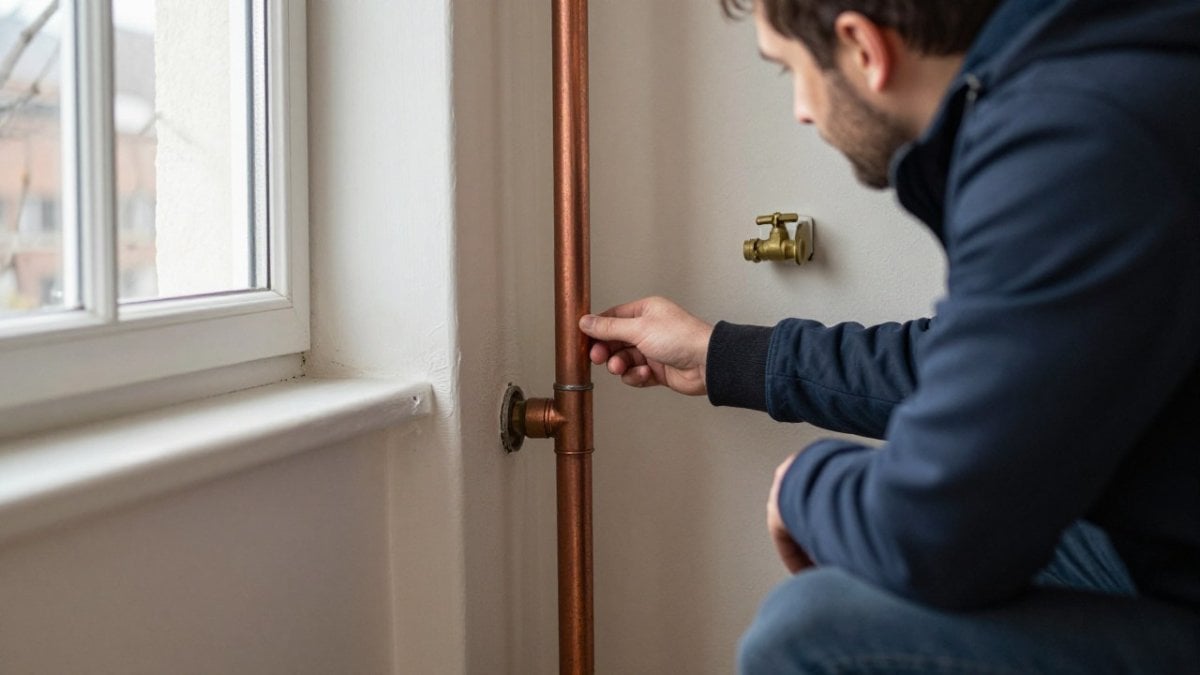
Strange pipe noises are a classic sign of trouble. Gurgling, banging pipes and whistling can all point to a freeze or trapped air.
- Gurgling: air and water mixing as flow is restricted
- Banging: pressure building against a partial blockage of ice
- Whistling: water forced through a narrowed gap
If the noises start during a cold snap, treat them as a warning, not background noise.
Damp Patches, Water Stains and Puddles
Damp patches, water stains and puddles on walls, ceilings or floors are serious. They can mean a frozen pipe has already cracked and is now leaking as it thaws.
Watch for brown tide marks on plasterboard, bubbling paint, and soft patches on the ceiling below a run of pipe. Our guide on how to dry out a room after water damage walks you through the first steps to limit the damage.
How to Tell a Frozen Pipe From a Burst Pipe
Telling a frozen pipe from a burst one matters because the response is different. A freeze needs careful thawing. A burst needs the water off and a plumber called. Getting this wrong wastes time at best and floods a floor at worst.
Here is the short answer: a frozen pipe shows no leak and often no water, while a burst pipe shows water where it should not be.
A Frozen vs Burst Diagnostic Checklist
Work through these in order. Stop at the first water sign and treat it as a burst.
- Is there reduced or no water at one tap, or on one side of the house, while others run normally?
- Does a wall, skirting or pipe feel noticeably colder than the surrounding surface, with condensation forming?
- Are there gurgling, banging or whistling noises but no visible water?
If you ticked the first four and none of the water signs, you likely have a freeze. If any water sign is present, treat it as a burst, turn off the stopcock and call a plumber.
Narrowing Down Where the Freeze Sits
You do not need to open the wall to make progress.
- Map the outlets. Turn on each tap, one at a time, and note which run weakly and which run normally. A single dead tap points to the branch feeding that outlet; several dead taps on one side point to a shared run along an external wall.
- Compare hot and cold. If the cold side is dead but the hot side runs, the freeze is on the cold feed, which is the more exposed of the two in most homes.
- Check the boiler. A combi boiler that will not fire, or shows a low-pressure fault, can indicate a frozen condensate pipe rather than a supply pipe. That is a different problem with a different fix.
- Feel the wall. Run the back of your hand slowly along the suspect wall. A cold patch, especially one with condensation, marks the likely freeze point. Compare it with the same wall in a warmer room.
- Listen. With the tap open and the house quiet, gurgling or hissing behind the plasterboard narrows the run further.
- Look for the pipe route. Pipes inside walls usually follow the shortest path from the stopcock or boiler to the outlet, often along external walls or under floors. The freeze is most likely where that route meets an unheated space.
Watch out: do not drill or cut into a wall to find a frozen pipe.
If a burst is suspected, it helps to know where you stand on cover. Our article on whether home insurance covers burst pipes explains escape of water claims.
Use this checklist to work out whether you are dealing with a freeze or a burst.
| Check | Frozen pipe | Burst pipe |
|---|---|---|
| Water at taps | Reduced or none on one side | Water where it should not be |
| Wall feel | Cold patch with condensation | Damp patch or water stain |
| Noises | Gurgling, banging or whistling | Not the key sign |
| Visible water | None | Puddle, bubbling paint or bulge |
| Response | Thaw gently | Turn off stopcock and call plumber |
How to Thaw Frozen Pipes in Walls Safely
Thawing a pipe inside a wall needs more care than thawing one you can see. You cannot watch the pipe, you cannot see a split opening up, and heat applied to plasterboard or insulation can smoulder long before it flames. The safest approach with concealed pipework is slow, gentle warming of the room and the wall surface, not direct heat on the pipe.
Work through these steps:
- Turn off the stopcock if you suspect any leak, then open the nearest tap so melting water has somewhere to go. If you have not found your stopcock yet, do it now, it is usually under the kitchen sink, in a downstairs cupboard or under the stairs, and it should turn by hand.
- Warm the room gently with the heating on low. Bring the whole room up to temperature rather than targeting one spot, because a sudden temperature change across plasterboard and pipe can crack both.
- Apply gentle heat to the wall surface with a hairdryer on a low setting, held at least 150 mm away and kept moving. Never hold it still on one patch.
- Start at the tap end and work back towards the frozen section, so melting water can escape through the open tap rather than building pressure behind the ice.
- Watch for water as it thaws. If a leak appears, stop, turn the stopcock off again and call a plumber.
- Give it time. A concealed freeze can take an hour or more to clear with gentle heat. Rushing it is how pipes split.
What Not to Do
- Never use a naked flame, a blowtorch or a gas torch on any pipe, concealed or exposed. The risk of fire inside a wall cavity is real and the pipe will overheat before you notice.
- Never use a heat gun on a concealed pipe. The concentrated heat can char insulation and timber inside the wall.
- Never pour boiling water down a drain or over a wall to thaw a pipe. It can crack the pipe and scald you if it splits.
Watch out: if the wall stays cold and damp after an hour of gentle warming, or if you cannot reach the suspect section without opening the wall, stop. A freeze deep inside a wall is a job for a Gas Safe registered engineer with the right tools, and continuing to apply heat blindly risks a concealed leak you cannot see.
When to Stop and Call a Plumber
Call for help straight away if any of these apply:
- You suspect a leak but cannot see it, and the wall is damp or stained.
- The pipe is behind tiles, a fitted kitchen or a solid wall.
- The freeze affects the boiler, the hot water cylinder or the main supply.
A Gas Safe registered engineer can help trace concealed pipework and check for splits before a freeze turns into a flood. If the freeze has left you with a boiler fault, we also offer boiler repair to get the heating back on.
Preventing Frozen Pipes in Winter
Prevention is cheaper than repair. A few simple habits protect the pipes most at risk.
- Lag exposed pipes in the attic, garage and under sinks with pipe insulation.
- Keep heating on low during cold spells, even when out, rather than switching it off.
- Find your stopcock now and make sure it turns.
Older homes carry more risk. Our guide on common plumbing issues in older properties explains the weaknesses that make pipes more likely to freeze.
What to Do When a Pipe Bursts
A burst pipe needs fast action. Water can spread through a floor in minutes.
- Turn off the stopcock straight away to stop the flow.
- Open all cold taps to drain the system.
- Switch off the electrics at the consumer unit if water is near wiring.
- Move valuables and furniture clear of the water.
- Call an emergency plumber and start soaking up water.
If water is escaping now, our 24/7 emergency call-out service covers Sussex and Surrey.
Get a Plumber to Check Hidden Pipework
Hidden pipework is where freezes do the most damage, because you cannot see the problem coming. A professional check finds the weak spots before winter bites.
Our Gas Safe registered engineers are approved installers for Worcester Bosch, Baxi, Glow-worm and Vaillant, and we back our work with a 2-year workmanship guarantee and full public liability insurance.
If you would rather have a professional take a look, you can get a quote from Apex Gas & Heating Ltd before any work starts. You can also book plumbing services to have hidden pipework checked.
Frequently Asked Questions
What are the early warning signs of a frozen pipe inside a wall?
Look for reduced or no water flow from taps, frost or condensation on the wall surface, a cold patch on plasterboard, gurgling or banging noises when you run a tap, and damp patches with no visible leak. A pipe freeze often starts in uninsulated pipes on outside walls or in unheated areas. If you spot these signs early, turn off the stopcock and call a Gas Safe registered plumber before the pipe bursts.
Can you hear a frozen pipe in a wall?
Yes. A frozen pipe in a wall often makes gurgling, banging or whistling sounds when water tries to move through the ice. The noise may be faint because the pipe is behind plasterboard, so listen near outside walls, the attic or the garage. Banging pipes can also mean water hammer, but if the sound appears only in freezing temperatures, suspect a pipe freeze and act quickly.
Should I turn off my water if I suspect a frozen pipe?
Turn off the stopcock if you suspect a frozen pipe, especially one inside a wall. This limits water damage if the pipe cracks as it thaws. Keep the tap open so melting water can escape, and never use a blowtorch or naked flame on a concealed pipe. Call a plumber to thaw the pipe safely and check for cracks before you turn the water back on.
How long does it take for a frozen pipe to burst?
A frozen pipe can burst within hours of freezing, depending on the temperature and pipe material. Water expands as it turns to ice, which cracks the pipe or pushes joints apart. The burst often becomes obvious only when the ice melts and water escapes. If you suspect a frozen pipe in a wall, turn off the stopcock and call a plumber before thawing begins.
A frozen pipe in a wall is easy to miss until it bursts, and by then the damage is done. If you have spotted the warning signs and want them checked properly, Apex Gas & Heating Ltd is here to help. Our Gas Safe registered engineers offer a 24/7 emergency call-out service, fixed-price quotes and a 2-year workmanship guarantee across Sussex and Surrey. Get started with Apex Gas & Heating Ltd and protect your home before the next cold snap.
