







Table of Contents
- Why Older Properties Need Extra Gas Safety Attention
- Signs of a Gas Leak You Should Never Ignore
- What to Do If You Smell Gas
- Gas Appliance Servicing: The Foundation of Safety
- Understanding Carbon Monoxide Alarms and Detection
- Common Gas Safety Hazards in Older Homes
- Gas Safety Certificates and Legal Requirements
- Frequently Asked Questions
Last Updated: October 13, 2026
Why Older Properties Need Extra Gas Safety Attention
Older homes have character. They also present specific gas safety hazards that newer buildings don’t. Pipes corrode. Seals deteriorate. Flues crack. These aren’t minor issues, they’re safety hazards that demand attention.
At Apex Gas & Heating Ltd, we work on properties across Sussex and Surrey built decades ago. The pattern is consistent: the older the property, the more likely it is to have gas safety problems hiding behind walls and under floorboards.
Gas safety tips for older properties aren’t optional extras. They’re essential maintenance. A gas leak in an older home can develop slowly, silently, and dangerously. Carbon monoxide can accumulate without warning. These threats don’t announce themselves.
The good news is that many hazards are preventable with regular checks and servicing. You don’t need to panic. You do need to be proactive.
Signs of a Gas Leak You Should Never Ignore
A gas leak announces itself through your senses. Learn what to watch for.
Smell is the first warning sign. Natural gas has no odour naturally. The smell you detect is an additive, mercaptan, deliberately added so leaks become obvious. It smells like rotten eggs or sulphur.
If you smell this, act immediately:
- Leave your property at once
- Do not use electrical switches, light matches, or create any spark
- Call the National Gas Emergency Service on 0800 111 999 from a safe location outside
- Wait for help before returning
Other signs of a gas leak include:
- Hissing or whistling sounds near pipes or appliances
- Dead plants or discoloured patches in your garden (gas escaping underground)
- Bubbles in water if you have a gas pipe running through wet ground
- Visible damage to pipework or connections
- Frost patterns on pipes in winter that shouldn’t be there
Don’t assume small leaks are harmless. A tiny leak today becomes a serious problem tomorrow. Even a faint smell warrants a professional inspection.
What to Do If You Smell Gas
Your response in the first few minutes matters.
Step 1: Get out immediately. Leave your property and close the door behind you. Do not stay inside to investigate further.
Step 2: Move away from the building. Go to a neighbour’s house or stand well away from your property. You need to be in fresh air, away from any potential ignition source.
Step 3: Call the National Gas Emergency Service. Ring 0800 111 999. This is a 24-hour service and it’s free. Tell them you smell gas and give your address.
Step 4: Do not return inside. Even if the smell fades, do not go back in. The emergency service will assess the property and confirm it’s safe before you re-enter.
Step 5: Get a professional inspection. Once the emergency service has cleared your home, contact a Gas Safe registered engineer to identify what caused the leak and fix it properly. At Apex Gas & Heating Ltd, we offer rapid response to gas safety concerns.
Many homeowners worry about overreacting. Don’t. A false alarm is far better than ignoring a real leak.
Gas Appliance Servicing: The Foundation of Safety
Regular servicing is your best defence against gas safety problems in older properties. It’s not an optional extra, it’s essential maintenance.
Annual servicing schedules
Your boiler should be serviced every year. This isn’t a suggestion. It’s a requirement under the Gas Safety Regulations 1998.
Why annual servicing matters:
- Catches problems before they become dangerous
- Keeps your boiler running efficiently
- Maintains your warranty on many models
- Provides documentation for landlord safety certificates
- Prevents breakdowns during winter when you need heat most
For older properties, annual servicing is non-negotiable. Boilers over 10 years old may need more frequent checks, a Gas Safe registered engineer can advise based on the specific model and condition.
Schedule your service before winter. Autumn is the ideal time. Engineers are less busy, and you’ll have a fully functioning boiler before the cold months arrive.
What engineers check during a service
A proper gas boiler service takes 1-2 hours. Your engineer inspects multiple components.
Key checks include:
- Burner condition and flame appearance
- Heat exchanger for cracks or corrosion
- Seals and gaskets for wear
- Gas pressure and flow rates
- Flue operation and ventilation
- Safety devices and controls
- Pipework connections for leaks
- Overall efficiency performance
During the service, the engineer will also run safety tests. These confirm carbon monoxide isn’t being produced and the boiler is operating safely.
If problems are found, your engineer will explain them clearly. Some issues need immediate attention. Others can wait for the next service. You’ll typically receive a written report documenting everything.
At Apex Gas & Heating Ltd, our Gas Safe registered engineers carry out thorough inspections on every boiler servicing visit. We focus on older properties where hidden problems are more common. If your boiler is beyond repair, we also provide new boiler installation with modern, efficient models that meet current safety standards.
Understanding Carbon Monoxide Alarms and Detection
Carbon monoxide is invisible, odourless, and deadly. You cannot detect it without an alarm.
What carbon monoxide is: It’s a gas produced when fuel burns incompletely. A faulty boiler, blocked flue, or poorly maintained appliance can produce dangerous levels.
Symptoms of carbon monoxide exposure include:
- Headaches and dizziness
- Nausea and vomiting
- Chest pain and shortness of breath
- Confusion and loss of consciousness
- In severe cases, death
The danger is that these symptoms mimic flu. Many people assume they’re unwell, not realising they’re being poisoned by their own heating system.
You need a carbon monoxide alarm. Install one in the room where your boiler or main heating appliance is located. Many people also install one in their bedroom for extra safety.
Choose an alarm that meets British Standard BS EN 50291. This ensures it meets proper safety standards. The alarm should be battery-powered or hardwired, and it should have a clear display showing carbon monoxide levels.
Test your alarm monthly. Press the test button to confirm it works. Replace batteries annually or when the alarm indicates low battery.
If your alarm sounds, treat it seriously. Leave your property immediately, get fresh air, and call the National Gas Emergency Service on 0800 111 999. Do not ignore a sounding alarm.
Common Gas Safety Hazards in Older Homes
Older properties develop specific problems over time. Knowing what to look for helps you catch issues early.
Corroded pipework
Copper and steel pipes corrode with age. In older homes, you may find pipes that have been in the ground or walls for 30, 40, or even 50 years.
Corrosion creates small holes. Gas escapes through these holes. The leak may be tiny at first, but it grows larger over time.
Signs of corroded pipework include:
- Green or blue discolouration on copper pipes
- Rust on steel pipes
- Damp patches near where pipes run
- A persistent smell of gas in one area
- Visible pitting or holes in the pipe surface
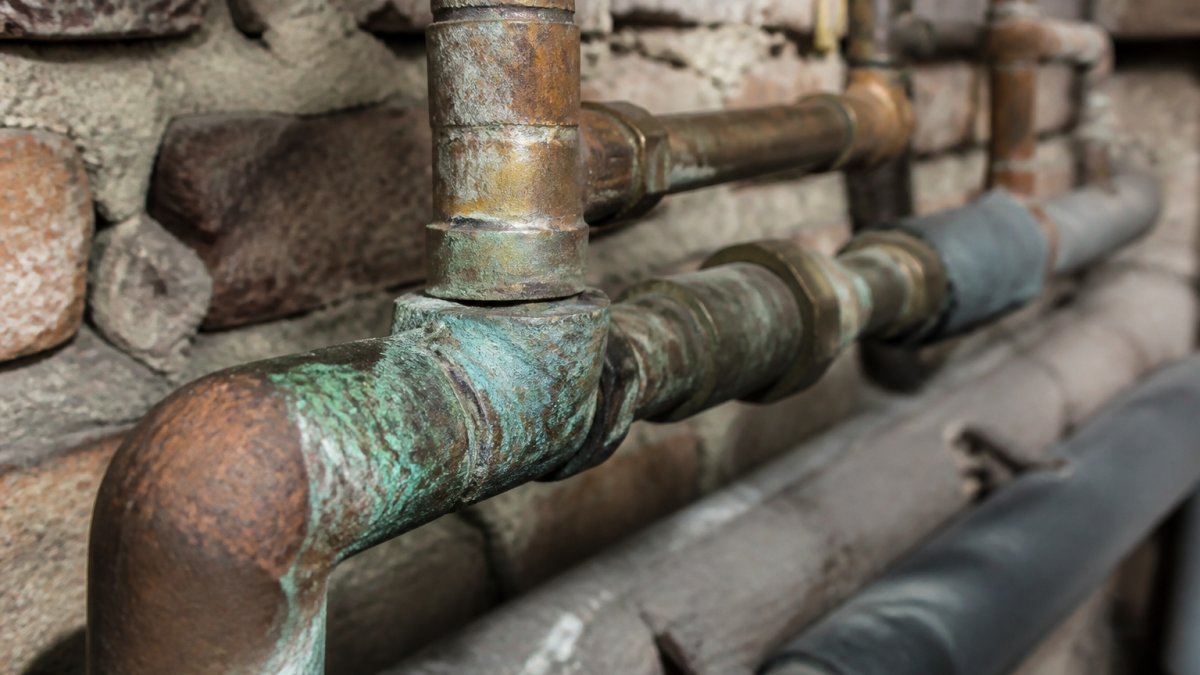
Corroded pipes need replacement. This isn’t a repair, the entire section must be renewed with new pipework that meets current safety standards. If your property has old steel pipes, consider having them inspected proactively rather than waiting for a leak to develop.
Blocked or damaged flues
Your boiler’s flue is the pipe that carries exhaust gases safely outside. A blocked or damaged flue means these gases stay inside your home.
Common flue problems in older homes:
- Bird nests blocking the flue exit
- Debris accumulation inside the flue
- Cracks or holes in the flue pipe
- Poor installation or sagging pipes
- Disconnected sections
A blocked flue is dangerous. Carbon monoxide and other gases back up into your property instead of venting outside.
You may not notice a blocked flue immediately. The boiler may still light and heat water, but safety is compromised. This is why professional inspection is essential.
Deteriorating seals and connections
Seals degrade. Connections loosen. In older properties, these problems accumulate.
Where seals and connections fail:
- Where pipes join the boiler
- At compression fittings throughout the system
- Around the gas meter
- At appliance connections
- Inside old radiators and valves
A failing seal produces a small gas leak. Over time, the leak grows. Regular servicing catches these problems before they become serious.
Gas Safety Certificates and Legal Requirements
If you’re a landlord, you need a Gas Safety Certificate, also called a CP12. This is a legal requirement under the Gas Safety Regulations 1998.
You must have:
- A Gas Safety Certificate for every property you let
- An inspection by a Gas Safe registered engineer each year
- The certificate must be provided to tenants within 28 days of the inspection
- Records kept for at least 2 years
Failure to comply carries serious penalties. You can be fined up to £6,000 per breach, prosecuted, or imprisoned. More importantly, you’re putting your tenants at risk.
For homeowners, there’s no legal requirement for a Gas Safety Certificate. However, you should still have annual servicing and regular inspections. Insurance companies may require evidence of servicing before they’ll pay out on gas-related claims.
Get your certificate from a Gas Safe registered engineer only. At Apex Gas & Heating Ltd, we provide Gas Safety & CP12 documentation as part of our comprehensive servicing. We work with landlords across Sussex and Surrey managing multiple properties.
Older properties demand respect when it comes to gas safety. Corroded pipes, deteriorating seals, and ageing boilers don’t announce problems until they become dangerous. The solution is simple: regular servicing, annual inspections, and immediate action if you notice warning signs.
Don’t wait for a crisis. Contact Apex Gas & Heating Ltd today for a professional gas safety inspection. Our Gas Safe registered engineers will assess your property, identify any hazards, and provide clear recommendations. We offer rapid response times and transparent reporting so you know exactly what needs attention. Get a quote and protect your home and family from gas safety risks.
Frequently Asked Questions
How often should gas appliances be serviced?
Gas appliances in older properties should be serviced annually by a Gas Safe registered engineer. Annual servicing is essential for safety and helps prevent breakdowns during winter. If your boiler or gas fire hasn’t been serviced in over a year, arrange a check-up immediately. Regular servicing also maintains efficiency and can extend the life of your appliance.
What should I do if I smell gas in my home?
Do not ignore a gas smell. Leave the property immediately and call the National Gas Emergency Service on 0800 111 999 from a safe location. Do not use electrical switches, naked flames, or mobile phones inside the property. Turn off the gas supply at the meter if you can do so safely without lingering. Once the emergency service has cleared the property, contact a Gas Safe registered engineer to identify and fix the source.
What does a carbon monoxide alarm do?
A carbon monoxide alarm detects dangerous levels of carbon monoxide gas produced by faulty or poorly ventilated gas appliances. It sounds an alarm if levels become hazardous, giving you time to ventilate your home and seek help. Install alarms near bedrooms and living areas where you spend time. Test them monthly and replace batteries annually. Alarms are vital protection in older properties where appliances may be less efficient.
Do older properties need a gas safety check?
Yes. Older properties often have aged pipework, corroded connections, and appliances that may no longer be safe. Even if you own your home, a professional gas safety inspection is strongly recommended every few years. If you rent out a property, a Gas Safety Certificate (CP12) is legally required annually. A qualified Gas Safe registered engineer can identify hidden hazards before they become dangerous.