









Table of Contents
- What Annual Plumbing Maintenance Plans Cover
- Benefits of Preventative Plumbing Maintenance
- Creating Your Plumbing Inspection Checklist
- How to Prevent Burst Pipes in Winter
- Comparing Maintenance Plans: What to Look For
- Emergency Call-Outs and Plan Coverage
- Getting Started with Your Maintenance Plan
- Frequently Asked Questions
Last Updated: 28 September 2026
What Annual Plumbing Maintenance Plans Cover
Annual plumbing maintenance plans are comprehensive service agreements designed to keep your home’s water and drainage systems running smoothly throughout the year. These plans typically include scheduled inspections, preventative repairs, priority call-out response, and access to emergency support when problems arise unexpectedly.
A solid maintenance plan covers the essentials: checking for leaks, inspecting pipe joints and connections, testing water pressure, examining your boiler and heating system integration, and assessing the condition of visible pipework. Many homeowners don’t realise that routine checks catch small issues before they become expensive emergencies.
Most plans include access to parts replacement at discounted rates and guaranteed response times for urgent call-outs. Some cover drainage camera inspections to identify blockages or damage inside pipes you can’t see. The specifics vary, so understanding what’s included in your chosen plan matters before you commit.
Check whether your plan covers both your heating system and general plumbing. Some providers bundle these; others treat them separately. Bundling usually offers better value.
Benefits of Preventative Plumbing Maintenance
Preventing problems is always cheaper than fixing emergencies. When you invest in preventative plumbing maintenance, you’re protecting your property from the most common and costly issues: burst pipes, slow drains, leaking joints, and boiler failures that leave you without hot water in the middle of winter.
Regular inspections catch wear before it becomes critical. A technician might spot a hairline crack in a pipe connection during a routine visit, something you’d never notice until water starts pooling under your sink. Catching it early means a simple repair rather than a flooded kitchen and damaged flooring.
Preventative maintenance also extends the lifespan of your plumbing system. Pipes that are regularly inspected and serviced last longer. Your boiler runs more efficiently when it’s properly maintained through boiler servicing. You’ll see lower energy bills and fewer unexpected breakdowns. The peace of mind alone is worth the investment: you know someone qualified has checked your system and flagged any concerns.
Emergency call-outs outside normal hours cost significantly more than planned maintenance. With a maintenance plan in place, many urgent issues are already covered, so you’re not facing a surprise bill at midnight on a Sunday.
Preventative maintenance can significantly reduce emergency call-outs for most households. The plan often pays for itself through avoided emergency charges alone.
Creating Your Plumbing Inspection Checklist
A thorough plumbing inspection checklist ensures nothing gets overlooked. Start by identifying all visible pipework in your home: under sinks, in the kitchen, bathroom, utility room, and anywhere pipes are exposed or accessible.
Your checklist should include:
- Checking all visible pipes for corrosion, discolouration, or mineral deposits
- Testing water pressure at taps and showers (normal pressure is 1.5-3 bar)
- Inspecting pipe joints and connections for dampness or leaks
- Examining the area under sinks for pooling water or staining
- Checking radiator valves and bleed points for leaks
- Testing hot and cold water flow at multiple points
- Inspecting boiler pipework and condensate drain
- Looking for signs of damp or water damage on walls and ceilings
- Checking stopcock accessibility and function
- Reviewing boiler pressure gauge and system controls
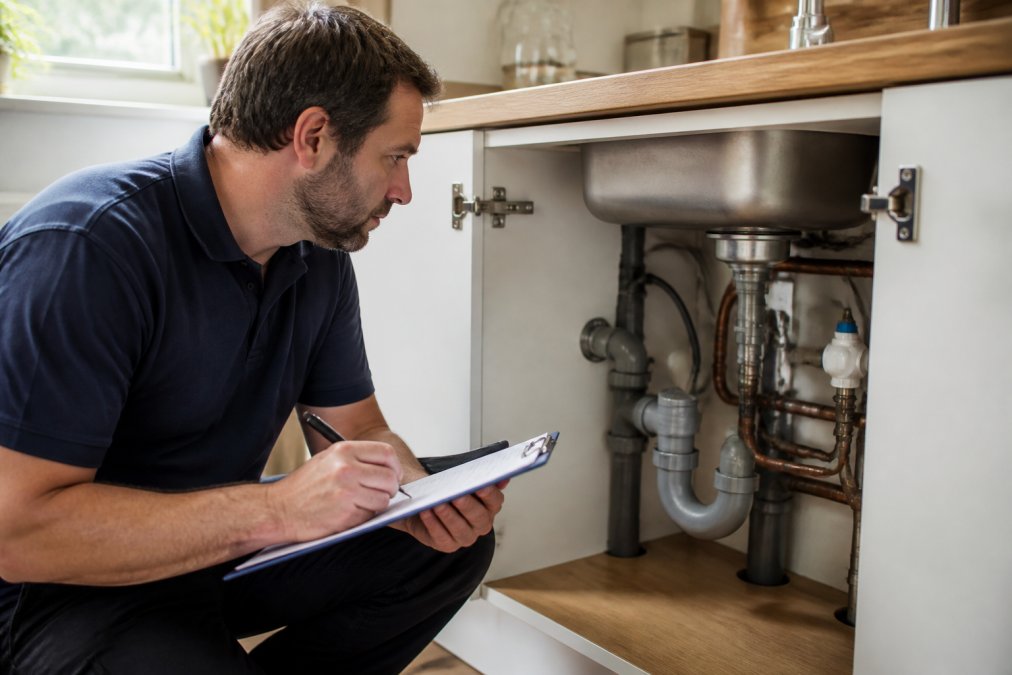
Many homeowners miss the obvious signs because they don’t know what to look for. Discolouration around joints often indicates slow leaks that haven’t yet caused visible damage. Mineral deposits suggest hard water is affecting your system. A qualified technician will spot these patterns and recommend action before they become emergencies.
The checklist also serves as a record. If you keep notes from each inspection, you’ll notice trends: pipes that weep slightly each winter, a radiator that needs regular bleeding, or a boiler pressure that drifts. These patterns help predict when replacement or major work might be needed.
How to Prevent Burst Pipes in Winter
Burst pipes are among the most expensive plumbing emergencies. Prevention starts with understanding why they happen: water expands when it freezes, and if that expansion happens inside a closed pipe, the pressure builds until the pipe splits. Once it thaws, you’re left with flooding.
The most vulnerable pipes are those exposed to extreme cold: outdoor hose taps, pipes in unheated lofts, pipes running along exterior walls, and those in uninsulated garages or sheds. Lagging, wrapping pipes with foam insulation, is the simplest defence. It’s cheap, effective, and takes an afternoon to install.
Ensure your loft is adequately insulated. Many homes lose heat through poor loft insulation, which then allows pipes to freeze. Aim for at least 270mm of mineral wool or equivalent. Check that pipes running through the loft aren’t trapped against cold roof timbers where they can’t benefit from any residual warmth.
Keep cabinet doors under sinks open during cold snaps. This allows warm air from inside the house to circulate around pipes that would otherwise sit in a cold pocket. It’s a small step, but it works.
During prolonged freezing, let taps drip slightly. Moving water is much harder to freeze than still water. A slow drip from a tap can prevent the entire supply line from freezing solid.
Bleed your radiators before winter arrives. Air trapped in the system reduces heat circulation and can cause cold spots where pipes are vulnerable. An annual bleed takes minutes and is often included in maintenance plans.
Never attempt to thaw a burst pipe with a blowtorch or naked flame. You risk fire and explosion. Use warm water, heat lamps, or call a qualified plumber.
Comparing Maintenance Plans: What to Look For
Not all maintenance plans are equal. When comparing options, focus on what matters most to your property and circumstances.
| Plan Element | What to Check | Why It Matters |
|---|---|---|
| Response Time | Guaranteed call-out within 1-4 hours | Faster response prevents water damage escalating |
| Coverage Scope | Boiler, heating, plumbing, or all three | Bundled plans offer better value than separate agreements |
| Parts & Labour | Whether parts are included or charged separately | Some plans cover labour only; others include parts |
| Call-Out Limits | Unlimited or capped at X per year | Unlimited is better for older properties prone to issues |
| Excess or Excess-Free | Whether you pay a per-call fee or nothing | Excess-free plans are better for frequent issues |
| Preventative Visits | Scheduled inspections included | Annual inspections catch problems early |
| Emergency Hours | 24/7 or business hours only | 24/7 matters if you work irregular hours or have elderly relatives |
| Cancellation Terms | How flexible the agreement is | Avoid long lock-in periods if your circumstances might change |
The cheapest plan isn’t always the best value. A plan with a low premium but high excess or limited call-outs might cost more in the long run if you need repairs. Look at the total cost of ownership over a year, not just the monthly fee.
Ask whether the provider is approved by boiler manufacturers. Apex Gas & Heating Ltd’s Worcester and Glow-worm approvals mean that repairs and servicing maintain your boiler warranty. Non-approved engineers can void your manufacturer’s guarantee, leaving you exposed to expensive replacement costs.
Emergency Call-Outs and Plan Coverage
Emergency call-outs outside normal business hours are where maintenance plans prove their worth. A burst pipe at 2 a.m. on a Sunday or a boiler failure on Christmas Eve shouldn’t trigger a panic about cost.
Most plans include 24/7 emergency access, but the response time and what’s actually covered varies. Some plans cover the call-out fee but charge for parts and labour. Others cover labour but not parts. The best plans cover both, with no excess.
Check whether your plan covers temporary fixes as well as permanent repairs. Sometimes a plumber needs to isolate a problem temporarily to prevent flooding, then return during normal hours to complete the work properly. Your plan should cover both visits.
Ask about the engineer’s authority to make decisions on the spot. Can they order parts and return the next day, or do they need approval from head office first? The faster they can act, the less disruption you’ll face.
Response time guarantees matter. A plan promising “within 4 hours” sounds reasonable until you’re standing in water. Apex Gas & Heating Ltd offers a fast, 24/7 emergency call-out service, recognising that every minute counts when pipes are leaking or your boiler has failed. Should a major issue arise, we can advise on boiler repair or plumbing services to get you back on track quickly.
Families with young children, elderly relatives, or anyone unable to take time off work for repairs should prioritise plans with 1-2 hour response guarantees.
Getting Started with Your Maintenance Plan
Starting a maintenance plan is straightforward. Contact Apex Gas & Heating Ltd to discuss your property’s needs. We’ll ask about your boiler age, any previous issues you’ve experienced, whether you have a combination boiler or a system with a separate tank, and any areas of concern.
Most plans begin with a full system inspection. This establishes a baseline: the current condition of your pipework, boiler, and heating system.
Frequently Asked Questions
What is included in an annual plumbing maintenance plan?
Annual plumbing maintenance plans typically include regular inspections of pipes, drains, and fixtures, pressure checks, leak detection, and preventative treatments to stop corrosion and blockages. Most plans cover professional servicing visits and may include priority call-out response for emergencies. Specific coverage varies by plan, so check what your chosen provider offers to ensure it matches your property’s needs.
Is a plumbing maintenance plan worth the investment for homeowners?
Yes. Preventative plumbing maintenance catches small issues before they become costly repairs. Regular inspections identify leaks, corrosion, and pressure problems early, helping you avoid burst pipes, water damage, and emergency call-out charges. Over time, the cost of a maintenance plan is typically far less than the expense of major repairs or emergency visits.
How often should you have a professional plumbing inspection?
Most professionals recommend at least one comprehensive plumbing inspection annually. Older properties, those with a history of problems, or homes with more complex plumbing systems may benefit from twice-yearly inspections. A maintenance plan ensures inspections happen on schedule without you having to remember to book them.
Does a plumbing maintenance plan cover emergency call-outs?
Many annual plumbing maintenance plans include priority access to emergency call-out services, and some cover the cost of emergency repairs. However, coverage varies between plans. Check whether your plan includes 24/7 emergency response and what proportion of repair costs are covered, so you’re not caught out by unexpected bills.