








Table of Contents
- Why Your Boiler Pressure Matters
- What Pressure Should a Boiler Be at When Cold
- Where Is the Boiler Filling Loop and What It Does
- Step-by-Step: How to Repressurise a Boiler Safely
- How to Repressurise a Combi Boiler Specifically
- Why Your Boiler Pressure Keeps Dropping
- When to Call a Gas Safe Registered Engineer
- Common Mistakes to Avoid
- Frequently Asked Questions
Last Updated: October 21, 2026
Why Your Boiler Pressure Matters
Low boiler pressure is one of the most common issues homeowners face. When pressure drops, your heating system struggles to push hot water through your radiators and pipes. The result: cold rooms, inconsistent heating, and a boiler that works harder than it should.
Boiler pressure is measured in bar. Think of it like the force pushing water around your central heating system. Too little pressure, and the system can’t function properly. Too much, and you risk damage to pipes and components. Getting it right keeps your home warm and your boiler running efficiently.
At Apex Gas & Heating Ltd, we help homeowners understand their heating systems. One question we hear often is about boiler pressure. Many people don’t realise that repressurising a boiler safely is something they can do themselves in minutes, without waiting for an engineer. This guide walks you through the process step by step.
Check your boiler’s manual first. The correct pressure range is usually printed on the front panel or inside the manual. Most systems need 1 to 1.5 bar when cold.
What Pressure Should a Boiler Be at When Cold
Your boiler pressure should be between 1.0 and 1.5 bar when the system is cold. This is the starting point before you switch the heating on. Most boilers have a pressure gauge on the front panel showing a green zone, that’s your target range.
Why does cold pressure matter? When you heat water, it expands. A boiler that starts at 1.0 bar might rise to 2.0 bar or higher once the system warms up. This is normal. The expansion vessel (a small tank inside the boiler) absorbs this extra pressure.
Different boiler types have slightly different requirements. Combi boilers, system boilers, and conventional systems all work the same way. Check your specific boiler’s manual to confirm the exact range.
The pressure gauge is usually a dial on the front of the boiler. It’s colour-coded: green means okay, red means too high or too low. If your needle sits in the red zone, your boiler needs to be repressurised safely.
Where Is the Boiler Filling Loop and What It Does
The filling loop is a small pipe with a valve that lets you add water to your heating system. It’s usually located at the bottom of the boiler, though some systems have it elsewhere.
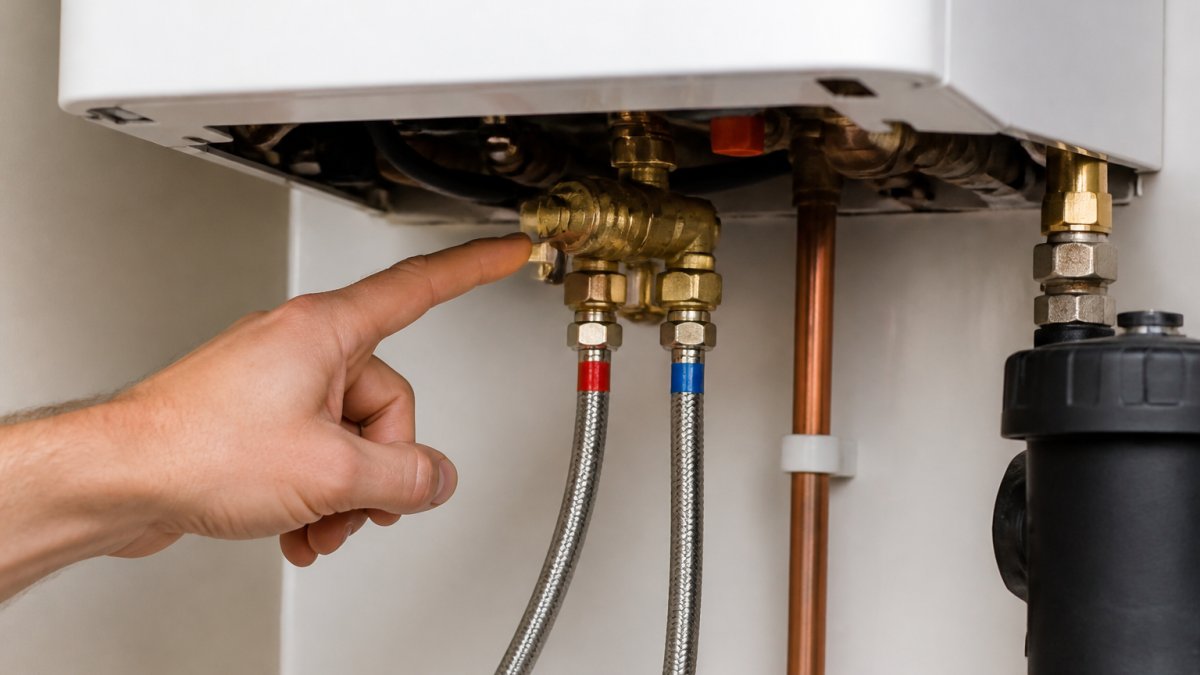
The filling loop does one job: it allows water to enter the closed heating system when pressure drops. Your system is sealed most of the time. Water can’t get in or out on its own.
Some older systems have a permanent filling loop that stays connected. Modern boilers often have an isolating valve you can turn on and off. This is safer, it prevents accidental over-pressurisation. Check whether yours has an isolation valve.
The filling loop is one of the most important parts of your heating system. Without it, you couldn’t maintain pressure when small leaks occur. It’s normal for systems to lose a tiny amount of water over time.
Step-by-Step: How to Repressurise a Boiler Safely
Before You Start: Safety Checks
Never work on a boiler that’s actively heating. Turn off the heating and let the system cool completely. This usually takes 30 minutes to an hour. A hot system is under pressure and can be dangerous.
Check the pressure gauge on your boiler. If it’s in the red zone on the low side, repressurising the boiler safely is your next step. If it’s already in the green zone, you don’t need to do anything.
Read your boiler’s manual. Different models have slightly different procedures. Some have isolation valves you need to open first. Others are straightforward. Knowing your specific boiler saves time and mistakes.
Safety checks before you start:
- Heating system is off and cool
- Pressure gauge shows low pressure
- You have the boiler manual nearby
- Your filling loop is visible and accessible
Locating and Using Your Filling Loop
Find the filling loop at the bottom of your boiler. It’s a small pipe with a valve. Some systems have one permanent loop. Others have a removable loop with connectors, it might be stored nearby if not currently attached.
If your filling loop has an isolation valve, turn it slowly to the open position. You’ll feel it click or turn smoothly. Don’t force it. If it won’t budge, stop and call an engineer. Forcing a stuck valve can damage it.
Listen for water flowing into the system. You might hear a slight hissing or gurgling sound inside the boiler. This is normal. Water is entering the heating system.
Watch the pressure gauge as you open the valve. It will start to rise. Keep watching, you want to stop when it reaches the green zone, usually around 1.2 to 1.5 bar.
Monitoring Pressure as You Fill
The pressure gauge is your guide. Open the filling loop valve slowly. Don’t rush this step. If you add water too quickly, you might overfill the system.
As pressure rises, watch the needle move towards the green zone. When it reaches the target pressure (usually 1.2 bar), close the valve. Turn it clockwise until it stops. Don’t force it, a gentle turn is enough.
Close the isolation valve if your system has one. Again, a gentle turn is all you need.
Now turn the heating on and let the system warm up. The pressure will rise further as water heats and expands. This is expected. Watch the gauge as the system heats. The pressure should rise into the upper part of the green zone, but not into the red.
Once the system is warm and the pressure is stable in the green zone, you’re done. Repressurising the boiler safely is complete.
If pressure rises too high and enters the red zone, do not panic. Turn off the heating and let the system cool. The pressure will drop. You can then open a radiator bleed valve slightly to release a tiny amount of water and bring pressure down. Only do this if you’re confident, otherwise, call an engineer.
How to Repressurise a Combi Boiler Specifically
Combi boilers are the most common type in UK homes. They heat water on demand and don’t need a separate hot water tank.
Find the filling loop. On most combis, it’s at the bottom front of the unit. Some models have it on the side. Check your manual if you’re unsure.
Turn off the heating and let the system cool. This is essential for safety. A warm combi boiler is under pressure.
Open the filling loop valve slowly. Watch the pressure gauge. When it reaches 1.2 to 1.5 bar, close the valve. That’s it.
The main difference with combis is that they’re more compact. The filling loop might be in a tighter space. Take your time locating it.
After repressurising the boiler safely, turn the heating on. Let the system warm up and check that pressure stays in the green zone as it heats. If it rises too high, you’ve added too much water.
Why Your Boiler Pressure Keeps Dropping
Boiler pressure drops for a reason. Understanding why helps you know whether to repressurise the boiler safely yourself or call an engineer.
A small drop in pressure over weeks or months is normal. Heating systems lose tiny amounts of water through microscopic leaks or evaporation. This is expected. You might repressurise your boiler safely once or twice a year, and that’s fine.
A rapid drop, pressure falling from green to red in days or hours, signals a real leak. A leak could be in a pipe, a radiator, or inside the boiler itself. This needs professional attention. Call an engineer if pressure drops quickly after you’ve just added water.
Common causes of pressure drop:
- Leaking radiator valve: Check under radiators for drips or puddles. A faulty valve wastes water.
- Leaking pipe: Look in the loft, under floors, or in the kitchen for wet patches or dripping water.
- Expansion vessel failure: This is inside the boiler. If it fails, pressure won’t hold. You’ll need a new boiler or a replacement vessel.
- Boiler leak: Internal leaks are harder to spot but cause steady pressure loss. An engineer can diagnose this.
If you repressurise a boiler safely and pressure drops again within a few days, don’t keep topping it up. Call an engineer. Repeated attempts to repressurise on a leaking system won’t fix the problem, it just hides it.
Pressure dropping slowly over months is normal and easy to fix. Pressure dropping fast is a warning sign that something is wrong. Know the difference.
When to Call a Gas Safe Registered Engineer
Some boiler issues need professional help. Know when to stop and call an expert.
Call an engineer if:
- Pressure drops rapidly after you repressurise a boiler safely
- You can’t find the filling loop or it won’t open
- The isolation valve is stuck or broken
- Pressure rises into the red zone and won’t come down
- You see water leaking from the boiler or pipes
- The boiler makes unusual noises when you repressurise it
- You’re unsure about any step in the process
Apex Gas & Heating Ltd offers boiler repair and servicing across Sussex and Surrey. Our Gas Safe registered engineers can diagnose pressure problems quickly. We offer fixed-price quotes and a 2-year workmanship guarantee on all repairs. If you’re not confident repressurising your boiler safely yourself, we’re here to help.
A professional can also check for hidden leaks, test the expansion vessel, and make sure your system is running safely. Regular servicing catches pressure problems before they become emergencies.
Common Mistakes to Avoid
Many people make the same mistakes when they repressurise a boiler safely. Knowing what to avoid saves time and prevents damage.
Mistake 1: Not letting the system cool first. A hot boiler is under pressure.
Mistake 2: Adding too much water. It’s easy to overfill. Watch the pressure gauge carefully. Stop when it reaches the green zone.
Mistake 3: Forcing a stuck valve. If the filling loop valve won’t turn, stop. Forcing it can break the valve or damage the boiler.
Mistake 4: Ignoring rapid pressure drops. If pressure falls quickly after you repressurise a boiler safely, there’s a leak. Don’t ignore it. Get it checked professionally.
Mistake 5: Forgetting to close the valve. After repressurising your boiler safely, close the filling loop valve. Leaving it open can cause problems. Make sure it’s fully closed.
Mistake 6: Not checking the manual. Every boiler is slightly different. Your manual tells you the correct pressure range and filling loop location. Use it.
Low boiler pressure is frustrating, but it’s usually fixable. However, if pressure drops repeatedly or you’re unsure at any point, contact Apex Gas & Heating Ltd. Our Gas Safe registered engineers can diagnose the underlying cause and ensure your heating system is safe and efficient. Get a quote from Apex Gas & Heating Ltd and let us handle the problem properly.
Frequently Asked Questions
How do I know when to stop filling the boiler?
Stop filling when the pressure gauge reaches 1.0-1.5 bar on a cold boiler. Most boilers display the safe pressure range on the gauge itself, usually marked in green. Once you reach the target, close the filling loop valve immediately. If you overfill, the pressure relief valve may discharge water, so err on the side of caution and stop slightly below the maximum mark.
What pressure should my boiler be when it is cold?
A cold boiler should sit at 1.0-1.5 bar, depending on your boiler model and system design. Check your boiler’s manual for the exact specification, as some systems may differ. The pressure gauge on your boiler shows the current reading. If it’s below 1.0 bar, you’ll need to repressurise. If it’s consistently dropping, contact a Gas Safe registered engineer to investigate for leaks or internal faults.
Should I turn my boiler off before repressurising it?
Yes, always turn your boiler off before repressurising. Wait 30 minutes for the system to cool completely, as pressure increases when the system is hot. This prevents overfilling and makes it safer to work with the filling loop. Never attempt to repressurise a hot boiler, as the pressure gauge reading will be inaccurate and you risk scalding.
What should I do if the boiler pressure keeps dropping?
Repeated pressure loss indicates a leak in the system or a faulty internal component. Check visible pipework for obvious drips or water stains. If you find no visible leak, the problem is likely inside the boiler or in hidden pipework. Do not keep repressurising repeatedly; contact a Gas Safe registered engineer to locate the leak and repair it permanently. Continuing to top up masks a serious problem that will worsen.