






Rated Excellent Rating Gas Safe Registered BPEC Certified 25 Years’ Experience 2 Year Guarantee Card Payments AcceptedApple Pay, Mastercard, Visa, Amex, Google Pay Worcester BoschVaillantBaxiGlow-wormAccredited

Category: Boiler Repair

  • Ampella Alternative for Emergency Boiler Repairs

    Ampella Alternative for Emergency Boiler Repairs

    Table of Contents

    Last Updated: August 9, 2026

    Why Homeowners Search for Emergency Boiler Repair Alternatives

    When your boiler stops working in winter, you need options: faster response times, transparent pricing, and engineers you can trust. Homeowners across Sussex and Surrey increasingly search for emergency boiler repair alternatives because not every service operates the same way. Understanding your choices before crisis strikes puts you in control.

    At Apex Gas & Heating Ltd, we’ve helped hundreds of homeowners navigate this situation. Some need immediate same-day repairs. Others want the security of a maintenance plan that covers unexpected breakdowns. Still others are comparing one-off call-outs against annual boiler cover plans. Each approach has genuine trade-offs depending on your situation, property age, and heating system reliability.

    This guide breaks down your real options for emergency boiler repairs, from one-off call-out services to comprehensive cover plans, so you can make a decision before your system fails.

    What to Do During a Boiler Emergency

    When your boiler stops working, your immediate actions determine whether you get a same-day repair or end up waiting.

    Start by checking the basics. Look at your thermostat: is it set to heat mode and above room temperature? Check the boiler pressure gauge, it should read between 1 and 1.5 bar. If pressure is low, you may be able to repressurise the system using the filling loop (consult your boiler manual). Listen for unusual noises: a kettling sound often signals limescale buildup, whilst a banging noise might indicate trapped air.
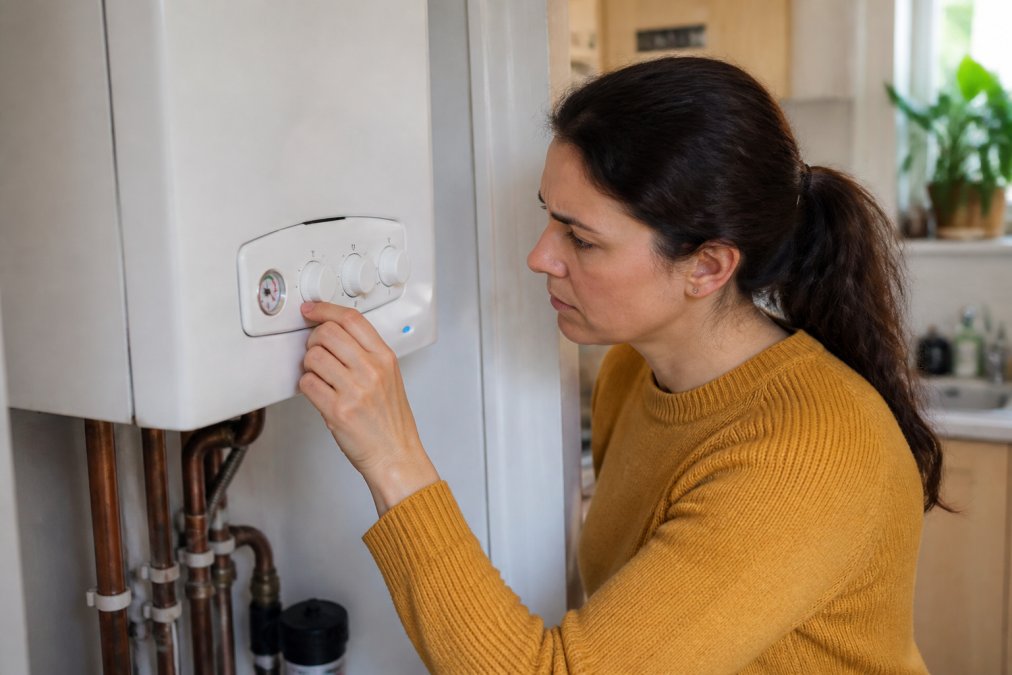
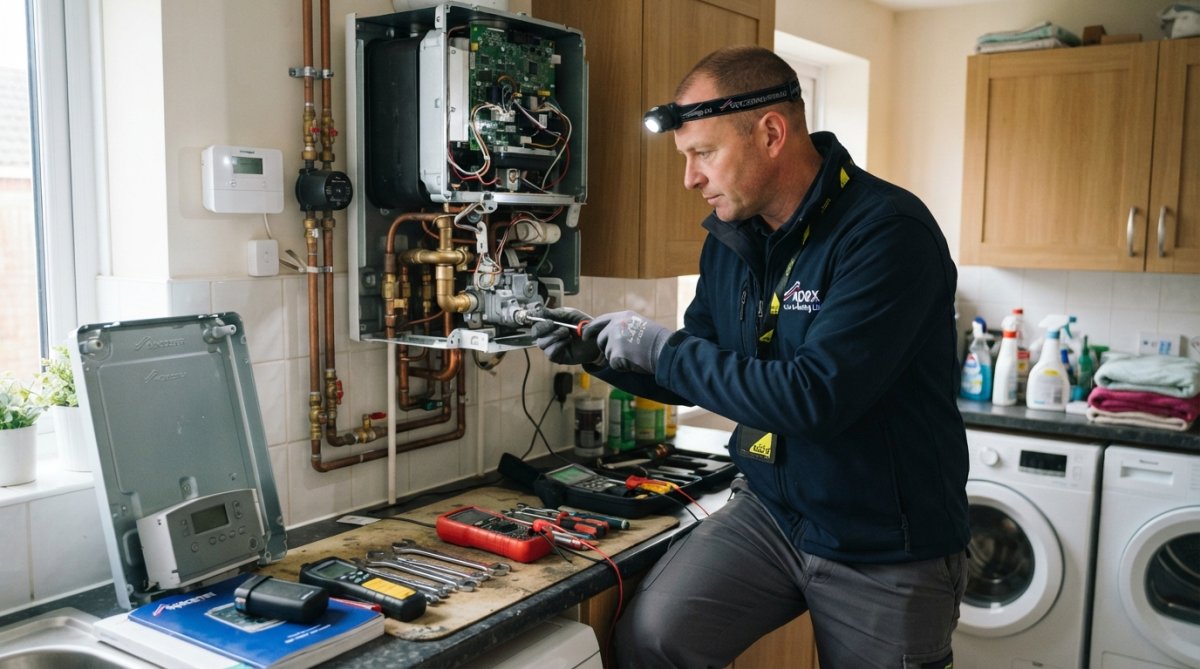
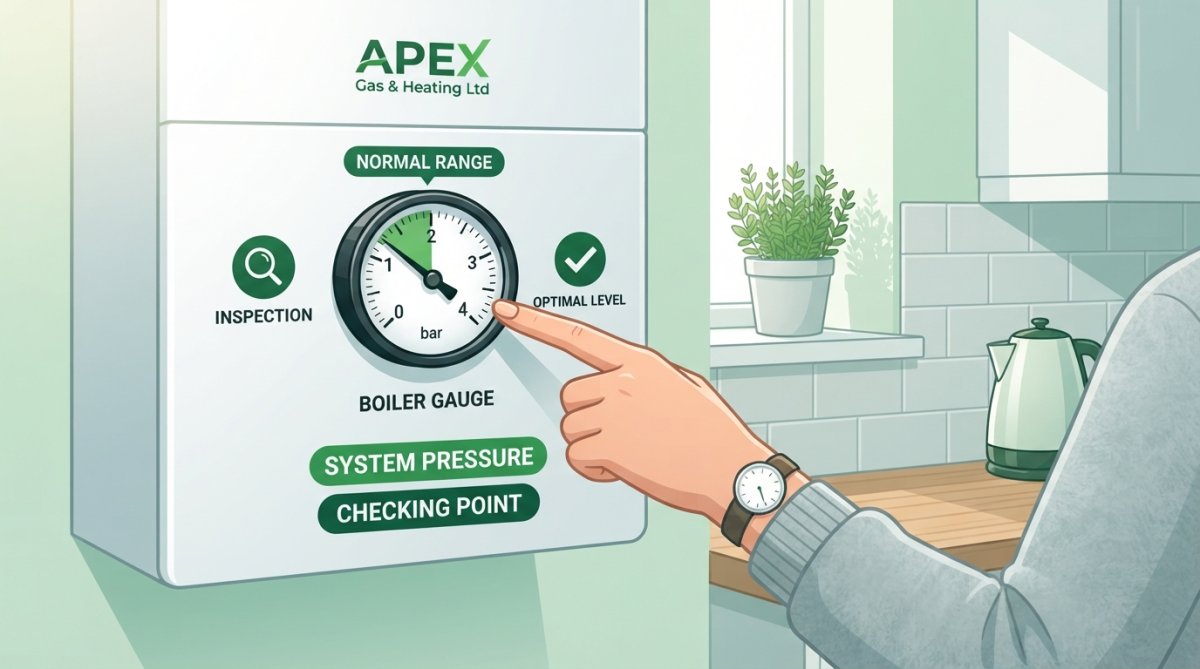
    Homeowner in a residential kitchen examining their boiler control panel and checking the pressure gauge, looking concerned but methodically checking settings
    Homeowner in a residential kitchen examining their boiler control panel and checking the pressure gauge, looking concerned but methodically checking settings

    If the pilot light is out, you may be able to relight it by following the instructions on your boiler’s casing. However, if it keeps going out or won’t light at all, you need an engineer, this is a Gas Safe issue and not a DIY fix.

    Once you’ve checked these basics, call an emergency engineer if your boiler isn’t responding. Document what you’ve already checked and what error codes the boiler is displaying; this information helps the engineer diagnose the problem faster. Keep your boiler’s model number and installation date handy. If you have a boiler cover plan, have your policy number ready when you call.

    Finding a Gas Safe Registered Emergency Plumber

    Your engineer must be Gas Safe registered, this is a legal requirement in the UK and your protection against unsafe work and carbon monoxide risk.

    When you search for an emergency engineer, verify their Gas Safe registration before booking. You can check the Gas Safe Register’s searchable database to confirm their credentials. A legitimate Gas Safe registered engineer will have a registration number and will be happy to provide it.

    Beyond the Gas Safe requirement, look for engineers who offer transparent pricing before they arrive. Ask about their response time guarantee and whether they carry common replacement parts. An engineer with stock can often complete the repair in a single visit rather than leaving you without heating whilst waiting for parts to arrive.

    Local engineers across Sussex and Surrey vary in their availability and pricing structures. Some operate on hourly rates plus parts; others offer fixed-price repairs for common faults. Ask what their call-out charge includes and whether it covers the diagnosis, labour time, or is applied as a credit towards repair costs if you proceed.

    Emergency Boiler Repair Cost Factors to Consider

    The cost of an emergency repair depends on several variables.

    The fault itself is the primary cost driver. A simple reset or pilot light relight might cost only the call-out fee. A new pump, thermostat, or heat exchanger costs significantly more. The timing matters too, evening, weekend, and bank holiday call-outs typically cost more than standard working hours. Your boiler’s age and model affects parts availability and labour time. Older boilers may require sourcing discontinued parts, which takes longer and costs more.

    Your location within Sussex and Surrey influences response times and travel charges. Urban areas typically have faster response times than rural properties. Whether you have a cover plan changes the equation entirely, with a plan, you pay a monthly premium and potentially a small excess per call, but you avoid the full cost of parts and labour.

    Many homeowners find that one emergency repair makes a strong case for switching to a boiler cover plan. Others, with newer systems that rarely fail, prefer to pay per repair and keep monthly costs low. If you’re in a rental property, your landlord may have a responsibility to arrange and pay for emergency repairs; check your tenancy agreement and contact them immediately if the heating fails.

    Comparing Emergency Repair Services vs. Boiler Cover Plans

    Two fundamentally different approaches exist: paying for repairs as they happen, or paying monthly for a plan that covers breakdowns.

    Emergency repair services work on a call-per-call basis. You pay a call-out charge plus labour and parts. Response times vary from same-day to within a few days, depending on demand. This approach suits homeowners with newer boilers that rarely fail, or those who prefer to avoid monthly commitments. The risk is that a major repair can cost several hundred pounds unexpectedly.

    Boiler cover plans charge a fixed monthly fee in exchange for unlimited call-outs, parts, and labour. Most plans include an annual service to maintain efficiency and catch problems early. This approach suits homeowners with older boilers, those in rental properties where landlords require cover, or anyone who values predictable monthly costs. The trade-off is paying for coverage even in years when you don’t need repairs.

    Service Type Response Time Parts & Labour Best For
    Emergency call-out (one-off) Same-day to 3 days You pay full cost Newer boilers, rare failures
    Boiler cover plan 24-48 hours typically Included in plan Older boilers, peace of mind
    Annual service only Scheduled, not emergency Not included Preventative maintenance

    Several UK providers offer boiler cover with different coverage levels. British Gas HomeCare includes annual servicing and same-day service (if you call before 11 am). YourRepair fixes pricing for up to three years. Hometree promises no unfair price hikes for claim-free customers. CORGI HomePlan provides access to over 4,000 Gas Safe engineers nationwide. Each has different excess fees, waiting periods, and exclusions; compare the details based on your boiler model and age.

    For properties in Sussex and Surrey, local services like Apex Gas & Heating Ltd offer 24/7 emergency call-outs with transparent pricing and no long-term contracts, suiting homeowners who want flexibility and prefer working with a locally trusted team.

    Local Emergency Boiler Repair Services in Sussex and Surrey

    Your location determines which services can reach you quickly. Sussex and Surrey have several options for emergency boiler repairs.
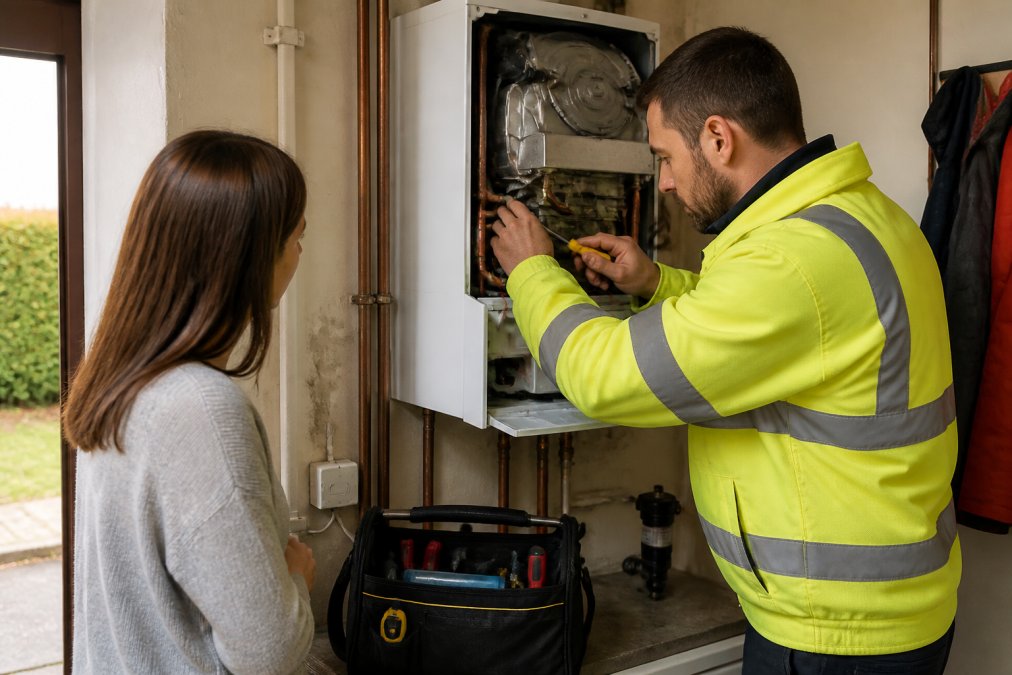
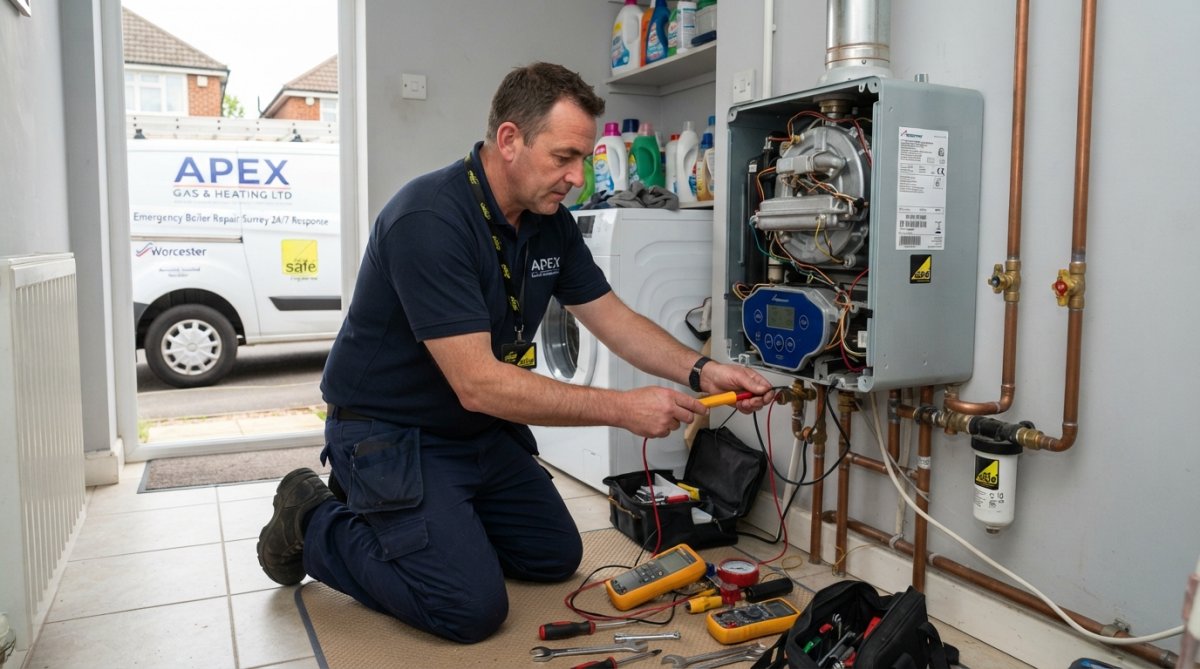
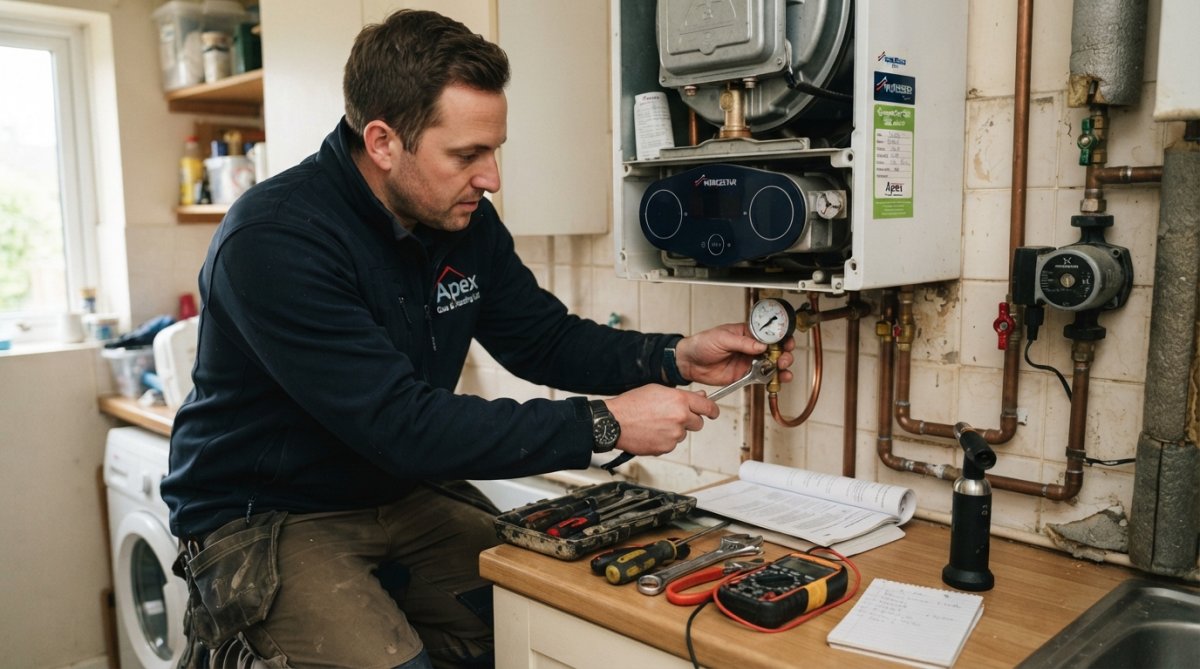
    Gas Safe registered heating engineer in uniform and high-visibility jacket examining a boiler system in a residential utility room, with tools and diagnostic equipment visible
    Gas Safe registered heating engineer in uniform and high-visibility jacket examining a boiler system in a residential utility room, with tools and diagnostic equipment visible

    National services with local engineers include British Gas, CORGI HomePlan, and HomeServe, offering large networks and established brand reputation, though response times and engineer quality vary by area. Specialist local services operate across specific regions and often provide faster response times because they have engineers based locally. Apex Gas & Heating Ltd serves Sussex and Surrey with 24/7 emergency call-outs and approved Glowworm and Worcester installations, so you’re working with engineers who know the local area and can often arrive within hours.

    When choosing a local service, confirm they’re Gas Safe registered, ask about their average response time for emergencies, and check whether they offer fixed-price repairs for common faults. Confirm their pricing model and whether they offer discounts for multiple properties.

    Preventing Future Boiler Breakdowns

    The best emergency is one that never happens. Regular maintenance prevents most breakdowns and extends your boiler’s working life.

    Annual servicing is the foundation. A qualified engineer inspects your boiler, cleans components, checks safety systems, and identifies worn parts before they fail. This catches issues like pilot light problems, pressure loss, or thermostat faults whilst they’re still minor. Most boiler cover plans include annual servicing, which is one reason they make financial sense.

    Pro Tip
    Many homeowners skip annual servicing to save money, then face a major emergency repair. A service prevents the majority of winter breakdowns.

    Bleeding radiators prevents trapped air from reducing heating efficiency and putting strain on the pump. If some radiators stay cold whilst others heat normally, air is likely trapped. A simple bleed valve on each radiator releases this air.

    Checking boiler pressure monthly takes 30 seconds. If pressure drops below 1 bar, your system is losing water, a sign of a leak somewhere in the pipework or boiler. Repressurise using the filling loop, but if pressure drops again within weeks, you have a leak that needs investigation.

    Insulating pipework in unheated spaces prevents freezing in winter. A frozen pipe can crack, causing water damage and loss of heating. Pipe insulation is inexpensive and a straightforward DIY job.

    Keeping the boiler clear of clutter helps with ventilation and safety. Don’t store items directly in front of or around the boiler.

    If your boiler is over 15 years old, consider replacement rather than waiting for the next major repair. Older boilers become less efficient, repairs become more frequent and expensive, and parts become harder to source. A new installation typically pays for itself within 5-7 years through improved efficiency.

    Key Takeaway
    The difference between homeowners who face constant boiler emergencies and those who rarely have problems comes down to one thing: annual servicing. It’s the single most effective prevention tool available.

    Conclusion

    When your boiler fails, you need options. Whether you choose a one-off emergency repair service, a monthly boiler cover plan, or a combination of both depends on your boiler’s age, your budget, and how much predictability matters to you.

    For homeowners and landlords across Sussex and Surrey, Apex Gas & Heating Ltd provides 24/7 emergency call-out service with Gas Safe registered engineers, transparent pricing, and approved Glowworm and Worcester installations. With full public liability insurance and a locally trusted team, you get peace of mind and fast response times when heating emergencies strike. Get a quote today and know you have a reliable partner before you need one.

    Frequently Asked Questions

    How much does an emergency boiler repair cost?

    Emergency boiler repair costs vary based on the fault type, time of call, and parts needed. Call-out fees typically range from £50 to £100+, with labour charged at hourly rates or fixed prices depending on the service provider. Diagnostic fees may apply if the engineer needs to identify the problem before repair. Many Gas Safe registered engineers offer transparent pricing upfront. Contact your chosen provider for a specific quote based on your boiler fault.

    How do I find a Gas Safe registered emergency plumber when my boiler breaks down?

    Search the official Gas Safe Register at gassaferegister.co.uk to verify any engineer's credentials before booking. Ask for their Gas Safe registration number when you call. Local emergency plumbing services, boiler cover providers, and heating maintenance companies all employ Gas Safe registered engineers. Check customer reviews and response-time guarantees. Many providers offer 24/7 booking online or by phone. Apex Gas & Heating Ltd, for example, maintains Gas Safe registration and Worcester/Glowworm approval across Sussex and Surrey.

    What should I do immediately if my boiler stops working in winter?

    First, check your thermostat is set correctly and the boiler pilot light is lit. Look for error codes on the display panel. Bleed radiators if they're cold at the top (turn the bleed screw gently with a radiator key). If these steps don't restore heat, contact a Gas Safe registered emergency engineer immediately, do not attempt repairs yourself. Keep your boiler's manual and any warranty documents handy. If you have boiler cover, call your provider's emergency line. Provide the engineer with your boiler model and any error messages you've seen.

    What factors affect the cost of an emergency boiler repair?

    Key factors include the type of fault (pilot light, pressure loss, heat exchanger damage), the time of call (weekend or night rates may apply), parts needed, and labour duration. Older boilers or rare models may cost more to repair. Whether the boiler is still under warranty affects cost. Call-out fees, diagnostic charges, and travel distance also vary by provider. Emergency call-outs typically cost more than standard daytime repairs. Get a quote from your engineer before work begins to understand the full cost breakdown.

    Is it illegal to repair my own boiler in the UK?

    Yes, it is illegal to repair a gas boiler yourself unless you are Gas Safe registered. Only qualified Gas Safe engineers can legally work on gas appliances under the Gas Safety (Installation and Use) Regulations 1998. Attempting DIY repairs voids your warranty, invalidates your boiler cover, and creates serious safety risks including carbon monoxide poisoning. If you rent, your landlord is legally required to provide emergency heating repairs by a qualified engineer. Always use a Gas Safe registered professional for any boiler work.


    Don’t wait for a breakdown to discover which service can actually reach you within hours. Compare your options now, verify Gas Safe registration, and choose the approach that matches your situation. Whether it’s a one-off repair or annual cover, the goal is the same: keeping your home warm, safe, and comfortable through every winter.
    Get a Free Quote Today →

    This article was written using GrandRanker

  • Why Does My Boiler Keep Breaking? Common Causes & Fixes

    Why Does My Boiler Keep Breaking? Common Causes & Fixes

    Table of Contents

    Last Updated: July 30, 2026

    If you’re asking why does my boiler keep breaking, you’re not alone. At Apex Gas & Heating Ltd, we’ve diagnosed hundreds of repeat boiler failures across Sussex and Surrey, and the patterns are consistent: a single unaddressed issue like low water pressure or a frozen condensate pipe triggers a cascade of breakdowns. Below, we’ll explain the exact reasons your boiler keeps failing, what you can safely fix yourself, and when you need a Gas Safe engineer.

    Why Does My Boiler Keep Breaking? Main Culprits Explained

    Repeated boiler failures almost always signal an underlying condition that hasn’t been properly addressed. Age plays a role, but a well-maintained 15-year-old boiler can outperform a neglected 5-year-old system. When small issues go unnoticed, a drop in system pressure, a faulty sensor, or a partially blocked pipe, they compound into bigger failures.

    Pro Tip
    The single best predictor of repeat boiler breakdowns is whether the system received an annual service in the previous year. Boilers without annual servicing are 3-4 times more likely to fail unexpectedly.

    Age-Based Breakdown Analysis

    Boilers older than 12 years are statistically more prone to repeated failures, but age alone doesn’t guarantee problems. The critical threshold is around the 10-year mark, when internal components like the heat exchanger begin to show wear. Corrosion accelerates, seals degrade, and the pump loses efficiency. For boilers over 15 years old, repair costs climb steeply, and many engineers recommend replacement rather than continued repairs.

    Seasonal Breakdown Patterns

    Winter is when most boiler breakdowns occur. Cold weather places extreme stress on your heating system, water pressure fluctuates due to temperature changes, and condensate pipes freeze solid. Autumn is the critical prevention window, if your boiler hasn’t been serviced by October, you’re entering winter with an untested system. Spring and summer breakdowns are rarer but more telling; if your boiler fails during mild weather, the fault is usually a sensor issue, faulty diverter valve, or pilot light problem, not weather-related stress.

    Common Boiler Problems That Lead to Repeated Breakdowns

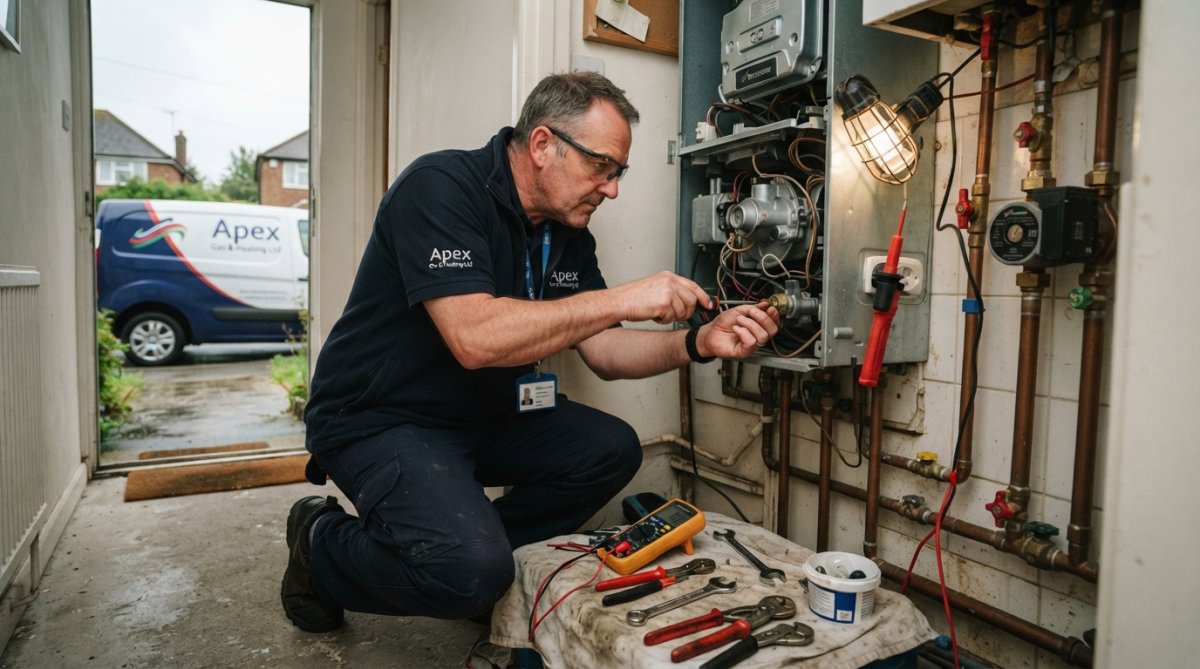
    Close-up of a technician's hands inspecting the internal components of an open boiler, showing the heat exchanger and copper pipes during a maintenance check in a home setting
    Close-up of a technician's hands inspecting the internal components of an open boiler, showing the heat exchanger and copper pipes during a maintenance check in a home setting

    Boiler Pressure Issues

    Low boiler pressure is the single most common reason homeowners call for emergency repairs. Your boiler operates at 1-1.5 bar when cold; below 1 bar, it locks out as a safety measure. Pressure loss happens due to a small leak, a faulty pressure relief valve, or a problem with the expansion vessel. If your boiler pressure keeps dropping, the underlying cause needs professional investigation. A one-off top-up is temporary; a permanent solution requires identifying whether you have a leak, faulty component, or system design issue.

    Watch Out
    Never ignore a boiler that requires pressure top-ups more than once per heating season. Repeated low pressure indicates a leak or faulty component and will eventually lead to boiler lockout at the coldest moment of winter.

    Frozen Condensate Pipes in Cold Weather

    Modern boilers produce condensate, a thin acidic liquid that drains through a small plastic pipe. In cold weather, this pipe freezes solid, causing the boiler to shut down automatically. Condensate pipe freezing is frustrating because it’s seasonal and recurring. The real solution is insulation or relocation of the pipe to a warmer route. A properly installed condensate pipe should run inside your home as much as possible, or be heavily insulated if it must run outside.

    Pilot Light Failure and Lockout

    The pilot light is a small continuous flame that ignites the main burner. When it fails, the boiler goes into lockout. Pilot light failure is usually caused by a faulty thermocouple, a blocked pilot jet, or a gas supply problem. If your boiler keeps going into lockout and requiring manual reset, the underlying cause won’t resolve itself. Continuing to reset without addressing the root cause is like ignoring a warning light on your car dashboard.

    How to Prevent Boiler Breakdowns: Maintenance & Smart Checks

    Prevention is infinitely cheaper than emergency repairs. Most repeat boiler failures are entirely preventable with basic maintenance and early detection.

    Annual Servicing and Safety Inspections

    An annual boiler service is the single most effective way to prevent repeated breakdowns. During a service, a Gas Safe engineer inspects every component, cleans the heat exchanger, checks for leaks, tests safety controls, and identifies parts that are starting to wear. The service also produces a gas safety certificate, proof that your boiler is safe to use, required by law for rental properties and valuable for insurance claims.

    Key Takeaway
    Schedule your annual service for September or October, before winter heating demand peaks. This ensures any problems are caught and fixed before the cold season arrives.

    Seasonal Maintenance Schedules

    Between annual services, perform simple checks. In autumn, check your boiler’s pressure gauge, it should read 1-1.5 bar when cold. If below 1 bar, top it up using the filling loop. In winter, listen for unusual noises: kettling suggests limescale buildup, and banging indicates air in the system or a failing pump. In spring, check that your boiler’s display shows no fault codes.

    Smart Home Integration Troubleshooting

    If your boiler is connected to a smart thermostat and has started failing, the problem might be a wiring issue or incompatibility. Check that the thermostat is powered, wiring is secure, and the thermostat is set to "heating" mode. Many smart thermostat problems can be resolved by restarting the device or recalibrating it to your boiler.

    DIY vs. Professional Repair: Safety Thresholds You Must Know

    If it involves gas, electricity, or opening sealed components, call a Gas Safe engineer.

    What You Can Safely Troubleshoot Yourself

    You can safely check and top up your boiler’s water pressure using the filling loop. You can listen for unusual noises and note fault codes. You can restart your boiler after lockout by pressing the reset button once. You can check that your thermostat is powered and set correctly. You can pour warm water on a frozen condensate pipe to temporarily restore function. You can perform basic visual inspections for leaks and check that the flue is clear.

    What you absolutely cannot do: open the boiler casing, replace internal components, adjust gas pressure, work on gas pipework, or clear internal blockages. These require training, certification, and specialist tools.

    When to Call a Gas Safe Engineer Immediately

    Call immediately if you smell gas, suspect a gas leak, or see water pooling under the boiler. Call if your boiler produces unusual smells or if it shuts down and won’t restart even after pressing the reset button. Call if it’s going into lockout repeatedly (more than once per month). Call if your boiler is over 10 years old and has broken down more than once in the past 12 months.

    Watch Out
    If you suspect carbon monoxide poisoning, headaches, nausea, dizziness, or confusion that improves when you leave the house, evacuate immediately, open windows, and call emergency services. Do not attempt to diagnose or repair the boiler yourself.

    Boiler Repair Cost UK: What to Expect for Repeated Issues

    A single repair costs £300-£600. If you’re paying this multiple times per year, replacement becomes financially sensible. A useful rule: if your boiler is over 10 years old and the repair cost exceeds 50% of the replacement cost, replacement is usually better. A new boiler costs £2,500-£4,000 installed and comes with a warranty (5-10 years) and peace of mind. Modern boilers are 10-15% more efficient than models from 10 years ago, and energy savings can offset a significant portion of installation cost over 15 years.

    Boiler Servicing UK: Your Best Defence Against Breakdowns

    Regular servicing is the most cost-effective way to prevent repeated breakdowns.

    What a Professional Service Includes

    A comprehensive service includes visual inspection of all accessible components, cleaning of the heat exchanger and burner, checking of all safety controls and sensors, testing of the thermostat and timer, inspection of the flue and ventilation, and a pressure test. The engineer will also check the pilot light, test the ignition sequence, verify correct temperature and flow rate, top up lost pressure, and clean or replace the filter. Most importantly, they’ll issue a gas safety certificate.

    How Regular Servicing Stops Repeated Breakdowns

    Servicing catches wear and tear before it becomes a failure. A thermocouple starting to fail might show signs during inspection, allowing replacement before lockout. A pressure relief valve leaking slightly can be identified and fixed, preventing repeated pressure drops. Servicing also cleans components that accumulate debris, restoring performance and preventing overheating. Service records create a historical pattern, helping engineers identify the root cause rather than treating symptoms.

    Emergency Boiler Breakdown: What to Do Right Now

    Immediate Steps Before Calling an Engineer

    Check if the boiler has gone into lockout by looking at the display panel. If there’s a fault code or red light, try pressing the reset button (usually red or black on the front) for 3-5 seconds. Wait 30 seconds to see if the boiler restarts. If it restarts and heating works, monitor it over the next few hours. If it locks out again, there’s a recurring fault needing professional diagnosis.

    If the reset button doesn’t work, check your boiler’s pressure gauge. If it’s below 1 bar, use the filling loop to top up pressure to 1.2-1.5 bar. If pressure is normal and reset didn’t work, check: Is the power switch on? Is the thermostat set to "heating" mode and above current room temperature? Is the timer set to allow heating?

    Understanding Boiler Lockout and Reset Procedures

    Boiler lockout is a safety feature. When the boiler detects a fault, no pilot light, low pressure, sensor failure, or gas supply problem, it shuts down and won’t restart until the reset button is pressed. If the fault hasn’t been resolved, the boiler will lock out again within minutes or hours. Repeated lockouts indicate a persistent problem, usually a faulty thermocouple. If your boiler is locking out repeatedly, stop pressing the reset button and call a Gas Safe engineer.

    Pro Tip
    Keep a note of your boiler’s fault codes and how often it locks out. This information helps engineers diagnose the problem quickly.

    Conclusion: Stop the Cycle of Boiler Breakdowns

    Repeated boiler breakdowns are frustrating and expensive, but almost always preventable. Address the root cause rather than treating symptoms, whether that’s scheduling an annual service, topping up pressure regularly, or replacing a boiler past its useful life.

    If your boiler keeps breaking down, Apex Gas & Heating Ltd can help. Our Gas Safe engineers diagnose the underlying cause of repeat failures and provide lasting solutions. With transparent pricing, full public liability insurance, and 24/7 emergency call-out service across Sussex and Surrey, we’re here when you need us most.

    Gas Safe Register

    Which? guide to boiler breakdowns and repairs

    Energy Saving Trust boiler maintenance advice

    Frequently Asked Questions

    Why does my boiler keep losing pressure and breaking down?

    Low boiler pressure is one of the most common reasons for repeated breakdowns. This can be caused by a leak in the system, a faulty expansion vessel, or a malfunctioning pressure relief valve. If your system pressure drops below 1 bar, the boiler will lockout as a safety measure. Check for visible leaks around pipes and radiators. If you can't identify the source, a Gas Safe engineer must diagnose the fault code and repair the underlying issue to prevent continuous breakdowns.

    How can I stop my boiler from breaking down every winter?

    To prevent boiler breakdowns during cold weather, schedule annual servicing before autumn arrives. Ensure your condensate pipe is insulated to prevent freezing, which is a common winter fault. Check system pressure monthly and bleed radiators to maintain proper flow rate. If your boiler is over 10-15 years old and breaks down repeatedly, replacement may be more cost-effective than ongoing repairs. Professional annual servicing catches faulty sensors and worn components before they cause emergency breakdowns.

    When should I call a Gas Safe engineer versus trying DIY troubleshooting?

    You can safely reset the boiler using the reset button if it's in lockout, or check system pressure yourself using the gauge. However, call a Gas Safe engineer immediately if you suspect a gas leak, see fault codes you don't recognise, notice carbon monoxide concerns, or if the pilot light won't stay lit after one reset attempt. Never attempt repairs to the heat exchanger, diverter valve, pump, or any gas-related components, these require professional certification and safety checks.

    Is it worth repairing a boiler that keeps breaking down, or should I replace it?

    If your boiler is under 7 years old and breaks down occasionally, repair is usually worthwhile. However, if it's over 10 years old and requires multiple repairs annually, replacement is often more economical. Consider the cost of repair versus a new installation, if repair costs exceed 50% of a replacement boiler's price, replacement makes financial sense. A professional engineer can advise whether your specific boiler's fault code indicates a one-off issue or a sign of systemic failure requiring replacement.


    Stop waiting for the next breakdown. Get a quote from Apex Gas & Heating Ltd today and get your heating system back to reliable, efficient operation.

    This article was written using GrandRanker

  • Worcester Boiler Repair Experts Surrey: Complete Guide

    Worcester Boiler Repair Experts Surrey: Complete Guide

    Table of Contents

    Last Updated: July 29, 2026

    When your Worcester boiler breaks down in the middle of winter, finding Worcester boiler repair experts Surrey becomes your immediate priority. At Apex Gas & Heating Ltd, we understand the stress that comes with a malfunctioning heating system. This guide covers everything you need to know about finding reliable boiler repair services in Surrey, understanding common faults, and making informed decisions about repair versus replacement.

    Not all boiler repair services are created equal. Some engineers lack proper certification, others charge hidden fees, and many fail to deliver promised response times. According to Gas Safe Register, the UK’s official gas safety regulator, only Gas Safe registered engineers should work on your boiler. Below, we’ll show you how to identify Worcester boiler repair experts in Surrey, what separates accredited installers from the rest, and how to avoid costly mistakes.

    Why Worcester Boiler Repair Experts in Surrey Matter

    A broken boiler is a safety issue. Worcester Bosch boilers are reliable, but when something goes wrong, you need someone who understands these specific systems. The difference between a qualified Worcester boiler repair expert and an amateur is often the difference between a £150 fix and a £2,000 replacement.

    Worcester Bosch systems contain complex components including heat exchangers, condensers, and pressure relief valves. A technician unfamiliar with these mechanisms might misdiagnose the problem entirely. Many homeowners have experienced situations where a non-specialist charged for unnecessary parts replacement when the real issue was simply a pressure reset or a blocked condensate pipe.

    Pro Tip
    Check your boiler’s warranty documentation immediately. Many Worcester Bosch warranties require repairs to be completed by an Accredited Installer; using anyone else voids your coverage entirely.

    During winter months, a same-day repair from a qualified engineer prevents frozen pipes, protects your family’s health, and avoids inflated emergency rates. Apex Gas & Heating Ltd maintains rapid response times across Surrey because boiler emergencies demand immediate attention.

    Worcester Bosch Accredited Installer Surrey: What Sets Them Apart

    Verification and Certification

    An Accredited Installer certification from Worcester Bosch represents completion of rigorous training and ongoing quality standards. These engineers have demonstrated competency in Worcester Bosch systems specifically, not just general boiler knowledge.

    When you hire a Worcester Bosch Accredited Installer, you access technical support that general engineers cannot provide. Worcester Bosch maintains direct relationships with their accredited network, meaning these engineers can access specialist parts, factory-level troubleshooting protocols, and warranty support that non-accredited engineers cannot offer.

    To verify accreditation, visit the Worcester Bosch website and use their official installer locator tool. Legitimate accredited installers appear in this directory; if someone claims accreditation but doesn’t appear there, their status has lapsed or they’re misrepresenting themselves.

    Watch Out
    Some engineers display Worcester Bosch logos or claim “familiarity” with their systems without actual accreditation. Familiarity with a brand doesn’t equal authorisation to service it under warranty terms or access restricted technical data.

    Warranty Protection and Support

    This is where accreditation becomes financially critical. Worcester Bosch warranties typically cover parts and labour only when repairs are completed by an Accredited Installer. If your boiler is still under warranty and you hire a non-accredited engineer, you’ve voided that protection yourself.

    Consider this scenario: your heat exchanger fails at year four of a ten-year warranty. A genuine Worcester Bosch Accredited Installer completes the repair under warranty at no cost. A non-accredited engineer charges you £800-£1,200 for parts and labour, and Worcester Bosch refuses to cover it. That single decision costs you over £1,000.

    Common Worcester Boiler Fault Codes: Troubleshooting Guide

    Pressure Loss and Low Pressure Errors

    Pressure loss is the most common Worcester boiler fault, accounting for roughly one in three service calls. Your boiler pressure should sit between 1.0 and 1.5 bar when the system is cold. Below 1.0 bar, the boiler locks out as a safety measure.

    A slow pressure loss suggests a small leak somewhere in the system. This might be a pinhole leak in a radiator, a weeping joint under the floorboards, or a fault in the boiler’s internal heat exchanger. Fast pressure loss indicates a larger rupture or a faulty pressure relief valve.

    DIY checks before calling an engineer:

    Check all visible radiator connections and pipe joints for moisture. Look under the boiler for water pooling. If you find nothing, the leak is likely internal or hidden behind walls. Repressurising the system yourself is straightforward if you have the filling loop. Locate it, open the isolation valves slowly, and watch the pressure gauge. Stop when it reaches 1.2 bar. If pressure drops again within a week, you have a genuine leak requiring professional repair.

    Ignition and Pilot Light Issues

    Modern Worcester boilers use electronic ignition rather than traditional pilot lights. When the boiler fails to ignite, the control board detects no flame within a specific timeframe and locks out the system, displaying a fault code.

    Common causes include blocked burners, faulty electrodes, gas supply interruption, pressure switch malfunction, or faulty control boards.

    Key Takeaway
    If your boiler won’t ignite and you’ve confirmed gas is reaching other appliances, the issue almost certainly requires an engineer. Attempting to clean internal components yourself risks damaging the burner assembly or creating a safety hazard.

    When to Call a Professional vs. DIY Checks

    You can safely attempt these checks yourself: repressurising via the filling loop, resetting the boiler, checking for visible leaks, and confirming gas supply to other appliances. Everything else requires a Gas Safe registered engineer. The cost of a service call (typically £80-£150) is far less than the cost of damaging your boiler through amateur repairs.

    Emergency Boiler Repair Surrey: 24/7 Response

    Signs You Need Immediate Assistance

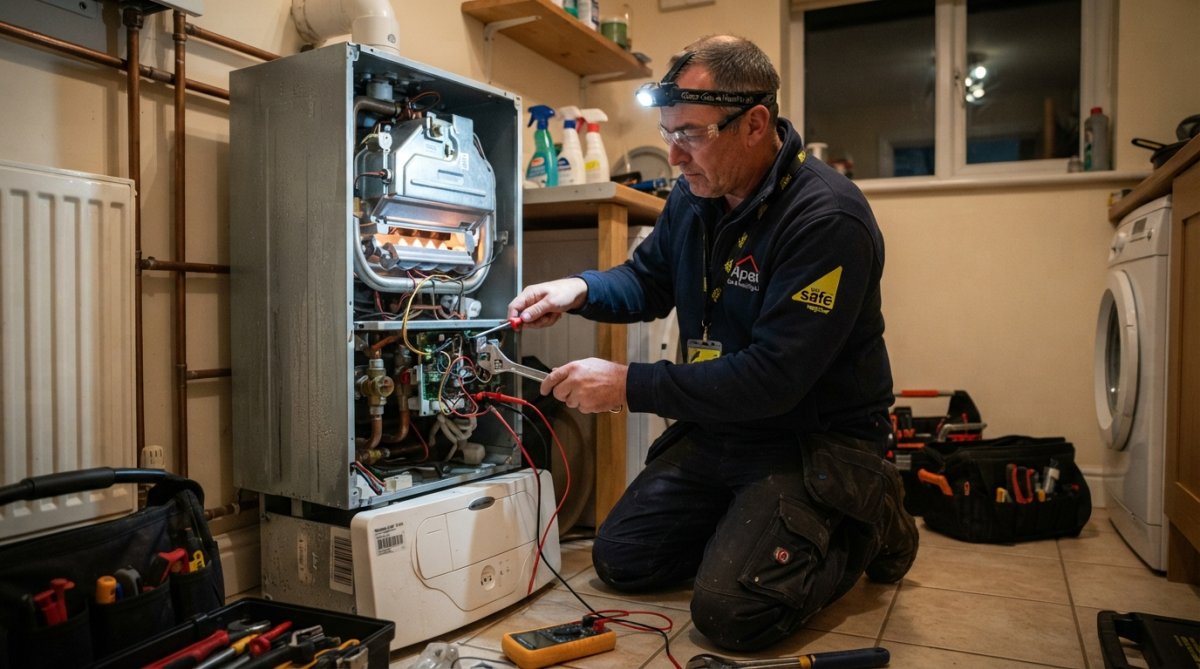
    Gas Safe registered heating engineer in uniform inspecting a Worcester boiler in a residential kitchen with diagnostic tools and equipment visible
    Gas Safe registered heating engineer in uniform inspecting a Worcester boiler in a residential kitchen with diagnostic tools and equipment visible

    If your boiler is leaking water actively, you need an engineer today; continued operation risks water damage and potential electrical hazards. If you smell gas near the boiler, evacuate immediately and call the National Gas Emergency Service on 0800 111 999.

    A boiler producing no heat during winter qualifies as an emergency for families with young children, elderly relatives, or anyone with health conditions exacerbated by cold. Unusual noises, banging, whistling, or grinding sounds, often indicate internal component failure. Carbon monoxide detectors triggering near your boiler is an absolute emergency. Evacuate the property, turn off the boiler, and call a Gas Safe engineer immediately.

    Same-Day Repair Availability

    Apex Gas & Heating Ltd offers 24/7 emergency call-out service across Surrey, with same-day repair availability in most areas. We maintain a network of Gas Safe registered engineers positioned throughout the region to ensure rapid response times. Emergency repair pricing should be transparent. We maintain consistent pricing whether you call at noon or midnight.

    Worcester Boiler Service Surrey Cost: Transparent Pricing

    What Affects Repair Costs

    Boiler repair costs depend on several factors. The specific fault drives cost more than anything else. A pressure relief valve replacement costs £150-£250 including labour. A heat exchanger replacement costs £600-£1,200. A control board replacement costs £400-£800.

    Your boiler’s age matters significantly. Parts for older Worcester models (pre-2010) are more difficult to source and cost more. The location of the fault affects labour time. A fault in an easily accessible area takes 45 minutes to diagnose and repair. A fault requiring the boiler to be partially dismantled takes two hours or more.

    Annual Servicing vs. Breakdown Repairs

    An annual boiler service costs £100-£200 and includes inspection, cleaning, safety checks, and minor adjustments. This preventative maintenance catches problems before they become emergencies. A boiler that receives annual servicing typically requires fewer repairs and lasts longer than one that’s ignored until it fails.

    The mathematics favour servicing. A single emergency repair often costs more than annual servicing, and you avoid the disruption of being without heating.

    Service Type Cost Range Frequency Prevents
    Annual boiler service £100-£200 Once yearly 60-70% of common faults
    Emergency repair £300-£1,200+ As needed Nothing (reactive only)
    System flush £400-£600 Every 5-7 years Sludge buildup, corrosion
    Pressure relief replacement £150-£250 As needed Water loss, safety issues
    Heat exchanger replacement £600-£1,200+ As needed No hot water, heating loss

    Landlords and property managers should prioritise annual servicing. UK law requires annual gas safety certificates for rental properties, and these must be completed by Gas Safe registered engineers.

    Boiler Age vs. Repair Viability: When to Repair or Replace

    Assessing Your Boiler’s Condition

    Most modern boilers last 10-15 years with proper maintenance. Worcester Bosch boilers often reach 15-20 years. Beyond 15 years, components begin wearing out more frequently, and repair costs accumulate.

    The "repair cost vs. replacement cost" calculation becomes critical around year 10-12. If your 12-year-old boiler requires a £900 heat exchanger replacement, you’re paying roughly 40-50% of a new boiler’s cost for a single repair. If it requires another major repair within 18 months, replacement becomes sensible.

    Check your boiler’s efficiency rating. Older boilers operate at 78-82% efficiency. Modern condensing boilers operate at 90%+ efficiency. If you’re paying £1,500 annually for heating, upgrading from an 80% to a 92% efficient boiler saves roughly £150-£200 per year. Over ten years, that’s £1,500-£2,000 in savings, which often justifies replacement.

    Best For
    Repair is viable if: your boiler is under 10 years old, the repair costs less than 50% of a replacement boiler, and you’ve had fewer than two major repairs in the past three years.

    Long-Term Cost Considerations

    A new Worcester Bosch boiler costs £2,500-£4,500 including installation. This comes with a 5-10 year warranty, guaranteed efficiency, and predictable running costs. An aging boiler might cost £400 to repair this year and £800 next year, creating unpredictable expenses.

    Energy efficiency improvements pay for themselves over time. A modern boiler with a smart thermostat can reduce heating costs by 15-20% compared to an aging system.

    Gas Safe Registered Engineers: Trust and Safety

    Carbon Monoxide Safety and Testing

    Gas Safe registration is non-negotiable. Only Gas Safe registered engineers can legally work on gas appliances in the UK. This registration means the engineer has passed competency assessments, carries professional insurance, and submits to regular audits.

    Carbon monoxide (CO) is produced whenever gas burns incompletely. A properly functioning boiler produces minimal CO and vents it safely outside. A faulty boiler or blocked flue can allow CO to accumulate in your home, causing poisoning. Symptoms include headaches, dizziness, nausea, and confusion.

    Gas Safe registered engineers test for CO as part of annual servicing. They use calibrated CO detectors to measure levels at the boiler outlet and in the room where the boiler operates. Safe levels are below 40 parts per million.

    Verification of Credentials

    Verify Gas Safe registration before hiring any engineer. Visit Gas Safe Register’s find an engineer tool and search by postcode or engineer name. If an engineer doesn’t appear in this database, they’re not registered and you should not hire them.

    Request their Gas Safe ID card and inspect it. The card shows their photograph, registration number, and which appliances they’re qualified to work on. Ask about professional indemnity insurance. Reputable engineers carry insurance protecting you if their work causes damage. Apex Gas & Heating Ltd carries full public liability insurance, providing protection for both our engineers and our customers.

    Choosing Worcester Boiler Repair Experts in Surrey

    Local Service Coverage and Response Times

    Surrey covers a large area, roughly 1,650 square miles from Guildford to Croydon. Response times vary significantly depending on your location and the engineer’s base. Apex Gas & Heating Ltd maintains engineer coverage across all of Surrey, with bases positioned to ensure rapid response. Our call-out service guarantees arrival within one hour for genuine emergencies.

    Ask potential engineers about their service area before booking. Some companies quote jobs in areas they don’t actually cover, then subcontract to local engineers at marked-up rates.

    Customer Reviews and Track Record

    Online reviews provide insight into real customer experiences. Look for reviews mentioning specific outcomes: "Engineer arrived on time, diagnosed the problem correctly, fixed it within two hours." Check multiple platforms: Google Reviews, Trustpilot, and local business directories.

    Apex Gas & Heating Ltd’s customer feedback consistently highlights rapid response times, transparent pricing, and thorough problem diagnosis.

    Insurance and Liability Protection

    Verify that any engineer carries public liability insurance. This protects you if their work accidentally damages your property. Request proof of insurance before work begins. Reputable companies provide insurance certificates readily.

    Apex Gas & Heating Ltd maintains full public liability insurance coverage, protecting our customers and our work.


    When your Worcester boiler needs repair in Surrey, the difference between choosing the right expert and settling for convenience often determines whether you face a £200 fix or a £2,000 replacement. Apex Gas & Heating Ltd brings Worcester Bosch Accredited Installer credentials, Gas Safe registration, 24/7 emergency response, and transparent pricing to every job across Surrey. We diagnose problems accurately, explain options clearly, and complete repairs efficiently, ensuring your heating system returns to reliable operation without hidden costs or unnecessary delays.

    Frequently Asked Questions

    How do I verify that an engineer is actually Gas Safe registered before booking a Worcester boiler repair in Surrey?

    Ask the engineer for their Gas Safe registration number and verify it directly on the Gas Safe Register website. Legitimate Worcester boiler repair experts in Surrey will provide this without hesitation. You can also request their ID card, which all Gas Safe registered engineers must carry. This protects you from unqualified tradespeople and ensures your boiler repair meets UK safety standards. Never proceed with anyone who cannot provide verifiable credentials.

    What are common Worcester boiler fault codes and can I fix them myself?

    Common codes include pressure loss warnings, pilot light failures, and heat exchanger faults. While you can perform basic checks, like checking pressure gauges or resetting the boiler, most fault codes require a qualified technician. Attempting complex repairs yourself risks voiding your warranty and creating safety hazards. A professional engineer can diagnose the exact issue using fault-finding diagnostics and provide a permanent fix rather than temporary solutions.

    How much does emergency boiler repair cost in Surrey, and what's included?

    Emergency call-out charges vary depending on the fault severity, time of day, and parts required. For specific pricing, contact Apex Gas & Heating Ltd directly for a transparent quote. Most emergency repairs include the engineer's visit, fault diagnosis, and labour to fix the issue. Parts are typically charged separately. Getting a quote upfront ensures you understand costs before work begins, and many engineers offer fixed prices for common repairs like pilot light relighting or pressure top-ups.

    Should I repair my old Worcester boiler or replace it entirely?

    Boilers over 10-15 years old become less efficient and more prone to breakdowns. If your boiler requires frequent repairs, consumes high energy bills, or lacks spare parts availability, replacement may be more cost-effective long-term. A professional heating engineer can assess your boiler's condition and advise whether repair or replacement makes financial sense. Modern Worcester Greenstar boilers offer better efficiency and lower running costs, offsetting the initial installation investment over time.

    This article was written using GrandRanker

  • Emergency Boiler Repair Sussex 24/7: Fast Response Guide

    Emergency Boiler Repair Sussex 24/7: Fast Response Guide

    Table of Contents

    Last Updated: July 28, 2026

    Emergency Boiler Repair Sussex 24/7: What You Need to Know

    When your boiler stops working on a freezing winter night, emergency boiler repair Sussex 24/7 becomes your lifeline to warmth and comfort. At Apex Gas & Heating Ltd, we understand that heating emergencies don’t follow business hours, which is why our team responds to urgent calls around the clock. A boiler breakdown can leave you without hot water and central heating within minutes, putting your family at risk and potentially causing property damage if the fault isn’t addressed quickly.

    Most boiler problems require immediate professional attention. Whether it’s a complete loss of heating, strange noises, pressure drops, or visible leaks, waiting until Monday morning isn’t an option when temperatures are dropping. Our Gas Safe registered engineers diagnose and repair common boiler faults on the same day you call, minimizing downtime and restoring your heating system’s reliability.

    Pro Tip
    If your boiler has stopped producing heat or hot water, check the pressure gauge first (should read between 1 and 2 bar). A low reading is often the culprit and can sometimes be reset without calling an engineer, though professional confirmation is always safer.

    How to Contact Emergency Support

    Getting help during a boiler emergency is as simple as making a phone call. When you contact Apex Gas & Heating Ltd, you’ll reach a trained dispatcher who asks essential questions about your heating system to prioritize your call appropriately.

    Have the following information ready when you call:

    • Your boiler’s make and model (usually found on the front panel or documentation)
    • A description of what’s happening (no heat, no hot water, leaking, making noise)
    • Your postcode and whether you’re in East Sussex or West Sussex
    • Whether you’ve noticed any error codes on the boiler’s display panel

    Our team maintains a network of local engineers across Sussex, which means we can typically dispatch someone to your property within one to two hours during peak times. Payment options are discussed when you book the call. We offer transparent pricing with no hidden charges, and emergency call-out fees are quoted upfront.

    What Happens When You Call

    Once you’ve spoken to our dispatcher, you’ll receive a time window for the engineer’s arrival. Our team communicates proactively, if circumstances change or the engineer is running late, you’ll be notified by phone or text.

    When the engineer arrives, they’ll conduct a full system inspection, checking the boiler’s controls, pressure gauge, water connections, and gas supply. Most emergency call-outs take between 30 minutes and two hours, depending on the fault’s complexity. If the repair can be completed on the spot, the engineer will fix it and test the system to ensure heating and hot water are restored. If parts need to be ordered or specialist equipment is required, the engineer will explain your options and provide a timeline.

    Key Takeaway
    Gas Safe registered engineers are legally required to work on gas appliances in the UK. Always verify your engineer’s Gas Safe registration number before work begins, you can check it at the official Gas Safe Register website.

    Understanding Boiler Breakdown Sussex: Common Emergency Issues

    Boiler problems fall into a few predictable categories, and understanding what’s gone wrong helps you communicate the fault clearly to the engineer.

    Loss of Heating and Hot Water

    A complete loss of heating is the most common emergency call. Your radiators stay cold even when the thermostat is set high, and the boiler either won’t fire up or shuts down immediately after starting.

    Common causes include low boiler pressure (the most frequent culprit), a faulty ignition electrode that won’t spark the pilot light, or a broken pump that circulates water through the central heating system. Without heating, your home loses temperature rapidly in winter, and pipes risk freezing if the problem persists for several hours.

    Strange Noises and Leaks

    Boilers that bang, whistle, or gurgle are signalling internal problems. Banging usually indicates kettling, where mineral deposits reduce water flow and cause steam pockets. Whistling suggests a pressure relief valve working overtime, and gurgling points to air in the system or a failing pump.

    Leaks are equally serious. A slow drip from beneath the boiler causes pressure loss and eventual shutdown. Leaks near gas connections are particularly dangerous due to gas safety risks.

    Boiler Pressure Problems

    Your boiler’s pressure gauge shows how much water is in the system. Normal pressure sits between 1 and 2 bar when the system is cold. Pressure below 1 bar triggers a safety lockout, and pressure above 3 bar activates the relief valve.

    Low pressure is usually caused by a small leak somewhere in the system. High pressure can result from a faulty expansion vessel or a stuck relief valve. Both conditions prevent normal operation and require professional diagnosis.

    Emergency Gas Engineer Sussex: Our 24-Hour Response Team

    Apex Gas & Heating Ltd maintains a roster of Gas Safe registered engineers available throughout Sussex and Surrey. Our team combines technical expertise with the reliability you need when your heating fails unexpectedly.

    Gas Safe Registration and Qualifications

    Every engineer working on gas appliances must hold current Gas Safe registration. This certification confirms they’ve passed rigorous safety assessments and understand the risks of working with gas. It’s a legal requirement under UK gas safety regulations.

    Our engineers hold additional qualifications in boiler installation, servicing, and repair across multiple brands. Many hold Worcester Bosch and Glowworm approvals, meaning they’re trained to manufacturers’ standards and can access genuine parts and technical support.

    When an engineer arrives at your home, ask to see their Gas Safe ID card. It displays their name, registration number, and the types of work they’re qualified to perform. You can verify the registration independently at the Gas Safe Register website.

    Watch Out
    Never allow anyone to work on your boiler who cannot produce a valid Gas Safe registration number. Unregistered engineers working on gas appliances is illegal and voids your boiler’s warranty. Gas leaks and carbon monoxide poisoning are serious risks when work is done by unqualified people.

    Boiler Brands We Repair

    We repair and service most common domestic boiler brands found in Sussex homes, including Worcester Bosch, Vaillant, Baxi, Ideal, Glow-worm, and Viessmann. We stock common parts for these brands and can often complete repairs without ordering components. If your boiler is a less common brand or an older model, call ahead so we can confirm engineer availability and part availability before dispatching someone.

    Step-by-Step Troubleshooting Before You Call

    Not every boiler shutdown requires an engineer. Some common faults can be resolved in minutes by following simple troubleshooting steps.

    Check Your Boiler Pressure and Reset

    Locate your boiler’s pressure gauge on the front panel, it should show a reading between 0 and 3 bar. If the needle sits below 1 bar, low pressure is likely your problem.

    Most modern boilers have a reset button (usually red or blue) on the front panel. Press and hold it for 10-15 seconds while watching the pressure gauge. The needle should rise toward the 1.5 bar mark. If it does and your boiler restarts, you’ve resolved the issue temporarily. However, if pressure drops again within days, a leak exists somewhere in the system and requires professional investigation.

    Inspect for Visible Leaks and Damage

    Check beneath and around your boiler for water pooling or drips. Look at connection points where pipes enter and exit the unit. If you spot active dripping, place a bucket underneath to contain water. Don’t attempt to tighten connections yourself, improper tightening can worsen leaks or crack fittings.

    Also check your thermostat and controls to ensure they’re switched on and set to the desired temperature. Surprisingly often, a boiler appears broken when the thermostat is simply set to a lower temperature than the current room temperature.

    Verify Your Thermostat and Controls

    Your boiler won’t fire if the thermostat isn’t calling for heat. Check that your thermostat is switched on and set to a temperature higher than the current room temperature. Many digital thermostats have battery-powered displays, if the screen is blank, replace the batteries. If you’ve made these checks and your boiler still won’t start, an engineer visit is necessary.

    Boiler Repair Cost Sussex: What to Expect

    Boiler repair costs vary based on the fault, the parts required, and whether the repair happens during standard hours or as an emergency call-out.

    Call-Out Fees and Service Rates

    An emergency call-out fee covers the engineer’s travel time and diagnostic work. This fee is quoted when you book the call and applies whether the repair is completed on the same visit or not.

    Labour charges depend on the repair’s complexity and duration. Simple resets might take 30 minutes, while replacing a faulty pump takes longer and costs more. Rates are transparent, and the engineer explains the work required before proceeding.

    Fixed-Price Repairs vs. Hourly Labour

    For common faults like pressure resets or thermostat replacements, we often offer fixed-price repairs. For complex diagnostics where the fault isn’t immediately obvious, hourly labour rates apply.

    Parts are charged at cost plus a small markup. Genuine manufacturer parts are more expensive than aftermarket equivalents but offer better reliability and warranty coverage. We discuss parts options before ordering so you can choose based on budget and preference.

    A Gas Safe registered heating engineer in uniform examining a boiler control panel in a residential kitchen, clipboard in hand, with natural light from a window
    A Gas Safe registered heating engineer in uniform examining a boiler control panel in a residential kitchen, clipboard in hand, with natural light from a window

    Urgent Boiler Repair Brighton and Surrounding Areas

    Apex Gas & Heating Ltd covers all of Sussex, including Brighton, Hove, Worthing, Eastbourne, and surrounding towns. We also serve Surrey properties. Our network of local engineers means faster response times and familiarity with the properties and heating systems in your area.

    Service Coverage Across Sussex

    East Sussex includes towns like Hastings, Bexhill, and Lewes. West Sussex covers Chichester, Horsham, and Crawley. Brighton and Hove sit between the two, and we maintain strong coverage throughout the coastal and inland areas. Rural properties sometimes experience slightly longer response times due to travel distance, but we prioritize emergency calls and aim for arrival within two hours.

    Gas Safety Checklist: Protect Your Home

    Beyond emergency repairs, maintaining your boiler and heating system prevents many common faults.

    Carbon Monoxide Detection

    Carbon monoxide (CO) is a colourless, odourless gas produced when fuel burns incompletely. A faulty boiler can leak CO into your home, causing serious illness or death. Every home with a gas boiler must have a CO detector installed.

    Mount the detector in the room where your boiler is located and another in your main living area. Test detectors monthly by pressing the test button. If the alarm sounds, open windows immediately, leave the house, and call the Gas Safe emergency number.

    Have your boiler serviced annually by a Gas Safe engineer. During servicing, they check for CO leaks and ensure all safety components function correctly.

    Annual Boiler Servicing and Safety Inspections

    A boiler service takes about an hour and costs less than a single emergency repair. During servicing, the engineer cleans internal components, checks all safety devices, tests for gas leaks, and verifies that combustion is efficient.

    Servicing extends your boiler’s life, improves efficiency (saving money on energy bills), and identifies small problems before they become emergencies. Most boiler warranties require annual servicing to remain valid. Schedule your service during autumn, before the winter heating season begins.

    Key Takeaway
    A boiler that’s properly serviced and maintained rarely breaks down unexpectedly. Annual servicing costs around £100-150 but prevents emergency repair bills that can exceed £500 for complex faults.

    Common Mistakes to Avoid During a Boiler Emergency

    When panic sets in, people often take actions that worsen the situation or create safety risks.

    Don’t attempt to repair gas connections yourself. Even tightening a loose fitting can damage the seal and create a gas leak. Gas work requires specialist tools and training.

    Don’t ignore strange smells. A rotten egg smell near your boiler indicates a gas leak. Leave the house immediately, don’t use electrical switches or create sparks, and call the Gas Safe emergency number from outside.

    Don’t reset your boiler repeatedly if it keeps shutting down. If it shuts down again within an hour, stop resetting and call an engineer. Repeated resets can damage components.

    Don’t delay calling for help because you’re worried about cost. A small fault becomes expensive when it causes secondary damage like burst pipes or complete boiler failure.


    When your boiler fails unexpectedly, you need a heating engineer you can trust to arrive quickly, diagnose accurately, and fix the problem without unnecessary expense. Apex Gas & Heating Ltd provides emergency boiler repair Sussex 24/7 with Gas Safe registered engineers, transparent pricing, and a genuine commitment to keeping your home warm. Our team holds Worcester Bosch and Glow-worm approvals, carries public liability insurance, and maintains a proven track record across Sussex and Surrey. Contact us today for a same-day repair or to arrange your annual boiler service before winter arrives.

    Common Boiler Fault Typical Cause Emergency Repair Time Prevention
    Loss of heating/hot water Low pressure or failed ignition 1-2 hours Annual servicing, pressure checks
    Strange noises Kettling or air in system 45 minutes to 2 hours Water softening, system bleeding
    Boiler leaks Faulty seals or corrosion 1-3 hours Regular inspections, prompt repairs
    Boiler won’t ignite Failed pilot light or electrode 30 minutes to 1 hour Servicing, cleaning components
    High pressure Faulty expansion vessel 1-2 hours Vessel inspection during servicing

    Frequently Asked Questions

    What constitutes a boiler emergency in Sussex that requires 24/7 repair?

    A boiler emergency typically involves complete loss of heating or hot water, visible leaks, strange noises, gas smells, or carbon monoxide alarm activation. If your central heating system fails during winter or you suspect a gas leak, contact emergency boiler repair services immediately. These situations require urgent attention from a Gas Safe registered engineer to protect your home and family safety.

    How quickly can an emergency gas engineer Sussex respond to my call?

    Most emergency boiler repair services in Sussex aim for same-day response, often within 1-2 hours during peak times. Response times depend on current call volume and your location within East Sussex or West Sussex. When you call, the operator will confirm the expected arrival window. Apex Gas & Heating provides 24-hour emergency call-out availability with transparent response time commitments to keep you informed.

    How much does emergency boiler repair cost in Sussex?

    Emergency boiler repair costs vary based on the specific fault, boiler brand, and whether parts are needed. Most engineers charge a call-out fee plus hourly labour rates or fixed-price repairs for common issues. Some offer no-fix-no-fee policies, meaning you only pay if the repair is successful. For accurate pricing, contact your local heating engineer directly, they can provide a quote after diagnosing the problem.

    What should I do if my boiler breaks down in the middle of the night in Sussex?

    First, turn off the boiler and check for obvious leaks or gas smells. If you smell gas, leave the property and call the National Gas Emergency Service (0800 111 999). For other emergencies, contact your 24/7 emergency boiler repair service immediately. Have your boiler model and any error codes ready. While waiting for the engineer, keep doors and windows open for ventilation and avoid using the boiler further to prevent damage.

    Are 24/7 emergency boiler repair services in Sussex Gas Safe registered?

    Reputable emergency boiler repair services should employ Gas Safe registered engineers, this is a legal requirement for working on gas appliances in the UK. Always verify the engineer's Gas Safe registration number before work begins. You can check registration at the Gas Safe Register website. Apex Gas & Heating employs approved Glowworm and Worcester installers with full Gas Safe credentials and public liability insurance for your peace of mind.

    This article was written using GrandRanker

  • Common Causes of Low Boiler Pressure: A Practical Guide

    Common Causes of Low Boiler Pressure: A Practical Guide

    Table of Contents

    Common Causes of Low Boiler Pressure: A Practical Guide

    Last Updated: July 27, 2026

    Understanding the common causes of low boiler pressure is essential for keeping your heating system running efficiently. At Apex Gas & Heating Ltd, we’ve helped hundreds of homeowners across Sussex and Surrey diagnose and fix pressure issues before they turn into costly breakdowns. Low boiler pressure affects everything from heating performance to system safety, yet many people don’t realize what’s happening until their radiators stop warming up entirely.

    Your boiler’s pressure gauge tells a story about your heating system’s health. When that needle drops below the normal operating range, it signals one of several underlying problems, some simple enough to fix yourself, others requiring a qualified Gas Safe engineer.

    What Is the Ideal Boiler Pressure and Why It Matters

    Your boiler operates most efficiently within a specific pressure range, typically between 1 and 1.5 bar when the system is cold. This measurement tells you how much force the water inside your heating circuit is exerting against the boiler’s internal components.

    Understanding bar and psi measurements

    Pressure is measured in two common units: bar and psi (pounds per square inch). Most UK boilers use bar as the standard measurement. One bar equals approximately 14.5 psi. When we talk about ideal boiler pressure in the UK, we’re typically referring to 1-1.5 bar for a cold system at rest.

    How pressure affects your heating system

    Pressure drives water circulation through your central heating system. Without adequate pressure, water moves sluggishly through pipes and radiators, delivering less heat to your home. The pressure also maintains system integrity by keeping water in the pipes rather than allowing it to escape through micro-leaks. When pressure drops significantly, your boiler’s pressure relief valve may activate, further reducing pressure and creating a cycle of declining performance.

    Pro Tip
    Check your boiler’s pressure when the system is cold and at rest. Pressure readings taken when the heating is running will be artificially elevated and won’t give you an accurate picture of your actual system pressure.

    Common Causes of Low Boiler Pressure Explained

    Low boiler pressure rarely appears without a cause. The most frequent culprits are leaks, bleeding radiators, expansion vessel failure, and faulty pressure relief valves.

    Leaks in pipework and solder joints

    Leaks represent the single most common cause of pressure loss in heating systems. Water escaping from your pipework reduces the total volume in your closed system, and that missing water directly translates to lower pressure readings. External leaks are usually obvious, you’ll see water pooling under pipes or staining on ceilings and walls. Internal leaks are trickier, with water escaping inside walls or under floorboards without visible evidence at first.

    Solder joints are particularly vulnerable. Over time, corrosion or manufacturing defects can cause pinhole leaks that drain enough water to drop your pressure by 0.3-0.5 bar within a few days.

    Bleeding radiators and pressure loss

    When you bleed a radiator to release trapped air, you’re also releasing a small amount of water. Each time you open a bleed valve, roughly 50-100ml of water escapes. After bleeding radiators, you should expect to top up your system pressure using the filling loop.

    Expansion vessel failure

    Your expansion vessel is a small tank, usually mounted near the boiler, that absorbs excess water as it heats and expands. Inside this vessel is a rubber diaphragm that separates water from pressurized air. When the diaphragm fails, water enters the air chamber, reducing the vessel’s ability to absorb expansion and forcing excess water out through the pressure relief valve.

    A failed expansion vessel creates a specific pattern: your pressure drops, you repressurize, the heating runs fine initially, then pressure drops again within hours. Expansion vessel failure is relatively common in systems over 8-10 years old and requires professional replacement.

    Faulty pressure relief valve symptoms

    The pressure relief valve (PRV) is a safety device designed to open when pressure exceeds a safe threshold, typically around 3 bar. A faulty PRV may open prematurely or fail to close properly after opening, causing water to continuously escape from your system.

    You might notice water dripping from a small pipe near your boiler. Alternatively, you may see pressure dropping steadily without any visible leak elsewhere in the system.

    Watch Out
    Never attempt to repair or adjust a pressure relief valve yourself. This is a safety device that must be handled by a qualified Gas Safe engineer. Improper adjustment can prevent the valve from protecting your system if pressure becomes dangerously high.

    How to Check Your Boiler Pressure: Step-by-Step

    Checking your boiler pressure takes less than a minute and requires no special tools.

    Reading your pressure gauge

    Locate your boiler’s pressure gauge, it’s typically a circular dial mounted on the front or side of the boiler unit. The gauge shows a needle pointing to a number on a scale. The normal operating range is usually marked in green, typically between 1 and 1.5 bar. If the needle is below 1 bar, your system has low pressure.

    Check the gauge when your heating system is cold and has been off for at least 30 minutes. Pressure readings taken while the heating is running will be 0.2-0.4 bar higher due to thermal expansion.

    Identifying visual signs of pressure problems

    Cold radiators in some rooms while others heat normally suggest that low pressure isn’t pushing water to distant radiators effectively. Listen for gurgling or hissing sounds inside pipes, these often signal trapped air, which frequently accompanies pressure loss.

    Check under your boiler and along visible pipework for water droplets or damp areas. Look at your expansion vessel for signs of corrosion or weeping. Discoloured patches on ceilings or walls, especially above pipes, indicate internal leaks that are slowly draining your system.

    Close-up of a homeowner's hand pointing to a pressure gauge on a boiler, with the needle positioned in the normal green operating range between 1 and 1.5 bar, in a domestic kitchen setting with natural light
    Close-up of a homeowner's hand pointing to a pressure gauge on a boiler, with the needle positioned in the normal green operating range between 1 and 1.5 bar, in a domestic kitchen setting with natural light

    Identifying Leaks in Your Central Heating System

    Once you’ve confirmed low pressure, finding the leak is your next priority.

    External leaks: what to look for

    Start by inspecting all visible pipework. Look under sinks, behind radiators, along the boiler unit, and in any cupboards where pipes run. Check for water pooling, damp patches, or mineral deposits (white or green staining) that indicate slow weeping from a joint.

    Pay particular attention to solder joints where copper pipes connect. A tiny pinhole leak may produce only a slow drip, but over days it will noticeably reduce your system pressure. If you find an external leak, mark its location and photograph it for a Gas Safe engineer.

    Internal leaks and system integrity checks

    Internal leaks are hidden within walls, under floorboards, or in inaccessible pipe runs. If your pressure drops by 0.5 bar or more within a week but you can’t find any external leak, an internal leak is likely present.

    Check for damp patches that gradually expand on walls or ceilings. An internal leak behind a wall will eventually show moisture on the surface as water saturates the plasterboard. System integrity is compromised when leaks are present, as water escaping creates a partial vacuum that draws in air, reducing heating efficiency.

    How to Repressurize a Boiler Using Your Filling Loop

    If your pressure has dropped but you haven’t found a leak, or if you’ve just bled radiators, you’ll need to repressurize your system.

    What you’ll need before you start

    Locate your filling loop, it’s a flexible hose with isolation valves at each end, usually positioned near the boiler. Ensure the heating system is cold before you begin. Never attempt to repressurize a hot system, as this can damage components and create safety risks.

    Step-by-step repressurizing process

    1. Locate both isolation valves on the filling loop (one connected to the mains water supply, one connected to the boiler circuit).
    2. Ensure both valves are in the closed position (turned clockwise).
    3. Open the mains isolation valve (turn counter-clockwise) to allow water into the filling loop.
    4. Slowly open the boiler isolation valve (turn counter-clockwise) to allow water into your heating system.
    5. Watch your pressure gauge as water enters. Stop when the gauge reads 1.2-1.3 bar.
    6. Close both isolation valves (turn clockwise) to seal the loop.
    7. Turn the boiler back on and check that the pressure remains stable after 10 minutes of operation.

    Common mistakes to avoid

    The most frequent error is opening the isolation valves too quickly, which can cause a sudden pressure spike that triggers the pressure relief valve. Open valves slowly and deliberately. Another mistake is failing to close the isolation valves after repressurizing, this leaves the filling loop open and allows water to continue entering if a minor pressure drop occurs.

    Some homeowners repressurize too high, pushing the gauge above 1.5 bar. Aim for 1.2-1.3 bar as your target.

    Key Takeaway
    Repressurizing is a temporary fix if you have an active leak. If your pressure drops again within a week, you have a leak that must be found and repaired. Repeatedly repressurizing without addressing the underlying cause will eventually damage your boiler.

    Boiler Leaking Water and Low Pressure: Diagnosis and Action

    When your boiler is actively leaking water, low pressure is inevitable.

    Why water escaping causes pressure drop

    Every litre of water that leaves your system reduces the total volume available to circulate. Your heating circuit is a closed loop containing a fixed amount of water that circulates continuously. When water escapes, that loop has less water to work with, resulting in lower pressure.

    When to call a Gas Safe engineer

    If you see water pooling directly under your boiler, or if water is dripping from the boiler unit itself, do not attempt repairs. Water inside a boiler indicates either a cracked heat exchanger, a failed internal seal, or a broken pipe connection, all of which are beyond DIY repair.

    If your pressure drops and you cannot find any external leak despite a thorough inspection, the leak is likely internal to the boiler. An internal boiler leak often requires boiler replacement, as repair costs typically exceed the cost of a new unit. Contact a Gas Safe engineer immediately if you suspect an internal boiler leak. According to Gas Safe Register guidance on boiler safety, any boiler showing signs of water leakage should be inspected by a registered engineer before further use.

    When to Call a Gas Safe Engineer Near You

    Knowing when to stop troubleshooting and call a professional prevents wasted time and protects your system from damage.

    Signs you need professional help

    You should contact a Gas Safe engineer if:

    • You’ve identified a leak but cannot access it (concealed pipework, solder joints, internal boiler leaks)
    • The pressure relief valve is weeping water
    • Your expansion vessel shows signs of failure (corrosion, weeping, or rapid pressure drops after repressurizing)
    • You cannot find the source of pressure loss despite thorough inspection
    • Your boiler itself is leaking water
    • Pressure drops repeatedly despite having no visible leak

    DIY vs professional repair: cost-benefit analysis

    Repressurizing your boiler yourself takes 5 minutes and costs nothing. Bleeding radiators yourself takes 30 minutes and costs nothing. However, identifying and repairing leaks in concealed pipework, replacing expansion vessels, or fixing pressure relief valves requires specialist skills and equipment.

    An engineer call-out typically costs £80-150 for diagnosis alone. If repair is needed, costs vary widely, from £200 for a simple joint repair to £800+ for an expansion vessel replacement. These costs are justified when they prevent boiler failure or water damage to your home.

    Apex Gas & Heating Ltd offers transparent pricing and fast response times across Sussex and Surrey. Our 24/7 emergency call-out service means you’re never left without heating in winter, and our Gas Safe certified engineers diagnose and fix pressure issues efficiently.

    Seasonal Maintenance Checklist to Prevent Pressure Loss

    Regular maintenance catches pressure problems before they become emergencies.

    Spring (March-May): After winter heating use, check your pressure gauge. If it’s dropped below 1 bar, investigate for leaks. Bleed radiators in rooms that were coldest during winter. Top up pressure to 1.2-1.3 bar using your filling loop.

    Summer (June-August): With heating off, inspect pipework for corrosion or damp patches. Check under sinks, in cupboards, and along any visible pipe runs. Look for mineral deposits or water staining that indicate slow weeps.

    Autumn (September-November): Before the heating season starts, have your boiler serviced. A professional service includes pressure system inspection and can catch problems before winter demands peak performance.

    Winter (December-February): Monitor your pressure gauge weekly during the coldest months. If pressure drops by more than 0.2 bar per week, you have a leak that needs attention.

    Worcester Bosch guidance on boiler maintenance recommends annual professional servicing to maintain warranty coverage and ensure safe operation.


    Low boiler pressure disrupts your heating and signals an underlying problem that won’t resolve itself. Whether the cause is a slow leak, a failed expansion vessel, or a faulty relief valve, identifying the issue early prevents costly damage and keeps your home warm through winter. If you’ve checked your pressure, ruled out simple fixes like radiator bleeding, and found that pressure continues to drop, it’s time to call a professional. Apex Gas & Heating Ltd provides Gas Safe certified engineers across Sussex and Surrey who diagnose pressure problems quickly and fix them right the first time. With transparent pricing, full public liability insurance, and 24/7 emergency call-outs, you can trust our team to restore your heating system’s performance. Get a quote today and stop worrying about low boiler pressure.

    Frequently Asked Questions

    What are the signs of low boiler pressure?

    Common signs include weak heating output, radiators not warming evenly, boiler shutting down unexpectedly, and a pressure gauge reading below 1 bar. You may also notice the heating system takes longer to reach temperature or your towel rails feel cold. Check your boiler's pressure gauge regularly, most modern boilers display pressure clearly on the front panel.

    How do I repressurise a boiler safely?

    Most boilers have a filling loop (a flexible hose with isolation valves) beneath or behind the unit. Turn off the boiler and let it cool slightly. Open both isolation valves slowly to allow water from the mains to enter the system until the pressure gauge reads 1-1.5 bar. Close the valves carefully and restart the boiler. If you're unsure or the pressure won't hold, contact a Gas Safe engineer.

    Can a boiler lose pressure without a leak?

    Yes. A faulty pressure relief valve, expansion vessel failure, or bleeding radiators can all cause pressure loss without visible water escaping. Seasonal temperature changes can also affect pressure slightly. However, if pressure drops repeatedly after repressurizing, a leak or faulty component is likely present. A Gas Safe engineer can diagnose the exact cause using system integrity tests.

    Why does my boiler keep losing pressure after repressurising?

    Repeated pressure loss indicates a persistent problem: a slow leak in pipework or solder joints, a failing expansion vessel, or a defective pressure relief valve. Internal leaks are harder to spot than external ones. If pressure drops within days of repressurizing, stop repressurizing yourself and call a heating engineer. Continuing to top up without fixing the underlying cause wastes water and risks boiler damage.

    This article was written using GrandRanker