







Rated Excellent Rating Gas Safe Registered BPEC Certified 25 Years’ Experience 2 Year Guarantee Card Payments AcceptedApple Pay, Mastercard, Visa, Amex, Google Pay Worcester BoschVaillantBaxiGlow-wormAccredited

Category: Boiler Servicing

  • Gascore Alternative for Annual Servicing: Your Options

    Gascore Alternative for Annual Servicing: Your Options

    Table of Contents

    Last Updated: August 6, 2026

    Why You Might Need a Gascore Alternative for Annual Servicing

    If you’re searching for a Gascore alternative for annual servicing, you’re likely weighing options between monthly boiler cover plans and one-off service visits. At Apex Gas & Heating Ltd, we’ve helped hundreds of Sussex and Surrey residents navigate this decision. The reality is simpler than marketing suggests: what works depends entirely on your boiler’s age, your budget, and how much peace of mind you’re willing to pay for.

    Some homeowners pay monthly premiums for years and never claim, effectively subsidising someone else’s emergency repair. Others skip cover entirely and face catastrophic costs when their boiler fails. This guide breaks down what you’re actually choosing between, what each option truly includes, and how to spot hidden costs that marketing materials gloss over.

    Boiler Service vs Boiler Cover Plans: What’s the Real Difference?

    A boiler service is a single event: an engineer visits, inspects your heating system, cleans components, tests for safety, and leaves. A boiler cover plan is insurance: you pay monthly, and when something breaks, the provider sends an engineer and covers repair costs (subject to terms).

    A one-off boiler servicing covers the inspection, cleaning, safety checks, and a detailed report. It does not cover repairs if faults are found. A service is preventative maintenance that catches problems early and keeps your boiler running efficiently. It’s also a legal requirement if you’re a landlord (the Gas Safe certificate, or CP12, must be renewed annually).

    A boiler cover plan bundles servicing with breakdown cover. When your boiler breaks, you call the provider, they send an engineer, and repairs are covered (usually with an excess, depending on your plan tier).

    If your boiler is reliable and under 10 years old, one-off servicing is almost certainly cheaper. If your boiler is older (15+ years) or has a history of faults, cover plans start to make sense. A single major repair can cost £400-800, justifying years of premiums.

    The psychological factor matters too. Monthly cover removes the anxiety of a surprise repair bill. For some homeowners, that peace of mind is worth the cost, even if the maths don’t favour it.

    Finding a Gas Safe Registered Engineer Near Me

    The only way to ensure you’re hiring someone qualified and legally permitted to work on gas appliances is to verify they’re registered with Gas Safe Register. This is non-negotiable for safety and compliance.

    Gas Safe Register is the official body responsible for registering gas engineers in the UK. Any engineer working on gas appliances must be registered. Ask for their Gas Safe ID card, it’s a legal requirement, and any legitimate engineer will have it. You can also search the Gas Safe Register engineer database to verify credentials before booking.

    Local independent engineers often offer better value than national chains. They’re also more likely to prioritise your needs over upselling unnecessary work. National boiler cover providers (Hometree, British Gas, HomeServe, CORGI HomePlan) maintain large networks of engineers with guaranteed availability and standardised pricing, though at higher cost.

    For homeowners in Sussex and Surrey, Apex Gas & Heating Ltd combines local knowledge with rapid response times. As approved Glowworm and Worcester installers with full public liability insurance, we’re equipped to handle everything from routine servicing to emergency boiler repair. Our 24/7 call-out service means you’re not waiting days for an appointment during winter.
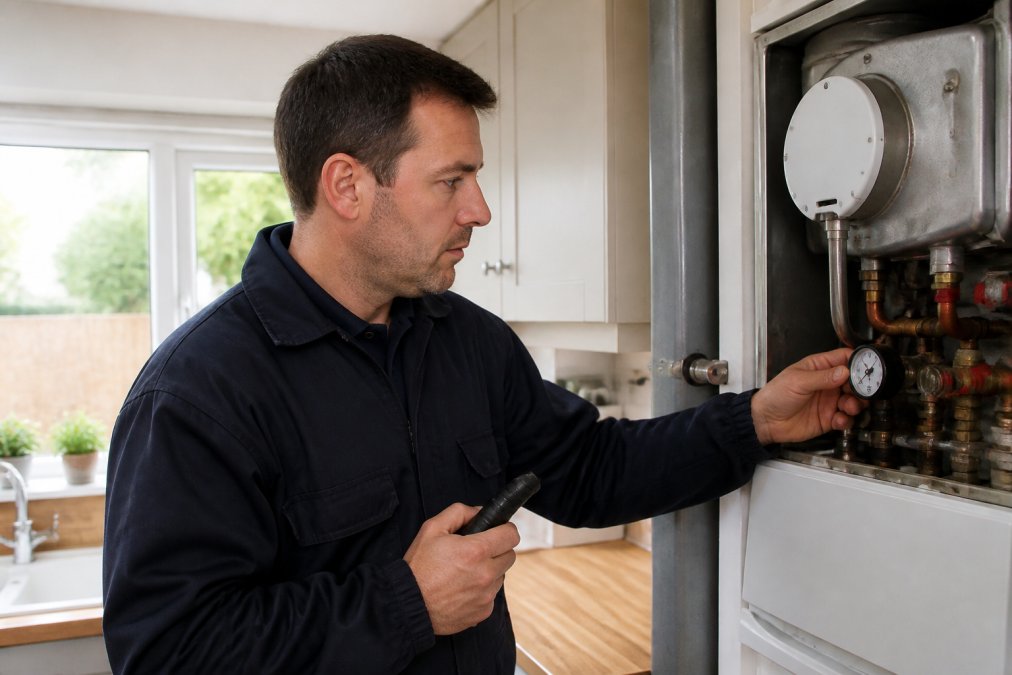
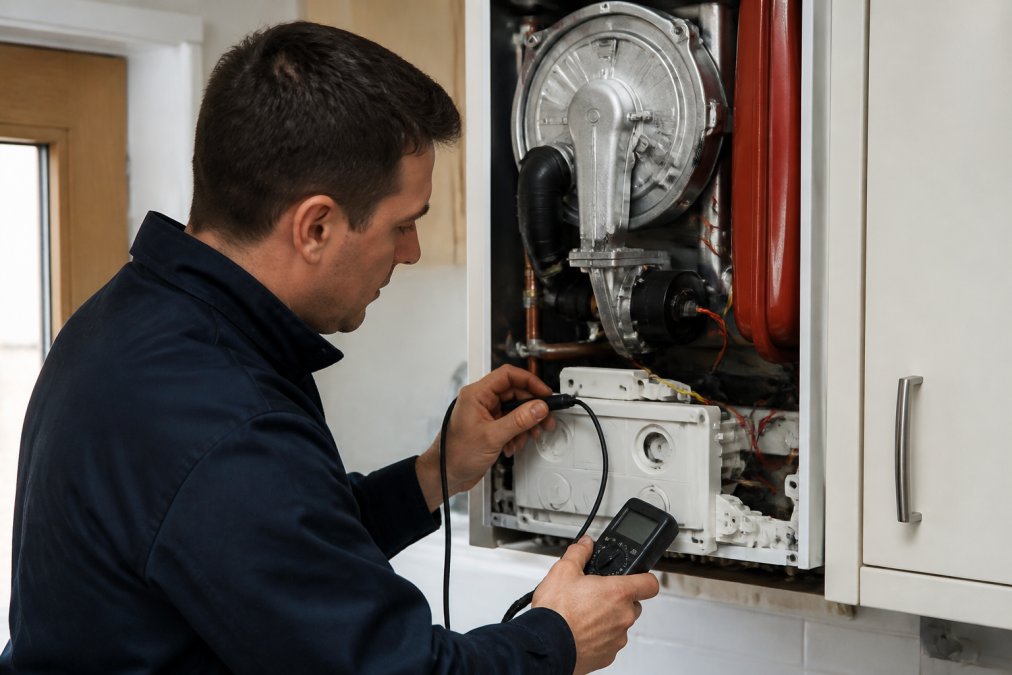
    Professional heating engineer in uniform performing boiler inspection, checking pressure gauges and flue systems in a residential kitchen with natural daylight
    Professional heating engineer in uniform performing boiler inspection, checking pressure gauges and flue systems in a residential kitchen with natural daylight

    How to find a qualified engineer:

    • Use the Gas Safe Register search tool to verify credentials
    • Ask for references or check online reviews (Google, Trustpilot)
    • Request a fixed quote before work begins
    • Confirm they hold public liability insurance
    • Check if they’re approved installers for your boiler brand (Glowworm, Worcester, etc.)

    Annual Boiler Service Checklist: What to Expect

    An annual boiler service is a thorough health check. A proper service takes 1-2 hours and covers these key areas:

    Safety and emissions testing. The engineer measures flue gas composition to ensure your boiler isn’t leaking carbon monoxide. The engineer uses a combustion analyser to test oxygen levels, CO2 readings, and temperature. If readings are outside safe parameters, the boiler shouldn’t be left running.

    System pressure and performance. Your boiler operates under pressure (typically 1-1.5 bar). The engineer checks the pressure gauge and tops up if needed. They also test the heating system’s flow rate and temperature to confirm everything’s running efficiently.

    Component inspection and cleaning. The engineer visually inspects the heat exchanger, burner, and flue for damage or blockages. They clean the burner and check for soot accumulation.

    Controls and safety devices. The engineer tests the thermostat, timer, and safety cut-off mechanisms to verify that the boiler shuts down properly if something goes wrong.

    Efficiency check. Modern boilers are rated for efficiency (typically 88-92%). The engineer confirms your boiler is still performing within spec.
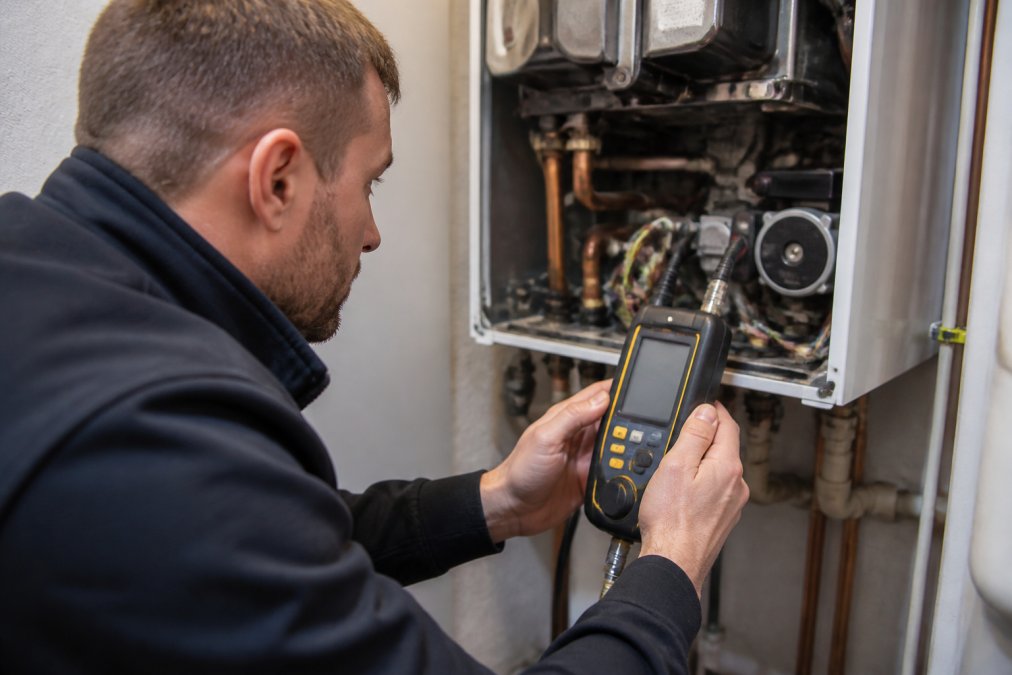
    Close-up of engineer's hands holding flue gas analysis meter next to boiler, demonstrating carbon monoxide safety testing in residential setting
    Close-up of engineer's hands holding flue gas analysis meter next to boiler, demonstrating carbon monoxide safety testing in residential setting

    At the end of the service, you should receive a written report detailing what was checked, any faults found, and recommendations. If you’re a landlord, this report forms part of your Gas Safety & CP12 certificate, a legal requirement for rental properties.

    Common findings during a service include sludge in the system, worn pump seals, faulty thermostats, inefficient burners, and pressure relief valve issues. A good engineer will explain findings clearly and provide options without pressuring you into repairs during the service visit.

    Get a Free Quote Today →

    One-Off Service vs Monthly Cover: Cost Comparison

    The financial comparison depends on your boiler’s reliability and your tolerance for unexpected costs.

    Scenario One-Off Service Monthly Cover (5 years) Difference
    Reliable boiler, no repairs Pricing available on website Pricing available on website Pricing available on website
    One major repair needed Pricing available on website Pricing available on website Pricing available on website
    Two major repairs needed Pricing available on website Pricing available on website Pricing available on website
    Boiler replacement needed Pricing available on website Pricing available on website Pricing available on website

    The break-even point is typically one major repair every 5 years. If your boiler averages that or worse, cover plans pay for themselves.

    Hidden costs in cover plans include excess fees (£0-95 per call-out), renewal price hikes (sometimes 20-30%), exclusions for damage caused by sludge or lack of maintenance, and service quality variance. One-off servicing costs are predictable and transparent.

    Local Independent Engineers vs National Boiler Cover Providers

    Local independent engineers operate in your area and build their reputation on word-of-mouth. They’re motivated to do good work because their business depends on referrals. They’re also more flexible for quick repairs outside normal hours. The downside is they’re not available 24/7, and quality varies by individual.

    National providers (British Gas, Hometree, HomeServe, CORGI HomePlan) offer consistency and guaranteed availability with standardised processes and formal complaint procedures. The downside is higher cost and response times that are often 24-48 hours rather than same-day.

    Approved installers like Apex Gas & Heating Ltd occupy a middle ground. We’re local (serving Sussex and Surrey), which means rapid response times and personal accountability. We’re also approved installers for major brands (Glowworm, Worcester), maintaining 24/7 availability and transparent pricing.

    For landlords managing multiple properties, national providers offer convenience. For homeowners wanting value and reliability, local approved installers typically offer better balance.

    How to Choose the Right Gascore Alternative

    Choose one-off servicing if:

    • Your boiler is under 10 years old and has a reliable history
    • You can afford an unexpected repair bill
    • You prefer predictable, transparent costs
    • You’re comfortable managing your own engineer search

    Choose a monthly cover plan if:

    • Your boiler is 15+ years old or has recurring faults
    • You can’t afford a surprise repair bill
    • Peace of mind is worth the extra cost
    • You want guaranteed access to 24/7 emergency support

    Choose a local approved installer like Apex Gas & Heating Ltd if:

    • You want rapid response times (24/7 availability in your area)
    • You value personal accountability and quality workmanship
    • You need an engineer who understands your specific boiler brand
    • You’re a landlord requiring reliable, ongoing service
    Pro Tip
    Request a fixed quote before any work begins. This prevents surprise charges and gives you a clear basis for comparing engineers.

    Landlord Gas Safety Certificates (CP12)

    If you’re a landlord, an annual boiler service isn’t optional, it’s a legal requirement. Every rental property must have a Gas Safe certificate (CP12) renewed annually. This certificate proves that all gas appliances have been inspected and are safe.

    The CP12 is issued by a Gas Safe registered engineer following a service visit. You’re legally required to provide a copy to your tenants and keep records for at least two years. Failure to maintain a valid CP12 is a criminal offence.

    For landlords with multiple properties, a cover plan simplifies management: one provider, one point of contact, automatic renewal reminders.

    Watch Out
    Never let a CP12 lapse. The moment it expires, your property is technically unsafe to let, and you’re in breach of your legal obligations. Set calendar reminders for renewal dates.

    Conclusion

    The choice between a Gascore alternative and monthly boiler cover isn’t about finding the "best" option, it’s about finding the right option for your circumstances. One-off servicing works well for reliable boilers and financially stable homeowners. Monthly cover plans suit older boilers and those who value peace of mind over cost efficiency. Local approved engineers offer the balance of rapid response, quality workmanship, and transparent pricing.

    For homeowners and landlords in Sussex and Surrey, Apex Gas & Heating Ltd provides reliable annual servicing and 24/7 emergency support. Our approved Glowworm and Worcester installations, combined with transparent pricing and full public liability insurance, ensure your heating system remains safe and efficient year-round. Get a quote today and discover why local expertise beats national call centres.

    Frequently Asked Questions

    What should be included in a standard annual boiler service?

    A proper annual boiler service covers safety checks (carbon monoxide and flue gas analysis), system pressure testing, heat exchanger inspection, combustion analysis, and a thorough visual examination of all components. A Gas Safe registered engineer will also check controls, seals, and pipework, and clean internal parts if needed. This ensures your boiler operates safely and efficiently, protecting your warranty and your family's safety.

    Is it worth getting annual boiler servicing instead of a monthly cover plan?

    That depends on your boiler's age and reliability. If your boiler is newer and rarely breaks down, paying for a one-off annual service is often cheaper than a monthly subscription. However, if your boiler is older or prone to problems, a cover plan provides peace of mind with unlimited repairs and no unexpected bills. Calculate your typical annual repair costs against the monthly subscription fee to decide which suits you best.

    How do I find a Gas Safe registered engineer near me for annual servicing?

    Search the official Gas Safe Register at gassaferegister.co.uk to find qualified engineers in your area. Check their registration number, experience with your boiler type, and customer reviews. Local independent engineers often provide more personalised service and faster response times than national providers. Ask for transparent pricing upfront and confirm they'll provide a safety certificate after the service.

    What are the main differences between boiler service and boiler cover plans?

    A boiler service is a one-off safety and efficiency check, typically costing £60-£120. Boiler cover plans are monthly subscriptions (usually £6-£20/month) that include annual servicing plus unlimited repairs and breakdown cover. Cover plans suit those wanting predictable costs and protection against expensive repairs; one-off services work better for reliable boilers where you only pay when needed. Some plans exclude servicing, so check what's included before signing up.
    Get a Free Quote Today →

    This article was written using GrandRanker

  • Is Boiler Servicing Worth the Cost? A 2026 Guide

    Is Boiler Servicing Worth the Cost? A 2026 Guide

    Key Takeaways

    11 min read

    • A combi boiler service typically costs £150–£200 — a single emergency repair can cost as much as five years of servicing.
    • Skipping your annual service can void your manufacturer’s warranty, leaving you liable for the full repair or replacement cost.
    • Unserviced boilers carry a higher risk of carbon monoxide leaks — only a Gas Safe registered engineer can check for this properly.
    • Regular servicing helps your boiler run more efficiently, which can help keep energy bills down.
    • A full boiler replacement typically costs £2,500–£5,000 — routine maintenance is the cheapest way to avoid it.

    Table of Contents

    Last Updated: July 31, 2026

    Is Boiler Servicing Worth the Cost? The Real Value Explained

    When homeowners ask "is boiler servicing worth the cost," they’re weighing spending money now against bigger problems later. At Apex Gas & Heating Ltd, we’ve helped homeowners understand that boiler maintenance isn’t an expense, it’s insurance.

    A boiler is one of the most expensive systems in your home. When it fails mid-winter, you face emergency callout rates, potential temporary accommodation costs, and stress of being without heating. Regular servicing catches problems early, keeps your system running efficiently, and protects your warranty. Most importantly, it keeps your family safe from carbon monoxide, which kills roughly 200 people annually in the UK according to the Health and Safety Executive.

    The financial case is clear: annual maintenance costs £150-250, while a major breakdown costs £1,000-3,000 to repair. A boiler replacement runs £2,500-5,000. Annual servicing is one of the smartest investments a homeowner can make.

    Why Homeowners Question Boiler Servicing Costs

    Most homeowners skip servicing because the cost feels immediate while the benefit feels abstract. You pay £150-200 today for something that might prevent a problem months away.

    Boiler problems develop quietly. A small leak becomes major. A worn component loses efficiency. Carbon monoxide levels creep upward. By the time you notice something’s wrong, you’re in crisis mode.

    Watch Out
    Skipping annual servicing voids most manufacturer warranties. If your boiler fails and you haven’t had annual certification from a Gas Safe registered engineer, the manufacturer won’t cover repairs under warranty, even if the failure was a manufacturing defect. That one missed service could cost you thousands.

    Until your boiler fails in January at 2 a.m., the value of prevention feels theoretical. But once you’ve paid an emergency callout rate or gone without heat, the annual service fee becomes a bargain.

    The Financial Case for Annual Maintenance

    A standard annual service costs £150-250 depending on your boiler type and location. Service contracts bundling servicing with parts and labour typically run £200-400 per year.

    Compare that to what happens when you skip servicing:

    • Standard repair call: £150-300
    • Major component replacement: £500-1,500
    • Full boiler replacement: £2,500-5,000
    • Emergency callout surcharge: 50-100% more than standard rates

    A single emergency repair often costs what you’d spend on five years of annual servicing. An unserviced boiler becomes inefficient, running at 85% efficiency instead of 92%. For a household spending £1,200 annually on heating, that’s £84 wasted yearly, £420 over five years.

    Pro Tip
    Service contracts with labour and parts coverage offer the best value if your boiler is over 10 years old. For newer boilers still under manufacturer warranty, annual servicing alone is usually sufficient.

    What Is Included in a Boiler Service and Why It Matters

    A professional boiler service is far more thorough than most homeowners realize. A qualified engineer typically spends 45-90 minutes on a full service, removing panels, accessing internal components, testing systems, cleaning critical parts, and documenting everything.

    Gas Safe registered engineer in uniform using inspection tools and pressure gauges on a residential boiler system, checking combustion components and heat exchanger
    Gas Safe registered engineer in uniform using inspection tools and pressure gauges on a residential boiler system, checking combustion components and heat exchanger

    Safety checks and carbon monoxide testing are the first priority. The engineer checks the boiler’s flue for blockages or damage that could allow carbon monoxide to enter your home. They test the combustion process to ensure clean, complete fuel burning and verify that all safety devices, the flame failure device, overheat thermostat, and gas pressure regulator, are functioning correctly. They test carbon monoxide levels at the flue outlet to confirm they’re within safe limits.

    Efficiency inspection and cleaning come next. The engineer inspects the heat exchanger, which transfers heat from burning gas to your water. Over time, sludge and mineral deposits build up, reducing efficiency and increasing wear. They clean accessible components, check water pressure, test the thermostat, inspect the pump, and verify all controls are responding correctly.

    Inspection of components includes checking for leaks, corrosion, and wear. The engineer looks at the casing for damage, checks all visible joints and connections for leaks, inspects the burner for carbon buildup, tests the pressure relief valve, and verifies all electrical connections are secure. They’ll identify parts likely to fail soon, giving you time to plan repairs.

    Documentation is the final step. A reputable engineer provides a detailed report showing what they checked, what they found, and what they recommend. This documentation is essential for warranty claims and proving to future buyers that your boiler has been properly maintained.

    Boiler Service Cost UK: What You’ll Actually Pay

    Boiler service costs vary based on several factors. A simple gas combi boiler typically costs £150-200 to service. A system boiler with a separate hot water cylinder costs £180-220. An oil boiler costs £200-250. Boiler age matters too; an older boiler over 10 years may require additional cleaning or parts replacement, pushing costs toward £250-300.

    Your location affects pricing. Engineers in rural areas often charge more because of travel time. Apex Gas & Heating Ltd serves Sussex and Surrey with transparent pricing.

    Service contracts versus pay-per-visit represent two different approaches to maintenance costs. Pay-per-visit servicing means you pay for each annual service when it happens, typically £150-250, with flexibility to shop around each year. Service contracts bundle annual servicing with parts and labour coverage, typically £200-400 annually, providing budget certainty and eliminating the stress of unexpected repair bills.

    Service Option Annual Cost What’s Included Best For
    Annual service only £150-250 Inspection, testing, cleaning, report Newer boilers under warranty
    Service + parts contract £250-350 Annual service + parts up to £500 Boilers 8-12 years old
    Full coverage contract £350-450 Annual service + unlimited parts + labour Boilers over 12 years old

    Not sure what your service should cost?

    Get a fixed-price quote from a Gas Safe registered engineer covering Sussex & Surrey — no hidden extras, no surprise call-out fees.

    Get a Fixed-Price Quote

    Benefits of Boiler Service: Safety, Efficiency, and Peace of Mind

    Safety is the non-negotiable benefit. Carbon monoxide is odourless, colourless, and deadly. The Health and Safety Executive reports it kills around 200 people annually in the UK and causes thousands of non-fatal poisonings. A boiler service includes a carbon monoxide test that detects dangerous levels before they harm your family. Beyond carbon monoxide, servicing catches gas leaks, damaged flues, and malfunctioning safety devices.

    Efficiency is the financial benefit. A well-maintained boiler runs at 90-92% efficiency. A neglected boiler’s efficiency drops to 80-85%. That 7-10% difference translates directly to higher energy bills. For a household spending £1,200 annually on heating, a 7% efficiency loss costs £84 per year. Over a boiler’s 15-year lifespan, that’s over £1,200 in wasted fuel.

    Preventing costly breakdowns is the immediate financial benefit. A boiler regularly serviced is far less likely to fail. When it does eventually fail, it’s usually a minor repair caught early rather than a catastrophic failure. Homeowners who service annually spend roughly £150-250 per year on maintenance. Homeowners who skip servicing spend nothing until the boiler fails, then face £1,000-3,000 emergency repairs or a £3,000-5,000 replacement.

    Extending boiler lifespan is the long-term benefit. A well-maintained boiler typically lasts 15-20 years. A neglected boiler may fail at 10-12 years. That extra 5-8 years of service life is worth £3,000-5,000 in deferred replacement costs.

    Warranty protection is the often-overlooked benefit. Most boiler manufacturers require annual servicing by a Gas Safe registered engineer to keep the warranty valid.

    Key Takeaway
    The real value of boiler servicing isn’t in what it costs, it’s in what it prevents. A £200 service prevents a £2,000 breakdown, eliminates the risk of carbon monoxide poisoning, and extends your boiler’s life by years. That’s not an expense; that’s insurance.

    Gas Safe Registered Engineer: Why Professional Servicing Matters

    Not every technician who touches a boiler is qualified to service it safely. Gas Safe is the official register of engineers legally qualified to work on gas appliances in the UK, run by the Health and Safety Executive. Every engineer on the Gas Safe register has passed rigorous training, demonstrated competency, and passed background checks. They’re required to carry a valid Gas Safe ID card.

    When you hire a Gas Safe registered engineer, you’re hiring someone the HSE has verified as competent. Hiring an unregistered person is illegal, voids your boiler warranty, and voids your home insurance.

    What qualified technicians catch that DIY checks miss is the difference between a visual inspection and a proper service. A qualified engineer checks combustion efficiency using specialized equipment, carbon monoxide levels at the flue, gas pressure and flow rate, electrical connections and safety devices, internal component wear and corrosion, heat exchanger condition, pump and valve function, and thermostat calibration. These checks require specialized knowledge and equipment that homeowners don’t have.

    Apex Gas & Heating Ltd’s engineers are Gas Safe registered and approved installers for Glowworm and Worcester boilers.

    Boiler Warranty Validity: How Servicing Protects Your Investment

    A boiler warranty is only valuable if you can actually claim it. Many homeowners discover too late that they’ve voided their warranty by not servicing the boiler.

    Manufacturer requirements and documentation are explicit in most boiler warranties. The warranty states that to maintain coverage, the boiler must be serviced annually by a Gas Safe registered engineer. The engineer must provide a record of the service, typically a certificate or detailed report, that proves the service was done.

    If your boiler fails within the warranty period and you can’t produce evidence of annual servicing, the manufacturer will deny your claim. You’ll face the full cost of repair or replacement. Keep your service records in a safe place.

    Watch Out
    Never skip annual servicing thinking you’ll get it done “next month.” If your boiler fails before you reschedule, your warranty is void. Set a reminder now for your next service.

    Common Boiler Problems and Repair Costs: Prevention vs. Cure

    Leaks, pressure issues, and thermostat faults are the three most common problems. Leaks usually come from a failed seal on the pump, a corroded joint, or a crack in the heat exchanger. A seal replacement costs £150-300. A cracked heat exchanger costs £800-1,200 to replace. All are preventable through regular servicing, which catches corrosion and wear before they become failures.

    Pressure issues occur when the boiler’s water pressure drops below the minimum needed for operation. Low pressure usually means a small leak somewhere in the system or a failed expansion vessel. Finding and fixing the leak costs £100-300. Replacing an expansion vessel costs £200-400.

    How regular servicing reduces emergency repair bills is the practical payoff. A service catches wear before it becomes failure. A corroded joint that would have leaked in six months is identified and tightened. The cost difference is stark: a proactive repair identified during servicing might cost £150-300, while the same failure caught as an emergency costs £300-600 because of emergency callout rates.

    Environmental Impact: The Hidden Cost of Unserviced Boilers

    Combustion efficiency and carbon emissions are directly linked. A boiler running at 92% efficiency converts 92% of the fuel energy to heat. A boiler running at 85% efficiency wastes 7% as wasted combustion products and heat loss.

    A typical household boiler burns roughly 15,000-20,000 kWh of gas annually. A 7% efficiency loss means burning an extra 1,000-1,400 kWh unnecessarily. That’s equivalent to roughly 200-280 kg of additional CO2 emissions per year from a single unserviced boiler. Over 10 years, that’s 2-3 tonnes of unnecessary carbon emissions.

    How servicing reduces your heating system’s environmental footprint works through multiple mechanisms. Cleaning the heat exchanger restores efficiency by removing sludge buildup. Checking the burner reduces incomplete combustion. Verifying the thermostat ensures the boiler isn’t running unnecessarily.

    Key Takeaway
    An unserviced boiler wastes roughly 200-280 kg of CO2 annually compared to a well-maintained one. Over a boiler’s 15-year lifespan, that’s 3-4 tonnes of unnecessary carbon emissions. Servicing is an environmental action with immediate impact and immediate cost savings.

    Frequently Asked Questions

    How much does a boiler service cost in the UK?

    Boiler service cost UK varies depending on boiler type, age, location, and whether you have a service contract. Annual servicing typically ranges from basic inspections to comprehensive maintenance packages. Contact Apex Gas & Heating Ltd for a transparent quote tailored to your specific heating system and needs.

    What are the main benefits of boiler service?

    Benefits of boiler service include improved safety through carbon monoxide detection, enhanced efficiency reducing energy bills, extended boiler lifespan, maintained warranty validity, and prevention of costly emergency breakdowns. Annual servicing identifies small faults before they become expensive repairs, saving homeowners significant money over time.

    Why should I use a Gas Safe registered engineer for servicing?

    A Gas Safe registered engineer has legal authority to service gas boilers safely and issue compliance certificates. They're trained to detect dangerous faults like carbon monoxide leaks that unqualified technicians miss. Professional servicing protects your warranty, ensures legal compliance, and provides documented proof of maintenance for insurance and rental property requirements.

    Does skipping boiler servicing affect my warranty?

    Yes, boiler warranty validity typically requires annual professional servicing. Manufacturers use service records to verify maintenance compliance before approving warranty claims. Skipping servicing voids your warranty protection, leaving you responsible for all repair costs. Maintaining annual servicing documentation protects your investment and ensures manufacturer support when problems arise.

    This article was written using GrandRanker

    A

    Written by the Apex Gas & Heating Team

    Gas Safe registered & BPEC certified engineers with 25+ years’ experience servicing, repairing and installing boilers across Sussex & Surrey. Accredited installers for Worcester Bosch & Baxi, fully insured on every job.

    Ready to Book Your Boiler Service?

    Apex Gas & Heating are Gas Safe registered engineers covering Crawley, Horsham and the surrounding Sussex & Surrey areas. Fixed-price quotes, no hidden extras.

    Book Now

  • What Is Included in Annual Boiler Service: Complete Checklist

    Table of Contents

    Last Updated: August 1, 2026

    What Is Included in Annual Boiler Service: A Complete Breakdown

    Understanding what is included in annual boiler service is essential for homeowners who want to keep their heating systems safe, efficient, and reliable. A comprehensive annual service covers far more than a simple visual check, it’s a systematic examination of every critical component that keeps your home warm. When a Gas Safe registered engineer arrives, they follow a detailed checklist designed to catch problems before they become expensive breakdowns. The service typically takes 60-90 minutes depending on your boiler type and age.

    Safety Checks and Visual Inspections

    The engineer visually inspects your boiler for signs of damage, corrosion, or leaks, examining the external casing, pipework, and connections. They check the flue terminal to ensure it’s clear and properly positioned, as a blocked flue prevents harmful gases from safely exiting your home. The combustion chamber and burner area are inspected for corrosion or carbon buildup that could affect performance. Safety devices receive particular attention, with the engineer testing the boiler’s safety controls, including the low-water cutoff and pressure relief valve, to confirm they respond correctly if something goes wrong.

    Pro Tip
    Ask your engineer to point out the boiler’s age and serial number location before they leave. You’ll need this information if you ever need to claim on your warranty or book an emergency repair.

    Internal Component Cleaning and Corrosion Assessment

    The engineer removes the boiler’s front panel and inspects the heat exchanger, cleaning soot and carbon deposits that reduce efficiency. The burner and injector are checked to ensure they’re clean and functioning correctly, as a blocked injector causes inefficient combustion and excess carbon monoxide production. Condensate traps are checked for blockages or corrosion, and all visible pipework and seals are inspected for leaks or corrosion, catching pinhole leaks and hardened seals before they cause water damage.

    Flue Gas Analysis and Combustion Testing

    One of the most important checks is flue gas analysis. The engineer uses a combustion analyser to measure the gases leaving your boiler, revealing whether it’s burning gas efficiently and safely. The analyser measures carbon dioxide (CO2) levels, indicating combustion efficiency, and carbon monoxide (CO), the dangerous gas that can cause poisoning if it leaks into your home. Modern boilers should produce negligible CO. The engineer also checks flue gas temperature, as abnormal readings suggest problems with the heat exchanger or combustion process.

    Watch Out
    If your engineer finds elevated carbon monoxide levels during flue gas analysis, they must inform you immediately and may shut down your boiler. This is a serious safety issue requiring urgent attention before the boiler can be used again.

    Gas Pressure, Flow, and Tightness Verification

    Your boiler needs precise gas pressure to operate safely and efficiently. The engineer uses a manometer to measure gas pressure at the boiler’s inlet and compare it against manufacturer specifications. They also test the pressure-flow relationship, revealing whether the gas supply system can deliver adequate fuel during peak heating periods. Gas tightness testing is critical for safety, the engineer uses a gas detection device or soap solution to check every connection, joint, and seal for leaks. According to Gas Safe Register safety guidance, gas tightness testing is mandatory for every boiler service. The engineer also checks the boiler’s water pressure gauge and verifies that the system maintains correct pressure during operation.

    Heating Controls and Thermostat Testing

    The engineer tests your room thermostat to confirm it accurately measures temperature and triggers the boiler to fire when needed. The programmer or timer is tested to ensure it switches heating on and off at scheduled times. Heating controls on the boiler itself, including the water temperature sensor and flow switch, are tested for correct operation, along with any zone control valves or smart heating devices connected to your system.

    Why Do I Need an Annual Boiler Service: Safety and Efficiency Benefits

    An annual boiler service is a critical investment in your home’s safety and comfort. Regular servicing prevents small problems from becoming dangerous failures and keeps your boiler operating at peak efficiency.

    Preventing Carbon Monoxide Risk

    Carbon monoxide is an invisible, odourless gas produced when fuel burns incompletely. A faulty boiler can leak CO into your home, causing poisoning ranging from mild headaches to death in severe cases. An annual service includes flue gas analysis that detects dangerous CO levels before they harm your family. The engineer checks that your boiler’s combustion process is complete and efficient, verifies that the flue safely removes all exhaust gases, and inspects seals and connections that could allow CO to escape into living spaces. Research from Health and Safety Executive CO safety guidance emphasises that regular boiler servicing is the primary defence against accidental CO exposure in homes.

    Key Takeaway
    Carbon monoxide poisoning from a faulty boiler is entirely preventable with annual servicing. This single benefit justifies the cost of professional maintenance.

    Maintaining Boiler Efficiency and Reducing Energy Costs

    A well-maintained boiler burns fuel more efficiently, directly reducing your heating bills. Internal cleaning removes soot and deposits that insulate the heat exchanger and prevent heat transfer. A clean heat exchanger recovers significantly more heat from burning gas. The engineer adjusts burner settings if needed to optimise the combustion process and verifies that your boiler delivers the correct amount of heat. A boiler serviced annually typically uses 5-10% less fuel than one that’s neglected, translating to meaningful savings on your annual heating bill.

    Avoiding Unexpected Breakdowns During Winter

    Boiler breakdowns happen most often during winter when heating demand is highest. An annual service catches problems before they cause complete failure, leaving you without heat during the coldest months. The engineer identifies worn components likely to fail soon and replaces minor parts approaching the end of their lifespan. A boiler that breaks down in winter often requires an emergency repair visit, which costs significantly more than a routine service.

    How Long Does a Boiler Service Take: Timeline and What to Expect

    Typical Duration by Boiler Type

    A standard gas boiler service typically takes 60-90 minutes for a straightforward inspection with no complications. Modern condensing boilers often take slightly longer, around 90-120 minutes, because they have more complex components to check and clean. Older non-condensing boilers may be serviced more quickly if in good condition, sometimes completing in 45-60 minutes.

    Factors That Affect Service Length

    The boiler’s age and condition have the biggest impact on service duration. A well-maintained boiler will have minimal deposits and corrosion, allowing the engineer to work quickly. A neglected boiler with years of buildup may require extended cleaning. Accessibility affects timing too, if your boiler is easy to reach and the engineer has clear space to work, the service moves faster. The engineer’s findings during the initial inspection determine whether additional work is needed.

    Pro Tip
    Before the engineer arrives, clear the area around your boiler and ensure they have easy access. This simple step can reduce service time by 10-15 minutes and ensures a thorough inspection.

    Gas Safe Registered Engineer: Why Certification Matters

    Only a Gas Safe registered engineer can legally service your boiler in the United Kingdom. This certification is your assurance that the engineer has the training, competence, and insurance to work safely on gas appliances.

    Verifying Gas Safe Registration

    You can verify an engineer’s Gas Safe registration on the official Gas Safe Register website using their unique licence number. Before booking a service, ask for this number and check it online, this takes just two minutes and confirms the engineer is legitimate. Gas Safe registration is renewed annually, so a current licence means the engineer has maintained their training and competence standards.

    What Qualifications Gas Safe Engineers Hold

    A Gas Safe registered engineer has completed rigorous training in gas safety and boiler servicing, passing written exams and practical assessments. Many engineers hold additional qualifications in specific boiler brands. Continuing professional development is mandatory for Gas Safe engineers, ensuring they stay current with regulation changes and new boiler technologies.

    Boiler Service Cost UK: Understanding Pricing and Value

    One-Off Service vs. Annual Plans

    A one-off boiler service typically costs between £80-£150 in the UK, though prices vary by region and engineer. Annual service plans spread the cost across monthly payments, making budgeting easier. Many providers offer plans starting around £8-£12 per month, which works out to roughly £96-£144 per year. These plans often include benefits like priority booking and discounted repairs.

    What Affects Service Pricing

    Your boiler’s age and condition influence pricing. A newer boiler in good condition takes less time to service, reducing labour costs. An older boiler with heavy deposits or corrosion requires extended cleaning, which some engineers charge extra for. Location matters too, engineers in rural areas may charge more to cover travel time, while urban areas with high competition sometimes have lower prices.

    Service Type Typical Cost Best For Includes
    One-off service £80-£150 Homeowners booking occasionally Full inspection, cleaning, testing, certificate
    Annual plan (monthly) £8-£12/month Homeowners wanting predictability Scheduled service, priority booking, discounted repairs
    Landlord plan £10-£15/month Landlords with multiple properties Annual service plus Gas Safety Certificate (CP12)
    Emergency repair + service £150-£250+ Boilers needing urgent fixes Same as service plus parts and repair labour

    Common Post-Service Issues and Troubleshooting

    When to Contact Your Engineer After Service

    If your boiler makes unusual noises immediately after servicing, such as kettling sounds or banging pipes, contact your engineer. If your boiler won’t ignite or repeatedly locks out after the service, this is a safety concern requiring immediate attention. If you notice water pooling under the boiler or dripping from pipes after the service, report this immediately. A sudden increase in your heating bills after servicing is unusual and worth investigating.

    Service Record and Warranty Protection

    Your engineer provides a service record documenting what was checked, cleaned, and tested. Keep this record with your boiler documentation, it’s proof that you’ve maintained your heating system properly. Many boiler warranties require annual servicing to remain valid. If your boiler develops a fault and you can’t produce service records proving annual maintenance, the manufacturer may refuse to cover repairs.

    Key Takeaway
    Your service record is valuable documentation. File it safely and provide a copy to any future engineer who services your boiler. This continuity of maintenance history helps catch developing problems early.

    Your Boiler Service Homeowner Checklist: What to Watch For

    Visual Signs of a Well-Maintained Boiler

    A well-maintained boiler has clean, dry pipework with no visible leaks or corrosion. The area around your boiler should be dry, with no water stains or dampness indicating slow leaks. The boiler casing should be clean with no soot marks or discolouration suggesting combustion problems. The flue terminal should be clear and unobstructed. Your boiler’s pressure gauge should sit in the green zone, typically between 1.0 and 1.5 bar for most systems.

    Questions to Ask Your Gas Safe Engineer

    Before the engineer leaves, ask them to explain any issues they found and what they did to address them. Ask about the boiler’s age and likely remaining lifespan. If your boiler is approaching 15 years old, start planning for replacement, as modern boilers are significantly more efficient and reliable. Ask whether any components are showing wear and likely to need replacement soon, and request specific advice on maintaining your boiler between services.


    Regular annual boiler servicing is the most effective way to keep your heating system safe, efficient, and reliable. A professional inspection catches dangerous problems like carbon monoxide leaks before they harm your family, while internal cleaning and component testing maintain performance and extend your boiler’s lifespan. Apex Gas & Heating Ltd‘s Gas Safe registered engineers deliver comprehensive servicing across Sussex and Surrey, with transparent pricing and fast response times. Whether you need a one-off service or an annual plan, booking your boiler maintenance with a qualified engineer ensures your home stays warm and safe throughout the year. Get a quote from Apex Gas & Heating Ltd today and protect your home with professional boiler care.

    Frequently Asked Questions

    What is included in annual boiler service?

    An annual boiler service includes safety inspections of the combustion chamber, heat exchanger, and ignition device; internal component cleaning to check for corrosion; flue gas analysis to verify safe operation; testing of gas pressure and tightness; checking heating controls and thermostats; and a visual inspection of pipework and seals. A Gas Safe engineer will provide a service record documenting all checks performed.

    How long does a boiler service take in the UK?

    Most boiler services take between 45 minutes to 1.5 hours, depending on boiler type and condition. Condensing boilers may take slightly longer due to the condensate trap inspection. If the engineer discovers issues requiring further investigation or cleaning, the appointment may extend beyond this timeframe.

    Why is an annual boiler service important for safety?

    Annual servicing detects carbon monoxide risks, checks seal integrity to prevent gas leaks, tests the flue terminal for safe expulsion of combustion gases, and verifies that all safety devices function correctly. Regular preventative maintenance identifies potential faults before they become dangerous, protecting your household from gas-related hazards and ensuring your heating system operates safely year-round.

    What does a Gas Safe registered engineer check for during service?

    A Gas Safe registered engineer inspects the main injector, burner assembly, and spark probe for corrosion or damage; tests gas pressure and flow against manufacturer specifications; checks seal integrity on the heat exchanger; analyzes flue gas emissions for efficiency; tests heating controls and thermostat response; and visually inspects all pipework and connections for leaks or deterioration.

    Does my boiler service cost depend on the engineer I choose?

    Yes. Pricing varies by engineer, location, boiler brand, and service type. Independent Gas Safe engineers typically charge £80-£120 for a one-off service, while national providers may charge more. Some engineers offer annual plans spreading costs monthly. Factors affecting price include boiler age, accessibility, and whether repairs are needed. Always request a quote before booking.

    What should I do if my boiler breaks down shortly after servicing?

    Contact your engineer immediately with details of the fault. If the issue is related to the service (e.g., a control wasn't properly reset), the engineer should address it at no cost. Keep your service record and any warranty documentation. If the problem is unrelated, your engineer can diagnose it and advise on repair options or refer you to a specialist if needed.

    How does annual boiler servicing affect my heating system's efficiency?

    Regular servicing maintains boiler efficiency by cleaning internal components, ensuring proper combustion, and verifying that heating controls function correctly. A well-maintained boiler operates at peak efficiency, reducing energy consumption and lowering your heating bills. Neglecting servicing allows corrosion and carbon buildup, which reduces efficiency and increases fuel costs over time.

    This article was written using GrandRanker

  • Plumbing and Heating Maintenance Plans: Complete 2026 Guide

    Plumbing and Heating Maintenance Plans: Complete 2026 Guide

    Table of Contents

    Plumbing and Heating Maintenance Plans: Complete 2026 Guide

    Last Updated: July 22, 2026

    What Is a Plumbing and Heating Maintenance Plan?

    A plumbing and heating maintenance plan is a service agreement providing regular inspections, preventative maintenance, and priority repair access for your home’s water and heating systems. These plans ensure your pipes, boilers, water heaters, and HVAC equipment receive scheduled professional attention before problems become emergencies.

    Homeowners with maintenance plans spend significantly less on emergency call-outs than those who wait for systems to fail. Plans typically include annual or bi-annual inspections, seasonal tune-ups, filter replacements, and discounted labor rates. Most homeowners don’t realize their heating and plumbing systems have predictable failure points, a boiler without servicing runs at reduced efficiency with hidden safety risks, while a water heater accumulates sediment that shortens its lifespan by years.

    Pro Tip
    The best time to enroll in a maintenance plan is before winter arrives. Most providers see demand spike in October and November, creating longer wait times. Spring or summer enrollment gives you priority scheduling when it matters most.

    HVAC Maintenance Plan Benefits and Why They Matter

    Your heating and cooling system works harder than any other mechanical system in your home. Regular servicing improves energy efficiency, reducing utility bills by 10-15% compared to unmaintained systems.

    Beyond cost savings, maintenance plans provide safety assurance. Heating systems can develop carbon monoxide leaks, refrigerant issues, or electrical faults invisible to untrained eyes. Licensed technicians catch these hazards during routine inspections, providing essential peace of mind for families with children or elderly members.

    Emergency repairs during winter are expensive and inconvenient. Out-of-hours call-out fees often add 50-100% premiums to standard rates. Maintenance plan members typically receive standard rates even during emergency calls, saving hundreds of pounds per incident.

    System longevity is critical, equipment receiving annual maintenance lasts 3-5 years longer than neglected systems. A water heater or boiler extends from 10-12 years to 13-15+ years, deferring replacement costs substantially. A £1,200 annual plan over 10 years costs £12,000 but prevents a £4,000 emergency replacement at year 7.

    Key Takeaway
    Maintenance plans are ROI-positive within 2-3 years for most homeowners, especially those in older properties or areas with hard water.

    What’s Included in a Plumbing and Heating Maintenance Plan?

    Comprehensive plans typically include several core components that vary by provider.

    Annual Maintenance and Seasonal Tune-Ups

    Most plans include at least one annual service visit, with premium plans offering two or more. A winter heating tune-up checks boiler ignition, thermostat calibration, safety controls, and fuel efficiency. A summer air conditioning inspection verifies refrigerant levels, compressor function, and filter condition.

    Licensed technician performing HVAC system inspection, checking filters and connections with diagnostic tools in residential basement
    Licensed technician performing HVAC system inspection, checking filters and connections with diagnostic tools in residential basement

    Technicians replace air filters, clean burner components, test safety shutoffs, and measure system performance during these 1-2 hour visits. Many plans include drain cleaning and pipe inspection to catch early signs of corrosion or blockages before they cause water damage.

    Priority Scheduling and Emergency Service Access

    Maintenance plans deliver immediate practical value through priority scheduling and shorter wait times during peak seasons. More importantly, most plans include 24/7 emergency access without the premium rates non-members pay.

    A broken boiler in December is a heating emergency. Non-members calling for emergency service face £150-300 call-out fees plus labor charges. Maintenance plan members access the same emergency service at no additional call-out fee, paying only for parts and labor at standard rates. Some plans guarantee response within one hour for emergency calls, preventing water damage escalation and restoring heating before your home becomes uninhabitable.

    Water Heater Maintenance Plan: Essential Coverage

    Water heater failures are common and expensive. Most water heaters last 8-12 years, but without maintenance often fail by year 7. A water heater maintenance plan extends lifespan and prevents sudden cold water failures.

    A typical inspection includes flushing sediment buildup, testing the pressure relief valve, checking the anode rod, and verifying thermostat accuracy. Sediment accumulation is the primary enemy of water heater longevity. Hard water deposits coat the heating element, forcing it to work harder and fail sooner. Annual flushing restores efficiency.

    The anode rod sacrifices itself to prevent rust inside the tank. Once corroded completely, the tank itself begins rusting from inside. Replacing an anode rod costs £100-150 and adds years to your water heater’s life. Replacing the entire tank costs £800-1,500. A maintenance plan including anode rod inspection is extremely cost-effective.

    Watch Out
    If your water heater is over 8 years old and hasn’t been serviced, sediment buildup is likely severe. A professional flush can restore 10-15% of heating capacity and prevent premature failure.

    Preventative Plumbing Maintenance Checklist for Homeowners

    While professional maintenance plans handle technical work, homeowners should perform basic checks between service visits.

    Monthly checks:

    • Look for water stains under sinks and around water heater
    • Listen for unusual noises from pipes or boiler
    • Check that all taps turn off completely without dripping
    • Verify boiler pressure gauge is in the normal range (typically 1-1.5 bar)

    Quarterly checks:

    • Inspect visible pipes for corrosion, leaks, or discoloration
    • Test that radiators heat evenly without cold spots
    • Check drainage in showers and sinks
    • Verify thermostat response to temperature changes

    Annual checks:

    • Have a licensed technician perform a full plumbing and heating inspection
    • Request a written report documenting system condition
    • Photograph any areas of concern
    • Review your service agreement to confirm coverage

    These routine checks provide early warning signals. A homeowner noticing a small leak and reporting it during scheduled service prevents water damage costing thousands. A dripping tap wastes 3,000+ gallons of water annually and indicates internal valve wear.

    Understanding Your Plumbing Service Agreement

    Before enrolling in any maintenance plan, read the service agreement carefully. Contract terms determine what’s covered, what costs extra, and what happens during emergencies.

    What to Look for in a Service Contract

    A quality agreement specifies exactly what’s included in each service visit. Vague language like "annual inspection" doesn’t clarify whether that includes boiler servicing, water heater flushing, or drain cleaning. The best contracts itemize each service component and frequency.

    Check whether the plan covers parts and labor or only labor. Some providers include parts for routine maintenance but charge extra for major components. Understanding this distinction prevents surprise bills when technicians discover failing components.

    Verify the response time guarantee for emergency calls. "Within one hour" or "same-day" response for emergency heating issues matters more than monthly fees, delayed response to heating failure costs far more than premium membership.

    Look for cancellation terms. Can you cancel without penalty? Some plans lock you in for 12 months with early termination fees. Others allow month-to-month cancellation.

    Parts and Labor Warranty Coverage

    Warranty terms define your financial exposure when something goes wrong. Comprehensive plans cover both parts and labor for covered systems. Some include parts warranties extending beyond the service period, if a replaced valve fails within 12 months, the plan covers replacement.

    Labor warranty ensures accountability. If a technician’s repair fails within 30 days, the plan covers the follow-up visit at no additional cost. Check whether warranty covers only mentioned systems or the entire heating system as an integrated unit.

    Preventative Maintenance vs. Emergency Repairs: Cost Comparison

    The financial case for maintenance plans becomes clear when comparing preventative costs to emergency repair costs. A single emergency call-out often costs more than an entire year of plan membership.

    An emergency boiler repair typically costs £400-800 in labor alone, plus parts. Major component failures reach £1,500-3,000 total. A maintenance plan costing £150-300 annually prevents these emergencies through early detection.

    Consider a real scenario: a homeowner ignores boiler maintenance for five years. A small leak goes unnoticed until complete system failure in winter. The emergency call-out fee is £200, with corroded pipe replacement costing £800 in parts and labor. Total: £1,000 for one emergency repair.

    That same homeowner with a maintenance plan would have had the pipe inspected during annual visits. At year two, early corrosion would trigger recommended replacement at £600, scheduled conveniently without emergency premiums. Over five years, the maintenance plan costs £750-1,500 versus £1,000+ in a single incident, plus stress and potential property damage.

    Key Takeaway
    Preventative maintenance typically costs 30-50% less than emergency repairs over five years, before accounting for inconvenience and property damage from system failures.

    How Often Should You Schedule Plumbing and Heating Maintenance?

    Ideal maintenance schedules depend on system age, water quality, and usage patterns.

    For boilers and heating systems, annual servicing is the minimum standard. Gas boilers require yearly inspection for safety and efficiency. Many providers recommend servicing before winter, September through November is ideal.

    Water heaters benefit from annual flushing in hard water areas. Soft water areas may need flushing every 18-24 months. Ask your local water provider about your water hardness level to determine optimal frequency.

    Plumbing systems don’t require as frequent professional attention as heating systems, but annual inspection is valuable. Licensed plumbers identify slow leaks, corrosion, and drainage issues before escalation. Older copper or galvanized steel pipes benefit from inspection every 6-12 months.

    Seasonal tune-ups are valuable in climates with harsh winters. Pre-winter heating tune-ups and post-winter inspections catch freeze damage and thermal stress issues.

    Maintenance Item Frequency Urgency Cost Range
    Boiler safety inspection Annual Critical Included in plan
    Water heater flushing Annual (hard water) / 18-24 months (soft water) High Included in plan
    Radiator balance check Annual Medium Included in plan
    Drain cleaning As needed / annually Medium £80-150
    Thermostat calibration Annual Medium Included in plan
    Pipe corrosion inspection Annual High Included in plan
    Emergency repair access 24/7 Critical Plan membership

    Choosing a plumbing and heating maintenance plan is one of the smartest investments in your home’s reliability and safety. The cost of preventative care is modest compared to emergency repair expenses and stress, especially when heating or water systems fail during winter.

    Apex Gas & Heating Ltd offers transparent, comprehensive maintenance plans for Sussex and Surrey homeowners. With licensed Glowworm and Worcester-approved installers, 24/7 emergency access, and full public liability insurance, their team provides professional oversight keeping your systems running safely and efficiently. Get a quote today and discover how much you can save by switching from emergency repairs to planned maintenance.

    Frequently Asked Questions

    What is included in a plumbing and heating maintenance plan?

    A typical plumbing and heating maintenance plan includes annual system inspections, seasonal tune-ups, filter replacements, drain cleaning, thermostat calibration, and safety inspections. Most plans also offer priority scheduling for repairs, discounted repair rates, and 24/7 emergency service access. Coverage often extends to water heater inspections, pipe integrity checks, and leak detection. Plans vary by provider, so review what's included before committing to ensure it matches your home's needs.

    Are plumbing and heating maintenance plans worth the investment?

    Yes, when properly structured. Preventative maintenance reduces the risk of costly system failures and extends equipment lifespan significantly. Regular service catches minor issues before they become expensive emergencies. Plans typically include discounted repair rates and parts warranties, which offset the annual cost over time. Homeowners also gain peace of mind knowing their systems are monitored by licensed technicians. The ROI is strongest for older systems or homes with frequent repair histories.

    How often should plumbing and heating systems be serviced under a maintenance plan?

    Most experts recommend annual maintenance for heating systems, typically before winter, and at least one seasonal tune-up per year. Plumbing systems benefit from routine checkups every 1-2 years, with water heater inspections annually. High-use systems or older homes may need more frequent service. A good plumbing service agreement will specify the frequency and include reminders. Regular servicing prevents system failure, maintains energy efficiency, and keeps your home safe from hazards like carbon monoxide.

    What should I look for in a plumbing and heating maintenance plan contract?

    Check for clear coverage details: what's included, what's excluded, and whether parts and labor are covered under warranty. Verify the company is licensed and insured with full public liability coverage. Look for guaranteed response times (especially for emergency service), priority scheduling benefits, and any discounts on repairs or parts. Confirm whether the plan covers seasonal tune-ups, annual maintenance, and safety inspections. Ask about cancellation terms and whether you can adjust coverage. Transparent pricing and no hidden fees are essential markers of a trustworthy service agreement.

    This article was written using GrandRanker

  • Power Flushing Central Heating: Key Benefits Explained

    Power Flushing Central Heating: Key Benefits Explained

    Table of Contents

    Power Flushing Central Heating: Key Benefits Explained

    Last Updated: July 21, 2026

    What Is Power Flushing and How Does It Work?

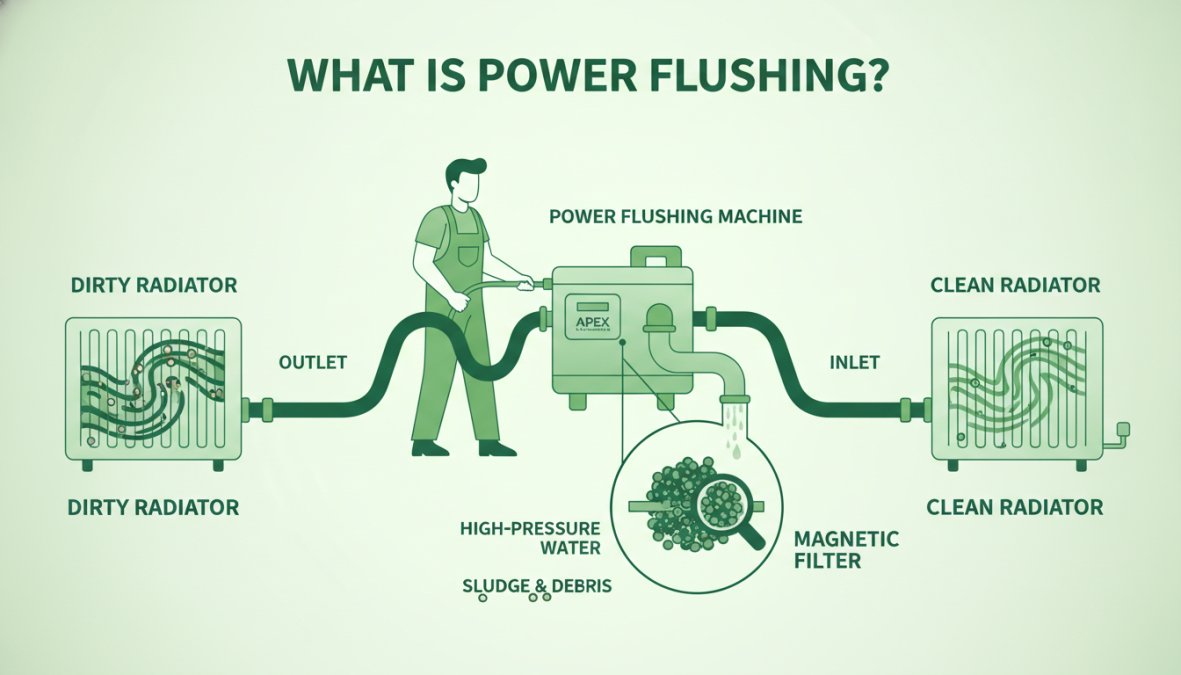
    Power flushing central heating systems involves using high-pressure water and specialized cleaning chemicals to remove accumulated sludge, debris, and corrosion from your heating circuit. At Apex Gas & Heating Ltd, we’ve seen firsthand how the benefits of power flushing central heating systems can transform a struggling heating setup into a reliable, efficient one. This process forces water through pipes and radiators at speeds that dislodge years of buildup that normal circulation cannot remove.

    The power flushing process works by connecting a specialized machine to your central heating system. High-pressure water flows through the circuit in both directions, breaking apart magnetic sludge and scale deposits. A powerful magnetic filter captures the debris as it’s expelled, preventing it from resettling elsewhere in the system. The entire operation typically takes between 4 to 8 hours, depending on the size and condition of your heating circuit.

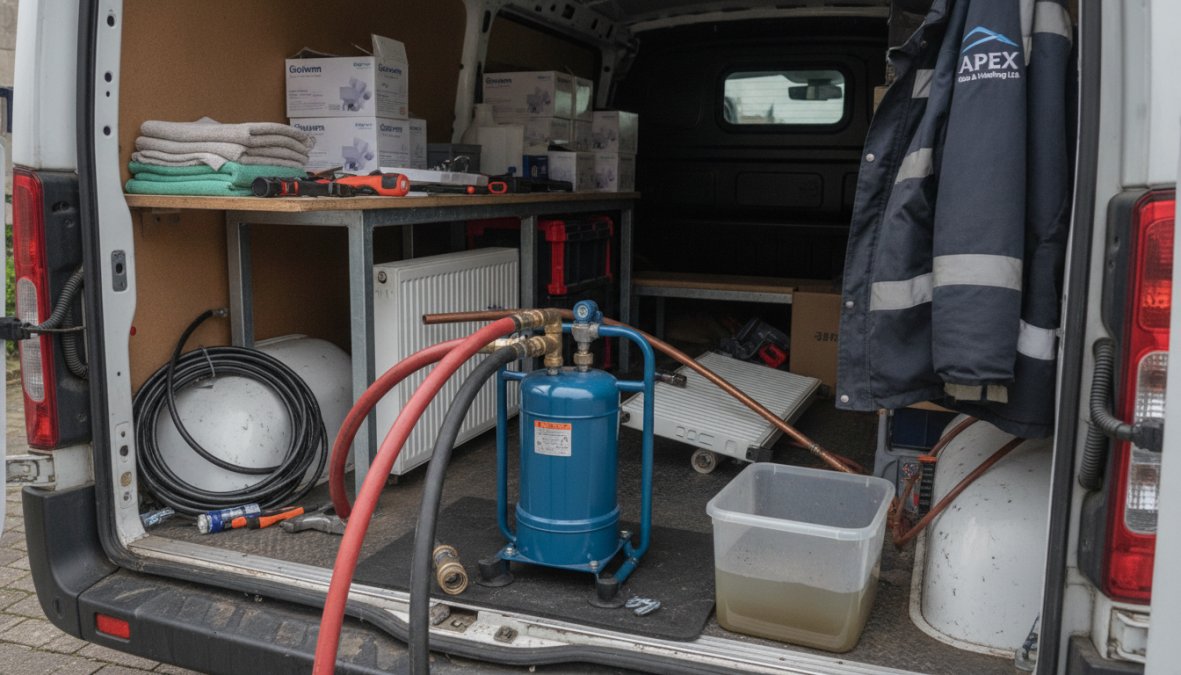
    Professional heating engineer operating a power flushing machine connected to central heating radiators, with high-pressure water flowing through pipes and magnetic filter collection visible
    Professional heating engineer operating a power flushing machine connected to central heating radiators, with high-pressure water flowing through pipes and magnetic filter collection visible

    The Power Flushing Process

    The actual mechanics are straightforward but require precision. A technician isolates your boiler and connects the flushing machine to the heating circuit. Water mixed with cleaning chemicals circulates at high velocity, agitating the system’s internal surfaces. The debris loosens and flows toward the magnetic filter, where iron particles and sludge accumulate. Once the water runs clear, a sign that most contaminants have been removed, the system is flushed with clean water and an inhibitor is added to prevent future corrosion.

    Pro Tip
    The magnetic filter is doing the real work here. Most sludge is ferrous (iron-based) and sticks to the magnet, which means you can actually see the contamination being removed. If the filter comes out black or grey, your system was definitely in need of attention.

    Many heating engineers recommend checking the inhibitor level after a power flush. This chemical barrier prevents rust from forming on internal metal surfaces, extending your system’s life significantly. Without inhibitor, corrosion begins immediately once the system restarts.

    Key Benefits of Power Flushing Central Heating Systems

    The benefits of power flushing central heating go far beyond simply cleaning pipes. A properly flushed system operates with renewed efficiency, reliability, and longevity. These improvements translate directly into lower energy bills, fewer emergency breakdowns, and extended equipment life.

    Improved Energy Efficiency and Lower Heating Bills

    When sludge accumulates inside your heating circuit, it acts as an insulator, preventing heat from transferring efficiently to your radiators. Your boiler has to work harder to reach the same temperature, consuming more fuel in the process. Power flushing removes this barrier, allowing heat to flow directly into radiators without resistance.

    Many homeowners report noticeable reductions in heating bills within weeks of a power flush. The exact savings depend on how much debris was present, but systems that were severely sludged can see improvements of 15-20% in fuel efficiency. Even moderately sludged systems often show measurable gains.

    The mechanism is simple physics: clean pipes conduct heat better than blocked ones. Your boiler reaches its target temperature faster, cycles less frequently, and consumes less energy overall. This efficiency gain compounds over months, making power flushing one of the most cost-effective maintenance investments for heating systems.

    Key Takeaway
    A power flush can reduce your annual heating costs by hundreds of pounds, particularly if your system has been running for 10+ years without this treatment.

    Extended System Life and Boiler Reliability

    Sludge doesn’t just reduce efficiency, it actively damages your boiler and pump. Particles circulate through the heat exchanger, causing micro-abrasions on internal surfaces. Over time, this wear accelerates component failure. A pump struggling against sludge-clogged circuits burns out faster. A heat exchanger coated with scale becomes prone to blockages and cracks.

    Power flushing removes the source of this damage. By eliminating sludge before it can cause permanent harm, you’re essentially giving your heating system a second life. Engineers often see boilers that were scheduled for replacement suddenly become reliable again after a thorough flush.

    The corrosion inhibitor added after flushing provides ongoing protection. This chemical layer prevents rust from forming on internal metal surfaces, which is particularly important in older systems where protective coatings may have worn away. The combination of mechanical cleaning and chemical protection creates conditions where your boiler can operate reliably for many additional years.

    Better Heat Distribution and Comfort

    Cold radiators in some rooms while others overheat is a classic symptom of sludge blocking the heating circuit. Debris accumulates in radiators, restricting water flow and preventing them from reaching full temperature. The result is uneven heating throughout your home.

    Power flushing restores balanced water circulation. Each radiator receives adequate flow at proper temperature, creating consistent comfort across all rooms. Bedrooms, bathrooms, and living spaces all heat evenly rather than some being noticeably colder than others.

    Thermal imaging can visually demonstrate this improvement. Before a power flush, thermographic surveys show cold spots on radiators where sludge has blocked water flow. After flushing, the same radiators display uniform heat distribution across their entire surface. This isn’t just a comfort improvement, it’s visible proof that the system is working as designed.

    Signs You Need Power Flushing for Your Central Heating

    Recognizing when your system needs flushing can prevent costly breakdowns. Several warning signs indicate that sludge accumulation has reached problematic levels.

    Cold spots at the bottom of radiators are the most common indicator. When sludge settles in the lower sections of radiators, it blocks water flow to those areas. The top of the radiator may feel hot while the bottom remains cold. Bleeding the radiator might provide temporary relief, but if cold spots return within weeks, sludge is the underlying cause.

    Boiler kettling, a loud, rumbling noise coming from the boiler, suggests sludge has coated the heat exchanger. The buildup causes water to boil unevenly, creating steam bubbles and the characteristic kettling sound. This is a warning sign that damage is occurring.

    Frequent boiler breakdowns, particularly if they occur seasonally when heating demand peaks, often trace back to sludge. The system works fine at low load but fails under stress. A power flush frequently resolves these recurring failures.

    Discolored water when bleeding radiators indicates debris circulating through your system. If the water runs black or dark grey, significant sludge is present. Clear water suggests the system is relatively clean, though flushing may still provide modest benefits.

    How Often to Power Flush Central Heating Systems

    The frequency depends on your system’s age, condition, and water quality. New systems installed with proper inhibitor rarely need flushing for 10-15 years. Older systems, particularly those that have never been flushed, benefit from treatment much sooner.

    Most heating engineers recommend power flushing every 5-8 years for systems over 15 years old. However, if your system shows signs of sludge, cold radiators, kettling, or frequent breakdowns, flushing shouldn’t wait. Addressing the problem early prevents escalating damage.

    Systems in hard water areas may need more frequent flushing due to increased scale buildup. Conversely, systems with properly maintained inhibitor levels require less frequent intervention. The key is monitoring your system’s performance and responding to warning signs promptly.

    Watch Out
    Delaying a power flush when your system shows clear signs of sludge can result in boiler failure, requiring costly replacement rather than preventive maintenance.

    Power Flushing vs Chemical Flush: Which Is Right for You?

    Both approaches aim to remove sludge, but they operate very differently. Understanding the distinction helps you choose the right solution for your system’s condition.

    Comparing Effectiveness and Cost

    A chemical flush introduces cleaning agents into your heating circuit while the system operates normally. The chemicals circulate for several days, gradually breaking down sludge. This approach is gentler on the system and less disruptive, your heating continues running throughout the process.

    However, chemical flushes are significantly less effective at removing heavy sludge accumulation. They work best on systems with moderate buildup or as preventive maintenance on relatively clean systems. For severely sludged circuits, chemical treatment alone often fails to restore full function.

    Power flushing, by contrast, uses mechanical force to dislodge debris. The high-pressure water is far more effective at removing years of accumulated sludge in a single day. Engineers can see exactly how much contamination is being removed via the magnetic filter. This visibility and effectiveness make power flushing the standard choice for systems with significant problems.

    Approach Best For Duration Effectiveness Cost
    Chemical Flush Preventive maintenance, light sludge 3-5 days Moderate Lower
    Power Flush Heavy sludge, cold radiators, system failure 4-8 hours High Higher

    For most systems showing clear signs of sludge problems, power flushing is the more reliable choice. Chemical flushing works best as a maintenance step after power flushing, helping prevent future buildup.

    Understanding Power Flush Cost and Value

    Pricing for power flushing varies based on system size, sludge severity, and your location. Larger systems with multiple zones cost more than small systems in compact homes. Systems that haven’t been flushed in decades may require additional time and cleaning cycles, affecting the final price.

    Rather than estimating costs, we recommend requesting quotes from qualified heating engineers who can assess your specific system. Apex Gas & Heating Ltd provides transparent pricing and free consultations to evaluate your heating circuit’s condition and recommend the most appropriate solution.

    What Affects Pricing and ROI

    System size is the primary cost driver. A small flat with 4-6 radiators costs less to flush than a large house with 12+ radiators and multiple zones. The complexity of your heating layout, whether you have a combi boiler, system boiler, or traditional tank setup, also influences pricing.

    The return on investment becomes clear quickly. Reduced heating bills, eliminated repair calls, and extended boiler life typically recoup the flushing cost within 1-2 years. Beyond that payback period, every month of reliable operation and lower energy consumption represents pure savings.

    Consider the alternative: ignoring sludge until your boiler fails completely. A new boiler installation costs £2,000-£5,000 or more. A power flush costs a fraction of that and often prevents the need for replacement entirely. The financial case for preventive flushing is compelling.

    Post-Flush Maintenance: Protecting Your Investment

    Power flushing is not a one-time fix that eliminates all future problems. Proper maintenance afterward ensures the benefits persist and sludge doesn’t rapidly reaccumulate.

    The inhibitor added during flushing is critical. This chemical barrier prevents corrosion and slows sludge formation. However, inhibitor levels decline over time as the system circulates. Most engineers recommend checking inhibitor concentration annually and topping it up as needed. This simple step costs little but extends the period between flushes significantly.

    Bleeding radiators occasionally helps release trapped air that can impede circulation. If cold spots begin to reappear months after flushing, bleeding may restore performance before a new flush becomes necessary. This basic maintenance takes minutes and prevents problems from escalating.

    Monitor your system’s performance. If kettling returns, breakdowns resume, or cold spots reappear, these are signals that sludge is beginning to accumulate again. Catching problems early allows for targeted intervention rather than waiting until another full flush becomes necessary.

    Pro Tip
    Set a calendar reminder to check your boiler’s inhibitor level each autumn before heating season begins. This five-minute check prevents most post-flush problems from developing.

    Professional vs DIY Power Flushing: Risk Assessment

    Some homeowners consider renting flushing equipment and attempting the process themselves. While technically possible, this approach carries significant risks that usually outweigh any cost savings.

    Power flushing machines are complex equipment requiring proper operation to avoid damaging your heating system. Incorrect pressure settings can rupture pipes or damage the boiler’s heat exchanger. Improper chemical handling poses safety risks. Most importantly, without proper training, you won’t recognize when something has gone wrong until serious damage has occurred.

    Professional heating engineers have years of experience recognizing system conditions, adjusting procedures accordingly, and troubleshooting problems in real time. They carry insurance covering any damage, giving you protection if something goes wrong. They also have access to specialized equipment and chemicals that perform better than consumer-grade alternatives.

    The cost difference between DIY and professional flushing rarely exceeds a few hundred pounds. Given the potential for expensive damage and the complexity of the work, professional service represents excellent value. Apex Gas & Heating Ltd’s licensed engineers provide expert service with full public liability insurance, ensuring your system is handled safely and effectively.


    Power flushing central heating systems addresses the root cause of many heating problems, accumulated sludge and corrosion that prevent your system from operating as designed. The benefits of power flushing central heating include improved energy efficiency, extended boiler life, and restored comfort throughout your home. If your system shows signs of sludge, cold radiators, kettling, or frequent breakdowns, professional power flushing can restore reliability and performance. Apex Gas & Heating Ltd’s licensed heating engineers provide expert flushing services across Sussex and Surrey with transparent pricing and 24/7 support. Get a quote today and discover how power flushing can transform your heating system.

    Frequently Asked Questions

    What are the main benefits of power flushing a central heating system?

    Power flushing removes sludge, scale, and debris from your heating circuit, improving energy efficiency and reducing heating bills. It enhances heat distribution across radiators, eliminates cold spots, and extends system life by preventing corrosion and pump failure. The process restores heat exchanger performance and boosts overall system reliability, helping your boiler operate at peak efficiency for years longer.

    How often should you power flush central heating systems?

    Most heating systems benefit from power flushing every 5-10 years, depending on water quality, system age, and maintenance history. Older systems or those showing signs of sludge accumulation may need it sooner. After a power flush, maintaining proper inhibitor levels and annual servicing helps extend the interval between flushes and keeps your central heating system operating efficiently.

    What is the difference between a power flush and a chemical flush?

    A power flush uses high-pressure water and a power flushing machine to physically dislodge and remove sludge, scale, and debris from your heating circuit. A chemical flush relies on cleaning chemicals to dissolve deposits over time. Power flushing is generally more effective for heavily contaminated systems, while chemical flushes are gentler and suitable for routine maintenance. Professional heating engineers often recommend power flushing for systems with significant sludge buildup.

    Is power flushing worth the cost for my central heating system?

    Power flushing is worth the investment if your system shows signs of sludge, radiator cold spots, or declining efficiency. The improved energy efficiency typically reduces heating bills, while preventing expensive boiler breakdowns and extending system life saves money long-term. For older systems or those with poor heat distribution, the benefits, better comfort, lower costs, and system reliability, usually outweigh the upfront power flush cost within 2-3 years.

    This article was written using GrandRanker