








Table of Contents
- Best central heating alternatives 2026
- Gas boilers: traditional heating that still works
- Air source heat pumps: energy-efficient heating
- Underfloor heating systems: comfort without radiators
- How to check heating engineer credentials
- Finding Gas Safe registered heating engineers
- Cost-benefit analysis: repairs versus replacement
- Conclusion
Last Updated: August 8, 2026
Best central heating alternatives 2026
When your boiler fails mid-winter or energy bills climb, the question isn’t whether you need heating, it’s which alternative suits your home. The landscape has shifted dramatically. Today’s options include air source heat pumps, underfloor systems, and hybrid approaches. Each solves different problems. A heat pump excels at efficiency but requires upfront investment. Underfloor heating offers unmatched comfort but costs more to retrofit. Gas boilers remain reliable but face long-term regulatory pressure.
The real decision framework is "which is best for my specific situation." This guide walks through the main heating alternatives available to homeowners in Sussex and Surrey, how each works, what it costs to install, and how to find qualified engineers.
The best heating alternative depends on three factors: your current setup, your budget, and your priority (comfort, efficiency, or cost). There’s no single winner, only the right choice for your home.
Gas boilers: traditional heating that still works
Gas boilers remain the most common heating system in UK homes. They burn natural gas to heat water, which circulates through radiators or underfloor pipes. For most homeowners, they’re straightforward, affordable to install, and reliable.
A gas boiler installation typically takes one day. Running costs are predictable. Hundreds of engineers across Sussex and Surrey can fix problems quickly. Replacement boilers cost less upfront than heat pumps and integrate seamlessly into existing radiator systems.
However, gas boilers become less efficient as properties improve insulation. A modern boiler achieves around 90% efficiency, meaning 10% of fuel energy is wasted. For a well-insulated home with minimal heat loss, that gap matters less. The real problem emerges over time: gas prices fluctuate, servicing becomes more expensive as units age, and regulatory pressure is building. The government has signalled that gas heating will face restrictions in new builds and potentially in existing homes over the next decade.
When a gas boiler makes sense:
- You have an existing radiator system and want to replace like-for-like
- Your property is poorly insulated, making a heat pump less efficient
- You need the lowest upfront cost
- You prioritize simplicity and rapid repair access
When it doesn’t:
- You’re planning to stay in the property for 15+ years (efficiency costs add up)
- Your home is well-insulated with good fabric efficiency
- You want to future-proof against regulatory changes
Apex Gas & Heating Ltd installs and services gas boilers across Sussex and Surrey, with transparent pricing and 24/7 emergency support. They hold full public liability insurance and employ only Gas Safe registered engineers, ensuring your installation meets all safety standards. Whether you need a new boiler installation or boiler repair, their team can advise on the best option for your situation.
Air source heat pumps: energy-efficient heating
An air source heat pump extracts heat from outside air, even when cold, and uses electricity to concentrate that heat for indoor use. It’s the most mature renewable heating technology in the UK market.
A modern air source heat pump delivers 3-4 units of heat for every unit of electricity consumed. Compare that to a gas boiler’s 90% efficiency, and the running costs are significantly lower over a 15-year lifespan, especially when electricity comes from renewable sources.
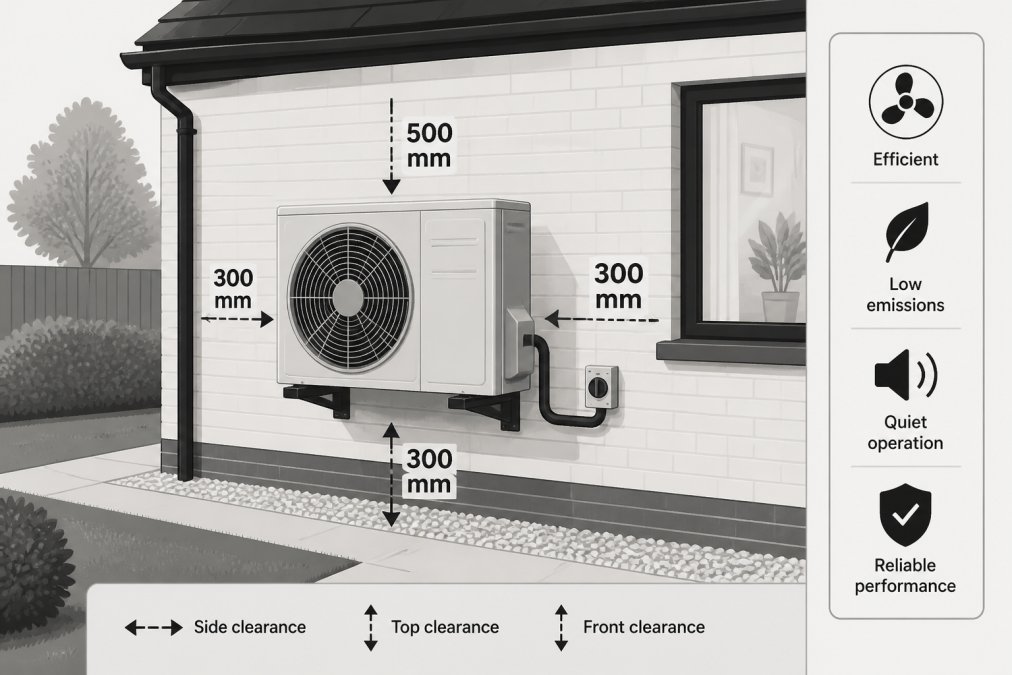
Installation is more involved than a boiler swap. The outdoor unit needs space and clear airflow. Your radiators may need upgrading to work efficiently with lower water temperatures. The process typically takes 3-5 days.
Heat pumps work best in well-insulated homes. A property with poor insulation, single-glazed windows, and heat loss through the roof will struggle to reach target temperatures efficiently. In a well-insulated home, the system barely needs to run, and savings are substantial.
When an air source heat pump makes sense:
- Your home is well-insulated (EPC rating C or better)
- You’re planning to stay for 10+ years
- You want to reduce running costs and carbon footprint
- You have space for an outdoor unit
When it doesn’t:
- Your property has poor insulation and you can’t upgrade it
- You need immediate heat in an extremely cold climate
- You can’t accommodate an outdoor unit
- Your electricity costs are very high
Heat Geek specializes in heat pump design using AI optimization, offering performance guarantees and monitoring. British Gas provides comprehensive heat pump installation with flexible payment options. Warmup Plc focuses on water-based underfloor systems that pair well with heat pumps.
Underfloor heating systems: comfort without radiators
Underfloor heating delivers warmth through pipes or electric mats embedded in floors rather than wall-mounted radiators. It creates even heat distribution from bottom to top, eliminating cold spots and drafts. There are no radiators taking up wall space, which opens design flexibility. The systems run at lower water temperatures than traditional radiators, making them highly compatible with heat pumps.
Two types exist: electric mats (simpler, faster to install, better for retrofits) and water-based systems (more efficient, better for whole-house heating). Electric systems work well for individual rooms. Water-based systems suit new builds and major renovations.
Installation disruption depends on your setup. In a new build, underfloor heating is straightforward. In an existing property, you’re either lifting floorboards (disruptive and expensive) or installing thin systems under existing flooring (less efficient). Running costs are lower due to the lower water temperatures required.
Once installed, underfloor systems are difficult to modify. If a leak develops, diagnosis and repair can be invasive.
When underfloor heating makes sense:
- You’re building new or doing major renovation
- You want maximum comfort and design flexibility
- You’re pairing it with a heat pump or renewable energy
- You have good insulation and low heat loss
When it doesn’t:
- You’re retrofitting into an existing property with solid floors
- You need quick, low-disruption installation
- You want the ability to modify the system later
- You’re on a tight budget
Warmup Plc supplies electric and water-based underfloor heating systems across the UK, with smart thermostat integration. The Underfloor Heating Store provides complete kits and components for DIY or professional installation.
How to check heating engineer credentials
Not every person calling themselves a heating engineer has the qualifications to work safely on your system. Gas work is particularly hazardous; carbon monoxide leaks, explosions, and fires are real risks from poor installation or maintenance.
The critical credential is Gas Safe registration. This is the legal requirement in the UK for anyone working on gas appliances. A Gas Safe registered engineer has passed rigorous exams, maintains current competency, and is subject to regular audits.
How to verify: Ask for their Gas Safe registration number. Visit the Gas Safe Register website and search for their name and registration. A genuine engineer will have this information readily available.
Beyond Gas Safe registration, look for:
- Worcester or Glowworm approval if they’re installing those brands
- Public liability insurance covering their work
- Membership in trade bodies like FENSA or OFTEC
- References or reviews from recent customers
Many unregistered engineers operate openly, betting that homeowners won’t check. Some are competent but cutting corners. Others are genuinely dangerous.
Apex Gas & Heating Ltd employs only Gas Safe registered engineers and holds full public liability insurance. Their Glowworm and Worcester approvals mean they’re authorised by these manufacturers to install and service their equipment to warranty-valid standards. They also provide Gas Safety & CP12 certification to ensure your heating system meets all legal safety requirements.
Finding Gas Safe registered heating engineers
The Gas Safe Register maintains a searchable database of all legitimate engineers. Visit the Gas Safe Register website, enter your postcode, and search for engineers in your area. You’ll see their registration number, the types of work they’re certified for, and their contact details.
Beyond the register, use these channels:
Online directories: Checkatrade and TrustATrader vet engineers and display customer reviews. Engineers on these platforms have undergone background checks and agree to dispute resolution.
Recommendations: Ask friends, family, or neighbours who they’ve used. Personal recommendations carry weight because they’re based on real experience.
Quotes from multiple engineers: Get at least three quotes before committing. This helps you understand market price and assess how each engineer communicates.
Red flags to watch for:
- No Gas Safe registration or reluctance to provide it
- Quotes significantly lower than others
- Pressure to decide immediately
- No written quote or contract
- No mention of insurance or guarantees
Apex Gas & Heating Ltd operates across Sussex and Surrey with 24/7 emergency call-out availability. Their local presence means faster response times, and their transparent pricing eliminates surprise bills. You can verify their Gas Safe credentials and Glowworm/Worcester approvals before booking.
| Verification Method | What It Checks | Time Required | Cost |
|---|---|---|---|
| Gas Safe Register search | Legal registration and certification type | 5 minutes | Free |
| Checkatrade/TrustATrader | Customer reviews and vetting | 10 minutes | Free |
| Personal recommendations | Real experience from trusted source | Varies | Free |
| Multiple quotes | Market rates and communication quality | 1-2 weeks | Free |
| Insurance verification | Public liability and professional indemnity | 5 minutes | Free |
Cost-benefit analysis: repairs versus replacement
At some point, every boiler reaches the decision threshold: repair it or replace it. The choice hinges on three factors: age, repair history, and efficiency loss.
Age matters because boiler lifespan is typically 10-15 years. A boiler at year 12 is in its decline phase. Repair costs rise. Spare parts become harder to source. At this stage, another major repair might tip the balance toward replacement.
Repair history reveals a pattern. One repair in ten years is normal maintenance. Three repairs in two years suggests the boiler is failing. A rule of thumb: if annual repair costs exceed 50% of a replacement boiler’s cost, replacement becomes the rational choice.
Efficiency loss is real but often invisible. A boiler that’s 15 years old operates at 85% efficiency instead of 90%. That gap translates to higher fuel bills every month. If you’re staying in the property for another 10 years, that efficiency penalty adds up.
Get a repair quote and a replacement quote. Calculate your annual energy savings from a new boiler (usually 10-15% lower bills). Divide the replacement cost by the annual savings. That’s your payback period. If it’s under 7 years and you’re staying, replace. If it’s 10+ years or you’re moving soon, repair.
One factor people underestimate: peace of mind. A new boiler comes with a warranty. An old boiler doesn’t. Some homeowners rationally choose replacement simply to eliminate the risk of catastrophic failure during winter.
Apex Gas & Heating Ltd handles both repairs and installations, so they can advise honestly on which makes sense for your situation. Their 24/7 emergency service means you’re covered either way, but a new installation with warranty protection reduces your long-term vulnerability.
Conclusion
The heating alternative that makes sense for your home depends on your specific circumstances: your property’s insulation quality, your budget, how long you’re staying, and your priorities around comfort, efficiency, and simplicity.
Gas boilers remain practical for immediate replacement. Air source heat pumps deliver long-term efficiency gains if your home is well-insulated. Underfloor heating offers unmatched comfort in new builds or major renovations. All require qualified installation from Gas Safe registered engineers to work safely and reliably.
When you’re ready to move forward, verification matters. Check credentials, compare quotes, and choose an engineer with transparent pricing and real accountability.
Apex Gas & Heating Ltd provides professional heating installation, repair, and servicing across Sussex and Surrey with Gas Safe registered engineers, Glowworm and Worcester approvals, and 24/7 emergency support. Their transparent pricing and full public liability insurance mean you know exactly what you’re paying for and who’s responsible if something goes wrong. Get a Quote and see how their locally trusted team can help you find the right heating solution for your home.
Frequently Asked Questions
What are the best alternatives to gas central heating in the UK?
The main heating alternatives in the UK include air source heat pumps, which extract warmth from outside air and are highly efficient; underfloor heating systems that provide even heat distribution without radiators; and modern gas boilers that remain reliable for many homes. Heat pumps are increasingly popular due to energy efficiency and lower running costs, though installation costs are higher. Your choice depends on your property type, budget, and long-term sustainability goals. Consult a qualified heating engineer to assess which option suits your home best.
How do I find a Gas Safe registered heating engineer in my area?
You can verify a heating engineer's Gas Safe registration by checking the official Gas Safe Register website using their name or company name. Always ask for their Gas Safe ID card before work begins. In Sussex and Surrey, many local heating companies display their registration prominently. Request proof of certification, public liability insurance, and warranties on workmanship. Trusted platforms like Checkatrade also list vetted engineers with customer reviews, making it easier to find reliable professionals in your area.
Should I repair my boiler or replace it with a heating alternative?
If your boiler is over 15 years old and requires frequent repairs, replacement often makes financial sense. Consider the repair cost versus replacement cost, your boiler's efficiency rating, and how long you plan to stay in your property. A boiler service costs around £100, while repairs can range significantly. Modern heating alternatives like heat pumps offer lower running costs and better efficiency, but have higher upfront costs. Get quotes from qualified engineers to compare long-term costs and energy savings before deciding.
Are there government grants available for upgrading heating systems?
Yes, the UK government offers the Boiler Upgrade Scheme, providing up to £7,500 towards heat pump installations. You may also qualify for the Warm Homes Grant if you're on a low income. Some local councils offer additional support for energy-efficient heating upgrades. Eligibility depends on your property type, location, and household circumstances. Contact a Gas Safe registered engineer or your local authority to check what grants you qualify for and how to apply.
How often should I have my boiler serviced by a professional?
Annual boiler servicing is recommended by manufacturers and safety standards. Regular servicing keeps your boiler efficient, extends its lifespan, and helps identify potential safety issues like carbon monoxide leaks before they become dangerous. Landlords must have gas safety certificates (CP12) completed annually for rental properties. If you notice any issues between services, strange noises, reduced heating, or pilot light problems, contact a Gas Safe registered engineer immediately rather than waiting for the annual service.
Leave a Reply