








Table of Contents
- Why Carbon Monoxide Detector Placement Matters
- Placing a Carbon Monoxide Alarm Near Your Boiler
- How Many Carbon Monoxide Alarms Do I Need
- Installing a Carbon Monoxide Alarm in Your Bedroom
- Where to Avoid Placing Your Detector
- Carbon Monoxide Alarm Testing and Maintenance
- Frequently Asked Questions
Last Updated: October 14, 2026
Why Carbon Monoxide Detector Placement Matters
Carbon monoxide detector placement in homes is one of the most overlooked aspects of home safety. This colourless, odourless gas can leak from faulty boilers, fires, and appliances without any warning. If you breathe it in, it can cause serious illness or death within minutes. Proper placement of your carbon monoxide alarm means you’ll catch a leak before it becomes dangerous.
We see homes every week where detectors are installed in the wrong spots. A detector in a cupboard or behind furniture won’t alert you to danger. You need it where you’ll hear it and where carbon monoxide actually collects. The difference between a well-placed alarm and a poorly placed one could save your life.
Getting placement right doesn’t take much effort. Most homes need between two and four detectors. Position them near potential sources of carbon monoxide and in sleeping areas. Test them monthly and replace batteries every year. This simple routine keeps your household safe.
Placing a Carbon Monoxide Alarm Near Your Boiler
Your boiler is the most likely source of carbon monoxide in your home. A carbon monoxide alarm near your boiler should be positioned 1 to 3 metres away from the appliance, at head height. Never place it directly next to the boiler or inside a cupboard where airflow is blocked.
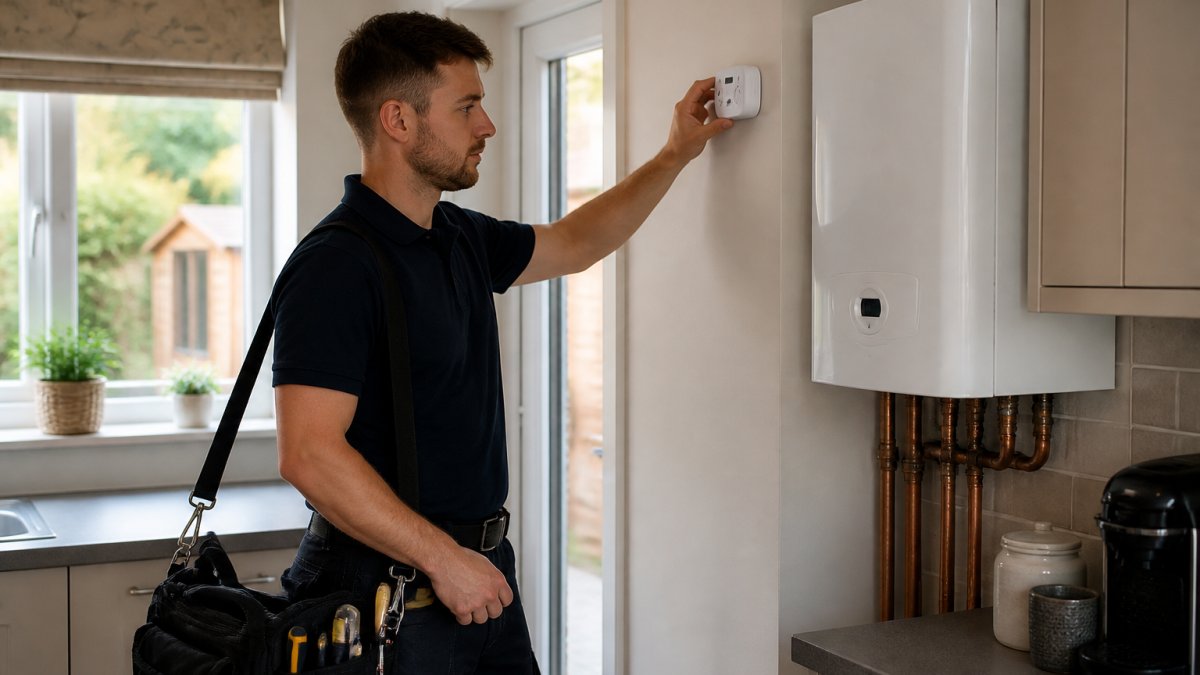
The alarm needs to “see” the room air, not just the boiler itself. Carbon monoxide spreads through the air as it leaks. An alarm tucked behind a radiator or in a corner won’t detect it quickly enough. Mount it on a wall or shelf where air circulates freely around it.
If your boiler is in a kitchen, place your carbon monoxide detector in the kitchen or just outside it. If it’s in a utility room, put the alarm near the door to that room. The goal is to catch leaks fast, before they reach sleeping areas. When your boiler is serviced, ask your Gas Safe registered engineer to check the detector’s position. Our team at Apex Gas & Heating Ltd recommends positioning detectors before any new boiler installation, so you’re protected from day one.
If you have a condensing boiler or a combi boiler, the risk of carbon monoxide is lower but still real. Never skip the detector just because your boiler is modern. Faults can happen at any age.
How Many Carbon Monoxide Alarms Do I Need
Most homes need at least two carbon monoxide alarms. One should be near your boiler or main heat source. A second should be in or near your bedroom. Larger homes or homes with multiple heat sources may need three or four.
The rule is simple: place an alarm on every level of your home and in every room where people sleep. If you have a two-storey house, put one upstairs and one downstairs. If you have a basement with a boiler, add one there. Each alarm covers a certain area, so measure your rooms to decide how many you need.
Flats and bungalows with one bedroom typically need two alarms. A three-bedroom house usually needs three. Don’t over-buy, but don’t under-protect either. A few extra pounds spent on alarms is cheap insurance against a silent killer.
Never rely on just one alarm in a large home. Carbon monoxide can collect in one room while missing another. Multiple alarms give you the best chance of early warning.
Installing a Carbon Monoxide Alarm in Your Bedroom
A carbon monoxide alarm in your bedroom is essential because you spend hours asleep there. If a leak happens at night, you won’t notice symptoms building up. The alarm will wake you before damage occurs. Position it on a wall or shelf at head height, roughly 1 to 3 metres from any heat source.
Don’t put the alarm in a cupboard or behind curtains. Sound needs to travel to you. Airflow needs to reach the sensor. Mount it where you’ll hear it even if you’re deeply asleep. Some people prefer a plug-in model with a light that flashes, in case the sound doesn’t wake them.
Check the alarm’s range when you buy it. Most modern alarms can be heard from a certain distance away. If your bedroom is large, you may need two alarms to ensure coverage. Test the alarm monthly by pressing the test button. Replace batteries every 12 months, even if the alarm seems to work fine.
Where to Avoid Placing Your Detector
Never put your carbon monoxide detector in a kitchen next to a cooker. Gas cookers produce small amounts of carbon monoxide during normal use. The alarm will trigger false alarms, and you’ll stop trusting it. Place the detector at least 1 to 2 metres away from any gas appliance except your boiler.
Don’t install alarms in damp places like bathrooms or near windows. Humidity damages the sensors. Avoid placing them near air vents, extractor fans, or open windows. Moving air can prevent carbon monoxide from reaching the sensor. Keep detectors away from heaters, radiators, and direct sunlight.
Never hide an alarm in a cupboard or behind furniture. It won’t detect gas leaks, and you won’t hear the alarm if it goes off. Mount it on a clear wall or shelf at head height. Make sure everyone in your home knows where the alarms are and can hear them from their bedroom.
False alarms from poor placement will train you to ignore the device. If you keep getting false alarms, move the detector to a better spot or check if it’s faulty. A detector you trust is one you’ll act on.
Carbon Monoxide Alarm Testing and Maintenance
Test your carbon monoxide detector once a month. Press the test button for 3 to 5 seconds. The alarm should sound loudly. If it doesn’t, replace the batteries first. If it still doesn’t work after a fresh battery, replace the whole unit.
Replace batteries regularly, even if the alarm hasn’t beeped. Mark the date on your calendar or set a phone reminder. Batteries lose power slowly, and you won’t know when they’re too weak to work. A detector with dead batteries is worse than no detector at all.
Most alarms last a number of years. Check the label on your detector to find the expiry date. When it expires, replace the entire unit. Don’t assume an old alarm still works just because it passes the test button. The sensor degrades over time.
If your alarm goes off, leave your home immediately. Don’t go back inside to find the source. Call the emergency services from outside or from a neighbour’s home. Once the area is cleared, have a Gas Safe registered engineer inspect your boiler and heating system. Apex Gas & Heating Ltd offers 24/7 emergency call-outs for suspected carbon monoxide leaks. Our engineers can identify the source and fix it quickly.
| Task | Frequency | Why It Matters |
|---|---|---|
| Test alarm button | Monthly | Confirms the alarm still works |
| Replace batteries | Regularly | Prevents silent failure |
| Replace whole unit | Regularly | Sensor degrades over time |
| Professional boiler check | Annually | Catches faults before they leak |
Carbon monoxide is a serious risk in any home with a gas boiler or fire. Proper detector placement gives you early warning and time to escape. Position alarms near your boiler, in bedrooms, and away from false-alarm triggers. Test them monthly and replace batteries yearly. If you’re unsure about your boiler’s safety or need a professional inspection, contact Apex Gas & Heating Ltd. Our Gas Safe registered engineers can service your boiler, check your detectors, and give you peace of mind that your home is protected. Get a quote today for a full safety assessment.
Frequently Asked Questions
Where should a carbon monoxide alarm be placed in a home?
Carbon monoxide detectors should be installed in sleeping areas and rooms with potential carbon monoxide sources. Place them 1-3 metres away from any gas-burning appliances like boilers or cookers, at head height or on walls. Avoid placing them in kitchens, bathrooms, or near windows where steam and draughts can interfere with detection. Every home with a boiler or gas appliance should have at least one alarm in the main living area and one in sleeping areas.
How many carbon monoxide alarms do I need in my home?
Most homes should have at least two carbon monoxide alarms: one in the main living area (near potential sources) and one in the bedroom or sleeping area. Larger properties with multiple bedrooms may benefit from additional alarms in each sleeping area. Flats and bungalows with a single living space still need at least one alarm positioned away from the boiler. The exact number depends on your home’s layout and the location of gas-burning appliances.
Do carbon monoxide alarms need to be tested regularly?
Yes, carbon monoxide alarms should be tested monthly using the test button on the device itself. Replace batteries regularly (or follow the manufacturer’s instructions) and replace the entire alarm according to the manufacturer’s guidance. Regular servicing of your boiler by a Gas Safe registered engineer also helps prevent carbon monoxide leaks before they occur. If your alarm sounds, evacuate immediately and call the emergency services.
Should a carbon monoxide alarm be placed near a boiler?
A carbon monoxide alarm should be positioned 1-3 metres away from your boiler, not directly next to it. This distance allows the alarm to detect carbon monoxide that has dispersed into the room, which is more representative of a real hazard. Placing it too close to the boiler can result in false alarms from normal combustion gases. Ensure the alarm is at head height and in a location where you’ll hear it clearly if it sounds.