








Table of Contents
- What Is Carbon Monoxide and Why It Matters
- Symptoms of Carbon Monoxide Poisoning to Watch For
- How to Detect Carbon Monoxide in Your Home
- Carbon Monoxide Alarm Placement in Every Room
- Why Annual Boiler Service Importance Cannot Be Overlooked
- What to Do If You Suspect Carbon Monoxide
- Frequently Asked Questions
Last Updated: September 26, 2026
What Is Carbon Monoxide and Why It Matters
Carbon monoxide is a colourless, odourless gas produced when fuel burns incompletely. It comes from boilers, cookers, fires, and car exhausts. Your body mistakes it for oxygen, which starves your organs of what they need. Even low levels over time cause damage.
This gas kills hundreds of people each year in the UK. Most die in their own homes. The dangerous part: you cannot see it, smell it, or taste it. Your senses are useless against it.
At Apex Gas & Heating Ltd, we help homeowners understand carbon monoxide signs and why detection matters. A functioning boiler should never leak this gas. But older systems, poor ventilation, and blocked flues create risk. Knowing the signs of carbon monoxide in residential homes could save your life.
Carbon monoxide poisoning happens quietly. By the time symptoms appear, damage may already be done. Prevention through detection is your only real defence.
Symptoms of Carbon Monoxide Poisoning to Watch For
Recognising carbon monoxide poisoning symptoms early matters because they mimic common illness. You might blame flu or a migraine when the real culprit sits in your living room.
Early signs include:
- Headache that won’t shift
- Dizziness or lightheadedness
- Nausea or vomiting
- Chest pain or tightness
- Confusion or difficulty concentrating
- Tiredness despite sleeping
- Shortness of breath
A key clue among carbon monoxide signs: symptoms ease when you leave the house. They return when you come back. If your whole family feels unwell at the same time, suspect carbon monoxide rather than a passing bug.
Severe poisoning causes loss of consciousness, seizures, and death. This happens fast. Do not wait for symptoms to worsen.
If multiple people in your home feel ill simultaneously and symptoms improve outside, suspect carbon monoxide immediately. Leave the property and call emergency services.
Children and pets show symptoms first because they breathe faster. Watch for unusual lethargy in your dog or cat. Notice if your child seems drowsy on school mornings but fine at weekends.
Pregnant women face extra risk. Carbon monoxide crosses the placenta and harms foetal development. Older people and those with heart disease deteriorate more quickly.
How to Detect Carbon Monoxide in Your Home
The only reliable way to detect carbon monoxide is with an alarm. Your nose cannot warn you. Your eyes cannot see it. An alarm can.
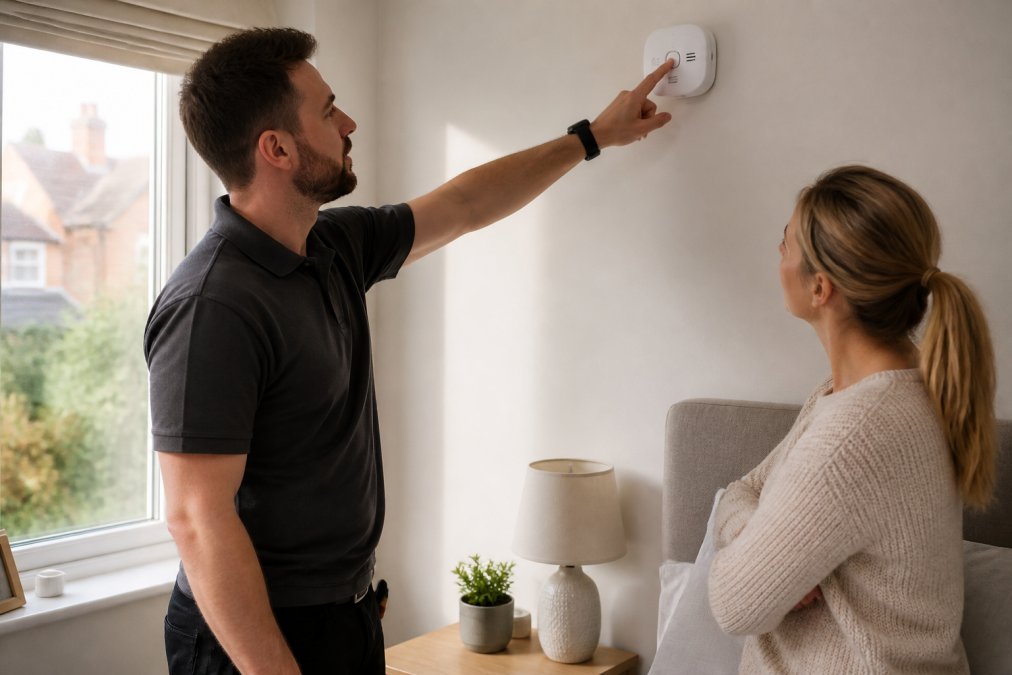
Install a detector in every room where you sleep or spend time. Alarms vary in cost. A dead battery costs nothing but your life.
Look for alarms marked EN 50291. This British Standard ensures the device works properly. Cheaper alarms from unknown brands often fail when you need them most.
Test your alarm monthly. Press the test button. If it beeps, it works. If it does not, replace the battery or the whole unit. A silent alarm is worse than no alarm because you trust it.
Replace batteries regularly. Many people do this when clocks change. Set a phone reminder if you forget.
Digital displays show carbon monoxide levels in parts per million (ppm). Certain levels indicate danger. Your alarm should sound before these thresholds.
Battery-powered alarms fail silently. Use mains-powered alarms with battery backup. Check the backup battery works every month.
Carbon Monoxide Alarm Placement in Every Room
Where you put your alarm matters as much as having one. Poor placement means it might not detect gas before it reaches you.
Place alarms:
- In bedrooms, near your head
- In living rooms where you spend evenings
- In kitchens near cookers
- In hallways outside bedrooms
- Near any gas appliance
Do not put alarms in kitchens directly above cookers. Steam and cooking fumes trigger false alarms. Place it at least 1 metre away from the stove.
Do not put alarms in bathrooms. Moisture damages sensors. Do not put them in cupboards or behind furniture. The gas needs a clear path to the sensor.
Mount alarms on walls at an appropriate height. Carbon monoxide mixes evenly with air, so height matters less than position. But an appropriate height lets you hear the alarm while sleeping.
Keep alarms away from windows and external walls. Cold air affects sensors. Keep them away from heaters and direct sunlight for the same reason.
If you rent, your landlord has responsibilities regarding alarms in properties with gas appliances. Landlords can arrange Gas safety & CP12 certification to ensure their properties meet these obligations.
Why Annual Boiler Service Importance Cannot Be Overlooked
A boiler that leaks carbon monoxide often shows no other signs of trouble. It heats your home normally. It makes no strange noises. Then one morning, you wake up with a pounding head.
Annual boiler servicing catches problems before they become dangerous. An engineer inspects the heat exchanger, the part most likely to crack and leak gas. They check ventilation, test for leaks, and clean components.
During servicing, the engineer:
- Inspects the combustion chamber
- Tests for carbon monoxide leaks
- Checks flue ventilation
- Cleans the burner
- Replaces the filter
- Tests controls and safety devices
A boiler older than 10 years needs extra attention. Corrosion inside builds up. Metal weakens. Cracks form. These cracks let gas escape.
Boilers in damp homes may need more frequent checks. Moisture accelerates corrosion. If your boiler sits in a kitchen or bathroom, consider more frequent servicing.
At Apex Gas & Heating Ltd, our engineers are trained to spot early signs of carbon monoxide risk. We service Baxi, Glow-worm, and Worcester boilers. We complete a full safety check every visit.
Homeowners with boilers over 8 years old. Annual servicing becomes essential at this age.
Skipping servicing saves money this year. It costs your life next year. The risk is not worth the saving.
What to Do If You Suspect Carbon Monoxide
Your alarm sounds. Your head pounds. Your partner feels dizzy. What happens next decides whether you survive.
Step 1: Leave immediately.
Do not investigate. Do not open windows to “let it out.” Do not stay to gather belongings. Get outside now. Take everyone with you. Leave pets if you must, but leave.
Step 2: Call emergency services.
Ring 999 from outside your home. Tell them you suspect carbon monoxide. They will send firefighters to check the property. Do not go back inside until they say it is safe.
Step 3: Turn off gas at the meter if you can reach it safely.
Only do this if the meter is outside or in a safe area. Do not enter the house for this. The gas supply can wait. Your life cannot.
Step 4: Go to hospital or call NHS 111.
Describe your symptoms. Tell them you suspect carbon monoxide exposure. Doctors test blood carbon monoxide levels. Early treatment prevents organ damage.
Step 5: Do not return home until cleared.
Firefighters will ventilate the property and find the source. An engineer must repair the fault. Only return once emergency services confirm it is safe.
If your boiler caused the leak, contact a Gas Safe registered engineer immediately. Apex Gas & Heating Ltd responds to emergency calls 24/7 and can diagnose and repair faults the same day when possible. We also offer boiler repair and new boiler installation if replacement is needed.
Never assume the danger has passed because the alarm stopped beeping. Carbon monoxide may still be present at lower levels. Wait for professional confirmation.
Frequently Asked Questions
What are the physical symptoms of carbon monoxide poisoning?
Early symptoms include headache, dizziness, weakness, and nausea. As exposure increases, you may experience confusion, chest pain, and loss of consciousness. Children and pets may show signs first. If multiple people in your home feel unwell simultaneously without obvious cause, suspect carbon monoxide and leave the property immediately, then call emergency services.
How can I tell if there is carbon monoxide in my house?
You cannot detect carbon monoxide by sight, smell, or taste, it is colourless and odourless. A working carbon monoxide alarm is your primary detection method. Physical signs include soot around boiler vents, yellow or orange flames on your boiler (should be blue), or a strong smell of gas. An annual boiler service will identify potential leaks before they become dangerous.
Where should carbon monoxide alarms be placed in a home?
Install alarms in every room where a gas appliance operates or near bedrooms where occupants sleep. The best carbon monoxide alarm placement includes areas near your boiler, kitchen, living rooms, and bedrooms. Mount alarms on walls at an appropriate height, away from windows and vents. Test monthly and replace batteries regularly to ensure reliability.
How often should a gas boiler be serviced to prevent carbon monoxide leaks?
Annual boiler service importance cannot be overstated, servicing should happen every 12 months. A qualified engineer will inspect the heat exchanger, combustion chamber, and flue for damage or blockages that could cause carbon monoxide to leak into your home. Regular servicing catches problems early, extends boiler life, and maintains your warranty.
Carbon monoxide poisoning is preventable. An alarm costs less than a single takeaway meal. Annual boiler servicing costs less than a week of petrol. Ignoring both costs everything.
If your boiler is over 5 years old or you cannot remember the last service, book one now. At Apex Gas & Heating Ltd, we offer transparent pricing and fast appointment times. Our engineers find and fix carbon monoxide risks before they become emergencies. Get a quote today and protect your home.