







Table of Contents
- What Is Carbon Monoxide and Why It’s a Silent Killer
- Physical and Visual Signs of a Carbon Monoxide Leak
- Carbon Monoxide Poisoning Symptoms in Humans
- Pet-Specific Warning Signs of CO Exposure
- How to Detect Carbon Monoxide with Alarms
- What to Do If Your Carbon Monoxide Alarm Goes Off
- Carbon Monoxide Alarm UK Law and Requirements
- Common Causes of Carbon Monoxide Leaks in Homes
Last Updated: July 23, 2026
What Is Carbon Monoxide and Why It’s a Silent Killer
Carbon monoxide is a colourless, odourless gas produced by incomplete combustion of fossil fuels. At Apex Gas & Heating Ltd, we explain that understanding signs of carbon monoxide leak is critical because this gas provides no sensory warning before poisoning occurs. When inhaled, carbon monoxide binds to haemoglobin in your blood more readily than oxygen does, starving your body’s cells of oxygen they need to function.
Unlike natural gas, which has an added odour for safety, carbon monoxide produces no smell, taste, or visible warning. A leak can develop silently while you sleep, potentially causing severe harm or death before anyone realises what’s happening. This is why recognising physical signs of a carbon monoxide leak and understanding poisoning symptoms are essential for every homeowner.
Carbon monoxide poisoning can occur in minutes at high concentrations. Even low-level exposure over hours can cause cumulative damage. The only reliable way to detect this gas is with a functioning CO detector or by recognising early symptoms in people and pets.
A faulty furnace, blocked flue, or malfunctioning water heater can turn your heating system into a source of danger.
Physical and Visual Signs of a Carbon Monoxide Leak
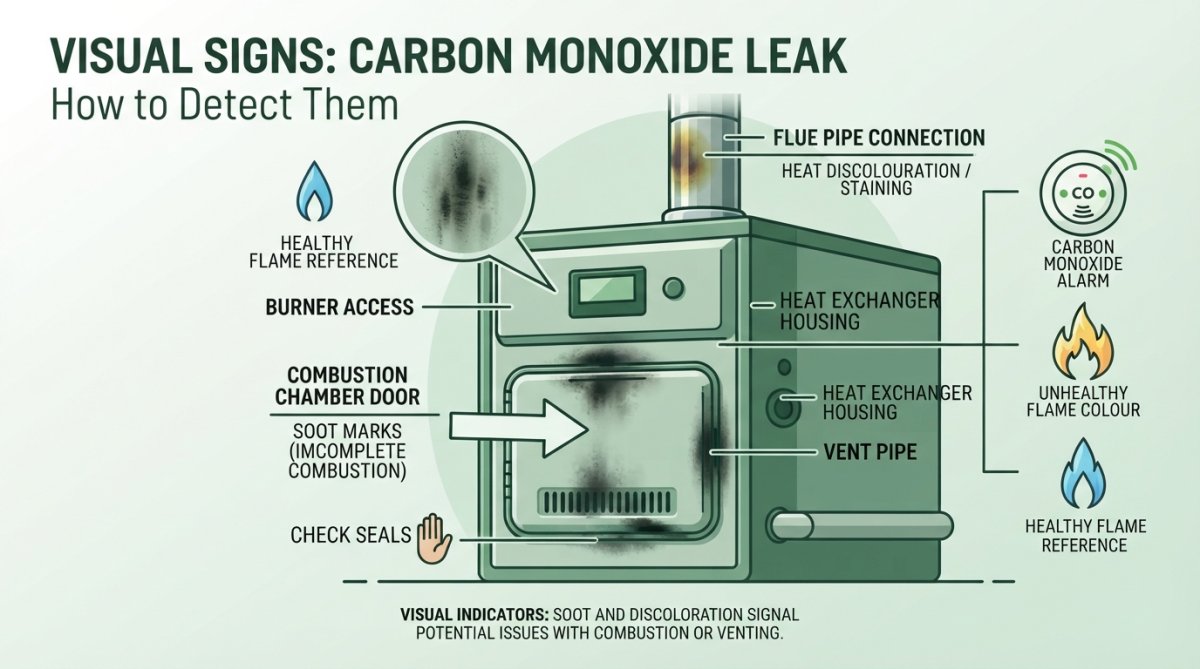
Identifying physical signs around your home requires knowing what to look for near combustion appliances. While carbon monoxide itself is invisible, the conditions that produce it often leave visible clues.
Visible signs around combustion appliances
Soot marks and staining around your boiler, furnace, or water heater are red flags. Black, sooty deposits on walls or casing surrounding these appliances indicate incomplete combustion, the exact condition that produces carbon monoxide. Rust-coloured stains on metal flue pipes suggest moisture and incomplete combustion inside.
Check your fireplace and chimney for damaged or deteriorating mortar, loose bricks, or visible cracks that allow gases to escape into your home instead of venting outside. A fireplace producing excessive smoke or where smoke backs into the room signals a serious ventilation problem.
Inspect flue pipes for disconnected sections, dents, or corrosion indicating that combustion gases may be leaking into living spaces. A rusted-through or separated water heater flue pipe is a direct pathway for dangerous gases.
Yellow or orange flames in a gas fireplace are warning signs. A healthy gas flame should be predominantly blue. Yellow or orange flames indicate incomplete combustion and carbon monoxide production.
Unusual smells and condensation patterns
While carbon monoxide itself has no smell, the conditions producing it often do. A strong burning or musty odour near your boiler or furnace warrants immediate investigation, suggesting combustion problems that could generate carbon monoxide.
Excessive condensation around windows, especially near heating appliances, can indicate incomplete combustion. When your furnace or water heater burns inefficiently, it produces more water vapour as a byproduct.
Carbon Monoxide Poisoning Symptoms in Humans
The symptoms of carbon monoxide poisoning mimic common illnesses, which is why they’re often missed. Many people attribute their symptoms to flu rather than recognising the true cause.
Early warning signs to watch for
Headache is typically the first symptom, a dull, persistent pressure rather than sharp pain. If multiple household members develop headaches simultaneously, especially if symptoms worsen when home and improve when outside, carbon monoxide exposure should be suspected.
Dizziness, lightheadedness, nausea, weakness, and fatigue follow closely. You might feel unsteady or disoriented, with muscles feeling heavy and unresponsive.
Confusion and impaired judgment emerge as exposure continues. You might struggle to think clearly, make decisions, or concentrate. Some people report blurred vision or difficulty focusing. These cognitive changes are particularly dangerous because they impair your ability to recognise the problem and take action.
If you experience headache, dizziness, nausea, and weakness simultaneously, especially when home and fading when outside, carbon monoxide exposure is a strong possibility. Leave the building immediately and call emergency services.
Severe symptoms requiring immediate action
Chest pain, rapid heartbeat, and shortness of breath indicate significant poisoning. Your heart works harder as your body struggles to compensate for oxygen deprivation.
Seizures, loss of consciousness, and coma represent the most dangerous stage, indicating hypoxia, critical lack of oxygen to the brain and vital organs. Without immediate medical intervention, these symptoms can be fatal.
Pet-Specific Warning Signs of CO Exposure
Pets often show signs of carbon monoxide exposure before humans do, making them valuable early-warning systems. Because pets spend more time at lower levels where heavier gases accumulate, they may be affected first.
Watch for unusual behaviour: lethargy, refusal to play, stumbling, loss of coordination, or difficulty standing. Vomiting, loss of appetite, diarrhoea, unusual anxiety, pacing, whining, and rapid or laboured breathing are concerning signs.
If your pet shows any of these symptoms, especially if multiple pets are affected simultaneously, leave immediately and seek fresh air. Call emergency services and request a welfare check of your home.
How to Detect Carbon Monoxide with Alarms
A functioning carbon monoxide detector is your primary defence against this invisible threat.
CO detector placement and maintenance
Install at least one CO detector on every level of your home, particularly near bedrooms. Detectors should be placed within 1-3 metres of potential sources: furnace, water heater, and fireplace.
Battery-powered detectors should have batteries replaced annually. Hardwired detectors with backup batteries require the same schedule. Test your CO detector monthly by pressing the test button. If it fails the test, replace it immediately.
CO detectors have a lifespan of 5-7 years. After this period, sensors degrade and may not detect dangerous levels. Mark installation dates and replace when reaching end of lifespan.
If your CO alarm sounds, do not investigate. Leave your home immediately, go outside to fresh air, and call emergency services. They will assess your home for carbon monoxide and determine whether the alarm is accurate. Professional confirmation is essential.
What to Do If Your Carbon Monoxide Alarm Goes Off
A sounding CO alarm demands immediate action. Speed matters.
Immediate steps to take
First, evacuate everyone immediately through the nearest exit and move to fresh air outside. Do not gather belongings, pets, or valuables. Do not turn off the alarm.
Second, call emergency services (999 in the UK) from outside your home. Tell them your CO alarm has sounded and provide your address.
Third, do not re-enter your home until emergency services have cleared it and confirmed carbon monoxide levels are safe.
When to call emergency services
Call 999 immediately if:
- Your CO alarm sounds
- You suspect carbon monoxide exposure based on symptoms
- Multiple household members experience headache, dizziness, nausea, or weakness simultaneously
- Your pet shows signs of poisoning and you suspect CO exposure
Call emergency services first, not your gas engineer. They will dispatch responders who can assess your situation and home safety. Your engineer can conduct repairs only after emergency services have cleared the building.
Carbon Monoxide Alarm UK Law and Requirements
In the United Kingdom, carbon monoxide detector requirements vary by property type and tenancy arrangement.
For owner-occupied homes, there is no legal requirement to install a CO detector, though it is strongly recommended by the Health and Safety Executive (HSE). Landlords must ensure all gas appliances, flues, and pipework are maintained in safe condition and undergo annual gas safety checks under the Gas Safety (Installation and Use) Regulations 1998.
The HSE guidance states landlords should provide tenants with information about carbon monoxide risks and poisoning symptoms. While a CO detector is not explicitly mandated by law for all rental properties, many local authorities and letting agencies now require them as standard safety provisions.
New buildings and properties undergoing renovation may have different requirements. Building regulations increasingly include provisions for carbon monoxide detection in properties with combustion appliances. Consult your building control officer or local authority for specific requirements in your area.
Gas safety certificates, required annually for rental properties, do not test for carbon monoxide. A gas safety check verifies appliances are safe and properly installed but does not measure CO levels. A CO detector provides real-time monitoring that a gas safety check cannot.
Common Causes of Carbon Monoxide Leaks in Homes
Understanding what causes carbon monoxide production helps you identify risks in your own home.
Faulty furnaces and water heaters
A furnace or boiler with cracks in its heat exchanger is a primary source of carbon monoxide leaks. When it cracks, combustion gases can leak into the air circulating through your home instead of being vented outside.
Corrosion inside the furnace or water heater creates similar problems. Over time, moisture and chemical reactions corrode metal, creating holes and weak points.
Improper installation or modification of your furnace increases risk. If your heating system was not installed according to manufacturer specifications or building codes, it may not vent gases safely.
An oversized furnace or water heater can cause incomplete combustion. Oversized units cycle on and off frequently, never reaching optimal operating temperature, producing more carbon monoxide than a properly sized unit.
Blocked chimneys and flues
A blocked or partially blocked chimney prevents combustion gases from venting outside. Blockages can be caused by bird nests, debris, ice buildup, or creosote accumulation. When gases cannot escape upward, they back up into your living space.
Damaged or deteriorating chimney liners allow gases to seep through cracks into surrounding structures and potentially into your home. A chimney inspection should reveal liner condition.
Negative air pressure in your home can cause combustion gases to back up into living spaces instead of venting out. This happens when your home is very well sealed or when exhaust fans and clothes dryers pull air out faster than it can be replaced.
Carbon monoxide detection and prevention require vigilance, but the effort is straightforward. Regular maintenance of your heating system, functioning CO detectors, and awareness of early warning signs form a complete defence strategy. If you’re concerned about your boiler’s safety or haven’t had your heating system serviced recently, Apex Gas & Heating Ltd offers comprehensive gas appliance inspections and maintenance. Our Worcester and Glowworm approved installers conduct thorough safety checks, identify potential carbon monoxide risks before they become dangerous, and ensure your heating system operates safely and efficiently. Get a quote today and protect your home with professional expertise.
Frequently Asked Questions
What are the early symptoms of carbon monoxide poisoning?
Early signs of carbon monoxide poisoning include headache, dizziness, weakness, nausea, vomiting, chest pain, and confusion. These symptoms often resemble flu-like illness. If multiple household members experience these signs simultaneously, especially near heating appliances, suspect CO poisoning and move to fresh air immediately. Seek medical attention and contact emergency services. The colorless and odorless nature of carbon monoxide makes it impossible to detect without a working alarm.
How often should I test my carbon monoxide detector?
Test your CO detector monthly by pressing the test button until the alarm sounds. Replace batteries twice yearly, when clocks change is a helpful reminder. Replace the entire unit every 5-7 years or per manufacturer instructions. Regular maintenance ensures your detector functions when you need it most. Keep detectors clean and free from dust. If your alarm sounds, treat it as a genuine emergency: evacuate, call 999, and don't re-enter until emergency services confirm the property is safe.
What causes carbon monoxide leaks in homes?
Carbon monoxide leaks occur when combustion appliances, furnaces, boilers, water heaters, fireplaces, and gas cookers, burn fossil fuels inefficiently. Common causes include blocked or damaged flues, poor ventilation, faulty heat exchangers, and cracked pipes. Blocked chimneys prevent proper exhaust escape, forcing CO back indoors. Inadequate servicing and preventative maintenance increase risk significantly. Professional annual inspections of gas appliances can identify problems before dangerous CO accumulates. Ensure all appliances have proper ventilation and are installed correctly.
Are carbon monoxide alarms a legal requirement in UK homes?
While not universally mandatory for all UK homes, carbon monoxide detectors are legally required in rental properties with solid-fuel appliances under the Health and Safety at Work etc. Act 1974. However, the Health and Safety Executive strongly recommends CO alarms for all homes with combustion appliances. Many local authorities and insurance providers also recommend or require them. Installing a detector is a low-cost safety measure that can save lives. Check your local regulations and insurance policy for specific requirements.
Leave a Reply