







Last Updated: November 1, 2026
Quick Summary
To prevent emergency plumbing issues in Crawley, check under sinks and test taps monthly, lag exposed pipes before the first frost, and never pour cooking fat down the sink. Fix dripping taps and slow drains early, and book an annual inspection with a Gas Safe registered engineer.
- Ten minutes a month covers the basics: check for damp patches, corrosion, drips and slow drains.
- Lag exposed pipes and drain outside taps in early autumn, before the first frost arrives.
- Fit a hair catcher in the bathroom and clear it weekly to stop drain blockages.
- Only flush pee, poo and paper, as wipes labelled flushable still cause blockages.
- Turn off the internal stop tap first in an emergency, then open cold taps to drain the pipes.
Table of Contents
- Why Emergency Plumbing Issues Are Worth Preventing
- Your Plumbing Maintenance Checklist for Every Season
- How to Prevent Burst Pipes Before Cold Weather Arrives
- How to Prevent Blocked Drains in the Kitchen and Bathroom
- Early Warning Signs You Should Not Ignore
- What to Do in a Plumbing Emergency
- Where DIY Stops and a Gas Safe Registered Engineer Starts
- Booking a Plumbing Maintenance Visit
- Frequently Asked Questions
Why Emergency Plumbing Issues Are Worth Preventing
Most plumbing emergencies start small. A dripping tap, a slow drain, a radiator that takes longer to heat up. Left alone, each one can turn into a burst pipe or a flooded floor. Learning how to prevent emergency plumbing issues in Crawley is mostly about catching these small faults early. The homes that suffer worst are rarely unlucky, they are simply unchecked.
Your Plumbing Maintenance Checklist for Every Season
A plumbing maintenance checklist works best when it is short enough to actually follow and specific enough to be useful. The schedule below splits the work into monthly checks, seasonal jobs and an annual inspection, so nothing gets forgotten and small faults never get the chance to grow. Treat it as a rolling plan rather than a one-off list.
Monthly Checks That Take Ten Minutes
Ten minutes a month covers the basics. Run through these and note anything that looks off:
- Check under sinks and around the base of the toilet for damp patches or staining
- Look at visible pipework for corrosion, green marks or white limescale crusting
- Test each tap for drips after turning it off
Renters can do most of this themselves, and report anything they find to their landlord. Our DIY plumbing maintenance tips for renters cover preventing leaks, unblocking drains and knowing your responsibilities.
Seasonal Jobs Worth Diarising
Some tasks only make sense at certain times of year. Put these in your calendar with a reminder:
- Early autumn (September-October): lag exposed pipes, insulate the cold water tank, drain and isolate outside taps, and fix any dripping taps before the first frost.
- Through winter: keep the heating on low during very cold spells, even when out, and open loft hatches in severe cold so warm air reaches the pipework.
- Spring: check for winter damage, hairline cracks, loose joints, damp patches on ceilings and walls, and clear gutters and downpipes so rainwater drains away from the property.
Annual Tasks Worth Booking In
Once a year, book a proper inspection of the plumbing and heating system. If you are weighing up a plumbing warranty vs maintenance plan, it helps to know what each covers before you decide. A Gas Safe registered engineer can check the boiler, pipework, radiators and controls together and spot wear before it fails. Autumn is the best time, before cold weather arrives, so any faults are fixed ahead of the heating season.
Keep a simple log of what you checked and when. A written record makes it far easier to spot a slow leak or a pressure loss that creeps up over months, and it is useful evidence if you ever need to make an insurance claim.
Property-Specific Considerations
Not every home has the same plumbing layout, so adjust the checklist to suit yours:
- Flats: confirm where the internal stop tap is and whether there is a communal riser or shared supply. Check with the building management before isolating anything that affects other flats.
- Older properties: expect galvanised or lead pipework in some areas, which is more prone to corrosion and pinhole leaks. Have it inspected and plan for replacement where needed.
- Homes with a cold water tank in the loft: insulate the tank and all pipework in the loft space, and check the ball valve and overflow regularly.
If you are unsure what type of system you have, ask a Gas Safe registered engineer at your next visit. Knowing your layout makes every check on this list quicker and safer.
How to Prevent Burst Pipes Before Cold Weather Arrives
Frozen pipes are the leading cause of winter escapes of water, and most are preventable. If you are wondering does home insurance cover burst pipes, it is worth checking before the cold arrives. Water expands as it freezes, and the pressure can split a pipe or push a joint apart. The fix is insulation and a little forward planning.
- Lag exposed pipes in lofts, garages and outbuildings
- Insulate the cold water tank and any pipework near draughts
- Fix dripping taps before winter, since a trickle freezes faster
How to Prevent Blocked Drains in the Kitchen and Bathroom
Blocked drains build up slowly, then block without warning. The cause is usually fat, hair, wipes or food scraps. Small habits stop nearly all of it.
In the kitchen, never pour cooking oil or fat down the sink. Let it cool and bin it. Use a sink strainer to catch food scraps, and run hot water for a few seconds after washing up.
Early Warning Signs You Should Not Ignore
Plumbing rarely fails without warning. The trick is knowing which signs matter, what each one usually points to, and what to do next. The table below pairs each warning sign with a likely cause and a sensible first action, so you can decide whether to monitor it, fix it yourself or call a Gas Safe registered engineer.
| Warning sign | What it may indicate | What to do next |
|---|---|---|
| Low water pressure at one tap | Scale, a partial blockage or a failing valve | Clean the tap aerator; if it persists, book an engineer |
| Low water pressure throughout the home | A supply issue or a problem with the internal stop tap | Check the stop tap is fully open; contact your water supplier if neighbours are affected |
| Dripping tap | A worn washer or cartridge | Replace the washer or cartridge; a small DIY job on most taps |
| Gurgling drains | A partial drain blockage or venting issue | Clear the trap and run hot water; if it recurs, get the drain inspected |
| Damp patch on a ceiling | A leak in the pipework above | Turn off the water at the stop tap and call an engineer |
| Boiler losing pressure | A leak in the heating system | Top up once, note the reading, and book an engineer if it drops again |
| Overflowing toilet | A blocked trap or faulty fill valve | Turn off the water at the isolation valve and clear the trap |
| Rust or green marks on pipes | Corrosion that can lead to a pinhole leak | Have the pipework inspected before it fails |
| Unusual noises from the boiler | Trapped air, scale or a failing component | Book a Gas Safe registered engineer; do not open the casing |
| Slow drain in one sink or bath | A local blockage of hair, soap or grease | Clear the trap and use a plunger; avoid chemical drain cleaners |
How to Read the Signs Together
A single sign is often minor, but two or more together usually point to something worth investigating. A dripping tap on its own is a small repair. A dripping tap plus rising damp on the wall behind it suggests water is tracking into the fabric of the building. A boiler that loses pressure once may simply need topping up; a boiler that loses pressure every few weeks is telling you there is a leak in the heating circuit that will not fix itself.
When to Monitor, Fix or Call
Use this simple rule of thumb:
- Monitor: a single minor sign with no water damage, such as a slow drain or a slightly stiff tap. Note it and check again in a week.
- Fix yourself: a dripping tap, a blocked trap, a toilet that will not flush properly, or a shower head that needs descaling.
- Call a Gas Safe registered engineer: any sign involving a gas appliance, a boiler losing pressure repeatedly, a leak you cannot isolate, damp on a ceiling or wall, or water near electrics.
If you smell gas or suspect a gas leak, do not attempt any DIY fix. Turn off the gas at the meter if safe to do so, open windows, avoid using electrical switches, and call the National Gas Emergency Service on 0800 111 999 immediately.
Any of these signs is worth acting on early. A dripping tap or a slow drain is a small repair now and a much bigger one later. Catching them at the monitoring stage is exactly how you prevent an emergency call-out.
What to Do in a Plumbing Emergency
Act fast, and in the right order. In a plumbing emergency, the first job is to stop the water, not to find a plumber. Then contain the damage and call for help. Here is the sequence we would follow:
- Turn off the water at the internal stop tap
- Open cold taps to drain the remaining water from the pipes
- Switch off the electricity to any affected sockets or lights at the consumer unit
- Move furniture and valuables clear and catch drips in buckets
- Call a Gas Safe registered engineer for a 24/7 emergency call-out
Finding and Turning Off the Internal Stop Tap
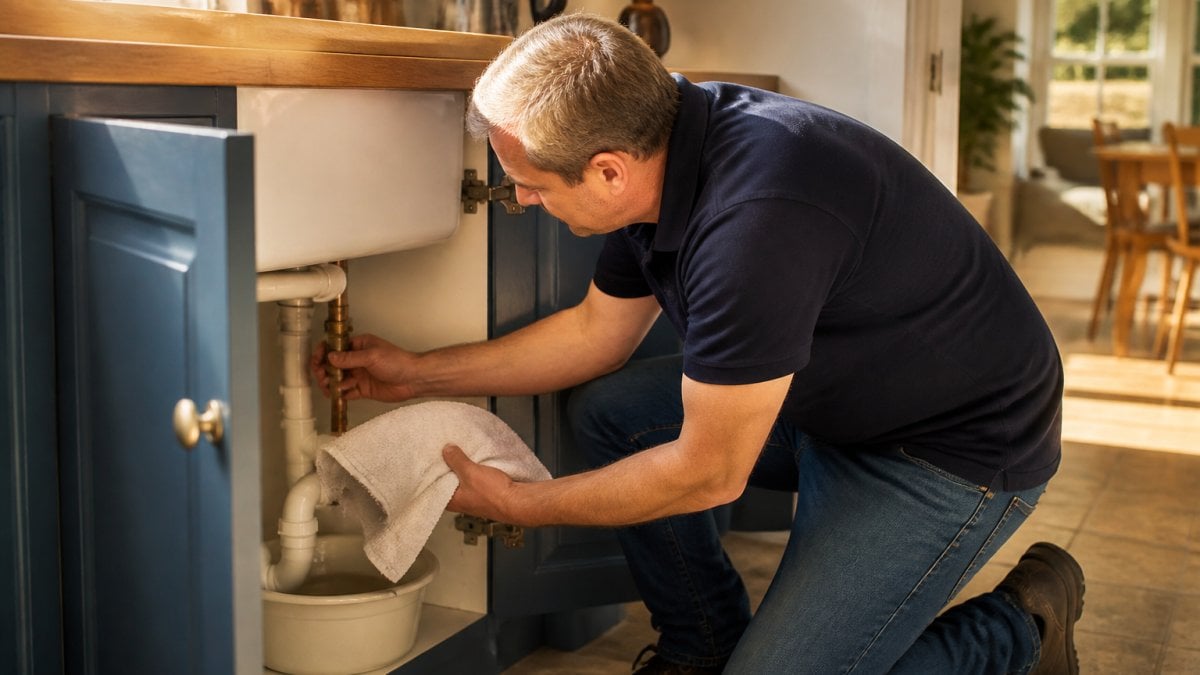
The internal stop tap is usually under the kitchen sink, in a downstairs cupboard or near the water meter. Our guide on how to shut off water during a pipe burst walks you through finding your stopcock and draining the system step by step. Turn it clockwise to close it. Test it before you need it, so you know it turns freely.
Where DIY Stops and a Gas Safe Registered Engineer Starts
Some jobs are safe to do yourself. Others are not, and gas work is firmly in the second group. By law, anyone working on gas appliances in the UK must be Gas Safe registered. Never open a boiler casing, adjust gas fittings or attempt a gas repair yourself.
Safe DIY jobs:
- Clearing a sink or bath trap
- Changing a tap washer
- Unblocking a toilet with a plunger
Jobs for a registered engineer:
- Any gas appliance work, including boiler repairs
- Boiler leaks or pressure faults
- Replacing a faulty radiator valve
If you are unsure which side of the line a job falls on, treat it as an engineer’s job.
Booking a Plumbing Maintenance Visit
A yearly maintenance visit is the simplest way to prevent emergency plumbing issues from taking you by surprise. Our plumbing services cover general plumbing work, and our team can advise on what a visit includes.
Small faults become big bills when they are left alone. If your home is due a check, or something on the list above has been nagging at you, we can help.
Frequently Asked Questions
What counts as emergency plumbing?
Emergency plumbing covers anything that risks immediate damage or leaves the home without water or heating. That includes a burst pipe, a water leak spreading into ceilings or electrics, an overflowing toilet that will not stop, a complete loss of water supply, or a boiler leaking water. A dripping tap or a slow-draining sink is inconvenient but can usually wait for a booked visit. If water is escaping and you cannot isolate it with the stop tap, treat it as an emergency and call a 24-hour plumber.
How often should I check my home’s plumbing?
A ten-minute walk-round once a month catches most problems early. Check under sinks and around the boiler for damp patches, watch for low water pressure or slow drains, and look at exposed pipework in lofts and garages before cold snaps. Consider a professional plumbing maintenance visit once a year, ideally before winter. Landlords should also keep the annual gas safety check up to date, since a failing boiler or heating system is one of the most common reasons for an urgent call-out.
What should I do if a pipe starts leaking?
Turn off the internal stop tap straight away to cut the water supply, then open the cold taps to drain what is left in the pipework. Move furniture and electrical items clear, catch drips in a bucket or towels, and switch off the electrics at the consumer unit if water is near sockets or lights. Do not use a blowtorch or attempt to solder a joint yourself. Call a Gas Safe registered engineer or plumber, and photograph the damage for your insurer before anything is cleared away.
How can I reduce the risk of blocked drains?
Never pour cooking fat or oil down the sink, since it sets hard as it cools. Wipe greasy pans with kitchen roll first and bin it. Use a drain strainer in the kitchen and bathroom, clear hair from plugholes weekly, and flush hot water with a little washing-up liquid down the sink once a week. Only flush the three Ps, and keep wet wipes, cotton buds and sanitary products out of the toilet entirely. If a drain gurgles or empties slowly, clear it before it blocks completely.
