







Last Updated: 26 October 2026
Quick Summary
To prevent carbon monoxide leaks in winter, inspect your boiler flue before cold weather arrives for snow, ice, debris, cracks or corrosion, and book a Gas Safe registered engineer to check your heating system. Install carbon monoxide alarms in bedrooms and living rooms, test them monthly, and leave your home immediately if an alarm sounds.
- Inspect your flue opening and pipe for snow, ice, debris, cracks, corrosion, and deteriorated sealant before winter
- Install carbon monoxide alarms in your bedroom and living room at head height where you’ll hear them
- Test your alarm every month by pressing the test button and replace batteries if it doesn’t sound
- Leave your home immediately and call emergency services if your carbon monoxide alarm goes off
- Book a Gas Safe engineer to service your boiler before winter to check pressure, seals and heating system function
Table of Contents
- Why Carbon Monoxide Risk Increases in Winter
- Check Your Boiler Flue and Heating System Before Winter
- Carbon Monoxide Alarm Placement and Testing
- Recognise Carbon Monoxide Poisoning Symptoms
- What to Do If Your Carbon Monoxide Alarm Goes Off
- Maintain Your Boiler Throughout Winter
- Book Your Pre-Winter Boiler Service
- Frequently Asked Questions
Why Carbon Monoxide Risk Increases in Winter
Carbon monoxide is a silent, odourless gas that becomes a serious threat during the winter months. Your boiler works harder when temperatures drop, running longer and more frequently to keep your home warm. This increased usage means more opportunity for dangerous faults to develop.
The risk is real. When boilers burn fuel, they produce carbon monoxide as a byproduct. Normally, this gas vents safely outside through your flue. But snow, ice, debris, or a blocked flue can trap it inside your home. Cold weather also affects how heating systems function, condensation can freeze in pipes, pressure can drop, and seals can crack.
The good news is that you can prevent carbon monoxide leaks if you act now, before winter arrives.
Check Your Boiler Flue and Heating System Before Winter
Your boiler flue is the pipe that carries dangerous gases out of your home. Before winter arrives, inspect it carefully.
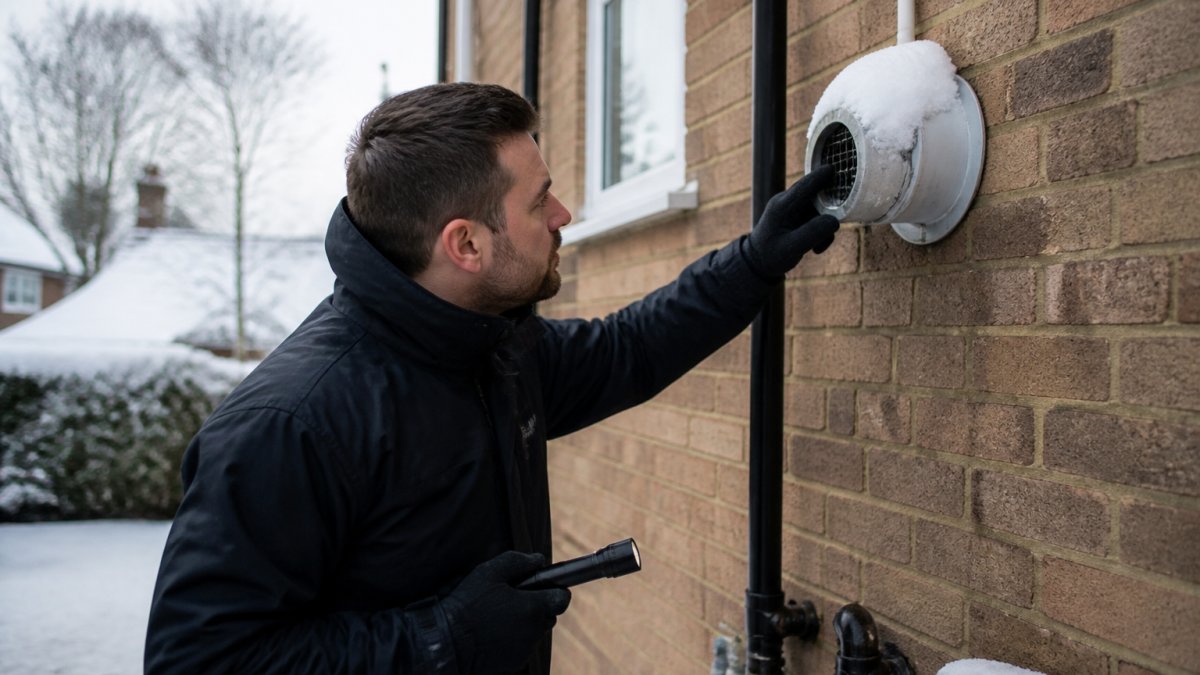
Look at where the flue exits your home, usually on an external wall. Check for:
- Snow or ice blocking the opening
- Debris, leaves, or bird nests inside
- Visible cracks or corrosion
- Loose or damaged sections
- Paint or sealant that has deteriorated
If you spot any damage, do not attempt to fix it yourself. A blocked or damaged flue means carbon monoxide cannot escape, it stays in your home instead.
Your heating system also needs attention. Low water pressure, leaking joints, or a faulty pump can all cause problems. A Gas Safe registered engineer can check these during an inspection.
Inspect these key areas of your boiler and flue before winter to prevent carbon monoxide leaks.
| Area to check | What to look for | Action if found |
|---|---|---|
| Flue opening | Snow, ice, debris, leaves, bird nests | Do not attempt to fix yourself |
| Flue pipe | Cracks, corrosion, loose or damaged sections | Contact a Gas Safe engineer |
| Sealant | Paint or sealant deterioration | Arrange professional inspection |
| Heating system | Low water pressure, leaking joints, faulty pump | Book a Gas Safe engineer check |
Carbon Monoxide Alarm Placement and Testing
A carbon monoxide alarm is your first line of defence. But only if it’s positioned correctly and maintained properly.
Install alarms in rooms where you spend the most time:
- Your bedroom (so you’re alerted at night)
- Your living room or main lounge
- Your kitchen (but not directly above the boiler)
Place the alarm at head height when you’re sitting down. Carbon monoxide mixes evenly with air, so height doesn’t matter as much as location, you need it where you’ll hear it.
Never put an alarm in a cupboard, behind furniture, or in direct sunlight. These spots prevent it from detecting gas properly. Also avoid placing it very close to your boiler. An alarm that’s too close might trigger false alarms from normal operation.
Test your alarm every month by pressing the test button. You should hear a loud beep. If it doesn’t sound, replace the batteries immediately. If it still doesn’t work, replace the entire unit.
For detailed guidance on alarm placement and testing, check our complete resource on carbon monoxide detector placement.
Recognise Carbon Monoxide Poisoning Symptoms
Carbon monoxide poisoning symptoms appear gradually and feel like flu. This is why it’s dangerous, people assume they’re just unwell.
Watch for these warning signs:
- Headache that comes and goes
- Dizziness or lightheadedness
- Nausea or vomiting
- Chest pain or tightness
- Shortness of breath
- Confusion or difficulty concentrating
- Tiredness or weakness
The symptoms get worse if you spend more time in the affected room. They improve when you leave the house. If multiple people in your home feel ill at the same time, carbon monoxide poisoning is more likely than coincidence.
Children and pets are often affected first because they’re more sensitive. If your pet seems unusually drowsy or unwell, and you can’t explain why, take it seriously.
For a detailed guide to recognising these symptoms, read our full resource on carbon monoxide poisoning signs.
What to Do If Your Carbon Monoxide Alarm Goes Off
An alarm going off is an emergency. Do not ignore it or assume it’s a false alarm.
Your immediate actions:
- Leave your home immediately, do not wait
- Take everyone outside, including pets
- Close all doors behind you as you leave
- Call the emergency services
- Do not re-enter your home until a Gas Safe engineer has checked it
Never assume the alarm is faulty. Treat every alarm as a genuine threat. Stay outside in fresh air until help arrives.
If you feel unwell after leaving, tell the Gas Safe engineer. Seek medical attention if symptoms persist. Tell the doctor you suspect carbon monoxide exposure, they need to know this to treat you correctly.
Once the engineer has cleared your home as safe, they’ll identify what caused the alarm.
For more information on responding to a carbon monoxide alarm, read our guide on detecting carbon monoxide leaks.
Maintain Your Boiler Throughout Winter
Your boiler needs attention before winter starts and regular checks throughout the season.
During winter, keep an eye on your boiler’s performance:
- Listen for unusual noises, knocking, whistling, or banging
- Watch for pilot light changes, it should be a steady blue flame
- Check your pressure gauge, it should sit in the green zone
- Feel the flue terminal from inside, it should be warm but not hot
Learn more about our boiler maintenance approach.
Book Your Pre-Winter Boiler Service
The best time to prevent carbon monoxide leaks in winter is now, before the cold weather arrives.
Book a Gas Safe registered engineer in under a minute.
If your boiler needs repair or replacement, we’ll give you a fixed-price quote upfront. No surprises. We’re approved installers for Worcester Bosch, Baxi, Glow-worm and Vaillant.
Our 24/7 emergency call-out service is available if something goes wrong during winter.
Frequently Asked Questions
How often should I test my carbon monoxide alarm?
Test your carbon monoxide alarm monthly by pressing the test button for a few seconds until the alarm sounds. This confirms the battery and sensor are working. Replace batteries annually, typically in autumn before winter heating season begins. If an alarm fails to sound during testing, replace it immediately. Regular testing is your first line of defence against undetected carbon monoxide in your home.
What are the early symptoms of carbon monoxide poisoning?
Early carbon monoxide poisoning symptoms include headache, dizziness, weakness, nausea, chest pain, and confusion. Symptoms often resemble flu but without fever. Children and pets may show signs first. If multiple household members feel unwell simultaneously, especially in winter, suspect carbon monoxide. Evacuate immediately, call the emergency services, and do not re-enter until a Gas Safe engineer confirms the source is safe.
Can a blocked boiler flue cause carbon monoxide to leak into my home?
Yes. A blocked boiler flue prevents safe venting of combustion gases outdoors. Snow, ice, debris, or bird nests can obstruct the flue terminal. When blocked, carbon monoxide and other dangerous gases accumulate indoors instead of being expelled. Before winter, inspect your flue terminal for blockages and clear any obstructions. If your boiler is an older model or the flue appears damaged, arrange a professional inspection through your Gas Safe engineer.
What should I do immediately if my carbon monoxide alarm sounds?
If your alarm sounds, treat it as a genuine emergency. Evacuate everyone from the home immediately, including pets. Do not stop to investigate or gather belongings. Once outside, call the emergency services and tell them you suspect a carbon monoxide leak. Do not re-enter the property until the fire service or a Gas Safe engineer has confirmed it is safe. Turn off your boiler if you can do so without delay, but prioritise leaving quickly.
Preventing carbon monoxide leaks in winter starts with one action: booking a service. A Gas Safe registered engineer will check everything that matters. You’ll know your home is safe, your boiler is working properly, and your family is protected. Get started with Apex Gas & Heating Ltd and have peace of mind through the coldest months.

Leave a Reply