









Table of Contents
- K D Jones Alternative for Heating: Your Options Explained
- Heating Alternatives Comparison Table
- Gas Boilers: The Traditional Choice
- Air Source Heat Pumps: Energy-Efficient Renewable Heating
- Electric Boilers and Storage Heaters: Off-Grid Solutions
- How to Choose a Reliable Heating Engineer
- Gas Safe Registered Heating Engineers Near Me
- Boiler Installation Services UK: What to Expect
Last Updated: August 7, 2026
K D Jones Alternative for Heating: Your Options Explained
When your heating system fails in winter, the pressure to find a replacement quickly can cloud your judgment. But rushing into the wrong choice costs more money and disruption than taking a few days to understand what actually suits your home. Whether you’re looking to move away from an aging boiler, explore renewable options, or find a system that works better with your property’s setup, there are several proven heating alternatives available across the UK today.
At Apex Gas & Heating Ltd, we’ve helped homeowners and landlords across Sussex and Surrey navigate this exact decision. The reality is that no single heating system works best for everyone. What matters most is matching the right technology to your home’s circumstances, your budget, and your long-term priorities. This guide walks you through the main alternatives, what each actually delivers, and how to choose a reliable heating engineer to install and maintain whatever system you select.
Heating Alternatives Comparison Table
| Heating System | Best For | Key Advantage | Main Consideration |
|---|---|---|---|
| Gas Boiler | Mains gas connection, quick heat-up | Familiar, affordable to run | Fossil fuel reliance, potential phase-out by 2035 |
| Air Source Heat Pump | Energy efficiency, renewable heating | Lower carbon footprint, eligible for grants | Higher upfront cost, needs good insulation |
| Electric Boiler | Off-grid homes, limited space | Simple installation, no flue needed | Higher running costs than gas |
| Oil Boiler | Rural properties without gas | Reliable for off-grid locations | Volatile fuel costs, requires storage tank |
| Biomass Boiler | Rural homes with fuel storage space | Renewable, eligible for grants | Requires regular maintenance, fuel storage |
| Storage Heaters | Economy 7 tariff users | Lower running costs with off-peak rates | Requires compatible electricity tariff |
| Underfloor Heating | New builds, renovations | Comfortable, space-saving | Expensive to retrofit, slower response |
| Infrared Panels | Targeted heating, allergies | Energy-efficient, minimal maintenance | May need multiple panels for whole-house coverage |
Gas Boilers: The Traditional Choice
A gas boiler remains the most common heating system in UK homes, and for properties connected to the mains gas network, it’s often the most straightforward option. Modern A-rated combi boilers achieve energy efficiency above 90 per cent, delivering hot water on demand without the need for a separate tank. Installation is relatively quick, and most engineers are familiar with the process.
The practical advantage of gas is cost. Natural gas remains cheaper than electricity per unit of energy, so running costs are typically lower than electric alternatives. A gas boiler heats your home rapidly, which matters on cold mornings when you need immediate warmth. The technology is proven, widely available, and spare parts are easy to source.
However, gas boilers depend on fossil fuels, which contributes to your home’s carbon emissions. The UK government has indicated that gas boiler installations may be phased out by 2035, though existing systems will continue to operate. If you’re installing a new gas boiler now, understand that you may face pressure to upgrade to a renewable system within the next decade. For landlords, this timeline is particularly relevant when planning property maintenance budgets.
Installation must be carried out by a Gas Safe registered engineer. This is a legal requirement, not optional. Any engineer working on a gas system must hold current Gas Safe registration and be able to demonstrate it on request. After installation, annual servicing is recommended to maintain efficiency and safety. Boiler servicing keeps your system running reliably and helps identify potential issues before they become costly problems.
Air Source Heat Pumps: Energy-Efficient Renewable Heating
An air source heat pump extracts heat from the outside air, even in cold temperatures, and uses it to warm your home and provide hot water. This technology has become increasingly popular across the UK as homeowners seek renewable alternatives and the government has made grants available to support adoption.
The efficiency advantage is substantial. A well-installed air source heat pump can be three times as energy-efficient as a traditional gas boiler, meaning you extract three units of heat from the environment for every unit of electricity consumed. This translates to lower energy bills over time, especially if you’re switching from an older boiler.
Government support makes the financial case stronger. The Boiler Upgrade Scheme provides grants towards the installation cost, which significantly reduces the barrier to entry for homeowners considering the switch.
The system works with both radiators and underfloor heating, though larger radiators may be needed to maximise efficiency. Installation involves placing a monoblock unit outside your home, roughly the size of two wheelie bins, connected to your internal heating system via pipework. The unit is visible, so placement matters for aesthetics.
A critical consideration is insulation. Air source heat pumps perform best in well-insulated homes. If your property has poor insulation, heat loss through walls and windows undermines the system’s efficiency advantage. Before committing, assess your home’s thermal performance. Loft insulation, wall insulation, and draught-proofing should ideally be addressed first.
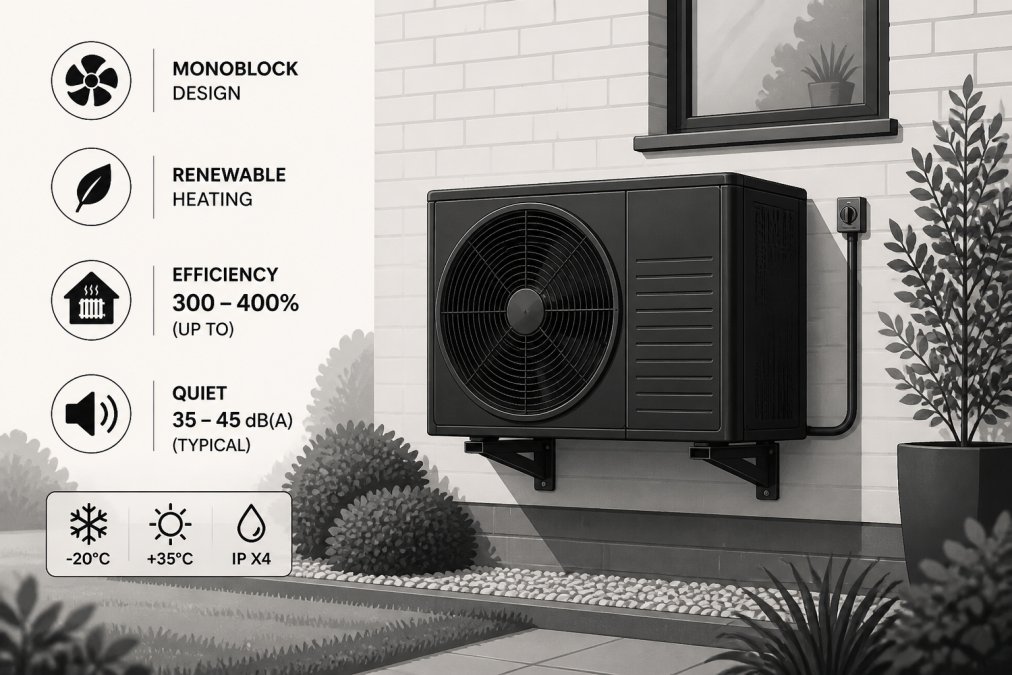
Noise is another practical factor. Modern units are quieter than older models, but they do produce sound during operation. Placement away from bedrooms and neighbours’ windows is advisable. Some homeowners report noise levels around 40-50 decibels, similar to a quiet conversation.
Electric Boilers and Storage Heaters: Off-Grid Solutions
Electric boilers offer a straightforward alternative for homes without access to mains gas. They work like traditional boilers but use electricity as the heat source, with no flue, fuel storage, or combustion required. Installation is simpler than gas systems because there’s no need for gas pipework or ventilation.
An electric boiler integrates seamlessly with existing radiator systems, so retrofitting is often straightforward. For smaller homes or flats where space is limited, the compact design is an advantage.
The trade-off is running cost. Electricity is more expensive per unit than gas or oil, so your heating bills will be higher. For homes with poor insulation or high heating demand, electric boilers can become costly to operate. This makes them most suitable for smaller properties or as a supplementary heating source rather than the sole system.
Storage heaters represent a different approach for off-grid homes with access to Economy 7 or Economy 10 electricity tariffs. These modern high heat retention units charge during cheap off-peak hours (typically 11pm to 7am) and release stored heat gradually throughout the day. Unlike older storage heaters, contemporary models include advanced controls to manage heat output, reducing the risk of running out of warmth.
They require no boiler, pipes, or flues, simplifying the system architecture. For homes where Economy 7 pricing is available, running costs can be significantly lower than daytime electricity rates.
The limitation is heat management. You must estimate your heating need the night before and charge accordingly. If you underestimate, you’ll have insufficient heat; if you overestimate, you’ve wasted energy. This requires planning and adjustment over several weeks as you learn your home’s heating pattern.
How to Choose a Reliable Heating Engineer
Selecting the right engineer matters more than selecting the system. A skilled installation determines whether your heating system performs as designed, whilst poor workmanship creates problems that persist for years. Here’s how to identify someone reliable.
First, verify credentials. For gas work, the engineer must hold current Gas Safe registration. This is not a suggestion or nice-to-have; it’s a legal requirement. You can verify registration on the Gas Safe Register website using the engineer’s registration number. For oil boilers, look for OFTEC (Oil Firing Technical Association) certification. For heat pumps and renewable systems, check that the installer is MCS (Microgeneration Certification Scheme) accredited if you’re claiming government grants.
Book a boiler repair or service →
Ask about public liability insurance. This protects you if the engineer damages your property during installation. Apex Gas & Heating Ltd carries full public liability insurance, which is standard for professional operators. Any engineer who can’t produce proof of insurance should be considered a risk.
Request references from recent installations. A reliable engineer will have completed similar work in the last 6-12 months and be willing to share contact details. Call these references and ask specific questions: Did the engineer arrive on time? Was the work completed as quoted? Has the system worked reliably since installation?
Transparent pricing is a red flag test. If an engineer provides a quote without visiting your property, or quotes a figure significantly lower than competitors, question whether they’ve assessed the job properly. A thorough survey takes time and identifies complications (like difficult pipework routing or electrical upgrades needed) that affect cost.
Check warranty terms. Most boilers come with manufacturer warranties, but the installation warranty matters equally. Apex Gas & Heating Ltd provides clear warranty documentation so you understand what’s covered and for how long. If an engineer can’t explain their warranty clearly, that’s a warning sign.
Gas Safe Registered Heating Engineers Near Me
Finding a Gas Safe registered engineer in your area is straightforward using the official Gas Safe Register website, where you can search by postcode and see all registered engineers operating locally. However, registration alone doesn’t guarantee quality. The register confirms someone is legally permitted to do the work, not that they’re the best choice.
When contacting engineers, ask how long they’ve been registered and whether they hold additional qualifications. Some engineers specialise in specific boiler brands (like Worcester or Glowworm), which can be advantageous because they’re trained on those systems’ nuances. Apex Gas & Heating Ltd, for example, are approved Glowworm and Worcester installers, meaning our team has manufacturer-level training on these systems.
Response time matters, especially for emergency repairs. A reliable local engineer should be able to visit within 24-48 hours for non-emergency work and ideally within a few hours for breakdown calls. Apex Gas & Heating Ltd offers 24/7 emergency call-out service across Sussex and Surrey, which is important during winter when heating failures are most disruptive.
Ask about their diagnostic approach. Before recommending a replacement, a good engineer will thoroughly test your current system to confirm it’s beyond repair. This protects you from unnecessary replacement costs and demonstrates that the engineer prioritises your financial interest, not just the sale. If your boiler can be repaired, professional boiler repair is often a more economical choice than replacement.
Boiler Installation Services UK: What to Expect
A professional new boiler installation typically takes 1-2 days depending on the system type and your home’s existing setup. The engineer will disconnect the old boiler, isolate the heating system, and install the new unit with all necessary pipework, controls, and safety devices.
Before installation, expect a site survey where the engineer assesses your property’s heating demand, existing pipework, water pressure, and electrical supply. This survey informs the boiler specification and identifies any preparatory work needed. For example, if your home has low water pressure, a pressure vessel may need to be installed.
On installation day, the process involves draining the system, removing the old boiler, installing the new unit, refilling and bleeding the system to remove air, and commissioning the boiler with full safety checks. The engineer should provide you with all documentation, including the installation certificate, warranty information, and instructions for basic operation and maintenance.
After installation, annual servicing is recommended. This typically involves cleaning the boiler’s internal components, checking safety devices, testing the system, and identifying any emerging issues before they become failures. Regular servicing also maintains your warranty and ensures the system operates at peak efficiency.
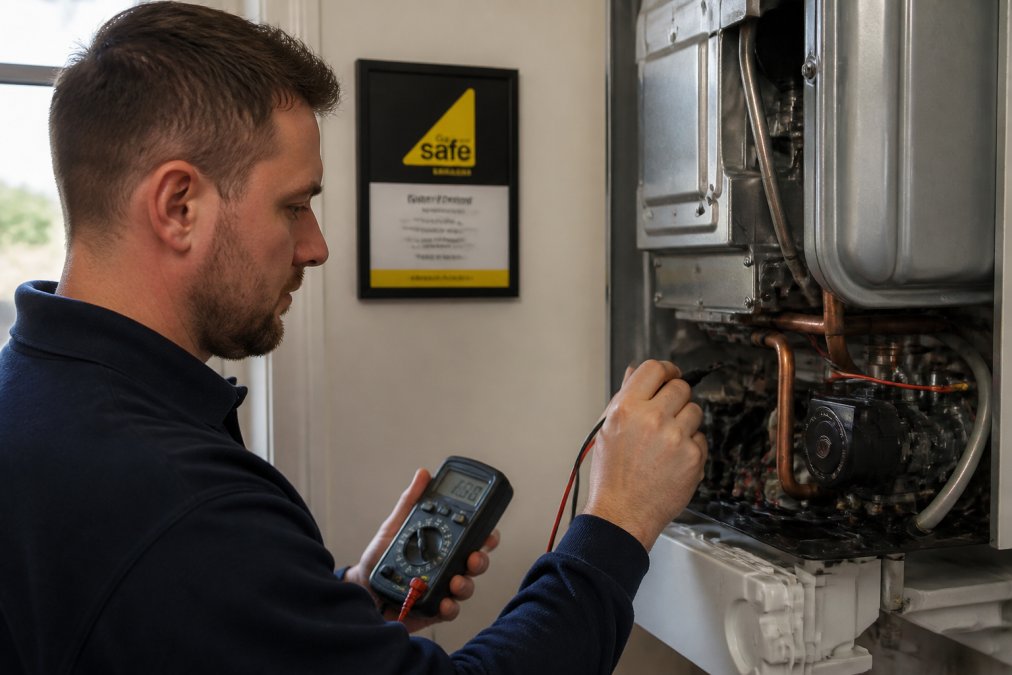
For landlords, remember that gas safety certificates (CP12) are a legal requirement. These must be obtained annually by a Gas Safe registered engineer and provided to your tenants. Failure to provide a valid CP12 is a criminal offence in the UK. Apex Gas & Heating Ltd handles Gas safety & CP12 certification for landlords with multiple properties, simplifying compliance across your portfolio.
Choosing a heating system is a decision that affects your comfort, bills, and carbon footprint for the next 10-15 years. The right choice depends on your home’s circumstances, not on what’s popular or cheapest upfront. Whether you’re considering an air source heat pump, sticking with a gas boiler, or exploring electric alternatives, the quality of installation and the reliability of your engineer matter as much as the system itself. For homeowners and landlords across Sussex and Surrey, Apex Gas & Heating Ltd provides expert guidance on heating alternatives, professional installation by approved engineers, and reliable ongoing support. Get a quote today and discover which system is right for your home.
Frequently Asked Questions
What is the best K D Jones alternative for heating?
The best alternative depends on your home's circumstances. If you're on the mains gas network, a modern gas boiler remains efficient and cost-effective. For off-grid properties or those seeking renewable heating, air source heat pumps offer significant energy savings and lower carbon emissions, with government grants available. Electric boilers suit homes without gas access, whilst biomass boilers work well for rural properties with fuel storage space. Consider your property type, location, and budget before deciding.
How do I find a Gas Safe registered heating engineer near me?
Check the official Gas Safe Register website to verify any engineer's credentials before booking. Ask for their Gas Safe registration number and confirm it's current. Look for local heating specialists with strong customer reviews mentioning reliability and professionalism. Apex Gas & Heating Ltd, for example, maintains full Gas Safe registration and provides transparent credentials. Request references from previous customers and ensure they carry public liability insurance for your protection.
Is it worth replacing a 20-year-old boiler?
Yes, typically. Boilers older than 15 years operate at significantly lower efficiency, wasting fuel and money. Modern A-rated boilers achieve over 90% efficiency, potentially saving 20-30% on heating bills annually. Older boilers also carry higher breakdown risks, leading to costly emergency repairs. If your boiler requires frequent servicing or fails to heat your home adequately, replacement usually pays for itself within 5-7 years through energy savings and reduced repair costs.
What qualifications should a professional heating engineer have in the UK?
A heating engineer must hold Gas Safe registration if installing or servicing gas boilers. They should be qualified in plumbing and heating installation, typically holding NVQ Level 3 or equivalent. Look for engineers registered with Worcester Bosch or Glowworm for manufacturer-backed credibility. They must carry full public liability insurance and understand current Building Regulations and heating compliance standards. Always verify credentials independently rather than relying on claims alone.
What are the benefits of choosing a local heating specialist over a national firm?
Local specialists like Apex Gas & Heating Ltd offer faster response times, often arriving within an hour for emergency breakdowns. They know local conditions and building types, providing tailored advice for your area. Personal accountability is stronger with local businesses, and they typically offer transparent pricing without hidden charges. Local engineers understand regional regulations and can often schedule work faster than national firms. You'll also build a relationship with someone who knows your property and heating history.
Leave a Reply