








Table of Contents
- Legal Responsibilities of Landlords for Gas Safety
- Annual Gas Safety Inspection Requirements
- Understanding Your Landlord Gas Safety Certificate CP12
- Gaining Tenant Access for Gas Safety Checks
- Maintaining Records and Landlord Gas Safety Record Retention
- Consequences of Non-Compliance
- Conclusion
Last Updated: August 13, 2026
Legal Responsibilities of Landlords for Gas Safety
Your legal duty as a landlord is straightforward: you must ensure every fixed gas appliance in your rental property is safe. This is a statutory requirement under the Gas Safety (Installation and Use) Regulations 1998. The law exists because gas appliances pose real risks, particularly carbon monoxide poisoning, which can be fatal and leaves no warning signs.
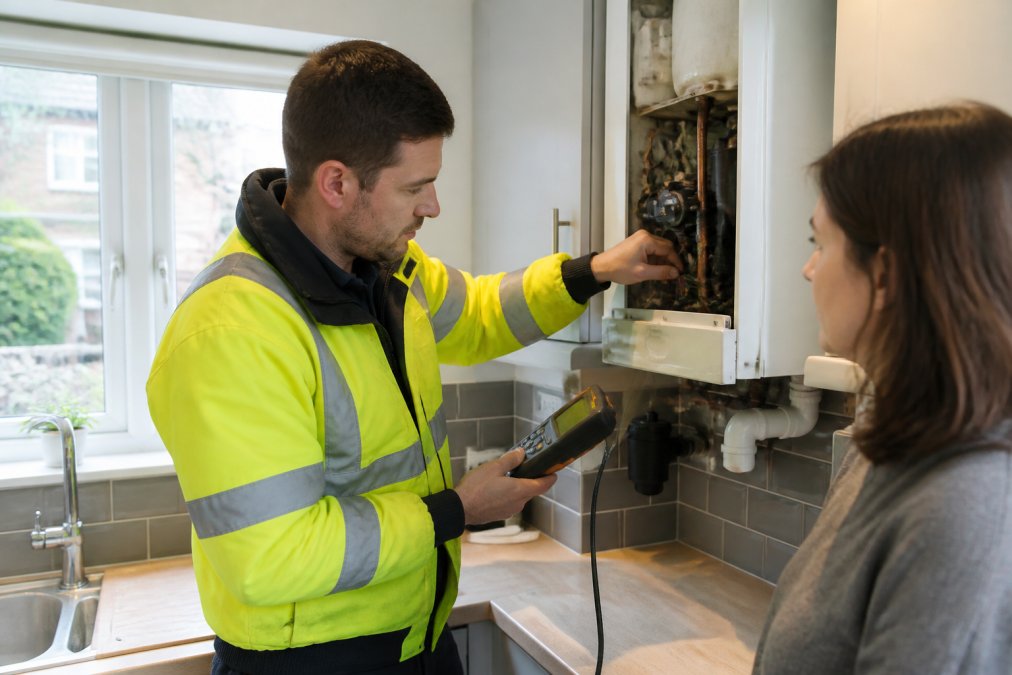
Your responsibility covers all fixed gas appliances and flues, including boilers, cookers, fires, heaters, and pipework that forms part of the installation. You’re liable regardless of who owns the appliance, if it’s fixed to the property, you’re responsible for its safety.
You must arrange annual inspections, maintain detailed records, and provide copies to your tenants. Failure to comply carries serious consequences: unlimited fines, criminal prosecution, and potential imprisonment for up to six months. A gas-related incident could result in injuries, deaths, and catastrophic liability claims.
At Apex Gas & Heating Ltd, we work with landlords across Sussex to ensure compliance and tenant safety through transparent communication and reliable service.
Annual Gas Safety Inspection Requirements
Your gas safety check requirements demand an annual inspection by a registered engineer within 12 months of the previous one. You must keep detailed records of every check performed.
The inspection covers all fixed gas appliances for safety, tests flues and ventilation, checks pipework for leaks or damage, and verifies that safety devices function correctly. The engineer also checks for signs of carbon monoxide spillage and ensures combustion is working as intended.
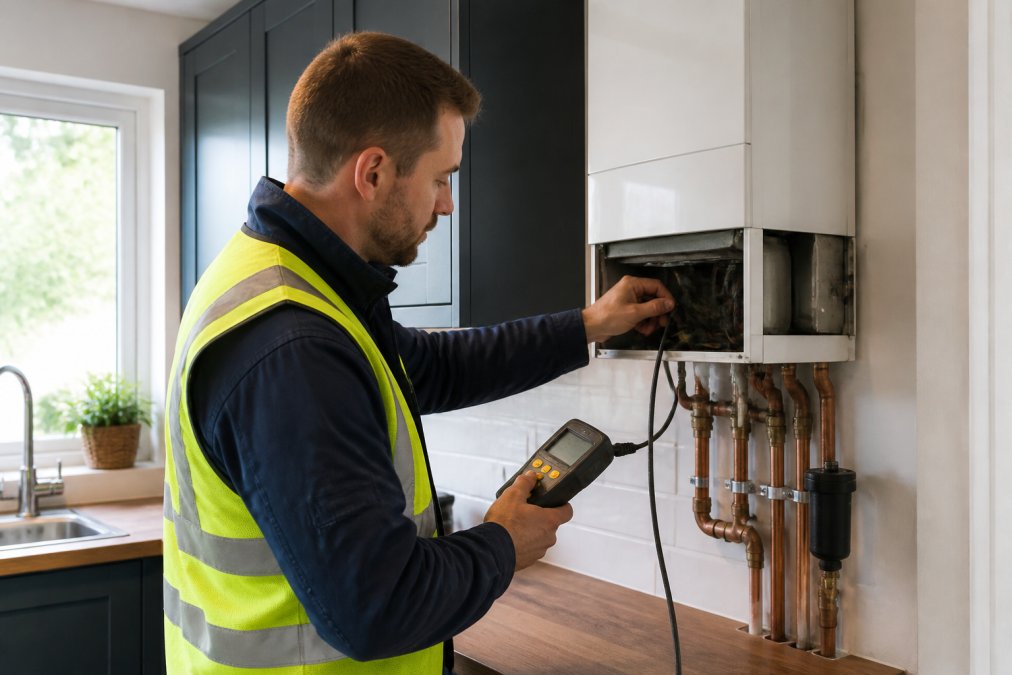
A registered engineer must perform this work, they must be on the Gas Safe Register, the official list of qualified engineers. Using an unregistered engineer is illegal, invalidates your insurance, and leaves you exposed to prosecution. Always verify the engineer’s Gas Safe registration number before they arrive.
The inspection typically takes 30 to 60 minutes depending on the number and complexity of appliances. The engineer will test each appliance’s operation, measure gas pressure, check for leaks, and inspect ventilation and flues.
After the inspection, you’ll receive a Gas Safety Certificate (CP12) if all appliances pass. This certificate is your proof of compliance. If any appliance fails, you must arrange repairs immediately and have it retested before the property can be considered safe.
Understanding Your Landlord Gas Safety Certificate CP12
The CP12 is your legal proof that a gas safety check has been completed and your primary defence if questions arise about compliance. The certificate records every fixed gas appliance in the property, the date of inspection, the engineer’s details, and whether each appliance passed or failed.
Your CP12 must be issued within 30 days of the inspection and remains valid for 12 months from the date of the check. You’re required to keep the original for your records and provide a copy to your tenant within 30 days of the check or before they move in, whichever comes first.
The CP12 contains the property address, date of inspection, engineer’s name and Gas Safe registration number, a list of all fixed gas appliances tested, test results for each appliance, and any safety advice or recommendations. If an appliance fails, the certificate clearly indicates this, and you must not allow the tenant to use it until repairs are completed.
Maintain a record system that tracks every certificate issued over the years. If you manage multiple properties, this becomes critical for staying organised and demonstrating compliance to enforcement officers. Digital storage of certificates is acceptable, provided you can produce them quickly if requested. Our Gas Safety & CP12 service handles certificate issuance and record management for landlords managing properties across Crawley and the surrounding area.
Gaining Tenant Access for Gas Safety Checks
You have a legal right to access your property for gas safety inspections under the Gas Safety (Installation and Use) Regulations 1998, but the law requires you to follow a formal procedure. Failure to document your access attempts properly can undermine your legal position if a local authority investigates.
The 24-Hour Notice Requirement
You must provide your tenant with at least 24 hours’ written notice before the inspection. This notice must specify the date, time window (ideally 2-4 hours), and the purpose of the visit. Written notice includes email, text message, or a formal letter sent to the address listed in your tenancy agreement.
Example notice wording:
"Dear [Tenant Name], I am writing to give you formal notice of a gas safety inspection required by law. The inspection will take place on [date] between [time] and [time]. A Gas Safe registered engineer will attend to test all fixed gas appliances and flues. Please ensure someone is home to provide access. If this time is unsuitable, please contact me within 24 hours to arrange an alternative appointment. This inspection is a legal requirement under the Gas Safety (Installation and Use) Regulations 1998."
Keep a copy of this notice and record the date and method you sent it. This creates a documented trail.
When a Tenant Refuses or Avoids Access
If a tenant refuses access or repeatedly fails to be home, document each attempt formally.
Step 1: First Refusal or Missed Appointment
Send a follow-up letter (recorded delivery or email with read receipt):
"I note that access was not provided on [date] for the mandatory gas safety inspection. The inspection is a legal requirement, and your tenancy agreement permits access for safety purposes. Please confirm your availability for a rescheduled inspection within 7 days, or I will arrange access at a time of my choosing with appropriate notice."
Step 2: Continued Refusal
If the tenant refuses again, send a second formal letter:
"This is formal notice that you are in breach of your tenancy agreement by refusing access for a mandatory gas safety inspection. I require access by [specific date, at least 7 days away]. If access is not provided, I will pursue legal remedies available to me, which may include possession proceedings based on breach of tenancy terms."
Step 3: Escalation to Local Authority
If the tenant continues to refuse, contact your local authority’s environmental health or housing enforcement team. They have statutory powers to serve notice on the tenant requiring them to permit the inspection. Many councils will issue a notice under Section 16 of the Health and Safety at Work etc. Act 1974, which carries criminal penalties if ignored.
Practical Solutions to Avoid Refusal
Most tenant refusals stem from inconvenience rather than deliberate obstruction. Offering flexibility often resolves the issue:
- Provide a choice of three or four appointment slots across different days and times
- Offer early morning (7:00-8:30 a.m.) or late afternoon (5:00-6:30 p.m.) slots for working tenants
- Schedule inspections on Saturdays if preferred
- Confirm the appointment 48 hours in advance with a reminder text or email
- Keep the inspection window as tight as possible
For landlords managing multiple properties in areas like Crawley, batch scheduling inspections on the same day across nearby properties can reduce disruption and improve tenant cooperation.
HMO and Multi-Occupancy Properties
For Houses in Multiple Occupation (HMOs) or properties with multiple tenants, send notice to each tenant individually. If one tenant refuses but others cooperate, you can proceed with the inspection of accessible areas and document the refusal separately. Report this to the local authority as part of your compliance record.
Documenting Reasonable Attempts
Your defence against enforcement action rests on proving you made reasonable attempts to gain access. A documented trail of notices, follow-up letters, and escalation to the local authority demonstrates this. Keep all records for at least three years.
Create a simple log for each property:
| Date | Action Taken | Method | Response | Notes |
|---|---|---|---|---|
| 15 Jan | First notice sent | Email + recorded delivery | No response | Tenant away on work |
| 22 Jan | Inspection appointment | In person | Tenant refused | Cited inconvenience |
| 24 Jan | Follow-up letter | Recorded delivery | No response | , |
| 31 Jan | Local authority notified | Phone + email | Authority issued notice | Tenant complied 5 Feb |
Maintaining Records and Landlord Gas Safety Record Retention
You must keep every CP12 certificate for at least two years after the date of inspection. This means at any given time, you’re holding certificates from the current year plus the previous two years.
Create a filing system, either physical or digital, that organises certificates by property and year. If using digital storage, ensure you have reliable backups. You need to produce the relevant certificate within minutes if a local authority inspector visits or a tenant makes a complaint.
You must provide a copy of the current certificate to your tenant within 30 days of the inspection or before they move in, whichever is sooner. Send it by email, post, or hand delivery and document how you provided it.
If you have multiple properties, maintain a master spreadsheet listing each property, the date of its last inspection, the engineer who performed it, and the date you provided the certificate to the tenant. For properties with multiple tenants or HMO properties, keep records of which tenants received copies and when.
Digital record management is increasingly common. Many landlords use cloud-based storage or property management software that automatically tracks inspection dates and reminds them when renewals are due.
Consequences of Non-Compliance
The penalties for failing to meet your gas safety check requirements are severe. Local authorities have powers to enforce compliance, and they use them.
If you fail to arrange an annual inspection, you’re committing a criminal offence. The fine is unlimited, meaning there’s no cap on what you might pay. Local authorities typically issue fines ranging from several hundred to several thousand pounds, depending on the severity and duration of non-compliance.
You could face prosecution, with magistrates able to impose sentences of up to six months’ imprisonment for serious breaches. If a tenant suffers harm or illness caused by an unsafe gas appliance, your liability extends far beyond regulatory penalties. You could face civil claims for damages, potentially running to tens of thousands of pounds.
Your insurance may not cover you if you’ve breached your statutory duty. Many landlord insurance policies exclude claims arising from non-compliance with gas safety regulations, meaning you’d be paying damages out of your own pocket.
Local authorities can issue enforcement notices requiring you to arrange an inspection within a specified timeframe. If you ignore an enforcement notice, further prosecution follows. Some councils have powers to arrange inspections themselves and charge you for the cost.
Staying compliant with gas safety check requirements is straightforward when you treat it as a routine business process. Book your annual inspection well in advance, maintain clear records, and provide certificates to your tenants promptly. If you manage multiple properties, consider working with a reliable service provider who can coordinate inspections across all your rentals and handle the administrative burden.
Apex Gas & Heating Ltd provides comprehensive Gas Safety & CP12 services for landlords managing properties across Sussex. Our registered engineers conduct thorough inspections, issue certificates promptly, and help you maintain compliant records. With transparent pricing and reliable scheduling, we make it simple to meet your legal obligations and protect your tenants.
Frequently Asked Questions
Do landlords have to do a gas safety check?
Yes. Under the Gas Safety (Installation and Use) Regulations 1998, landlords have a statutory duty to ensure all gas appliances, pipework, and flues in rental properties are safe. An annual gas safety check by a registered engineer is a legal requirement. Failure to comply can result in prosecution and substantial fines. This applies to all rental properties with gas appliances, regardless of property size or type.
What is included in a gas safety check?
A registered engineer inspects all fixed gas appliances (boilers, cookers, fires, heaters), pipework, flues, and ventilation. They test for carbon monoxide leaks, check combustion performance, conduct pressure tests, and verify that all installations meet safety standards. The engineer will document findings on a CP12 certificate, noting any appliances that are immediately dangerous or at risk. Tenant-owned portable appliances are excluded from this statutory check.
How should landlords manage tenant access for gas safety checks?
Provide tenants with at least 24 hours' written notice of the inspection date and time. Access is a legal right under your tenancy agreement, and tenants must cooperate. If a tenant refuses access, document the refusal in writing and attempt to arrange alternative times. Persistent refusal may constitute a breach of the tenancy agreement. For properties in areas like Crawley, coordinate with your registered engineer to schedule inspections at convenient times while maintaining compliance deadlines.
What happens if a landlord fails to provide a gas safety record?
Tenants have a legal right to request a copy of the gas safety certificate (CP12). Failure to provide it is a breach of the Gas Safety Regulations and can result in prosecution, unlimited fines, or imprisonment for up to six months in serious cases. You must retain records for at least two years and make them available to tenants and enforcement officers upon request. Maintaining digital copies alongside physical records ensures compliance and quick access.
Can landlords conduct their own gas safety checks?
No. Only a Gas Safe Register engineer can conduct statutory gas safety inspections. The engineer must be registered and qualified to work on the specific appliances in your property. Using an unregistered person is illegal and leaves your property and tenants at risk. Non-compliance can result in enforcement action by local authorities or the Health and Safety Executive.
What should landlords do if an appliance is found to be dangerous?
If an engineer identifies an appliance as immediately dangerous or at risk, take it out of service immediately. Do not allow tenants to use it. Arrange urgent repairs or replacement by a qualified engineer. Document the action taken and inform your tenant in writing. If the issue poses an immediate risk to safety (such as carbon monoxide), inform the tenant and local authority without delay. Continuing to let a property with dangerous gas appliances is a criminal offence.
How long should landlords retain gas safety records?
Retain CP12 certificates and all related gas safety inspection records for at least two years. This period allows for enforcement investigations and tenant queries. Digital record management systems can help organize certificates and reduce storage issues, particularly useful for landlords managing multiple properties. Ensure records are accessible to tenants and enforcement authorities if requested.
Are HMO landlords subject to different gas safety requirements?
Houses in Multiple Occupation (HMOs) must comply with the same annual gas safety check requirements as standard rental properties. However, HMOs may have additional regulations depending on licensing requirements in your local authority area. All gas appliances, flues, and pipework must be inspected and certified annually. Records must be kept and made available to tenants and enforcement officers. Check your local authority's specific HMO regulations for any additional safety obligations.
| Requirement | Frequency | Record Retention | Penalty for Non-Compliance |
|---|---|---|---|
| Annual gas safety inspection | Every 12 months | 2+ years | Unlimited fine, prosecution |
| CP12 certificate issuance | Within 30 days of inspection | 2+ years | Unlimited fine |
| Copy to tenant | Within 30 days or before move-in | Evidence of provision | Unlimited fine |
| Registered engineer requirement | Every inspection | Verification of registration | Unlimited fine, prosecution |
Leave a Reply