








Table of Contents
- What Is a Power Flush and How Does It Work?
- Signs Your Heating System Needs a Power Flush
- How Power Flushing Improves Boiler Efficiency
- Power Flushing vs Chemical Flush: Which Method Works Best?
- How Long Does a Power Flush Take?
- Do You Need a Power Flush or a New Boiler?
- Post-Flush Maintenance: Protecting Your System Long-Term
- Conclusion
- Frequently Asked Questions
Last Updated: September 4, 2026
What Is a Power Flush and How Does It Work?
A power flush is a professional cleaning process that removes sludge, rust, and debris from your central heating system without dismantling radiators or pipework. The question of does power flushing improve boiler efficiency comes up constantly among homeowners in Crawley and across Sussex, and the short answer is yes, when your system actually needs it. A trained engineer connects a flushing machine to your heating circuit, then circulates water at high velocity with cleaning chemicals to dislodge and wash away years of accumulated contamination.
The process works by forcing water through the system at a controlled flow rate, loosening sludge that has settled in radiators and the heat exchanger. The machine filters out the dislodged debris before the water is recirculated, so nothing harmful stays in the circuit. A power flush is often the difference between a struggling boiler and one that heats evenly again.
Signs Your Heating System Needs a Power Flush
Several warning signs indicate that your heating system needs a power flush rather than simple repairs. Cold spots at the bottom of radiators while the top feels hot are the most common clue, since sludge settles and blocks the lower sections. A boiler that takes noticeably longer to warm your home, makes gurgling noises, or requires frequent venting to remove trapped air all point toward system debris interfering with normal circulation.
Other indicators include dirty water when you bleed a radiator, black or discoloured water coming from drain points, and a circulation pump working harder than it should. If your fuel bills have crept up despite similar usage patterns, restricted flow could be forcing the boiler to run longer to deliver the same heat. Energy Saving Trust guidance on heating controls and maintenance confirms that keeping your heating system in good condition helps control energy consumption and heating performance over time.
How Power Flushing Improves Boiler Efficiency
Removing sludge buildup and iron oxide
Sludge buildup is a mixture of rust, iron oxide, and scale deposits that forms naturally inside steel radiators and pipework over years of use. This dark, magnetic debris settles in the lowest points of your heating circuit and coats the boiler’s heat exchanger, creating an insulating layer that stops heat from transferring into the water efficiently. When sludge accumulates on the heat exchanger surfaces, the boiler must run at higher temperatures and for longer cycles to achieve the same output, a direct driver of wasted fuel and higher energy bills.
Restoring flow rate and heat distribution
When sludge restricts the flow rate, your boiler’s circulation pump must work harder to push water around the system, increasing energy consumption while delivering less heat to your rooms.
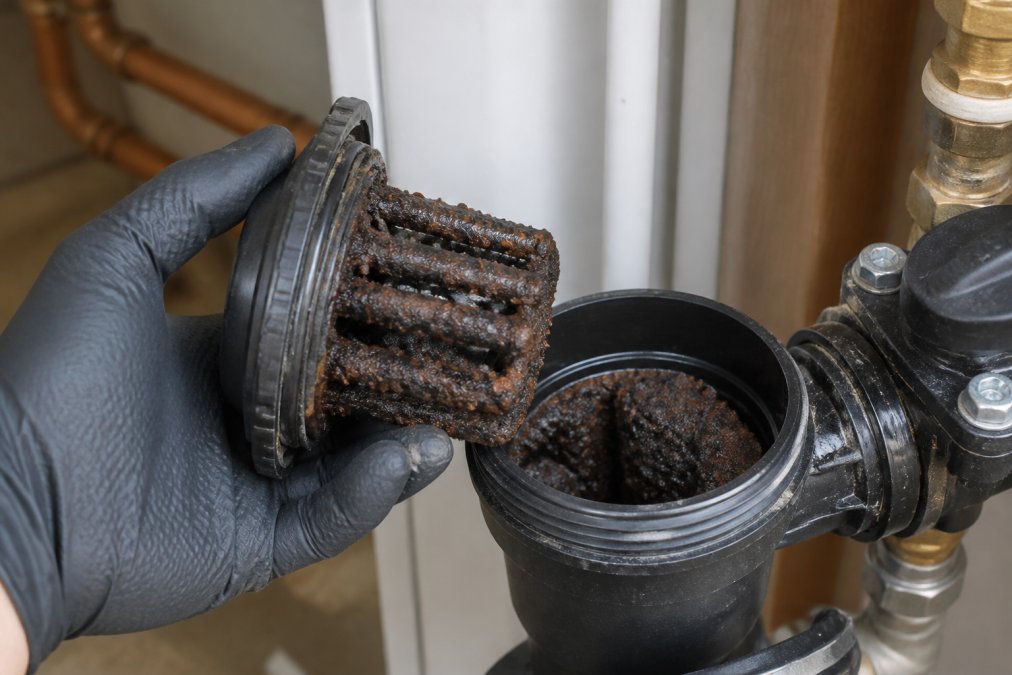
Once the flushing machine removes this contamination, water moves freely through the heat exchanger and radiators again. The boiler reaches temperature faster, heats rooms evenly, and cycles off sooner rather than running constantly. This restoration of the heating circuit is where the real efficiency gain comes from, along with reduced strain on components that extends boiler lifespan and lowers the risk of a boiler breakdown.
Assessing whether your system will actually benefit
Not every heating system needs a power flush, and determining whether yours will see a genuine efficiency improvement depends on several factors. A system showing cold spots on radiators (especially at the bottom while the top is hot), black or discoloured water when bleeding radiators, or a boiler that takes noticeably longer to heat your home is almost certain to benefit from flushing, as these are direct signs of sludge obstruction.
Conversely, if your system is relatively new (under five years old), has been serviced annually, and shows no cold spots or discolouration, a power flush is unlikely to deliver measurable efficiency gains. In such cases, fitting a magnetic filter alone may be sufficient preventative maintenance. Similarly, if your boiler is over 15 years old and already inefficient due to age rather than contamination, a power flush will improve heat distribution but may not justify the cost if the boiler is nearing end-of-life.
A qualified engineer can diagnose your system by checking boiler pressure stability (sludge-filled systems often show pressure fluctuations), water colour and clarity at drain points, and radiator temperature distribution across the circuit. In Crawley and across Sussex, a proper assessment takes 20-30 minutes and will confirm whether flushing is the right investment or whether your system simply needs a filter and annual servicing instead. This diagnostic step is essential because rushing into a power flush on a system that doesn’t need one wastes money, whilst delaying a flush on a heavily contaminated system allows efficiency to deteriorate further.
Power Flushing vs Chemical Flush: Which Method Works Best?
When comparing power flushing vs chemical flush, the distinction comes down to force versus chemistry. A chemical-only flush involves adding a cleaning solution to the system and letting it circulate, which helps break down some deposits but does nothing to physically dislodge stubborn sludge that has hardened over time.
Power flushing combines chemicals with high-velocity water movement, giving you both the softening effect and the physical removal. For systems with heavy contamination, power flushing is the more thorough option because the engineer can see the dirty water being expelled and continue until it runs clear. A chemical flush might suit a relatively clean system as preventative maintenance, but for genuine sludge problems, the machine-based approach delivers better system restoration.
| Method | Best For | Limitations |
|---|---|---|
| Power flush | Heavy sludge, cold spots, poor heat distribution | Requires professional equipment and expertise |
| Chemical flush | Mild contamination, routine maintenance | Cannot dislodge hardened deposits |
How Long Does a Power Flush Take?
A typical power flush takes between four and eight hours, depending on the size of your property and how contaminated the system has become. A small home with three or four radiators and moderate sludge might be completed in half a day, while a larger house with extensive buildup could require a full day to flush each radiator individually.
The engineer will work through the system methodically, checking the water clarity and monitoring the flow rate as the cleaning progresses. UK government guidance on maintaining heating systems for energy efficiency highlights the importance of proper maintenance, and a power flush is one of the most effective ways to restore a system that has deteriorated. Most reputable engineers will also add a corrosion inhibitor after flushing to protect the freshly cleaned system.
Do You Need a Power Flush or a New Boiler?
This is the decision that confuses many homeowners, and the answer depends on the age and condition of your boiler. If your boiler is relatively modern, under ten years old, and has been serviced regularly, a power flush is often the right call when efficiency has dropped due to sludge.
If the boiler is older, frequently breaking down, or showing signs of heat exchanger failure, replacement might be more cost-effective than cleaning a system that will soon need replacing anyway. A qualified engineer can assess your system pressure, water quality, and boiler condition to give you an honest recommendation. In Crawley and throughout Sussex, the Apex Gas & Heating Ltd team offers both boiler repair and new boiler installation, so we can advise on the most sensible path rather than pushing you toward an unnecessary purchase.
Skipping a power flush and simply replacing a radiator or pump on a sludge-filled system often leads to premature failure of the new component. The contamination will quickly damage fresh parts.
Post-Flush Maintenance: Protecting Your System Long-Term
A power flush is not a one-time fix that lasts forever. Without ongoing protection, sludge will slowly build up again within 12-24 months, so preventative maintenance matters just as much as the initial clean. The key to maintaining efficiency after flushing is a three-part strategy: magnetic filtration, corrosion inhibitor replenishment, and annual boiler servicing.
Magnetic filtration
Fitting a magnetic filter (also called a magnetic sump or magnetic trap) is one of the most effective steps you can take after flushing. These devices use a permanent magnet to capture iron oxide particles before they circulate through the boiler and radiators. Most magnetic filters should be checked and cleaned every 6-12 months, depending on how much debris the system is still releasing. A filter that becomes heavily laden with black sludge indicates ongoing corrosion and may signal that inhibitor levels are dropping or that a leak is allowing fresh water (which contains dissolved oxygen) to enter the circuit.
Worcester Bosch guidance on system protection and magnetic filters recommends magnetic filtration as part of a proper maintenance regime, and as approved Worcester installers, we follow these guidelines closely. The filter should be positioned on the return line to the boiler, where it catches particles before they can damage the heat exchanger.
Corrosion inhibitor levels
After a power flush, the system water is replaced with fresh water and a new dose of corrosion inhibitor is added. This inhibitor forms a protective layer on internal metal surfaces, preventing rust and iron oxide from forming again. However, inhibitor strength degrades over time, typically losing effectiveness after 3-5 years depending on water hardness and system age.
Your engineer should test inhibitor concentration at the annual service using a test kit. If levels have dropped below the manufacturer’s recommended range (usually 30-50% concentration for most inhibitors), a top-up is needed. Skipping this step is a common reason why systems re-sludge quickly after flushing: without adequate inhibitor, fresh corrosion begins immediately.
Annual boiler servicing and system checks
A full boiler service each autumn includes checking system pressure, inspecting the heat exchanger for signs of corrosion or debris, and verifying that the circulation pump is running smoothly. During this visit, the engineer will also:
- Bleed radiators to check water colour (should be clear or pale yellow, not black or brown)
- Inspect the magnetic filter and clean or replace the cartridge if needed
- Test inhibitor concentration and top up if necessary
- Check for any leaks or pressure loss, which would allow fresh water to enter and restart corrosion
- Verify that the boiler is cycling normally and not running longer than it should
Regular servicing also gives an engineer the chance to spot early signs of system debris or pressure instability before they become serious problems. Many homeowners skip the annual service to save money, but this false economy often leads to a re-sludged system within 18 months and a repeat power flush, which costs far more.
Conclusion
The answer to does power flushing improve boiler efficiency is a clear yes for systems suffering from sludge buildup, but it is not a universal cure. If your radiators have cold spots, your boiler runs longer than it should, or your fuel bills are climbing, a power flush could restore your heating performance and cut energy consumption.
Getting an accurate diagnosis matters, which is why Apex Gas & Heating Ltd offers boiler servicing and repair across Sussex and Surrey with transparent pricing and fully insured engineers. Whether you need a power flush, a new boiler installation, or ongoing maintenance, our approved Glowworm and Worcester installers will keep your home warm and your heating system running efficiently. Get a quote today and find out what your system really needs.
Frequently Asked Questions
Does power flushing really improve boiler efficiency?
Yes, power flushing removes sludge buildup and iron oxide from your central heating system, which restores flow rate and allows your boiler to heat water more effectively. When debris blocks the heat exchanger and radiator passages, your boiler works harder to maintain temperature, consuming more fuel. Clearing these blockages reduces energy consumption and improves heating performance. However, efficiency gains depend on how much sludge has accumulated and the age of your system.
What are the signs your heating system needs a power flush?
Watch for cold spots on radiators (especially at the bottom), slow heating response, noisy pipes or circulation pump, low system pressure that drops repeatedly, and discoloured water when bleeding radiators. If your fuel bills have increased without explanation, or your boiler is cycling on and off frequently, sludge buildup may be restricting flow. These signs indicate system debris is reducing efficiency and heat distribution throughout your property.
How long does a power flush take to complete?
A typical power flush takes 4 to 8 hours, depending on system size and sludge severity. Smaller properties with straightforward layouts may finish faster, while larger homes with multiple zones or heavily contaminated systems require longer. The process involves connecting a powerful flushing machine to your heating circuit, running cleaning solution through all pipes and radiators, then installing a magnetic filter to catch remaining debris. Planning a full day for the work is advisable.
Is power flushing better than chemical cleaning?
Power flushing is generally more effective for severe sludge buildup because it uses mechanical force to dislodge compacted debris, whereas chemical descaling dissolves scale deposits but works more slowly. Power flushing also installs a magnetic filter to trap iron oxide particles, preventing recontamination. Chemical cleaning suits lighter contamination or systems with scale rather than sludge. Many engineers recommend power flushing for older systems with significant corrosion, as it provides more thorough system restoration and better long-term protection for your boiler lifespan.