








Table of Contents
- Understanding Power Flushing and Magnetic Filters
- Signs Your Heating System Needs Cleaning
- How Often Should You Power Flush Radiators?
- Benefits of Magnetic Boiler Filters
- Power Flushing vs Magnetic Filters: Key Differences
- Can a Magnetic Filter Replace a Power Flush?
- Which Solution Is Right for Your Heating System?
- Frequently Asked Questions
Last Updated: September 3, 2026
Understanding Power Flushing and Magnetic Filters
Power flushing vs magnetic filters represents one of the most important decisions homeowners face when maintaining a central heating system. At Apex Gas & Heating Ltd, we’ve worked with properties across Sussex and Surrey, and this choice comes up repeatedly when systems show signs of age or poor performance.
Both approaches address the same underlying problem: sludge and magnetite accumulation inside your heating circuit. Over time, corrosion, scale buildup, and system debris collect in your pipework and radiators, reducing boiler efficiency and causing cold spots. Power flushing is a one-time deep clean using high-velocity water flow and chemical treatments to blast debris out. Magnetic filters work continuously, capturing iron oxide particles as water circulates. Understanding when each makes sense can save you money and prevent costly boiler breakdowns.
Signs Your Heating System Needs Cleaning
Your heating system sends clear signals when sludge accumulation has become a problem.
Cold radiators are the most obvious indicator. If your radiators heat unevenly, warm at the bottom but cold at the top, magnetite and debris are blocking the flow. Certain radiators may never heat properly, no matter how much you adjust the thermostat.
Boiler noise is another red flag. A kettling sound, grinding, or banging from your boiler suggests debris is moving through the heat exchanger. This indicates your boiler is working harder than it should, shortening its lifespan and increasing energy consumption.
Slow heating response is equally important. Your system takes noticeably longer to reach temperature because sludge restricts water flow. You’ll see this reflected in higher fuel bills even though your usage hasn’t changed.
Visible discolouration in your system is a direct sign of corrosion. If you open a bleed valve and the water runs brown or grey, iron oxide has built up significantly.
Frequent boiler breakdowns, especially in winter, often stem from system contamination. If you’re calling an engineer multiple times per season, your system likely needs a thorough clean. If you’re experiencing repeated issues, our boiler repair service can diagnose the underlying cause, though addressing system contamination through power flushing or filtration often prevents future failures.
How Often Should You Power Flush Radiators?
The frequency of power flushing depends on your system’s age, condition, water quality, and boiler type.
System age and condition assessment:
If your system is showing active signs of contamination, cold radiators, kettling noises, slow heating response, or discoloured water, a power flush is your immediate priority. For systems over 10 years old that have never been flushed, a single flush often restores significant performance gains. Newer systems installed with proper inhibitor and no visible contamination may never require flushing.
Boiler type matters:
Combi boilers are particularly sensitive to sludge accumulation because they have smaller, more intricate heat exchangers. If you have a combi and notice any heating irregularities, flushing should be considered sooner rather than later. System boilers and heat-only boilers are more forgiving but still benefit from preventative maintenance.
Water hardness and corrosion risk:
In areas with hard water, scale and corrosion form more rapidly, increasing magnetite production. If you’re in a hard-water region across the South East, your system accumulates debris faster. Your water supplier can confirm your local water hardness; this is a useful baseline for planning maintenance intervals.
Maintenance intervals after initial flushing:
After a power flush, most systems perform well for 2-4 years before significant recontamination occurs. If your system is old with active corrosion, sludge may reaccumulate within 12-18 months. With a magnetic filter installed after flushing, reaccumulation drops dramatically, and you typically avoid repeat flushing entirely, instead performing simple annual filter servicing.
Cost-benefit over time:
A single power flush is a one-time cost with immediate results but requires repeat treatments if contamination returns. A magnetic filter is a one-time installation with minimal annual servicing but provides continuous protection. For most homeowners planning to remain in their property, a filter typically offers better long-term value.
When to act:
Don’t wait for a breakdown. If you’re experiencing cold radiators, boiler noise, or higher-than-expected energy bills, schedule an inspection with a qualified engineer. They can assess your system’s condition and advise whether flushing is needed now and whether a filter should follow.
Benefits of Magnetic Boiler Filters
Magnetic filters offer several compelling advantages for long-term system health, efficiency, and peace of mind.
Continuous, passive protection:
Unlike power flushing, a magnetic filter works every day your heating system runs. It captures iron oxide particles as they form, preventing sludge accumulation before it becomes a problem. This means fewer emergency repairs, more predictable system performance, and no need to schedule disruptive flushing appointments.
Improved boiler efficiency and faster heat-up:
A clean system circulates water more freely, allowing your boiler to reach temperature faster and maintain consistent heat output. You’ll notice faster radiator warm-up times and more even heating across your home.
Reduced energy consumption and lower fuel bills:
When your boiler doesn’t have to work against sludge-clogged pipework, it uses less fuel to heat your home.
Extended boiler lifespan and reduced breakdown risk:
Boilers operating in clean systems experience less stress and fewer breakdowns. Additionally, fewer breakdowns mean fewer expensive emergency engineer call-outs.
Minimal maintenance and clear DIY boundaries:
Magnetic filters require straightforward annual servicing: drain collected magnetite from the filter chamber, inspect the magnet, and refill. Many homeowners can safely perform this themselves. However, filter installation must be performed by a qualified Gas Safe engineer. If the filter develops a leak or the magnet becomes damaged, professional replacement is necessary.
System-specific compatibility:
Magnetic filters work effectively in all boiler types, combi, system, and heat-only, but they’re particularly valuable in systems prone to corrosion. Filters are compatible with most modern pipework materials, though your engineer will confirm compatibility during assessment.
Book a boiler repair or service →
Environmental advantage:
Power flushing generates chemical waste that must be disposed of responsibly. Magnetic filters produce no chemical waste; they simply trap iron oxide particles that are safely disposed of during annual servicing.
Long-term warranty and reliability:
Market-leading magnetic filters are designed for durability and come with substantial warranties. With proper annual servicing, a quality filter will protect your system for many years.
The combined approach:
The greatest benefit emerges when a magnetic filter is installed after a power flush. The flush removes existing contamination, restoring immediate heating performance. The filter then prevents reaccumulation, eliminating the need for repeat flushing.
Power Flushing vs Magnetic Filters: Key Differences
Understanding how these two methods differ is essential for making the right choice.
How Power Flushing Works
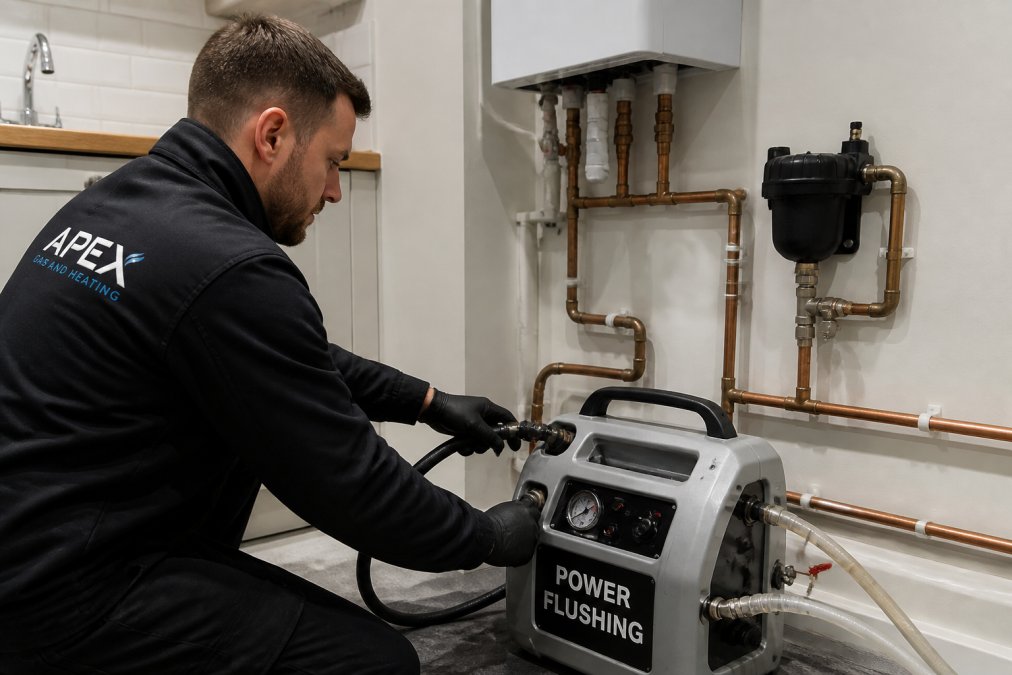
Power flushing uses specialist equipment to force water through your heating circuit at high velocity. A pump creates pressure that dislodges accumulated sludge, scale, and corrosion from pipework, radiators, and the boiler’s heat exchanger. Chemical treatments are added to break down deposits and prevent new corrosion.
The procedure typically takes 4-8 hours depending on system size and contamination severity. An engineer connects the power flushing pump to your system, isolates sections of pipework, and forces treated water through each circuit. The debris is flushed out through a drain, and the system is refilled with fresh water and chemical inhibitor.
Power flushing is highly effective for systems with significant existing contamination. However, it’s a one-time intervention; once complete, sludge can begin reaccumulating, particularly in older systems with active corrosion.
How Magnetic Filters Work
Magnetic filters work on a simpler principle. A powerful neodymium magnet is positioned inside the filter body, typically installed on the return pipe to the boiler. As water circulates through your heating system, magnetite particles are attracted to the magnet and trapped inside the filter chamber.
The filter requires no chemicals and no active intervention; it works passively as your heating system operates. Servicing is straightforward: drain the filter annually to remove accumulated magnetite, check the magnet, and refill.
Magnetic filters are preventative rather than corrective. They work best when installed in systems that are already reasonably clean, or after a power flush has removed existing contamination.
Can a Magnetic Filter Replace a Power Flush?
If your system is already clean, a magnetic filter can absolutely prevent future sludge accumulation. However, if your system currently has significant sludge buildup, a magnetic filter alone won’t fix it. Existing debris remains in your pipework and radiators.
The most effective approach combines both methods. Power flush first to remove existing contamination, then install a magnetic filter to prevent future buildup. This strategy addresses the immediate problem and provides long-term protection. In some cases, particularly with newer systems or those recently installed with inhibitor, a magnetic filter alone is sufficient. Your engineer can assess your system during an inspection and advise accordingly.
Which Solution Is Right for Your Heating System?
Choosing between power flushing and magnetic filters requires considering your system’s age, condition, and your long-term maintenance preferences.
Choose power flushing if:
- Your system currently shows signs of contamination (cold radiators, boiler noise, slow heating)
- You want immediate restoration of heating performance
- Your system is old and has never been flushed
Choose magnetic filter installation if:
- Your system is already reasonably clean
- You want preventative maintenance to avoid future problems
- You’re planning to stay in your property long-term
Choose both if:
- Your system shows active contamination but you want long-term protection
- You want the fastest return to optimal performance plus future prevention
At Apex Gas & Heating Ltd, we recommend a consultation with a qualified engineer who can assess your specific system. During a boiler service or inspection, we can identify sludge accumulation, measure heating performance, and advise whether flushing, filtration, or both makes sense for your property. Our team across Sussex and Surrey, including Crawley and surrounding areas, can arrange either service, and we often recommend the combined approach for systems with a history of problems.
Choosing the right approach to heating system maintenance protects both your comfort and your investment. If your radiators aren’t heating evenly, your boiler is making strange noises, or you’re seeing higher energy bills, your system likely needs attention. Apex Gas & Heating Ltd offers both power flushing and magnetic filter installation across Sussex and Surrey, with transparent pricing and 24/7 emergency support. Our approved Worcester and Glowworm installers can assess your system, recommend the best solution, and ensure your heating performs reliably all winter. Get a quote today and discover how a clean, well-maintained heating system can save you money and stress.
Frequently Asked Questions
Q: Can a magnetic filter replace the need for a power flush?
A: Not entirely. A magnetic filter captures magnetite and iron oxide particles from ongoing circulation, but it cannot remove heavy sludge accumulation already present in your system. If your heating system has years of built-up debris, a power flush cleans the circuit thoroughly first. After that, a magnetic filter prevents future contamination. For systems already clean, a magnetic filter alone maintains health. For heavily contaminated systems, power flushing followed by magnetic filter installation offers the best long-term protection.
Q: How often should you power flush radiators to maintain system health?
A: Most heating systems benefit from power flushing every 5 to 10 years, depending on water quality and system age. If your radiators develop cold spots, your boiler becomes noisy, or heating performance drops, flushing may be needed sooner. Once flushed, adding a magnetic filter significantly extends the interval between services by capturing new debris before it accumulates. Annual boiler servicing helps identify whether flushing is overdue. Discuss your system’s specific needs with a qualified engineer during servicing.
Q: What are the main signs your heating system needs cleaning?
A: Watch for cold spots on radiators despite the system running, unusual boiler noises (kettling or banging), slower heat-up times, uneven heating across rooms, or increased energy consumption without obvious cause. These indicate magnetite sludge and debris restricting circulation and reducing heat exchanger efficiency. Discoloured water when bleeding radiators is another clear sign. If your boiler is over 10 years old and has never been flushed, preventative cleaning prevents future breakdowns. A professional inspection during annual servicing can confirm whether your system needs attention.
Q: Is it worth installing a magnetic filter to an older heating system?
A: Yes, especially if your system is over 10 years old. Older systems accumulate more magnetite from corrosion and scale buildup. A magnetic filter captures this debris, protecting your boiler from premature breakdown and maintaining heating performance. If the system has never been flushed, combine power flushing with magnetic filter installation for maximum benefit. The filter then prevents re-contamination during the system’s remaining lifespan. For landlords managing rental properties, magnetic filters reduce emergency repair calls and extend asset life, making them a sound investment.