








Table of Contents
- What Is a Power Flush?
- How Long Does a Power Flush Take to Complete?
- Factors Affecting How Long a Power Flush Takes
- Signs Your Central Heating Needs a Power Flush
- Is a Power Flush Necessary Before a New Boiler Installation?
- How to Prepare Your Home for a Power Flush
- Post-Flush Maintenance and System Care
- Frequently Asked Questions
Last Updated: August 31, 2026
What Is a Power Flush?
A power flush is a professional cleaning process that removes sludge, debris, and corrosion buildup from your central heating system. Over time, magnetite particles, rust, and mineral scale accumulate inside radiators, pipework, and the boiler’s heat exchanger, restricting water flow and reducing heating efficiency. A heating engineer uses a specialised power flushing machine to circulate chemical cleaner through your entire heating circuit at high velocity, dislodging trapped material and flushing it out through a magnetic filter. The process restores system performance and extends boiler life by preventing corrosion and blockages from worsening. At Apex Gas & Heating Ltd, we’ve helped homeowners across Sussex and Surrey restore heating system efficiency through professional power flushing. The procedure is particularly valuable before installing a new boiler, as it ensures your pipework and radiators are clean and won’t damage expensive new equipment.
How Long Does a Power Flush Take to Complete?
Typical Duration
A standard power flush typically takes between 4 to 8 hours to complete, though some systems may require longer depending on sludge severity and system complexity. Most residential properties finish within a single working day. The heating engineer will connect the power flushing machine to your system, run the chemical treatment cycle, and monitor water clarity as the process progresses.
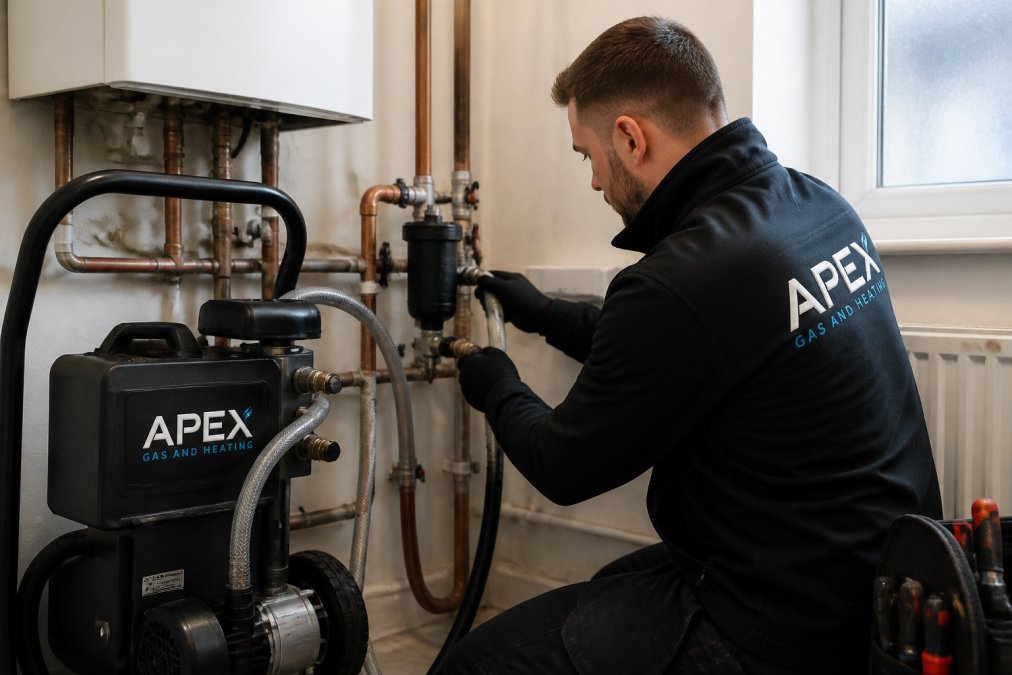
Duration depends on when water running through the magnetic filter becomes clear, indicating sludge removal is nearly complete. Some engineers may recommend leaving inhibitor to circulate overnight for particularly contaminated systems, extending the total time to the following morning.
System Size and Complexity
Larger properties with more radiators naturally require longer flushing times. A three-bedroom semi-detached house with eight radiators typically takes 5 to 6 hours, whilst a larger five-bedroom detached property with twelve radiators can take 7 to 8 hours or more. Bungalows and smaller flats may finish in 4 to 5 hours.
Pipework layout also affects duration. Properties with microbore pipework (small-diameter plastic pipes) may take longer than those with standard 15mm copper pipework, as the smaller diameter restricts flow. Systems with multiple heating circuits or underfloor heating add complexity and time.
Factors Affecting How Long a Power Flush Takes
Central Heating System Size
System volume, measured in litres, is the primary factor determining flushing duration. A typical three-bedroom semi-detached property has a system volume of 60 to 100 litres, whilst larger detached homes can reach 150 to 200 litres. The power flushing machine must circulate chemical cleaner through every litre multiple times to achieve effective sludge removal. A property with eight radiators typically contains 80-100 litres; one with twelve radiators may hold 140-180 litres.
Sludge and Debris Buildup
The condition of your heating system dramatically impacts flushing time. A system that’s never been flushed and has been running for 15+ years will contain far more sludge than one maintained regularly. Severely contaminated systems may require 8 to 10 hours or even a split process across two days.
Water colour provides the clearest indicator of progress. Initially, water exiting the system appears dark brown or black due to magnetite particles and rust. As flushing continues, the water gradually lightens. When it runs clear or pale yellow, the process is nearing completion.
Pipework Configuration and Age
Older properties with complex pipework layouts experience longer flushing times. Microbore systems, common in properties built during the 1980s and 1990s, have smaller pipe diameters (typically 8-10 mm compared to standard 15 mm copper) and restricted flow rates, increasing duration by 1 to 2 hours compared to standard systems.
Properties with radiator towel rails, heated floors, or multiple heating zones require extended flushing time to ensure chemical circulation reaches every part of the system. A property with underfloor heating in addition to standard radiators may add 1-2 hours to the total duration.
Boiler and Heat Exchanger Condition
A boiler’s heat exchanger condition influences flushing duration. Engineers may recommend slower circulation speeds to protect an aging heat exchanger from thermal shock, which extends the overall timeframe by 1-3 hours. If your boiler is scheduled for replacement, power flushing beforehand ensures the new unit isn’t contaminated immediately.
How These Factors Combine: Realistic Scenarios
A small bungalow (four radiators, 50-60 litres, standard 15 mm pipework, recently serviced) with light sludge buildup typically completes in 4-5 hours. A three-bedroom semi-detached (eight radiators, 80-100 litres, standard pipework, 10+ years without flushing) with moderate contamination usually takes 6-7 hours. A larger detached property (twelve radiators, 150+ litres, mixed pipework including microbore sections, 15+ years old, severe sludge) with underfloor heating can easily require 8-10 hours or a two-day process.
Signs Your Central Heating Needs a Power Flush
Cold spots on radiators are the most obvious indicator that sludge buildup is restricting water flow. If the bottom half of your radiator feels noticeably cooler than the top, or if entire radiators remain cold whilst others heat normally, sludge is likely blocking the heating circuit.
Discoloured water when you bleed radiators, brown, orange, or black water instead of clear, signals magnetite and rust particles circulating through your system. Noisy boilers, banging pipes, or gurgling sounds often accompany sludge buildup as air pockets form around debris.
Rising energy bills without obvious cause frequently indicate reduced heating efficiency from sludge restricting flow. If your heating bills have increased year-on-year without changes in usage patterns, sludge accumulation is a likely culprit.
Frequent boiler breakdowns, particularly pressure loss or lockout codes, can result from contamination damaging internal components. If you’re repairing your boiler repeatedly within a few years, a power flush may prevent future failures.
Is a Power Flush Necessary Before a New Boiler Installation?
Yes, a power flush is strongly recommended before installing a new boiler, particularly if your existing system shows signs of contamination. A new boiler’s heat exchanger is precision-engineered and vulnerable to damage from sludge particles. Debris circulating through a brand-new unit can cause scaling, corrosion, and premature failure, potentially voiding your warranty.
Many boiler manufacturers, including Worcester and Glowworm, recommend power flushing before installation when replacing an older unit. The cost of power flushing is worthwhile insurance against expensive repairs within the first few years. Engineers at Apex Gas & Heating Ltd routinely recommend power flushing as part of new boiler installation packages. If your existing system is over 10 years old or shows signs of sludge buildup, scheduling a power flush before your new boiler arrives is the sensible approach.
How to Prepare Your Home for a Power Flush
Access and Workspace Preparation
Clear access to your boiler, radiators, and airing cupboard before the engineer arrives. The engineer needs to connect the power flushing machine to your heating system, typically near the boiler, and access the magnetic filter for emptying during the process. Ensure at least 1 metre of clear floor space in front of the boiler for equipment placement.
Check that all radiators are accessible, if any are blocked by furniture or radiator covers, move them beforehand. The engineer may need to isolate individual radiators or access their bleed valves during flushing. Ensure the heating system’s isolation valves (usually located near the boiler or in the airing cupboard) are accessible and not painted over or stuck.
System Information and Documentation
Gather information about your heating system before the engineer arrives. Locate your boiler manual or note the boiler make, model, and age. Count your radiators and note which rooms they’re in; this helps the engineer calculate system volume accurately. If you have records of previous servicing or maintenance, have these ready.
Inform the engineer if your property has a system boiler with a separate hot water cylinder (rather than a combi boiler), as this affects how the power flushing machine is connected. Similarly, if you have a heat pump, biomass boiler, or any non-standard heating setup, mention this in advance.
Communicating System Issues and History
Inform the engineer of any known system problems before work begins. Describe which radiators don’t heat properly and whether cold spots are at the bottom, middle, or top. If you’ve noticed pressure loss, boiler lockouts, or unusual noises, explain these in detail, they help the engineer determine whether sludge is causing problems.
Mention if you’ve had previous power flushes and what the outcome was. If a previous flush didn’t resolve your heating issues, the engineer needs to know this to investigate whether a different problem exists.
Heating Disruption and Timing
Plan for disruption to your heating during the work; the system will be isolated from the boiler whilst flushing occurs. Schedule power flushing during milder months if possible, or arrange temporary heating if flushing during winter. Ensure you’re home throughout the procedure, the engineer will need to access various parts of your system and may need to discuss progress.
Safety and Utility Considerations
Ensure the area around your boiler is safe and well-lit. Clear any trip hazards, and if you have pets, arrange for them to be kept away from the work area. If your heating system uses oil rather than gas, inform the engineer in advance. Ensure your water supply is accessible in case the engineer needs to top up the system during or after flushing.
Post-Flush Maintenance and System Care
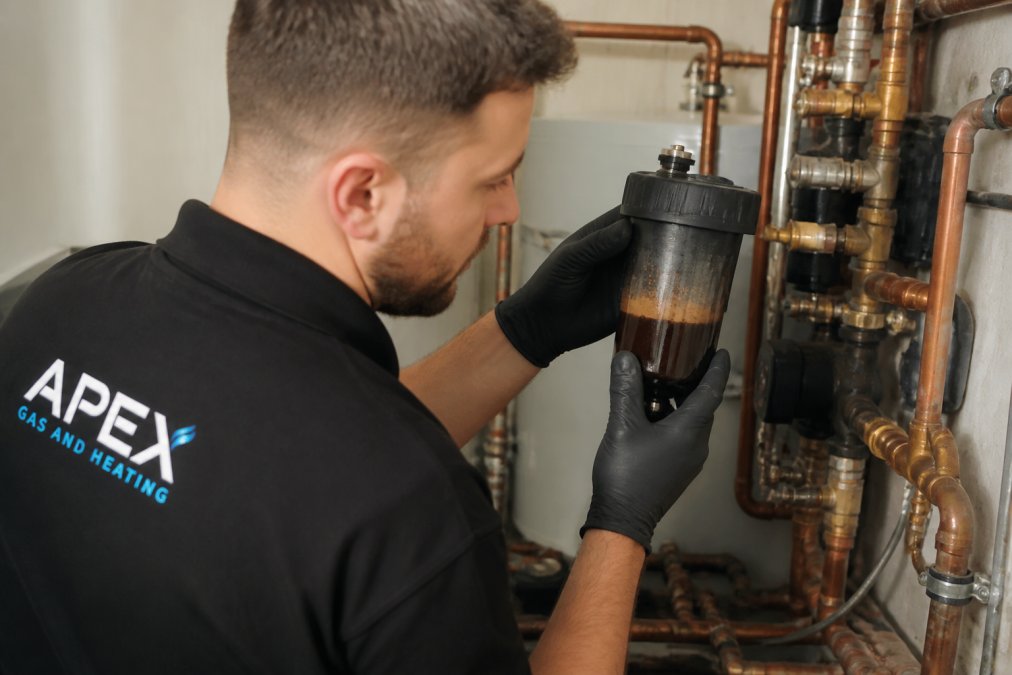
After power flushing, your heating engineer will add inhibitor to your system, a chemical treatment that prevents future corrosion and sludge formation. Inhibitor effectiveness typically lasts 3 to 5 years, after which your engineer can top it up during a boiler service.
Regular boiler servicing becomes even more important after power flushing. Annual servicing allows your engineer to monitor system pressure, check inhibitor levels, and catch emerging issues before they develop into costly problems.
Maintain system pressure within the normal operating range shown on your boiler’s pressure gauge, typically 1 to 1.5 bar when the system is cold. Low pressure can indicate a leak or water loss, which compromises inhibitor concentration. Bleed radiators annually if air accumulates, but frequent radiator bleeding more than once or twice yearly suggests an underlying issue requiring professional attention.
Avoid adding water treatment products or additives unless your engineer specifically recommends them. If you suspect contamination has returned, contact your heating engineer to discuss whether another power flush is needed.
Power flushing is an investment in your heating system’s longevity and efficiency. Whether you’re preparing for a new boiler installation or addressing existing performance issues, professional power flushing removes the sludge and debris restricting your system’s potential. The 4 to 8 hours required for a thorough flush pays dividends through improved heating performance, lower energy bills, and extended boiler life. Apex Gas & Heating Ltd provides professional power flushing and new boiler installation services across Sussex and Surrey, with transparent pricing and a commitment to restoring your heating system to peak performance. Get a quote today and discover how power flushing can transform your home’s comfort and efficiency.
Frequently Asked Questions
Q: What factors influence the duration of a power flush?
A: System size, sludge accumulation, pipework layout, and boiler condition all affect how long a power flush takes. Larger central heating systems with significant debris typically require 4-8 hours, whilst smaller systems may finish in a shorter timeframe. A heating engineer will assess your specific setup to provide an accurate timeframe before starting work.
Q: Are power flushes worth it for older heating systems?
A: Yes, power flushing can restore heating performance in older systems by removing corrosion, scale, and sludge that accumulate over decades. If your radiators have cold spots or your boiler operates inefficiently, a power flush often improves thermal efficiency significantly. However, a professional assessment is essential to confirm your system can handle the process safely.
Q: Do you need access to all radiators for a power flush?
A: Access to the boiler, pump, and primary pipework is essential, but you don’t necessarily need to isolate every radiator. The power flushing machine connects to the heating circuit and circulates chemical cleaner throughout the system. Your heating engineer will explain which radiators or valves need attention based on blockages or cold spots they identify.
Q: How often should a central heating system be power flushed?
A: Most systems benefit from power flushing every 5-10 years, depending on water quality, system age, and maintenance history. If you notice cold spots, reduced flow rate, or noisy pipes, flushing may be needed sooner. Regular boiler servicing and inhibitor top-ups help extend intervals between flushes and maintain system health.