







Table of Contents
- What Is Power Flushing and How Does It Work?
- Key Benefits of Power Flushing Central Heating Systems
- Signs You Need Power Flushing for Your Central Heating
- How Often to Power Flush Central Heating Systems
- Power Flushing vs Chemical Flush: Which Is Right for You?
- Understanding Power Flush Cost and Value
- Post-Flush Maintenance: Protecting Your Investment
- Professional vs DIY Power Flushing: Risk Assessment
Power Flushing Central Heating: Key Benefits Explained
Last Updated: July 21, 2026
What Is Power Flushing and How Does It Work?
Power flushing central heating systems involves using high-pressure water and specialized cleaning chemicals to remove accumulated sludge, debris, and corrosion from your heating circuit. At Apex Gas & Heating Ltd, we’ve seen firsthand how the benefits of power flushing central heating systems can transform a struggling heating setup into a reliable, efficient one. This process forces water through pipes and radiators at speeds that dislodge years of buildup that normal circulation cannot remove.
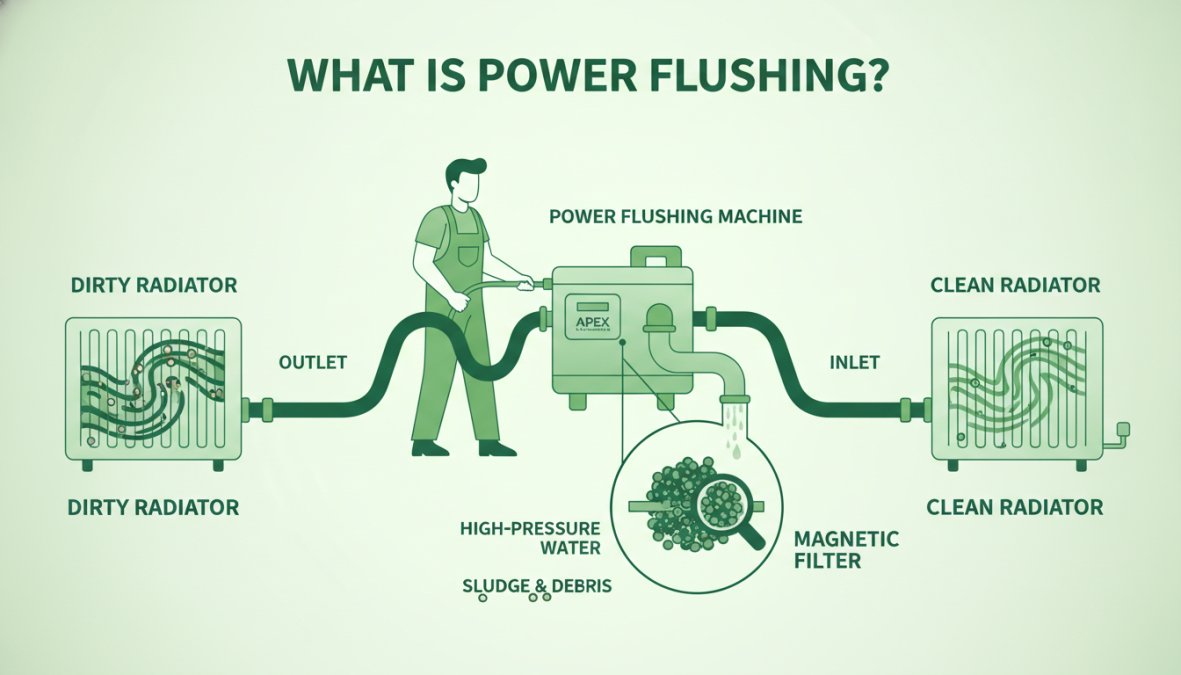
The power flushing process works by connecting a specialized machine to your central heating system. High-pressure water flows through the circuit in both directions, breaking apart magnetic sludge and scale deposits. A powerful magnetic filter captures the debris as it’s expelled, preventing it from resettling elsewhere in the system. The entire operation typically takes between 4 to 8 hours, depending on the size and condition of your heating circuit.
The Power Flushing Process
The actual mechanics are straightforward but require precision. A technician isolates your boiler and connects the flushing machine to the heating circuit. Water mixed with cleaning chemicals circulates at high velocity, agitating the system’s internal surfaces. The debris loosens and flows toward the magnetic filter, where iron particles and sludge accumulate. Once the water runs clear, a sign that most contaminants have been removed, the system is flushed with clean water and an inhibitor is added to prevent future corrosion.
The magnetic filter is doing the real work here. Most sludge is ferrous (iron-based) and sticks to the magnet, which means you can actually see the contamination being removed. If the filter comes out black or grey, your system was definitely in need of attention.
Many heating engineers recommend checking the inhibitor level after a power flush. This chemical barrier prevents rust from forming on internal metal surfaces, extending your system’s life significantly. Without inhibitor, corrosion begins immediately once the system restarts.
Key Benefits of Power Flushing Central Heating Systems
The benefits of power flushing central heating go far beyond simply cleaning pipes. A properly flushed system operates with renewed efficiency, reliability, and longevity. These improvements translate directly into lower energy bills, fewer emergency breakdowns, and extended equipment life.
Improved Energy Efficiency and Lower Heating Bills
When sludge accumulates inside your heating circuit, it acts as an insulator, preventing heat from transferring efficiently to your radiators. Your boiler has to work harder to reach the same temperature, consuming more fuel in the process. Power flushing removes this barrier, allowing heat to flow directly into radiators without resistance.
Many homeowners report noticeable reductions in heating bills within weeks of a power flush. The exact savings depend on how much debris was present, but systems that were severely sludged can see improvements of 15-20% in fuel efficiency. Even moderately sludged systems often show measurable gains.
The mechanism is simple physics: clean pipes conduct heat better than blocked ones. Your boiler reaches its target temperature faster, cycles less frequently, and consumes less energy overall. This efficiency gain compounds over months, making power flushing one of the most cost-effective maintenance investments for heating systems.
A power flush can reduce your annual heating costs by hundreds of pounds, particularly if your system has been running for 10+ years without this treatment.
Extended System Life and Boiler Reliability
Sludge doesn’t just reduce efficiency, it actively damages your boiler and pump. Particles circulate through the heat exchanger, causing micro-abrasions on internal surfaces. Over time, this wear accelerates component failure. A pump struggling against sludge-clogged circuits burns out faster. A heat exchanger coated with scale becomes prone to blockages and cracks.
Power flushing removes the source of this damage. By eliminating sludge before it can cause permanent harm, you’re essentially giving your heating system a second life. Engineers often see boilers that were scheduled for replacement suddenly become reliable again after a thorough flush.
The corrosion inhibitor added after flushing provides ongoing protection. This chemical layer prevents rust from forming on internal metal surfaces, which is particularly important in older systems where protective coatings may have worn away. The combination of mechanical cleaning and chemical protection creates conditions where your boiler can operate reliably for many additional years.
Better Heat Distribution and Comfort
Cold radiators in some rooms while others overheat is a classic symptom of sludge blocking the heating circuit. Debris accumulates in radiators, restricting water flow and preventing them from reaching full temperature. The result is uneven heating throughout your home.
Power flushing restores balanced water circulation. Each radiator receives adequate flow at proper temperature, creating consistent comfort across all rooms. Bedrooms, bathrooms, and living spaces all heat evenly rather than some being noticeably colder than others.
Thermal imaging can visually demonstrate this improvement. Before a power flush, thermographic surveys show cold spots on radiators where sludge has blocked water flow. After flushing, the same radiators display uniform heat distribution across their entire surface. This isn’t just a comfort improvement, it’s visible proof that the system is working as designed.
Signs You Need Power Flushing for Your Central Heating
Recognizing when your system needs flushing can prevent costly breakdowns. Several warning signs indicate that sludge accumulation has reached problematic levels.
Cold spots at the bottom of radiators are the most common indicator. When sludge settles in the lower sections of radiators, it blocks water flow to those areas. The top of the radiator may feel hot while the bottom remains cold. Bleeding the radiator might provide temporary relief, but if cold spots return within weeks, sludge is the underlying cause.
Boiler kettling, a loud, rumbling noise coming from the boiler, suggests sludge has coated the heat exchanger. The buildup causes water to boil unevenly, creating steam bubbles and the characteristic kettling sound. This is a warning sign that damage is occurring.
Frequent boiler breakdowns, particularly if they occur seasonally when heating demand peaks, often trace back to sludge. The system works fine at low load but fails under stress. A power flush frequently resolves these recurring failures.
Discolored water when bleeding radiators indicates debris circulating through your system. If the water runs black or dark grey, significant sludge is present. Clear water suggests the system is relatively clean, though flushing may still provide modest benefits.
How Often to Power Flush Central Heating Systems
The frequency depends on your system’s age, condition, and water quality. New systems installed with proper inhibitor rarely need flushing for 10-15 years. Older systems, particularly those that have never been flushed, benefit from treatment much sooner.
Most heating engineers recommend power flushing every 5-8 years for systems over 15 years old. However, if your system shows signs of sludge, cold radiators, kettling, or frequent breakdowns, flushing shouldn’t wait. Addressing the problem early prevents escalating damage.
Systems in hard water areas may need more frequent flushing due to increased scale buildup. Conversely, systems with properly maintained inhibitor levels require less frequent intervention. The key is monitoring your system’s performance and responding to warning signs promptly.
Delaying a power flush when your system shows clear signs of sludge can result in boiler failure, requiring costly replacement rather than preventive maintenance.
Power Flushing vs Chemical Flush: Which Is Right for You?
Both approaches aim to remove sludge, but they operate very differently. Understanding the distinction helps you choose the right solution for your system’s condition.
Comparing Effectiveness and Cost
A chemical flush introduces cleaning agents into your heating circuit while the system operates normally. The chemicals circulate for several days, gradually breaking down sludge. This approach is gentler on the system and less disruptive, your heating continues running throughout the process.
However, chemical flushes are significantly less effective at removing heavy sludge accumulation. They work best on systems with moderate buildup or as preventive maintenance on relatively clean systems. For severely sludged circuits, chemical treatment alone often fails to restore full function.
Power flushing, by contrast, uses mechanical force to dislodge debris. The high-pressure water is far more effective at removing years of accumulated sludge in a single day. Engineers can see exactly how much contamination is being removed via the magnetic filter. This visibility and effectiveness make power flushing the standard choice for systems with significant problems.
| Approach | Best For | Duration | Effectiveness | Cost |
|---|---|---|---|---|
| Chemical Flush | Preventive maintenance, light sludge | 3-5 days | Moderate | Lower |
| Power Flush | Heavy sludge, cold radiators, system failure | 4-8 hours | High | Higher |
For most systems showing clear signs of sludge problems, power flushing is the more reliable choice. Chemical flushing works best as a maintenance step after power flushing, helping prevent future buildup.
Understanding Power Flush Cost and Value
Pricing for power flushing varies based on system size, sludge severity, and your location. Larger systems with multiple zones cost more than small systems in compact homes. Systems that haven’t been flushed in decades may require additional time and cleaning cycles, affecting the final price.
Rather than estimating costs, we recommend requesting quotes from qualified heating engineers who can assess your specific system. Apex Gas & Heating Ltd provides transparent pricing and free consultations to evaluate your heating circuit’s condition and recommend the most appropriate solution.
What Affects Pricing and ROI
System size is the primary cost driver. A small flat with 4-6 radiators costs less to flush than a large house with 12+ radiators and multiple zones. The complexity of your heating layout, whether you have a combi boiler, system boiler, or traditional tank setup, also influences pricing.
The return on investment becomes clear quickly. Reduced heating bills, eliminated repair calls, and extended boiler life typically recoup the flushing cost within 1-2 years. Beyond that payback period, every month of reliable operation and lower energy consumption represents pure savings.
Consider the alternative: ignoring sludge until your boiler fails completely. A new boiler installation costs £2,000-£5,000 or more. A power flush costs a fraction of that and often prevents the need for replacement entirely. The financial case for preventive flushing is compelling.
Post-Flush Maintenance: Protecting Your Investment
Power flushing is not a one-time fix that eliminates all future problems. Proper maintenance afterward ensures the benefits persist and sludge doesn’t rapidly reaccumulate.
The inhibitor added during flushing is critical. This chemical barrier prevents corrosion and slows sludge formation. However, inhibitor levels decline over time as the system circulates. Most engineers recommend checking inhibitor concentration annually and topping it up as needed. This simple step costs little but extends the period between flushes significantly.
Bleeding radiators occasionally helps release trapped air that can impede circulation. If cold spots begin to reappear months after flushing, bleeding may restore performance before a new flush becomes necessary. This basic maintenance takes minutes and prevents problems from escalating.
Monitor your system’s performance. If kettling returns, breakdowns resume, or cold spots reappear, these are signals that sludge is beginning to accumulate again. Catching problems early allows for targeted intervention rather than waiting until another full flush becomes necessary.
Set a calendar reminder to check your boiler’s inhibitor level each autumn before heating season begins. This five-minute check prevents most post-flush problems from developing.
Professional vs DIY Power Flushing: Risk Assessment
Some homeowners consider renting flushing equipment and attempting the process themselves. While technically possible, this approach carries significant risks that usually outweigh any cost savings.
Power flushing machines are complex equipment requiring proper operation to avoid damaging your heating system. Incorrect pressure settings can rupture pipes or damage the boiler’s heat exchanger. Improper chemical handling poses safety risks. Most importantly, without proper training, you won’t recognize when something has gone wrong until serious damage has occurred.
Professional heating engineers have years of experience recognizing system conditions, adjusting procedures accordingly, and troubleshooting problems in real time. They carry insurance covering any damage, giving you protection if something goes wrong. They also have access to specialized equipment and chemicals that perform better than consumer-grade alternatives.
The cost difference between DIY and professional flushing rarely exceeds a few hundred pounds. Given the potential for expensive damage and the complexity of the work, professional service represents excellent value. Apex Gas & Heating Ltd’s Gas Safe registered engineers provide expert service with full public liability insurance, ensuring your system is handled safely and effectively.
Power flushing central heating systems addresses the root cause of many heating problems, accumulated sludge and corrosion that prevent your system from operating as designed. The benefits of power flushing central heating include improved energy efficiency, extended boiler life, and restored comfort throughout your home. If your system shows signs of sludge, cold radiators, kettling, or frequent breakdowns, professional power flushing can restore reliability and performance. Apex Gas & Heating Ltd’s Gas Safe registered heating engineers provide expert flushing services across Sussex and Surrey with transparent pricing and 24/7 support. Get a quote today and discover how power flushing can transform your heating system.
Frequently Asked Questions
What are the main benefits of power flushing a central heating system?
Power flushing removes sludge, scale, and debris from your heating circuit, improving energy efficiency and reducing heating bills. It enhances heat distribution across radiators, eliminates cold spots, and extends system life by preventing corrosion and pump failure. The process restores heat exchanger performance and boosts overall system reliability, helping your boiler operate at peak efficiency for years longer.
How often should you power flush central heating systems?
Most heating systems benefit from power flushing every 5-10 years, depending on water quality, system age, and maintenance history. Older systems or those showing signs of sludge accumulation may need it sooner. After a power flush, maintaining proper inhibitor levels and annual servicing helps extend the interval between flushes and keeps your central heating system operating efficiently.
What is the difference between a power flush and a chemical flush?
A power flush uses high-pressure water and a power flushing machine to physically dislodge and remove sludge, scale, and debris from your heating circuit. A chemical flush relies on cleaning chemicals to dissolve deposits over time. Power flushing is generally more effective for heavily contaminated systems, while chemical flushes are gentler and suitable for routine maintenance. Professional heating engineers often recommend power flushing for systems with significant sludge buildup.
Is power flushing worth the cost for my central heating system?
Power flushing is worth the investment if your system shows signs of sludge, radiator cold spots, or declining efficiency. The improved energy efficiency typically reduces heating bills, while preventing expensive boiler breakdowns and extending system life saves money long-term. For older systems or those with poor heat distribution, the benefits, better comfort, lower costs, and system reliability, usually outweigh the upfront power flush cost within 2-3 years.
Leave a Reply