









Table of Contents
- Why Eco-Friendly Heating Matters for Rural Properties
- Air Source Heat Pumps: Efficient Heating for Off-Gas Properties
- Ground Source Heat Pumps: Maximum Efficiency When Space Allows
- Biomass Boilers: Renewable Heating From Sustainable Wood Fuel
- Boiler Upgrade Scheme Eligibility and Government Support
- Benefits of Power Flushing Central Heating Systems
- Maintaining Low-Carbon Heating Systems for Long-Term Performance
- Hybrid Heating Systems and Solar Thermal Integration
Last Updated: August 24, 2026
Why Eco-Friendly Heating Matters for Rural Properties
Rural homes face unique heating challenges without access to mains gas, relying instead on expensive oil, LPG, or electric heating with high running costs and significant carbon footprints. Eco-friendly heating solutions offer a practical alternative that reduces fuel bills, accesses government grants, and future-proofs against rising energy costs.
For homeowners in areas like Crawley and across Sussex, switching to renewable heating delivers measurable benefits: lower carbon emissions, reduced fossil fuel dependency, and significant financial support through schemes like the Boiler Upgrade Scheme. At Apex Gas & Heating Ltd, we’ve worked with numerous rural homeowners making this transition successfully.
This guide covers eight practical renewable heating options available to rural properties, from air source heat pumps to hybrid systems combining multiple technologies. You’ll understand each solution’s efficiency, installation requirements, and suitability for different property types.
Air Source Heat Pumps: Efficient Heating for Off-Gas Properties
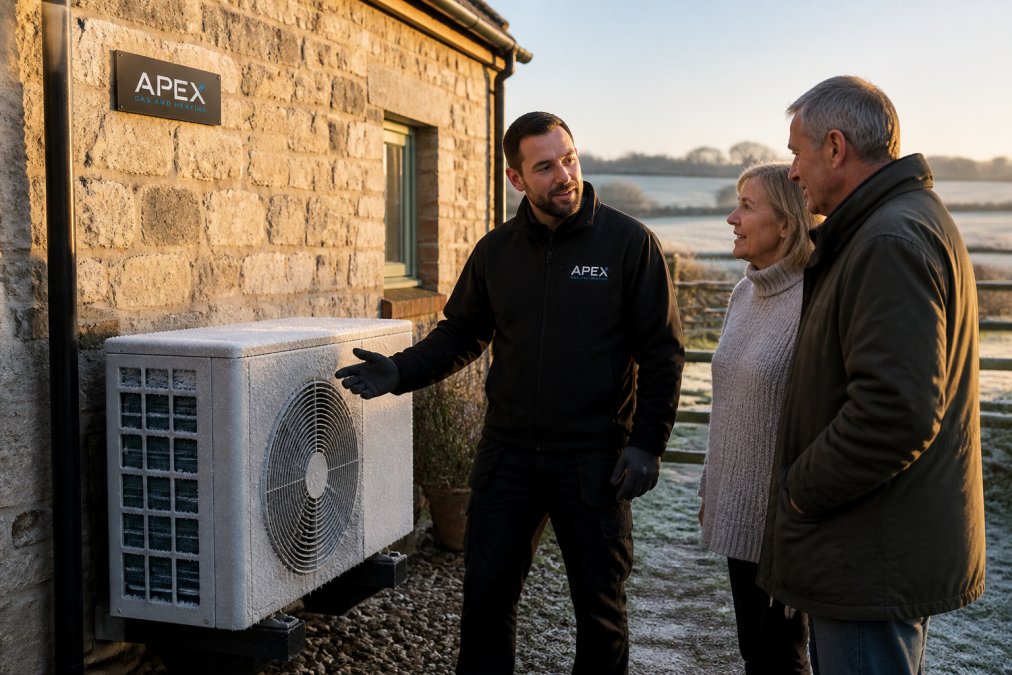
Air source heat pumps extract heat from outside air and transfer it indoors for heating and hot water, working effectively even in cold climates. For every unit of electricity consumed, they deliver three to four units of heat, dramatically reducing running costs compared to oil or LPG boilers (peer-reviewed research).
Installation typically takes three to five days depending on your property’s layout. The compact units mount against external walls, suiting most rural properties.
Air source heat pumps perform best with good insulation and appropriately sized radiators for lower flow temperatures. Modern units maintain efficiency down to minus 15°C, though output declines in extreme cold, with backup electric heaters maintaining comfort ([the NIH](https://pmc.ncbi.nlm.nih.gov/articles/PMC11929890/)).
The Boiler Upgrade Scheme currently offers grants toward installation costs. Running costs depend on electricity tariff and insulation, but generally air source heat pumps cost significantly less to operate than oil or LPG systems, representing one of the most cost-effective renewable heating solutions for off-grid properties.
Ground Source Heat Pumps: Maximum Efficiency When Space Allows
Ground source heat pumps extract stable heat from the earth via buried pipework, offering superior efficiency to air source systems. The ground maintains a relatively constant temperature of 10-12°C year-round, enabling peak efficiency throughout winter regardless of external air temperature (usgs.gov).
Installation involves either horizontal trenching across your garden or vertical boreholes sunk deep underground. Horizontal systems require space equivalent to one-and-a-half times your home’s floor area; vertical boreholes occupy minimal surface space but cost more. Both approaches are disruptive during installation but deliver decades of reliable performance.
The ground loop lifespan exceeds 50 years, outlasting multiple generations of residents. Combined with minimal maintenance requirements, ground source heat pumps represent a long-term investment delivering exceptional returns.
Ground source installation isn’t suitable for properties with shallow bedrock, high water tables, or conservation area restrictions. Check with your local planning authority before proceeding.
Ground source heat pumps qualify for the Boiler Upgrade Scheme. The higher upfront cost is offset by lower running costs and exceptional long-term efficiency, making them the gold standard in renewable heating technology for rural properties with suitable space and ground conditions.
Biomass Boilers: Renewable Heating From Sustainable Wood Fuel
Biomass boilers burn organic material, typically wood pellets, chips, or logs, providing central heating and hot water. Pellet boilers are most practical, using standardised wood pellets with automatic feeding systems, removing manual labour whilst maintaining renewable benefits.
The carbon footprint depends on fuel sourcing. Sustainably managed forestry produces genuinely carbon-neutral wood fuel over its lifecycle. When trees are replanted after harvest, carbon released during combustion is reabsorbed as new growth occurs.
Installation requires space for fuel storage, typically a dedicated shed or bunker holding several months’ supply. The boiler occupies similar space to conventional oil boilers, with standard flue installation.
Biomass boilers require [annual servicing](/2026/08/20/annual-boiler-service-landlords-benefits/) and regular ash removal. Budget for maintenance costs and factor in time managing fuel deliveries, as biomass heating demands more active management than oil or gas systems.
Running costs vary depending on pellet prices in your area. In many rural locations, biomass fuel costs less than oil or LPG, delivering genuine savings. Modern biomass boilers meeting EcoDesign 2022 standards ensure efficient combustion and minimal emissions. The Boiler Upgrade Scheme provides grants toward installation.
Boiler Upgrade Scheme Eligibility and Government Support
The Boiler Upgrade Scheme provides grants toward renewable heating system installation, making eco-friendly solutions more accessible to rural homeowners. The scheme offers a flat-rate grant toward heat pump installation or biomass boiler replacement, available to both owner-occupiers and landlords covering primary residences and rental properties.
Eligibility requires your property currently uses fossil fuel heating, oil, LPG, or natural gas. Properties with electric-only heating are ineligible. Your installer must be registered with the scheme, confirming they meet quality standards and can process grant claims on your behalf.
The application process is straightforward: your registered installer submits the claim after installation, and the grant is paid directly to them, reducing your final bill. No means testing applies, making the scheme genuinely universal for eligible properties.
The Boiler Upgrade Scheme represents the most significant government support for renewable heating, often making the difference between renewable heating being affordable or prohibitively expensive for rural properties.
Timeline matters. The scheme operates on annual budget allocation, and funding can exhaust before the financial year ends. Applying early maximises the chance of securing your grant before funds run out. Landlords should note the scheme applies to rental properties too, with each eligible heating system qualifying for full grant support.
Benefits of Power Flushing Central Heating Systems
Power flushing circulates high-velocity water and cleaning chemicals through heating pipework to remove accumulated sludge, rust, and debris. Over time, central heating systems accumulate magnetite, black iron oxide reducing heat transfer and forcing boilers to work harder.
When installing renewable heating systems, power flushing beforehand is essential. Heat pumps and biomass boilers operate most efficiently with clean pipework. Installing new systems into clogged pipework wastes investment as systems work harder distributing heat through restricted pipes. Our plumbing services include comprehensive power flushing to prepare your system for optimal renewable heating performance.
Benefits include improved heat distribution, reduced running costs, and extended equipment lifespan. A properly flushed system allows your heat pump or biomass boiler to deliver rated output without overworking.
If upgrading from an oil boiler to a heat pump, power flushing is non-negotiable. Oil boiler systems often contain significant sludge accumulation, and installing a heat pump into contaminated pipework compromises performance immediately.
Modern power flushing uses magnetic filters capturing debris permanently, protecting your heating system throughout its lifespan. For rural properties switching to renewable heating, power flushing represents excellent value with modest costs compared to efficiency gains delivered.
See our new boiler installations →
Maintaining Low-Carbon Heating Systems for Long-Term Performance
Renewable heating systems require different maintenance approaches than conventional boilers. Air source heat pumps need annual servicing to maintain efficiency and check refrigerant levels, with outdoor units kept clear of snow, ice, leaves, and debris.
Ground source heat pumps require less frequent servicing, typically every three to five years, as the system is largely sealed and protected underground. Servicing focuses on pump performance and system pressure checks.
Biomass boilers demand more active maintenance. Annual servicing includes cleaning the heat exchanger, checking combustion efficiency, and inspecting the flue. You’ll also arrange regular ash removal, typically monthly during heating season, and ensure fuel storage remains dry and pest-free.
Neglecting maintenance on renewable heating systems leads to reduced efficiency, higher running costs, and potential equipment failure. Budget for annual servicing and factor maintenance costs into your decision-making.
Many installers offer maintenance contracts covering annual servicing and emergency callouts. For rural properties where service response times can be longer, these contracts provide valuable peace of mind. Apex Gas & Heating Ltd provides comprehensive boiler servicing for heating systems across Sussex and Surrey, ensuring your renewable installation maintains peak performance. Keep records of all servicing, repairs, and component replacements to support warranty claims and demonstrate proper maintenance.
Hybrid Heating Systems and Solar Thermal Integration
Hybrid heating systems combine multiple renewable technologies, delivering flexibility and resilience that single-technology approaches cannot match. A common configuration pairs an air source heat pump with solar thermal panels. The heat pump handles primary heating and hot water, whilst solar panels supplement hot water production during sunnier months, reducing heat pump reliance and lowering running costs.
Another effective hybrid combines a biomass boiler with an air source heat pump. The biomass system handles winter heating when fuel is abundant and heating demand is highest, whilst the heat pump provides supplementary heating during milder months, optimising each technology for the season when it performs best.
Solar thermal panels specifically improve hot water efficiency by preheating water before it enters your heat pump or boiler, reducing energy needed for final heating. For properties with good south-facing roof space, solar thermal integration typically pays for itself within eight to ten years.
Hybrid heating systems provide resilience. If one component requires maintenance, the other continues operating, ensuring heating continuity. For rural properties where service appointments may take longer to arrange, this redundancy offers genuine peace of mind.
System integration requires careful design. Your installer must ensure components work harmoniously, with modern smart heating controls optimising hybrid systems automatically. The Boiler Upgrade Scheme supports certain hybrid configurations, particularly those combining heat pumps with solar thermal. Check with your installer whether your proposed system qualifies for grant support.
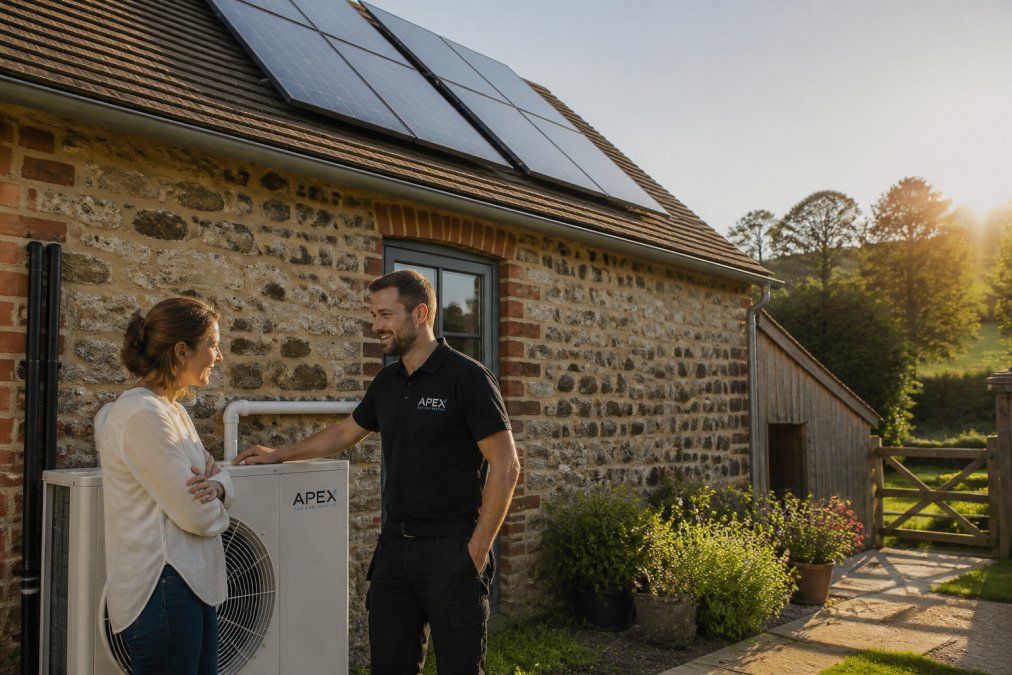
Choosing eco-friendly heating for a rural property is a significant decision, but today’s options make renewable heating genuinely practical and affordable. Whether you select an air source heat pump, biomass system, or hybrid configuration, you’re investing in lower running costs, reduced carbon emissions, and energy independence from fossil fuel price volatility.
The Boiler Upgrade Scheme makes this transition financially accessible. Combined with professional installation from experienced engineers, renewable heating delivers reliable warmth and hot water for decades. Apex Gas & Heating Ltd specialises in new boiler installation and heating system maintenance across Sussex and Surrey. Our Worcester and Glowworm approved installers can assess your property, recommend the most suitable renewable heating solution, and manage installation with full transparency and professional workmanship. Get a quote today to explore how renewable heating can transform your property’s efficiency and comfort.
=== FAQ ANSWERS (audit these too, same rules) ===
[1] Q: What is the most environmentally friendly heating system for a rural home without mains gas?
A: Air source heat pumps and ground source heat pumps are the most environmentally friendly options for rural properties off the gas grid. Air source heat pumps extract heat from outside air and work efficiently even in cold climates, reducing carbon emissions significantly compared to oil or LPG boilers. Ground source heat pumps offer even higher efficiency if you have sufficient outdoor space for installation. Both qualify for the Boiler Upgrade Scheme, which provides grants to offset upfront costs. Biomass boilers using sustainably sourced wood pellets are also a strong renewable alternative if fuel supply is accessible.
[2] Q: How does the Boiler Upgrade Scheme eligibility work for rural homeowners?
A: The Boiler Upgrade Scheme provides grants towards the installation of heat pumps, biomass boilers, or solar thermal systems. Eligibility depends on your property being off the mains gas grid and having an EPC rating. Rural homes in areas like Crawley and surrounding Sussex typically qualify, as many are not connected to mains gas. You must use an approved installer, and the grant is applied directly to reduce your installation costs. Check with your local authority or an approved installer to confirm your property’s eligibility and the specific grant amount available.
[3] Q: What are the benefits of power flushing central heating systems before installing new eco-friendly heating?
A: Power flushing removes sludge, rust, and debris from your existing central heating pipework, improving heat distribution and system efficiency. Before installing a new heat pump or hybrid heating system, power flushing ensures your radiators and pipes are clean, allowing the new system to operate at peak performance. This is particularly important in older rural properties where sediment buildup is common. A clean system reduces the risk of blockages, extends the lifespan of your new heating installation, and can improve energy efficiency. Professional power flushing should be performed by a qualified heating engineer as part of your heating upgrade.
[4] Q: Are heat pumps suitable for older rural homes that need retrofitting?
A: Yes, air source heat pumps can be retrofitted into older rural homes, though they perform best in well-insulated properties. Older homes may require radiator upgrades or the addition of underfloor heating to maximise heat pump efficiency, as heat pumps work best at lower flow temperatures. Before installation, conduct a heat loss calculation and consider improving insulation in lofts, walls, and around windows. Ground source heat pumps are also suitable for older properties if you have outdoor space for the ground loop. Many older rural homes have successfully switched to heat pumps, particularly when combined with improved insulation and smart heating controls.
[5] Q: What maintenance is required to keep low-carbon heating systems running efficiently?
A: Low-carbon heating systems require regular maintenance to sustain performance. Heat pumps need annual servicing to check refrigerant levels, filter cleaning, and system diagnostics. Biomass boilers require ash removal after each burn cycle and annual professional inspection. Solar thermal systems need periodic checks of pipework and fluid levels. All renewable heating systems benefit from power flushing every 5-10 years to maintain efficiency. Smart heating controls should be checked to ensure they’re optimising your system’s performance. Schedule annual servicing with a qualified heating engineer to catch issues early and maintain your system’s warranty coverage.
Frequently Asked Questions
What is the most environmentally friendly heating system for a rural home without mains gas?
Air source heat pumps and ground source heat pumps are the most environmentally friendly options for rural properties off the gas grid. Air source heat pumps extract heat from outside air and work efficiently even in cold climates, reducing carbon emissions significantly compared to oil or LPG boilers. Ground source heat pumps offer even higher efficiency if you have sufficient outdoor space for installation. Both qualify for the Boiler Upgrade Scheme, which provides grants to offset upfront costs. Biomass boilers using sustainably sourced wood pellets are also a strong renewable alternative if fuel supply is accessible.
How does the Boiler Upgrade Scheme eligibility work for rural homeowners?
The Boiler Upgrade Scheme provides grants towards the installation of heat pumps, biomass boilers, or solar thermal systems. Eligibility depends on your property being off the mains gas grid and having an EPC rating. Rural homes in areas like Crawley and surrounding Sussex typically qualify, as many are not connected to mains gas. You must use an approved installer, and the grant is applied directly to reduce your installation costs. Check with your local authority or an approved installer to confirm your property's eligibility and the specific grant amount available.
What are the benefits of power flushing central heating systems before installing new eco-friendly heating?
Power flushing removes sludge, rust, and debris from your existing central heating pipework, improving heat distribution and system efficiency. Before installing a new heat pump or hybrid heating system, power flushing ensures your radiators and pipes are clean, allowing the new system to operate at peak performance. This is particularly important in older rural properties where sediment buildup is common. A clean system reduces the risk of blockages, extends the lifespan of your new heating installation, and can improve energy efficiency. Professional power flushing should be performed by a qualified heating engineer as part of your heating upgrade.
Are heat pumps suitable for older rural homes that need retrofitting?
Yes, air source heat pumps can be retrofitted into older rural homes, though they perform best in well-insulated properties. Older homes may require radiator upgrades or the addition of underfloor heating to maximise heat pump efficiency, as heat pumps work best at lower flow temperatures. Before installation, conduct a heat loss calculation and consider improving insulation in lofts, walls, and around windows. Ground source heat pumps are also suitable for older properties if you have outdoor space for the ground loop. Many older rural homes have successfully switched to heat pumps, particularly when combined with improved insulation and smart heating controls.
What maintenance is required to keep low-carbon heating systems running efficiently?
Low-carbon heating systems require regular maintenance to sustain performance. Heat pumps need annual servicing to check refrigerant levels, filter cleaning, and system diagnostics. Biomass boilers require ash removal after each burn cycle and annual professional inspection. Solar thermal systems need periodic checks of pipework and fluid levels. All renewable heating systems benefit from power flushing every 5-10 years to maintain efficiency. Smart heating controls should be checked to ensure they're optimising your system's performance. Schedule annual servicing with a qualified heating engineer to catch issues early and maintain your system's warranty coverage.
Leave a Reply