








Table of Contents
- Why Detecting a Gas Leak at Home Matters
- The 4 Key Signs of a Natural Gas Leak
- How to Check Your Pipes and Appliances for Leaks
- DIY vs. Professional Gas Leak Detection Tools
- Emergency Gas Leak Procedure: What to Do First
- Step 1: Stop What You Are Doing and Do Not Touch Anything Electrical
- Step 2: Extinguish All Naked Flames and Do Not Smoke
- Step 3: Open Doors and Windows to Ventilate
- Step 4: Turn Off the Gas Supply at the Emergency Control Valve
- Step 5: Leave the Property and Get to Fresh Air
- Step 6: Call the National Gas Emergency Service
- What Happens After You Call
- When to Evacuate Immediately
- What Not to Do in a Gas Emergency
- Save the Number Now
- How to Turn Off Gas Supply Safely
- Is a Carbon Monoxide Detector Worth It for Gas Leaks?
- Common Gas Leak Myths Debunked
- Frequently Asked Questions
Last Updated: September 5, 2026
Natural gas is odourless in its natural state, which is why detecting a leak in your home often comes down to knowing what to look for. Understanding how to detect a natural gas leak at home is a vital skill for any homeowner, as a small leak can escalate into a serious safety hazard if left unchecked. This guide from Apex Gas & Heating Ltd covers the signs, the checks, and the exact steps to take if you suspect a problem.
Speed matters: gas leaks are a combustible risk, and the difference between a safe outcome and a dangerous one is often measured in minutes. Below, we walk you through the four key signs of a leak, how to inspect your pipes and appliances, and the emergency procedure that keeps your household safe.
Why Detecting a Gas Leak at Home Matters
A gas leak is not something to wait on. When natural gas escapes into an enclosed space, it can build up to a level where a single spark from a light switch or an appliance can ignite it. Beyond the fire risk, incomplete combustion and poor ventilation can also lead to carbon monoxide issues, a separate but equally serious health concern.
Fittings can loosen over time, pipes can corrode, and rubber hoses can perish. Regular detection is part of routine home maintenance, not just an emergency response. By learning the signs now, you avoid the panic of trying to figure them out while a leak is already filling your kitchen.
The 4 Key Signs of a Natural Gas Leak
Four primary indicators may signal a natural gas leak in your home. If you notice any single one, it warrants immediate investigation.
The Smell: Rotten Eggs and Sulphur
Gas suppliers add a chemical called mercaptan to natural gas precisely so you can smell it. Mercaptan has a strong, distinctive odour that most people describe as similar to rotten eggs or sulphur. This is your first line of defence.
Do not ignore it. The odour can be faint at first, so check near appliances, pipework, and around your gas meter. The smell can be masked by cooking odours, so a lingering egg-like scent after you’ve finished in the kitchen is a red flag.
The Sounds: Hissing and Whistling
A hissing or whistling sound near your gas pipes, meter, or appliances is a strong indicator of a leak. Gas escaping under pressure from a loose connection or a crack in a pipe often produces an audible noise.
A faint hiss behind your boiler or under the sink where a gas pipe runs is not normal. If you hear a continuous whistling sound you cannot trace to a window draft or a tap, treat it as a potential leak and investigate immediately.
Visual Clues: Bubbles, Dead Vegetation, and Discoloured Flames
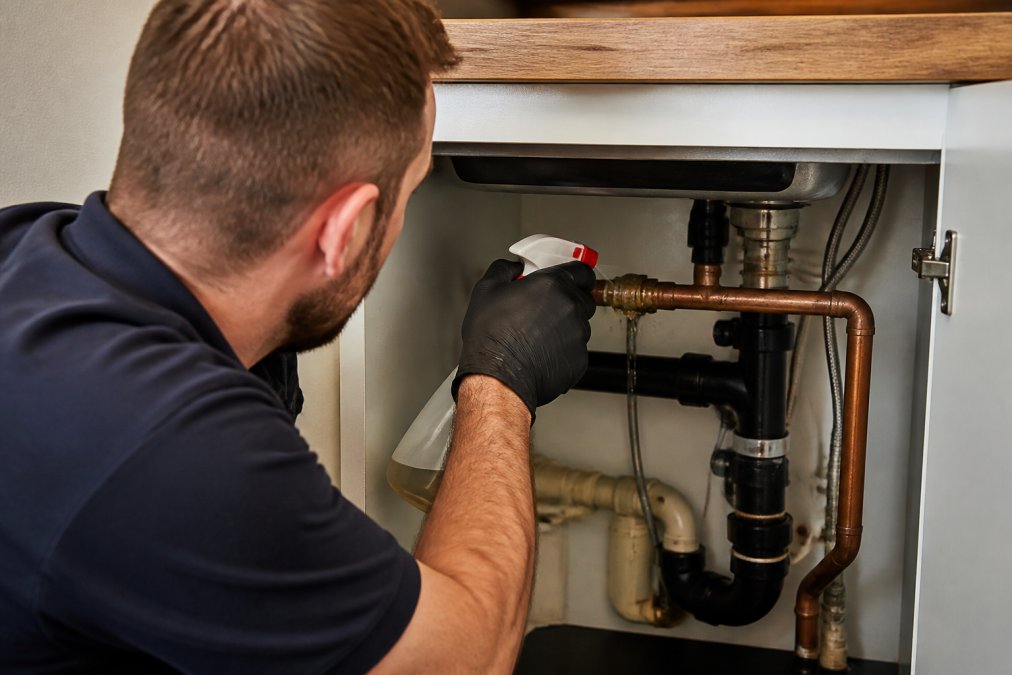
Not all gas leaks are detectable by smell or sound, which is why visual checks matter. If you suspect a leak on an exposed pipe joint, apply a soapy water solution to the area. If gas is escaping, it will create small air bubbles at the point of the leak.
Outside, look for dead or dying vegetation in an otherwise healthy lawn, as leaking gas can starve plant roots of oxygen. Inside, check the flame colour on your gas hob: a healthy flame is a crisp blue, while yellow or orange flames indicate incomplete combustion.
Physical Symptoms: Headaches, Dizziness, and Nausea
Exposure to a gas leak can cause headaches, dizziness, nausea, and fatigue before you ever smell or hear it. If multiple household members feel unwell at the same time and symptoms ease when you leave the house, a leak is a likely cause.
These symptoms are your body reacting to gas in the air you are breathing. Do not dismiss them as a general bug. If you experience them alongside any other sign on this list, follow the emergency procedure below without delay.
How to Check Your Pipes and Appliances for Leaks
A quick sensory check is a good start, but a thorough inspection means going room by room. Below is a practical checklist covering the most common leak points in a typical UK home. If you find anything suspicious at any stage, stop and follow the emergency procedure further down this page.
Kitchen: Gas Hob and Oven
The flexible hose connecting your hob to the gas supply is one of the most vulnerable points in the house. It can perish, crack, or work loose over time, especially if the appliance has been pulled forward for cleaning.
- Check the hose along its full length for cracks, brittleness, or signs of wear. In the UK, flexible hoses should be replaced every five years, check the date stamp printed on the hose.
- Check the fittings where the hose meets both the appliance and the gas pipe. Hand-tighten then use a spanner to ensure they are snug, but do not overtighten.
- Test the joints with the soapy water method described below.
- Check the flame colour on each burner. A healthy flame is a crisp blue. If you see yellow or orange tips, the burner may be clogged or the air-to-fuel ratio is wrong, this needs a professional look.
- Check for soot or black marks around the burner rings, which indicates incomplete combustion.
Utility Cupboard or Bathroom: Boiler and Water Heater
Your boiler is the highest-risk appliance in the home because it runs frequently and operates under pressure. Leaks here can develop internally, making them harder to spot.
- Listen for hissing around the boiler casing, particularly near the gas valve and the pipework entering the unit.
- Check the condensate pipe (the plastic pipe leading outside) for leaks, although this carries water, not gas, a fault here can cause the boiler to shut down and potentially lead to gas pressure issues.
- Look for soot or staining around the boiler casing or flue. This suggests incomplete combustion and a potential carbon monoxide risk.
- Check the flame through the viewing window if your boiler has one. It should be a steady blue flame, not yellow or flickering.
- Feel for unusual heat around the gas pipework, a warm pipe can indicate a leak nearby, though this is rare.
Living Room or Bedroom: Gas Fire
If you have a gas fire, it shares many of the same risks as a boiler but is often forgotten because it is only used seasonally.
- Check the burner for blockages or debris that could cause incomplete combustion.
- Inspect the flue (if accessible) for blockages, a blocked flue can push carbon monoxide back into the room.
- Look for discolouration on the fire surround or the wall above it, which can indicate soot or heat damage.
Outside: Gas Meter and Pipework
Your gas meter is the entry point for gas into your home, and the pipework around it is exposed to the elements.
- Check the meter area for rust or corrosion on the pipework.
- Look for damage to the meter box or the pipes leading into it, strimmers and garden tools can easily damage exposed pipes.
- Sniff around the meter, the distinctive rotten egg smell is often strongest here if there is a leak on the supply side.
- Check the ground above buried pipework for dead patches of grass or unusual plant growth patterns.
The Soapy Water Test: How to Do It Properly
The soapy water test is the most reliable DIY method for pinpointing a leak on an exposed joint:
- Mix a teaspoon of washing-up liquid with water in a spray bottle. The solution should be soapy but not thick.
- Spray the solution generously onto every joint, fitting, and connection you can see on your gas pipework.
- Wait 30 seconds and watch closely. A leak will cause small bubbles to form and grow at the point of escape.
- If you see bubbles, do not attempt to tighten the joint yourself if it is on the hard pipework, call a Gas Safe registered engineer. If the leak is on a flexible hose connection, you can try tightening it slightly with a spanner, then re-test.
Do not use washing-up liquid that contains bleach or ammonia, as these can corrode brass fittings over time. Plain washing-up liquid is fine.
What This Checklist Cannot Catch
This DIY checklist cannot detect leaks behind plasterboard walls, under floorboards, or inside appliances, nor can it measure the overall pressure integrity of your gas system. A slow leak in a hidden pipe can go undetected for months. This is why an annual service by a Gas Safe registered engineer is not just a legal requirement for landlords, it is the only way to fully verify that your entire gas system, including the parts you cannot see, is sound.
DIY vs. Professional Gas Leak Detection Tools
Handheld gas detectors are available to buy and can be useful for ongoing peace of mind. However, they vary significantly in quality and sensitivity, and a false negative from a cheap unit can give you dangerous confidence.
Professional engineers use calibrated electronic gas sniffers that can pinpoint the exact source of a leak, including in areas you cannot see. They also test the gas pressure of the entire system to confirm no leak is present. For a thorough annual check, a professional service is the only way to be sure. The Health and Safety Executive provides clear guidance on gas safety responsibilities, and it is worth checking their advice on landlord gas safety duties and homeowner responsibilities to understand what your legal obligations cover.
Emergency Gas Leak Procedure: What to Do First
If you suspect a gas leak, the next few minutes matter more than anything else. The procedure below follows official guidance from the National Gas Emergency Service and the Health and Safety Executive. Read it now, before you need it, so the steps are automatic in a crisis.
Step 1: Stop What You Are Doing and Do Not Touch Anything Electrical
Do not operate any electrical switches, including light switches, doorbells, or appliance plugs, and do not use a mobile phone inside the property. A tiny spark from switching a light on or off is enough to ignite gas that has accumulated in the room. Even unplugging a device can create a spark at the socket.
If you are cooking, turn off the gas at the appliance if you can do so without reaching across a flame. Do not use any extractor fans.
See our CP12 gas safety checks →
Step 2: Extinguish All Naked Flames and Do Not Smoke
Put out candles, cigarettes, and any other naked flames immediately. If you have a pilot light on your boiler or gas fire, leave it, attempting to extinguish it could create a spark. Just ensure the room is ventilated as per Step 3.
Step 3: Open Doors and Windows to Ventilate
Open every external door and window you can reach safely to create a through-draft that pushes the gas outside. Do not spend time opening internal doors, focus on external openings. If the smell is strongest in one room, start there and work outwards.
Step 4: Turn Off the Gas Supply at the Emergency Control Valve
Your emergency control valve is normally located next to your gas meter, the rectangular tap on the pipe leading into it. To turn it off:
- Use a spanner or adjustable wrench to grip the flat part of the tap.
- Rotate it a quarter turn so the tap sits across the pipe (perpendicular to it). When it is in line with the pipe, gas is flowing. When it is across, the supply is off.
- Do not turn it back on under any circumstances. Only a Gas Safe registered engineer can safely restore your supply after a leak.
If you cannot find the valve quickly, or it is stuck, do not waste time wrestling with it, move to Step 5.
Step 5: Leave the Property and Get to Fresh Air
Get everyone out of the house, including pets. Do not stop to gather belongings. Walk to a safe distance, at least 10 metres from the property, where you can no longer smell gas.
Step 6: Call the National Gas Emergency Service
From outside your home, call the National Gas Emergency Service on 0800 111 999. This number is free from UK landlines and mobiles and is available 24 hours a day, 365 days a year. If calling from a mobile and the line drops, call back, the service will prioritise your call.
When you speak to the operator, be ready to give:
- Your full address, including postcode.
- The nature of the problem (e.g., “I can smell gas in my kitchen”).
- Whether you have turned off the gas supply.
- Any symptoms anyone in the household is experiencing.
What Happens After You Call
The emergency service will dispatch an engineer to your property, usually within one hour. The engineer will:
- Use calibrated detection equipment to locate the source of the leak.
- Make the area safe, which may involve capping the gas supply or isolating the affected appliance.
- Advise you on the next steps.
If the engineer isolates your gas supply, you will need a Gas Safe registered engineer to carry out repairs and conduct a pressure test before your supply can be restored. The emergency service will not repair your internal pipework or appliances, that is your responsibility as the homeowner.
When to Evacuate Immediately
If you smell gas and hear a hissing sound, or if the smell is overwhelming, do not attempt any steps above except opening doors and windows on your way out. Leave immediately and call 0800 111 999 from outside. The same applies if you feel dizzy, nauseous, or have a headache, these symptoms suggest significant gas exposure, and every second inside increases the risk.
Never go back into the property until the emergency engineer has confirmed it is safe. The smell can linger even after the leak has been capped, and re-entering too early puts you at risk.
What Not to Do in a Gas Emergency
- Do not use a landline phone inside the house, the handset can create a spark when lifted.
- Do not turn lights on or off.
- Do not strike matches or use a lighter to check for leaks.
- Do not use a torch or any battery-operated device inside the property.
- Do not assume the smell will dissipate on its own, it will not, and the risk only grows.
- Do not attempt to find the leak yourself beyond the visual checks described earlier in this guide.
Save the Number Now
Take 30 seconds to save the National Gas Emergency Service number (0800 111 999) into your phone contacts right now. Also note the location of your emergency control valve and keep a spanner near it. These two small preparations could save your home and your family in the event of a leak.
How to Turn Off Gas Supply Safely
The emergency control valve, also known as the gas shut-off valve, is typically located next to your gas meter. Find it now, before an emergency, so you are not searching for it in a panic.
To turn it off, use a spanner or adjustable wrench to rotate the rectangular tap a quarter turn, so it sits across the pipe rather than in line with it. Once off, do not turn it back on yourself, you will need a registered engineer to check the system and restore the supply safely.
Is a Carbon Monoxide Detector Worth It for Gas Leaks?
A carbon monoxide detector is a separate safety device from a gas leak detector. Carbon monoxide is produced by incomplete combustion, not by a leak of unburnt natural gas, so a carbon monoxide detector will not alert you to a raw gas leak.
That said, a carbon monoxide detector is absolutely worth installing in any home with gas appliances. It protects you from a silent, odourless danger that can arise from a faulty boiler or poor ventilation. The NHS guidance on carbon monoxide poisoning highlights the serious health risks, including long-term neurological damage. Install a detector near bedrooms and have your appliances serviced annually to cover both risks.
Common Gas Leak Myths Debunked
Several myths about gas leaks persist, and believing them can be dangerous.
Myth: You can smell a gas leak easily. False, the gas itself has no smell. You rely entirely on the added mercaptan, which can be undetectable if you have a cold or if the leak is very small.
Myth: Only old homes have gas leaks. Not true. Leaks can occur in new installations due to poor workmanship or fittings that have worked loose during transport and installation.
Myth: A gas leak will always cause an explosion. While the risk is real, a leak more often causes carbon monoxide poisoning or a fire. The explosion risk increases when gas accumulates in an enclosed space, which is why ventilation is your immediate priority.
Myth: You can fix a gas leak yourself. This is the most dangerous myth. Working on gas is legally restricted to Gas Safe registered engineers in the UK. Attempting a DIY repair puts your household at risk and is against the law. If you need help finding a registered professional in your area, the official Gas Safe Register search tool is the only place you should look.
Detecting a gas leak is about knowing the signs and acting decisively. From the smell of rotten eggs to the hiss of escaping gas, your senses are your first tool, but they are no substitute for professional checks. Annual servicing of your boiler and gas appliances is the single best way to catch problems before they become emergencies. At Apex Gas & Heating Ltd, our Gas Safe registered engineers provide thorough boiler servicing and leak detection across Sussex and Surrey, giving you the peace of mind that your home is safe. As approved Worcester and Glowworm installers with full public liability insurance and a 24/7 emergency call-out service, we are here when you need us most. Get a quote today and ensure your gas system is in safe hands.
Frequently Asked Questions
Will a carbon monoxide detector detect a natural gas leak?
No, a carbon monoxide detector will not detect a natural gas leak. Natural gas is primarily methane, while carbon monoxide (CO) is a separate, toxic byproduct of incomplete combustion. CO detectors are essential for catching silent, odourless carbon monoxide, but a natural gas leak is detected by its distinctive rotten egg smell (mercaptan), a hissing sound, or a dedicated natural gas alarm. For complete home safety, install both a CO detector and a natural gas alarm.
What should I do if I smell gas in my home?
Follow the emergency gas leak procedure immediately. Do not operate any electrical switches, light a match, or use your phone inside the house. Open all doors and windows to ventilate the area, turn off your gas supply at the emergency control valve if safe to do so, and evacuate the property. Once outside, call the National Gas Emergency Service on 0800 111 999 to report the leak.
How long can a gas leak go unnoticed?
A gas leak can go unnoticed for a significant period, especially if it is small or located outside. The strong odour of mercaptan is designed to alert you quickly, but a slow leak may only produce a faint smell that can be masked by other household odours. Regular visual checks of your pipes and appliance connections for bubbles or hissing sounds can help you identify a leak early before it becomes a more serious hazard.
Is it free to get a gas leak checked?
The National Gas Emergency Service will attend a suspected gas leak for free. However, if the issue is within your property’s internal pipework or an appliance, they may cap the supply and ask you to contact a Gas Safe registered engineer to carry out the repair. A professional engineer will charge for their call-out and any necessary work. Regular annual servicing of your gas appliances can help prevent leaks and costly emergency repairs.