







Table of Contents
- What Is Bleeding a Radiator and Why It Matters
- Why Do Radiators Get Air in Them?
- Signs Your Radiator Needs Bleeding
- Tools Required for the Best Way to Bleed Radiators Efficiently
- Step-by-Step Guide: The Best Way to Bleed Radiators Efficiently
- Radiator Balancing vs. Bleeding: Understanding the Difference
- How to Repressurise Your Boiler After Bleeding Radiators
- Common Mistakes to Avoid When Bleeding Radiators
Best Way to Bleed Radiators Efficiently: A Step-by-Step Guide
Last Updated: July 24, 2026
Understanding the best way to bleed radiators efficiently is essential for maintaining a comfortable home and reducing energy bills. At Apex Gas & Heating Ltd, we’ve helped thousands of homeowners across Sussex and Surrey master this straightforward maintenance task. When air becomes trapped in your central heating system, radiators develop cold spots that prevent them from heating properly, forcing your boiler to work harder and consume more fuel. This guide walks you through the entire process, from identifying which radiators need bleeding to repressurisating your boiler afterwards.
What Is Bleeding a Radiator and Why It Matters
Bleeding a radiator is the process of releasing trapped air from your heating system through a small valve, allowing hot water to circulate freely and warm the entire radiator surface. Air pockets prevent water from flowing efficiently through radiators, creating cold spots that waste energy and leave rooms uncomfortably cool.
Air enters your central heating system when you drain part of it for repairs or maintenance. Over time, dissolved oxygen in the water separates and forms bubbles that rise to the highest points in your system, typically the top of radiators. When air blocks the path, water cannot reach the top of the radiator, leaving that section cold. This forces your boiler to maintain higher temperatures to compensate, increasing your heating bills unnecessarily. Bleeding radiators restores full circulation and improves heating performance.
Most homeowners wait until they notice cold spots before bleeding radiators. The better approach is to bleed radiators once a year, typically in autumn before the heating season begins. This prevents problems before they start and maintains consistent warmth throughout winter.
Why Do Radiators Get Air in Them?
Air enters your central heating system through several common mechanisms. The most frequent cause is maintenance work, whenever a plumber or heating engineer repairs a pipe, valve, or component, the system must be drained and refilled. During this process, air inevitably enters the pipes and rises to the highest points in your system.
Another source is the filling loop, a flexible hose with isolation valves that connects your mains water supply to the heating system. If this valve leaks slightly or is not fully sealed, air can be drawn in over time. Dissolved oxygen in fresh water also contributes to air pockets. Every time you top up your heating system with mains water, you introduce oxygen that separates from the water over weeks and months, forming small bubbles that migrate upward to radiators.
Magnetite and sludge buildup can also trap air pockets. Magnetite is a black iron oxide that forms inside steel pipes and radiators as the system ages. Flushing your system with a product like Fernox F3 Central Heating Cleaner removes this debris and improves water circulation.
Signs Your Radiator Needs Bleeding
Cold spots at the top of a radiator are the clearest sign that air is trapped inside. Feel the radiator surface with your hand, if the top section is noticeably cooler than the bottom, air is blocking water circulation in that area.
Unusual noises in your heating pipes signal trapped air. You may hear gurgling, hissing, or banging sounds, particularly when the boiler first fires up. Reduced heating performance across multiple radiators or longer warm-up times also suggest air pockets are reducing efficiency throughout the system.
A pressure gauge reading that drops between bleedings indicates a persistent air problem or a slow leak. Your boiler’s pressure gauge should read between 1 and 1.5 bar when cold. If pressure drops noticeably within a few weeks of bleeding, you may have a leak in the filling loop that requires professional attention.
If your boiler pressure drops rapidly (within days) after you bleed radiators, do not attempt further repairs yourself. Contact a Gas Safe registered engineer immediately, this indicates a leak in a pressurised component that requires professional diagnosis and repair.
Tools Required for the Best Way to Bleed Radiators Efficiently
Manual radiator keys vs. automatic air vents
A radiator key is a simple tool that fits over the bleed valve at the top of your radiator. The Rothenberger Brass Radiator Air Bleed Key (Pack of 2) costs around £1.09 per key and fits most standard UK radiators with 5mm square valves. This durable brass option resists corrosion and provides good use for stiff valves.
For a more advanced solution, automatic air vents like the Aladdin HV30C eliminate manual bleeding entirely. These devices automatically release trapped air as it accumulates, maintaining optimal system performance without intervention. They cost between £15 and £25 depending on the model and retailer.
Additional equipment you’ll need
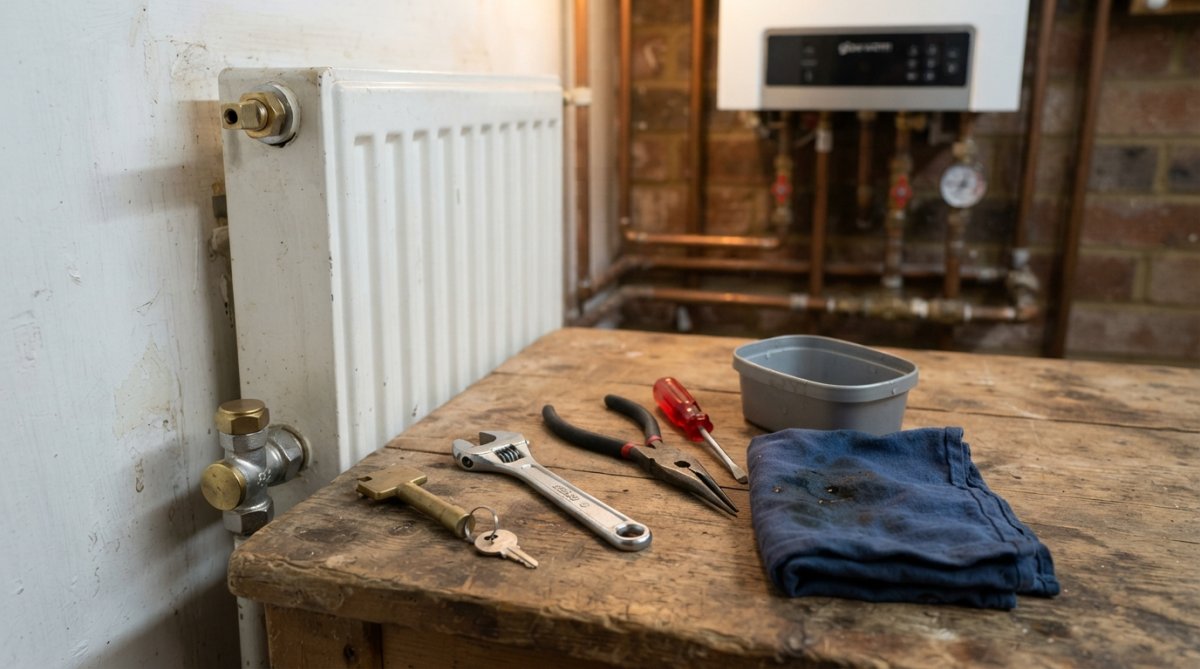
Beyond a radiator key, gather these items before starting:
- Towel or cloth: Essential for catching water drips and preventing stains
- Container or jug: A small jug catches water as it escapes from the bleed valve
- Flathead screwdriver: Some radiators use a small flathead slot instead of a square valve
- Pressure gauge: Check your boiler’s pressure before and after bleeding
- Filling loop: Located near your boiler, this is how you add water back to the system
The WENKO Radiator Bleeding Key with Water Reservoir (around £10-15) combines the key and collection container into one tool, eliminating the need for separate cloths and containers.
Step-by-Step Guide: The Best Way to Bleed Radiators Efficiently
Step 1: Turn off your central heating system
Before touching any radiator valves, switch off your boiler completely. Allow the system to cool for at least 30 minutes. This is critical for safety, hot water under pressure can cause severe burns if it escapes from the bleed valve.
Step 2: Locate the bleed valve on each radiator
The bleed valve is a small metal fitting, usually brass or chrome-plated, located at the top corner of each radiator. Most radiators have the bleed valve on one of the top corners, typically the opposite end from the lockshield valve and the thermostatic radiator valve (TRV). Look for a small square hole or a slotted opening.
Step 3: Prepare your workspace and safety precautions
Position your container or jug directly under the bleed valve before opening it. Place your towel nearby to catch any splashes. Wear old clothes or an apron, as radiator water may contain rust or sediment that stains fabric. Ensure good ventilation in the room and check that your radiator key fits the valve properly before applying pressure.
The best way to bleed radiators efficiently starts before you touch the valve: proper preparation prevents mistakes, reduces mess, and keeps everyone safe.
Step 4: Open the bleed valve and release trapped air
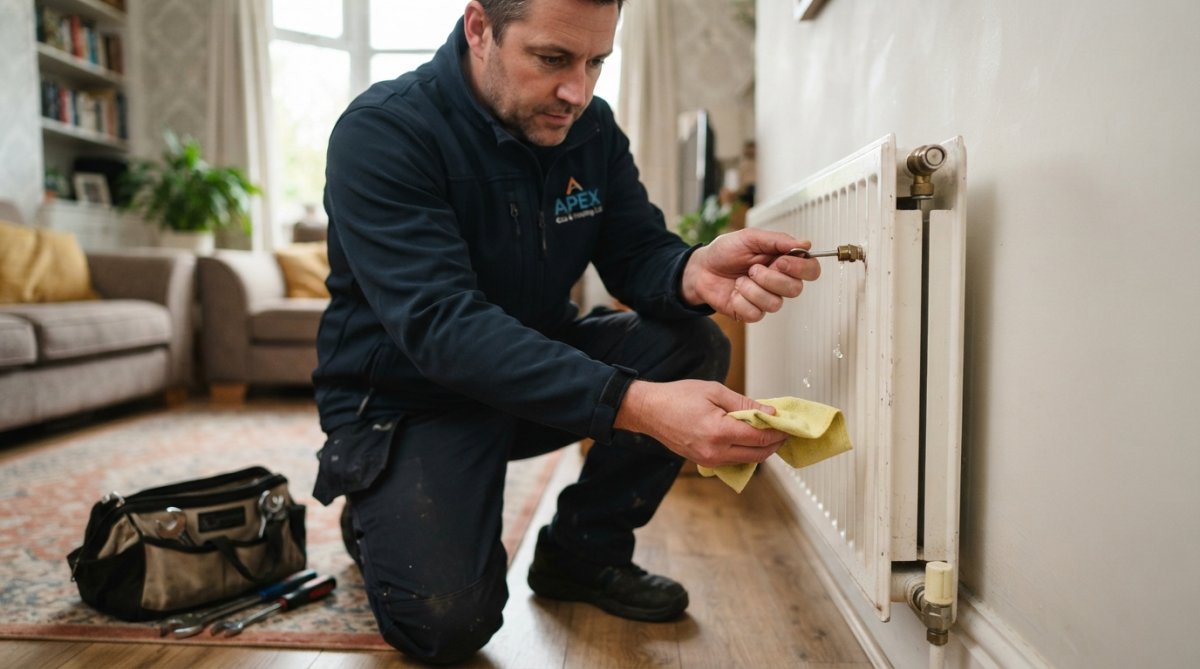
Insert your radiator key into the valve opening and turn it anti-clockwise (counter-clockwise) approximately one quarter turn. Do not force it, radiator valves are delicate and turn easily when properly loosened. You should hear a faint hissing sound as air escapes. Keep your container positioned to catch the water that follows. Once water flows steadily without any air bubbles or hissing, close the valve by turning the key clockwise approximately one quarter turn.
Step 5: Close the valve and repeat for remaining radiators
Once the first radiator is bled, move to the next one. Work systematically through your home, starting with radiators on the lowest floor and working upward. This approach ensures air is displaced from the entire system efficiently. Repeat the process for each radiator: position your container, turn the key anti-clockwise one quarter turn, wait for water to flow steadily, then close the valve.
After bleeding all radiators, check your boiler’s pressure gauge. The needle should have dropped slightly because you released pressurised water from the system. Most likely, you will need to repressurise the boiler to restore proper operation.
Radiator Balancing vs. Bleeding: Understanding the Difference
Radiator balancing and bleeding radiators efficiently are two separate but related maintenance tasks that homeowners often confuse. Bleeding removes air from radiators. Balancing adjusts the flow of water to each radiator so heat is distributed evenly throughout your home.
A radiator that remains cold even after bleeding may need balancing. If the top is warm but the bottom is cold, bleeding is the solution. If the entire radiator is cold while others nearby are hot, the lockshield valve is likely closed or partially restricted, requiring balancing rather than bleeding. Professional heating engineers use measuring tools and adjust lockshield valves to achieve consistent temperature differences.
How to Repressurise Your Boiler After Bleeding Radiators
Checking your pressure gauge and filling loop
After bleeding radiators, your boiler’s pressure will have dropped. Check the pressure gauge on your boiler, it should show a reading between 1 and 1.5 bar when the system is cold. If it has dropped below 1 bar, you must repressurise the system.
Locate your filling loop, a flexible hose with two isolation valves (one on each end) connected near your boiler. Before opening the filling loop, ensure both isolation valves are fully closed and the boiler is switched off and cool.
Restoring optimal boiler pressure
To repressurise your boiler, open both isolation valves on the filling loop slowly. You will hear water entering the system. Watch the pressure gauge, it should begin to rise. Stop when the gauge reaches 1.2-1.3 bar (approximately mid-range on most gauges). Do not overfill, as excessive pressure can damage components and cause leaks.
Once the pressure is correct, close both isolation valves on the filling loop by turning them clockwise. Check that both valves are fully closed, if left open, the filling loop can develop leaks. Switch the boiler back on and allow it to run for several minutes. The pressure may rise slightly as the system heats up, which is normal.
If the pressure drops again within a few days, you likely have a leak somewhere in the system. Contact Apex Gas & Heating Ltd’s 24/7 emergency service if you suspect a leak.
Never force the filling loop valves open or closed. They are delicate and can be damaged by excessive force. If a valve will not turn, stop and call a professional rather than risk breaking it.
Common Mistakes to Avoid When Bleeding Radiators
Opening the bleed valve too far is a frequent error. A quarter turn is sufficient, opening it further than necessary increases water spillage and makes it harder to close the valve cleanly. Excessive force can strip the valve mechanism, rendering it unusable.
Bleeding radiators while the system is still hot causes unnecessary risk. Hot water under pressure can cause severe burns. Always allow at least 30 minutes for the system to cool after turning off the boiler.
Forgetting to repressurise the boiler after bleeding is surprisingly common. Low pressure reduces heating efficiency and can eventually damage the boiler. Always check the pressure gauge and top up the system to 1.2-1.3 bar before resuming normal operation.
Attempting to bleed a radiator without a proper container leads to water damage. Always position a container to catch water before opening any valve. Bleeding only one or two radiators when the entire system has air problems provides temporary relief but does not solve the underlying issue.
| Common Mistake | Why It’s a Problem | How to Avoid It |
|---|---|---|
| Opening valve too far | Damages valve mechanism, excessive spillage | Turn key only one quarter turn |
| Bleeding hot system | Risk of severe burns | Cool system for 30 minutes minimum |
| Skipping repressurise | Reduces heating efficiency and damages boiler | Check pressure gauge and top up to 1.2-1.3 bar |
| No container ready | Water damage to carpets and walls | Position jug before opening valve |
| Bleeding only one radiator | Leaves air in other radiators | Bleed all affected radiators systematically |
Bleeding radiators is one of the most important heating maintenance tasks you can perform, yet many homeowners struggle with pressure issues or persistent cold spots even after attempting to bleed their system. If you’ve followed these steps and your radiators still have cold spots, or if your boiler pressure keeps dropping, the problem may require professional diagnosis. Apex Gas & Heating Ltd’s Gas Safe registered engineers can identify underlying issues like leaks in your filling loop, sludge buildup requiring system flushing, or faulty pressure relief valves. With our 24/7 emergency call-out service across Sussex and Surrey, we’re available whenever heating problems arise. Get a quote from Apex Gas & Heating Ltd and let our approved Glowworm and Worcester installers restore your heating system to peak efficiency.
Frequently Asked Questions
How often should you bleed radiators in the UK?
Most UK homeowners should bleed radiators once a year, typically at the start of the heating season in autumn. However, if you notice cold spots, hissing sounds, or uneven heating across your central heating system, bleed them immediately. Systems with recurring air problems may need bleeding more frequently, consult a Gas Safe engineer if this occurs.
What are the signs that a radiator needs bleeding?
Common signs include cold spots at the top of radiators, hissing or gurgling sounds from the bleed valve, reduced heating efficiency, and uneven warmth across your home. You may also notice your boiler pressure dropping or needing frequent top-ups. If your radiator feels cool despite the central heating running, air pockets are likely trapped inside and need releasing.
Can you bleed a radiator when the heating is on, and what safety precautions matter most?
No, always turn off your central heating and allow the system to cool for at least 30 minutes before bleeding. Hot water can cause scalding injuries. Wear protective gloves, place a towel beneath the bleed valve to catch water discharge, and use a jug to collect any spillage. Never force a stuck valve; contact a professional heating engineer instead to avoid damaging the radiator.
What happens if you don't bleed radiators, and how does it affect heating efficiency?
Trapped air in radiators creates cold spots and reduces heating efficiency, forcing your boiler to work harder and increasing energy bills. Over time, air pockets can cause system-wide problems including pressure fluctuations, corrosion, and damage to components like the expansion vessel. Regular bleeding maintains optimal performance and helps prevent costly repairs while keeping your home warm and comfortable.
Leave a Reply