








Table of Contents
- What Causes Cold Spots in Radiators
- Radiator Sludge Symptoms and How to Spot Them
- How Power Flushing Works to Restore Heat Distribution
- Signs Your Heating System Needs Power Flushing
- How Long Does a Power Flush Take
- DIY Radiator Bleeding vs Professional Power Flushing
- When Power Flushing Alone Won’t Fix the Problem
- Maintaining Your System After Power Flushing
Last Updated: August 29, 2026
What Causes Cold Spots in Radiators
Cold spots on radiators are a common heating complaint. A cold radiator means heat isn’t distributing evenly, leaving some areas warm whilst others remain noticeably cool to the touch.
The primary culprit is sludge buildup inside your radiator and heating pipework. Over time, corrosion products accumulate, primarily iron oxide particles and debris, settling at the bottom of radiators and blocking water flow. This is why cold spots almost always appear at the radiator bottom first.
Air trapped inside radiators also causes cold zones by blocking water circulation, typically after system drainage or improper bleeding. Stuck or failed thermostatic radiator valves can restrict flow to individual radiators, causing uneven heating. Scale buildup from hard water further reduces the effective diameter of heating circuits, slowing water circulation and creating poor heat distribution.
At Apex Gas & Heating Ltd, we diagnose these issues across properties in Sussex and Surrey. The good news is that many cold spot problems can be resolved, though the solution depends entirely on what’s causing them.
Radiator Sludge Symptoms and How to Spot Them
Sludge buildup manifests in several telltale ways. The most obvious sign is a cold radiator bottom, the lower section remains noticeably cooler than the top, even at full heating capacity. This happens because sludge settles at the lowest point and creates a blockage.
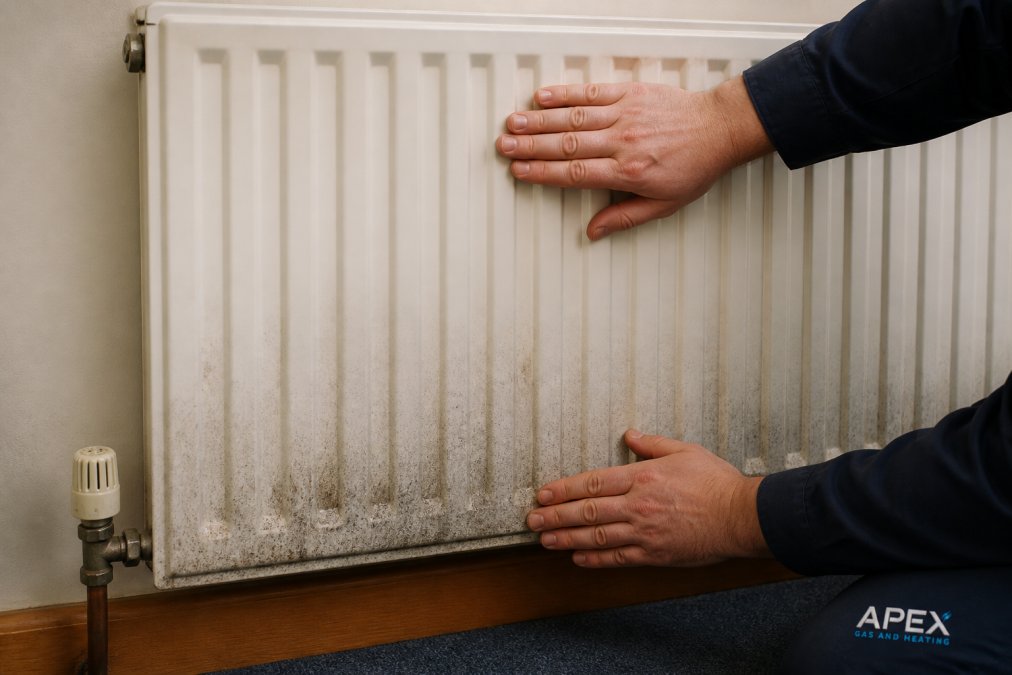
You might notice radiators taking longer to warm up, or some heating quickly whilst others lag behind. A significant temperature difference between top and bottom sections indicates sludge is the cause.
Visible discoloration at the radiator bottom and darker water when bleeding a radiator suggest iron oxide and debris circulating through your system. Kettling sounds, distinct rumbling or popping noises from your boiler or pipes, often indicate sludge restricting water flow and causing pressure fluctuations.
Rising heating bills without increased usage suggest sludge buildup. When your boiler works harder to push water through a clogged system, it consumes more fuel to maintain temperature.
How Power Flushing Works to Restore Heat Distribution
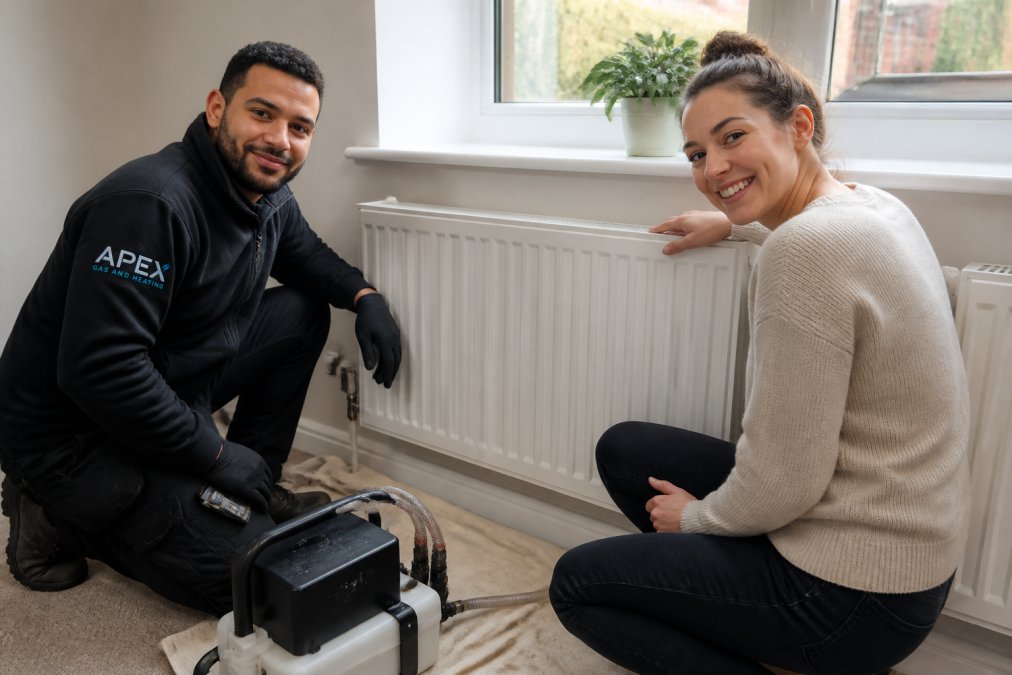
Power flushing is a professional method designed to remove accumulated sludge, debris, and corrosion products from your entire central heating system. Unlike manual radiator bleeding, power flushing uses high-pressure water to dislodge years of buildup settled inside radiators and pipework.
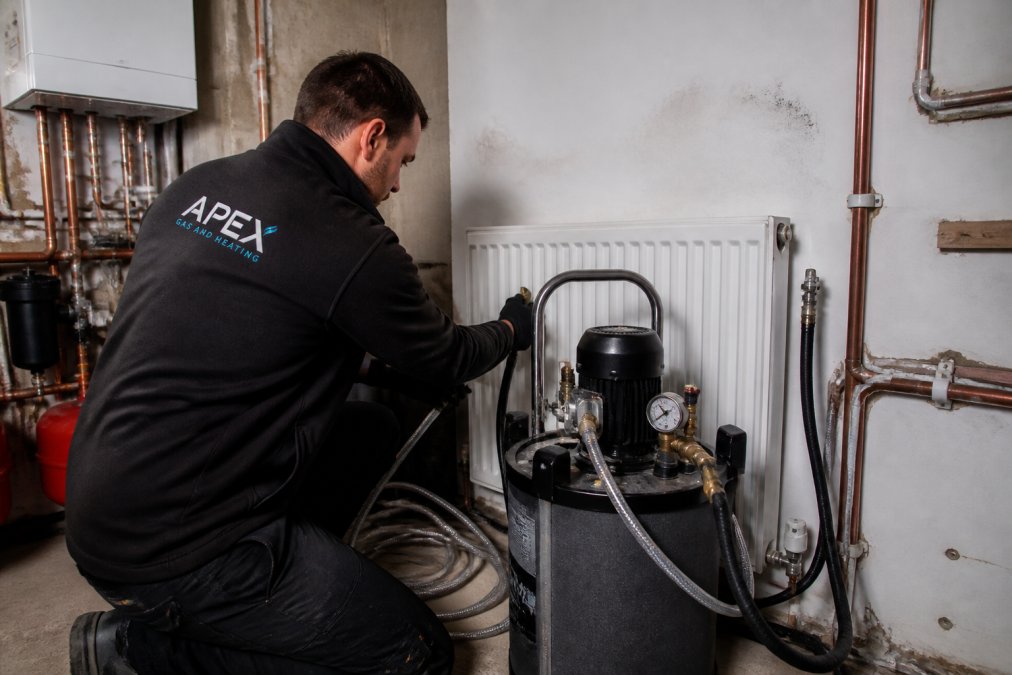
A powerful flushing machine connects to your heating circuit and pumps water at high pressure in the opposite direction to normal flow. This reversed, high-pressure water dislodges sludge from radiator interiors and pipes, breaking up blockages. As debris loosens, it’s carried through a filter unit that captures sludge before it re-enters your system.
Professional engineers typically run the power flush for several hours until water running through the filter becomes clear, indicating most sludge has been removed. Some use chemical flushing for stubborn buildup.
Once complete, a corrosion inhibitor is added to prevent new sludge formation by slowing the corrosion process that produces iron oxide particles. This coating extends the time between flushes significantly.
When cold spots are caused by sludge, power flushing typically resolves them completely. By removing blockages at the radiator bottom, water flows freely and heat distributes evenly. Most homeowners notice faster, more even warming within days.
Signs Your Heating System Needs Power Flushing
The most obvious sign is cold spots that don’t respond to bleeding or temperature adjustments. If your heating system is over 15 years old and has never been power flushed, it almost certainly needs one. Sludge accumulates gradually, and older systems become progressively more clogged.
Boiler kettling, that distinctive rumbling, popping, or gurgling sound, indicates sludge restricting water flow and causing pressure fluctuations. This noise damages your boiler over time and signals inefficient operation.
Rising heating bills without increased usage suggest your system is working harder than necessary. When sludge clogs pipework, your boiler must pump with greater force, consuming more fuel.
Uneven heating across your home, with some rooms staying cold whilst others overheat, can indicate sludge problems, though it might also suggest faulty thermostatic radiator valves or system imbalance. A professional heating engineer can diagnose the issue.
If you’ve recently had work done on your heating system, such as boiler installation or radiator replacement, power flushing beforehand ensures new equipment doesn’t get clogged with debris from the old system.
How Long Does a Power Flush Take
A typical power flush for a domestic property takes between 4 to 8 hours. Smaller systems with lighter sludge buildup might finish in 4 hours, whilst larger homes with multiple radiators and extensive pipework can take a full working day.
The engineer must isolate your heating system, connect the power flushing machine, run initial flush cycles, monitor water clarity, add corrosion inhibitor, and check that all radiators warm evenly before disconnecting equipment.
Systems requiring chemical flushing alongside power flushing take longer. Chemical flushing dissolves stubborn deposits over several hours and can extend total time to 10-12 hours across one or two visits.
A thorough job requires patience to ensure all sludge is removed and your system is genuinely restored. Any engineer promising completion in under 3 hours is likely cutting corners.
DIY Radiator Bleeding vs Professional Power Flushing
Radiator bleeding involves opening a small valve at the top of your radiator to release trapped air. This straightforward task takes minutes per radiator and costs nothing if done yourself. Bleeding works well when cold spots are caused by air in the system, perhaps after recent drainage or new radiator installation.
However, if radiators still have cold spots after bleeding, sludge is almost certainly the cause. Sludge sits at the radiator bottom where manual bleeding can’t reach it. You’d need a power flushing machine, expensive equipment that professional engineers own and operate safely.
Power flushing requires specialist knowledge. The engineer must safely disconnect your heating system, operate high-pressure equipment, monitor water quality, add correct corrosion inhibitor, and ensure proper re-pressurisation and bleeding.
Professional power flushing includes diagnosis. A heating engineer identifies whether cold spots stem from sludge, scale, trapped air, or faulty valves, then recommends the appropriate solution and checks your boiler and radiators before starting work.
For most homeowners, professional power flushing is the practical choice. The investment typically pays for itself within one or two heating seasons through improved efficiency and reduced fuel bills.
When Power Flushing Alone Won’t Fix the Problem
Whilst power flushing resolves many cold spot issues, some problems require additional work. Power flushing works when cold spots are caused by sludge, debris, or corrosion products blocking water flow. However, if cold spots stem from a different cause, flushing alone won’t help.
Faulty thermostatic radiator valves (TRVs) are a common culprit. If a TRV is stuck or has failed, it restricts flow regardless of system cleanliness. You’ll need the valve replaced. A heating engineer can test your TRVs during flushing and recommend replacements if necessary.
Scale buildup from hard water requires different treatment. Whilst power flushing removes loose sludge, stubborn limescale deposits need chemical treatment. Your engineer might recommend chemical flushing alongside or instead of power flushing.
System imbalance can cause cold radiators in larger homes. Water naturally takes the path of least resistance, flowing quickly through radiators near the boiler and slowly through distant ones. Balancing valves need adjustment to redirect flow appropriately. Power flushing won’t address this.
Boiler problems can masquerade as cold radiator issues. If your boiler isn’t heating water to the correct temperature, all radiators will feel lukewarm. Power flushing won’t fix a faulty boiler; you’ll need boiler servicing or repair.
If radiators still have cold spots after professional power flushing, the issue lies elsewhere. Further investigation by a qualified heating engineer becomes necessary to check TRVs, test boiler temperature, balance your system, or identify other causes.
Maintaining Your System After Power Flushing
Power flushing is an investment in your heating system’s health, but benefits only last with proper maintenance. The corrosion inhibitor added during flushing slows the corrosion process producing iron oxide sludge. However, its effectiveness diminishes over 2-3 years. Many engineers recommend annual inhibitor level checks and top-ups.
Annual boiler servicing is essential after power flushing. A qualified engineer will check efficiency, clean the burner, and ensure all components work correctly. During servicing, they can assess your heating system’s overall condition and spot early sludge signs.
Bleeding your radiators once or twice per heating season prevents air accumulation. Air pockets can trap sludge particles and reduce heating efficiency. A quick bleed takes minutes and costs nothing if done yourself.
Checking your system pressure monthly is another simple task. Your boiler should maintain pressure between 1.0 and 1.5 bar when cold. If pressure drops significantly, it suggests a leak. Low pressure allows air to enter the heating circuit, triggering corrosion and sludge formation. Top up pressure using the filling loop if it drops below 1.0 bar.
If cold spots return months or years after power flushing, don’t ignore them. Early intervention prevents sludge from building up to the point where another full power flush becomes necessary. A conversation with your heating engineer can determine whether you need inhibitor top-up, system balancing, or another service.
For homeowners in Sussex and Surrey, Apex Gas & Heating Ltd provides comprehensive boiler servicing and heating system maintenance to keep your system running efficiently after power flushing. Our team can advise on the best maintenance schedule for your specific system and catch potential problems before they affect your comfort.
Can power flushing fix cold spots on radiators? Yes, when cold spots are caused by sludge buildup, power flushing restores even heat distribution and improves system efficiency. However, proper diagnosis is essential. If cold spots persist after professional power flushing, the underlying cause is something else entirely, and continuing to pursue flushing wastes time and money. A qualified heating engineer can identify the real problem and recommend the appropriate solution. At Apex Gas & Heating Ltd, we diagnose heating issues correctly and deliver the right fix first time, saving you money and restoring your home’s warmth.
Frequently Asked Questions
Will power flushing completely fix cold spots on my radiators?
Power flushing can fix cold spots caused by sludge buildup and debris blocking water circulation. However, if cold spots result from thermostatic radiator valve failure, system pressure issues, or boiler problems, power flushing alone won't resolve them. A heating engineer can diagnose the root cause and recommend whether power flushing will solve your specific issue or if additional repairs are needed.
What are the main signs your heating system needs power flushing?
Watch for radiators that are cold at the bottom but warm at the top, uneven heating across different rooms, noisy pipework, discoloured water when bleeding radiators, and declining boiler performance. If your system is over 10 years old and hasn't been flushed, sludge accumulation is likely. These signs suggest debris is restricting water flow through your heating circuit.
How long does a power flush take to complete?
A professional power flush typically takes 4 to 8 hours, depending on system size and sludge severity. Larger properties with multiple radiators may take longer. The engineer will isolate your system, connect high-pressure water equipment, circulate cleaning solution through pipework and radiators, then flush with fresh water and add corrosion inhibitor before reconnecting your boiler.
Can I bleed my radiators myself instead of paying for power flushing?
Radiator bleeding removes trapped air and can temporarily improve heat distribution, but it won't clear sludge or iron oxide buildup inside your system. If cold spots persist after bleeding, or if your radiator bottom stays cold whilst the top warms up, sludge is the problem and only power flushing will restore full water circulation and system efficiency.