








Table of Contents
- What Is Included in Professional Boiler Servicing
- Why Professional Boiler Servicing Matters for Safety and Efficiency
- How Long Does a Boiler Service Take
- Annual Boiler Service Checklist: What Engineers Inspect
- Gas Safe Registered Engineer Requirements
- What Happens After Your Boiler Service
- Preparing Your Home Before the Engineer Arrives
- Frequently Asked Questions
Last Updated: September 1, 2026
What Is Included in Professional Boiler Servicing
Professional boiler servicing is a comprehensive inspection and maintenance procedure carried out by a Gas Safe registered engineer to ensure your heating system operates safely, efficiently, and reliably. A thorough service involves far more than a quick visual check. It includes internal component inspection, combustion analysis, safety device testing, and detailed pressure checks that catch problems before they become dangerous or expensive.
The service typically takes between 60 and 90 minutes, depending on your boiler model and its condition. During this time, the engineer will methodically work through a detailed checklist, examining everything from the burner and heat exchanger to the flue system and safety controls. Each step serves a specific purpose: to verify that your boiler is burning gas efficiently, that no carbon monoxide is escaping into your home, and that all safety devices will activate if something goes wrong.
Book your annual service before the heating season starts (September or October). Engineers are less busy then, and you’ll avoid the winter rush when emergency call-outs are common.
Why Professional Boiler Servicing Matters for Safety and Efficiency
Your boiler burns gas to create heat, producing combustion byproducts including carbon monoxide, a colourless, odourless gas that’s lethal in high concentrations. An unserviced boiler can develop leaks, cracks, or blockages that allow carbon monoxide to escape into your home instead of up the flue. Regular servicing is your primary defence against this silent killer.
An unserviced boiler also becomes less efficient. Dust and debris accumulate inside the heat exchanger, the burner nozzle clogs, and gas pressure drifts out of specification. Each issue forces your boiler to work harder, increasing energy bills and shortening its lifespan. A well-maintained boiler can last 15 years or more; a neglected one might fail within 10.
Most boiler manufacturers require annual servicing as a warranty condition. For landlords, the Gas Safety (Installation and Use) Regulations 1998 require that every gas appliance in a rental property is serviced annually and a Gas Safety Certificate (CP12) is issued and kept on file. Failure to do so is a criminal offence.
Never attempt to service a boiler yourself. Gas work must be carried out by a Gas Safe registered engineer. Tampering with gas appliances can invalidate your insurance and create serious safety hazards.
How Long Does a Boiler Service Take
A typical boiler service takes between 60 and 90 minutes. The exact duration depends on the age and model of your boiler, how well it’s been maintained, whether any faults are discovered, and how accessible the boiler is in your home.
A straightforward service on a modern, well-maintained boiler might take closer to 60 minutes. If the engineer discovers a minor issue, a worn seal, misaligned burner, or small corrosion, they may spend additional time investigating or explaining findings. Older boilers often take longer because components wear over time and the risk of finding problems increases with age.
Set aside at least two hours for the appointment to give the engineer time to work without rushing and allow space for questions about findings.
Book your service early in the day or mid-week when engineers have more flexibility. You’ll be less likely to face delays, and the engineer can give your boiler the attention it deserves.
Annual Boiler Service Checklist: What Engineers Inspect
When a Gas Safe engineer arrives to service your boiler, they follow a systematic checklist covering all critical safety and performance checks. Here’s what happens during a professional boiler servicing appointment.
Visual Inspection of the Boiler and Casing
The engineer begins by examining the external casing and surroundings, checking for signs of damage, corrosion, leaks, or loose fittings. They verify that the boiler is mounted securely with adequate clearance for safe operation and future maintenance. They also inspect the flue pipe to ensure it’s properly connected, undamaged, and not blocked.
Corrosion on the casing might indicate internal rust or moisture issues. Loose connections could lead to gas leaks. A damaged flue could allow combustion gases to escape into the room instead of venting safely outside. The engineer will also verify that all safety labels and manufacturer instructions are visible and legible.
Internal Components and Heat Exchanger
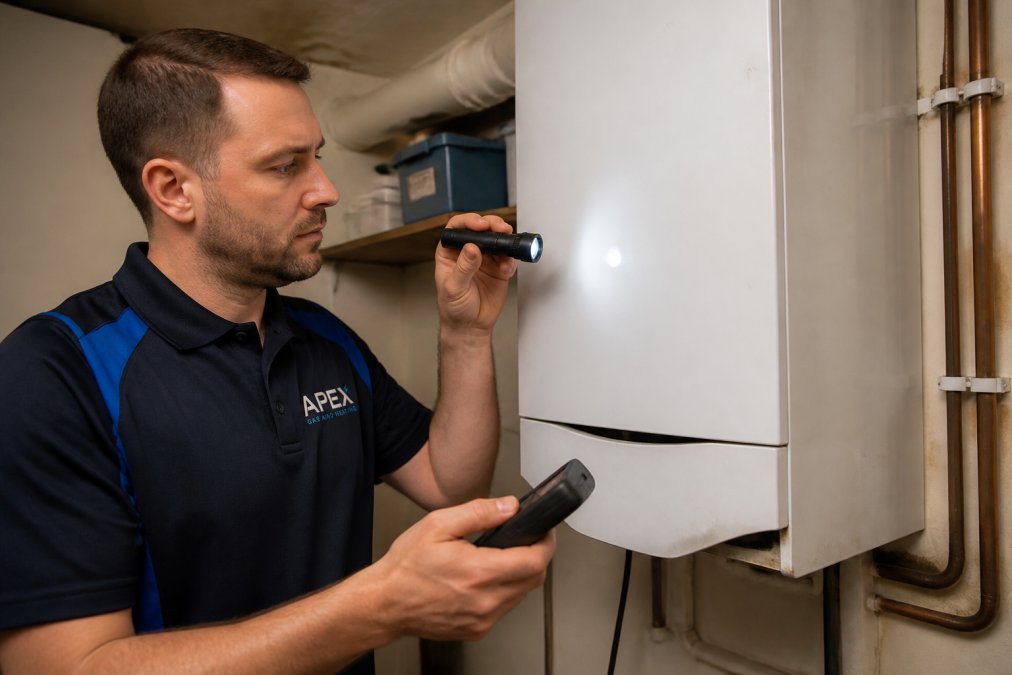
The engineer opens the boiler casing to inspect internal components. They examine the heat exchanger, where gas is burned and heat is transferred to your water. Over time, the heat exchanger can develop scale deposits or corrosion, reducing efficiency and potentially causing failure.
They inspect the burner, which ignites the gas and maintains a steady flame, checking that it’s clean, properly aligned, and free from debris. A dirty or misaligned burner causes incomplete combustion, leading to inefficiency and potentially dangerous emissions. Seals and gaskets throughout the boiler are examined for wear or deterioration, as these prevent gas and water from leaking where they shouldn’t. The engineer also checks the expansion vessel, which helps manage pressure changes in the central heating system.
Gas Pressure, Flow Rate, and Combustion Analysis
The engineer uses specialised equipment to measure gas pressure and flow rate, which must be within the manufacturer’s specifications for safe and efficient operation. If pressure is too low, the boiler won’t produce enough heat. If too high, it can damage components or cause unsafe combustion.
The combustion analysis is performed using a flue gas analyser, which measures the composition of gases leaving the boiler. This reveals whether the boiler is burning gas completely and efficiently. The engineer checks for carbon monoxide levels, oxygen content, and flue gas temperature. If combustion isn’t complete, it indicates a problem requiring correction. These measurements are recorded and compared against the boiler’s specifications.
Safety Devices and Carbon Monoxide Testing
Every boiler has safety devices designed to shut down the appliance if something goes wrong. The main safety device is the flame supervision device, which cuts off gas supply if the flame goes out. During servicing, the engineer tests this device to ensure it responds correctly.
The engineer also tests the boiler’s overheat thermostat and any other safety controls specific to your model. Carbon monoxide testing is performed at the flue outlet (to ensure the boiler isn’t producing excessive CO) and in the room where the boiler is located (to verify that no CO is leaking into your home). This is a critical safety check.
Gas Safe Registered Engineer Requirements
All gas work in the UK must be carried out by an engineer registered with Gas Safe Register. This is a legal requirement. Gas Safe registration means the engineer has demonstrated competence in gas safety, holds appropriate qualifications, and is subject to regular audits and inspections.
Book a boiler repair or service →
When you book a service with Apex Gas & Heating Ltd, you can verify that our engineers are Gas Safe registered. We’re also approved installers for leading boiler brands including Glowworm and Worcester, meaning our engineers have received manufacturer-specific training and are authorised to service and repair those appliances.
The Gas Safe Register maintains a public search tool where you can check any engineer’s registration status, qualifications, and enforcement history. Always verify this before allowing anyone to work on your boiler.
Before booking a service, ask for the engineer’s Gas Safe registration number and check it on the Gas Safe Register website. A legitimate engineer will provide this information immediately without hesitation.
What Happens After Your Boiler Service
Once the service is complete, the engineer will provide you with a detailed service report recording everything that was checked, tested, and measured. It includes combustion analysis results, pressure readings, safety device tests, and any faults or issues identified.
If your boiler has passed all checks, the report will state this clearly. If any faults have been found, the report will explain what they are, how serious they are, and what action is needed. For landlords, the engineer will issue a Gas Safety Certificate (CP12) if all safety checks have passed. This certificate is your proof of compliance with the Gas Safety Regulations and must be kept on file for at least two years.
The service report should also include recommendations for any maintenance work that would benefit your boiler, such as replacing worn seals or flushing the central heating system. Keep your service report and certificate in a safe place for warranty claims, home sales, or compliance proof.
Preparing Your Home Before the Engineer Arrives
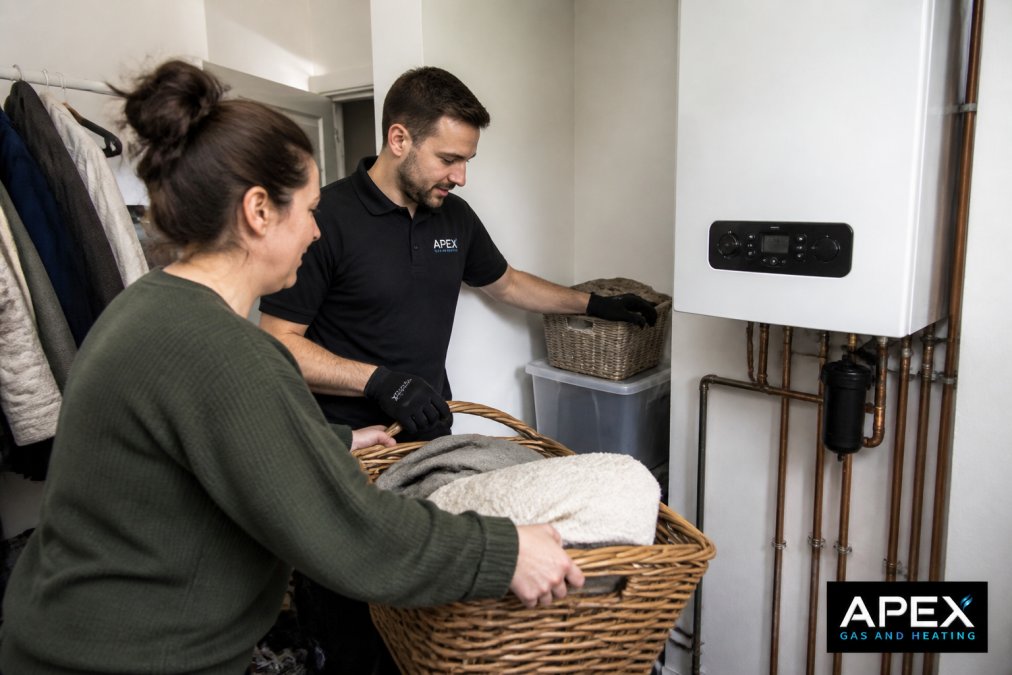
Ensure the engineer has clear access to your boiler. If it’s in a cupboard, remove any items stored in front of it. Clear the surrounding area of clutter so the engineer has space to open the casing, use tools, and move around safely.
Check that the area is well-lit. Make sure the central heating system is turned on and has been running for at least 20 minutes before the engineer arrives, allowing the boiler to reach normal operating temperature for accurate testing.
If you’ve noticed any issues with your boiler recently, unusual noises, pilot light problems, or inconsistent heating, make a note and mention them to the engineer. Ensure someone is home during the appointment, as the engineer may need to ask questions and explain their findings.
Have your boiler’s model number and serial number to hand if possible, as these help the engineer verify they’re servicing the correct appliance and following the right procedures.
Professional boiler servicing is an investment in your home’s safety, comfort, and efficiency. A well-maintained boiler runs more reliably, uses less energy, and lasts longer. At Apex Gas & Heating Ltd, our Gas Safe registered engineers carry out thorough, systematic services that catch problems early and keep your heating system operating at its best. We’re approved installers for Glowworm and Worcester boilers and provide transparent, detailed service reports so you understand exactly what’s been done and what comes next. If your boiler is due for its annual service, get a quote from us today and enjoy the peace of mind that comes with knowing your heating system is in safe, expert hands.
Frequently Asked Questions
What does a full boiler service include?
A full professional boiler service includes visual inspection of the boiler casing and internal components, combustion analysis to check flue gas quality, gas pressure and flow rate testing, safety device testing, heat exchanger examination, and checks on seals, gaskets, and the condensate trap. The engineer will also test for carbon monoxide leaks and verify that all heating controls function correctly. A service report detailing findings and any recommendations is provided at the end.
How long does a boiler service take?
A standard boiler service typically takes 60 to 90 minutes, depending on the boiler model, its age, and any issues the engineer discovers. Older boilers or those requiring additional cleaning may take longer. The engineer will discuss timing when booking and explain any delays if components need closer attention or if fault finding is required.
Should a boiler be serviced every 12 months?
Yes, annual boiler servicing is recommended for all domestic boilers to maintain efficiency, safety, and warranty compliance. For landlords, an annual gas safety inspection (CP12 certificate) is a legal requirement under the Gas Safety (Installation and Use) Regulations 1998. Regular servicing helps prevent breakdowns, extends boiler life, and ensures carbon monoxide safety devices function properly.
What happens if a Gas Safe engineer finds a fault during a service?
If a fault is discovered, the engineer will document it in the service report and explain the issue and recommended repair. Minor faults may be fixed during the service; serious safety concerns will result in the boiler being isolated until repairs are completed. You’ll receive a clear explanation of options and costs. For landlords, certain faults must be remedied before the property can legally remain occupied.
Do radiators get checked during a boiler service?
Radiators are not routinely inspected during a standard boiler service. However, the engineer will check the central heating system pressure, expansion vessel, and circulation to ensure the heating system functions correctly. If you have concerns about specific radiators, discuss this with the engineer, as additional checks or plumbing work may be available.
Why is an annual boiler service a legal requirement for landlords?
Landlords must arrange an annual gas safety inspection to comply with the Gas Safety (Installation and Use) Regulations 1998. This legal requirement protects tenants from gas leaks, carbon monoxide poisoning, and unsafe appliances. Failure to provide a valid CP12 certificate can result in fines, prosecution, and loss of rental income if the property cannot be let. A Gas Safe registered engineer must perform the inspection.
How do I know the engineer is actually Gas Safe registered?
Ask the engineer for their Gas Safe ID card before work begins. You can verify their registration by visiting the Gas Safe Register website and searching their registration number. Reputable companies like Apex Gas & Heating Ltd employ only Gas Safe registered engineers and will provide proof of registration. Never allow unlicensed individuals to work on gas appliances.