Table of Contents
- How to Check If Your Boiler Is Leaking: A Step-by-Step Guide
- Common Causes of Low Boiler Pressure and Leaks
- Signs of Carbon Monoxide Leak from Boiler: What to Watch For
- Emergency Boiler Repair Services: When to Call a Heating Engineer
- Temporary Mitigation Techniques and Insurance Implications
- Visual Identification Guide by Boiler Type
- Frequently Asked Questions
Last Updated: September 15, 2026
How to Check If Your Boiler Is Leaking: A Step-by-Step Guide
Knowing how to check if your boiler is leaking is one of the most valuable maintenance skills a homeowner can have. A leaking boiler wastes water, corrodes internal components, and in the worst cases points to a gas or carbon monoxide problem. At Apex Gas & Heating Ltd, we attend boiler leaks across Sussex, and homeowners who catch the leak early can potentially save on repairs.
This guide walks you through a full visual inspection in under fifteen minutes and tells you when to call a heating engineer.
What You’ll Need Before You Start
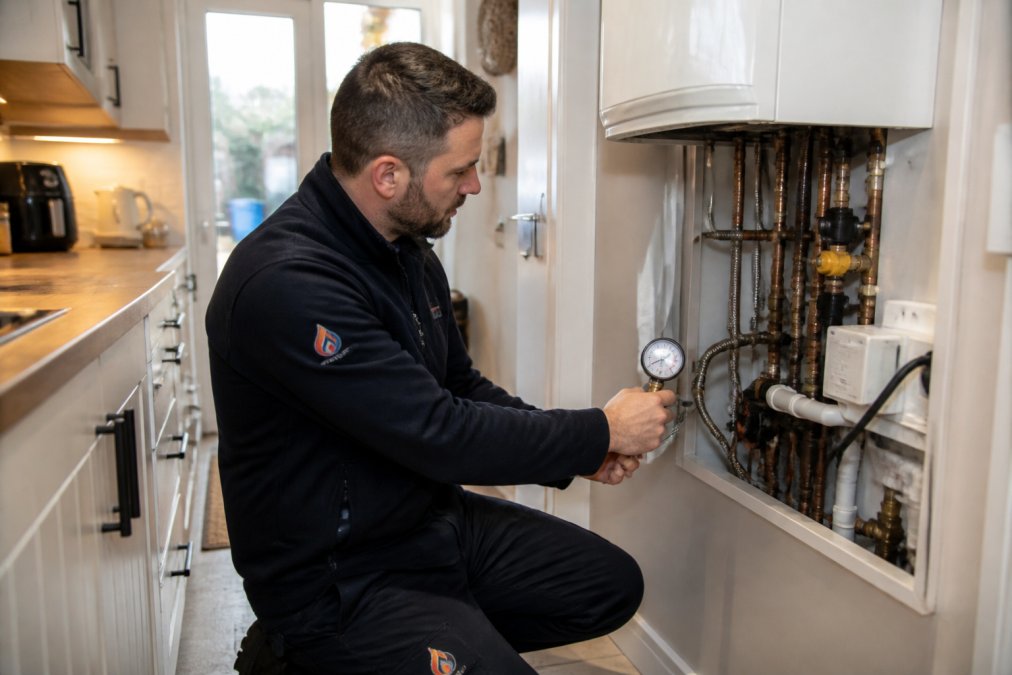
You need three things: a torch, a dry cloth or paper towel, and your boiler’s pressure gauge reading. No tools and no opening the boiler casing.
Safety comes first. The Gas Safe Register guidance for homeowners is clear that any work inside the boiler casing is legally restricted to a registered engineer. Your job is inspection only: look, touch, and note. If you smell gas at any point, stop, open windows, and call the National Gas Emergency Service on 0800 111 999 from outside the property.
Step 1: Visual Inspection of the Boiler Casing and Surrounding Area
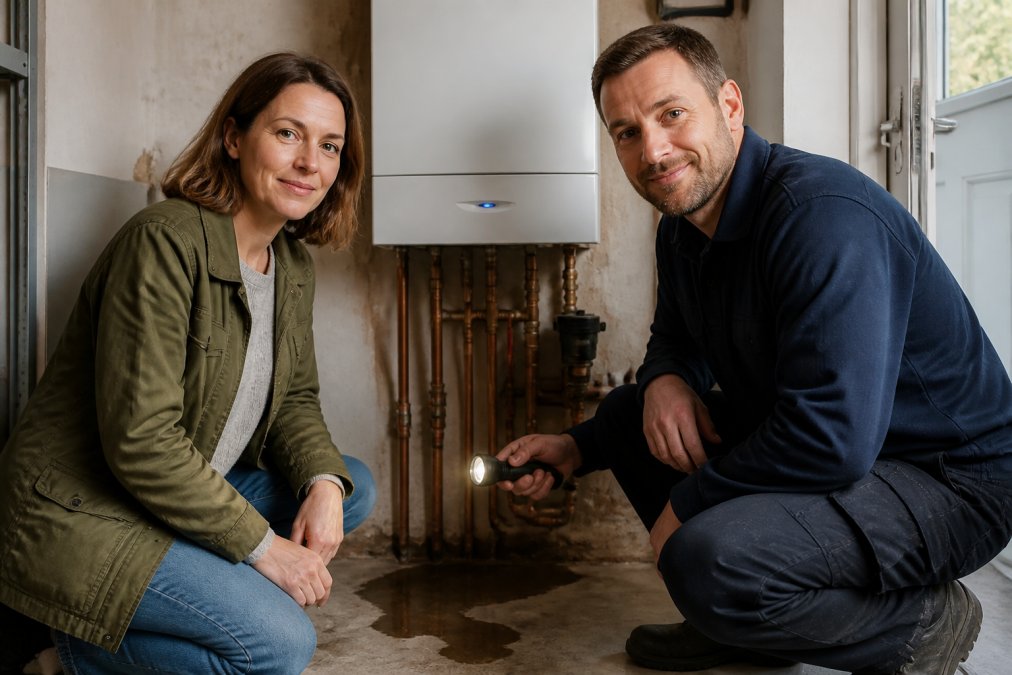
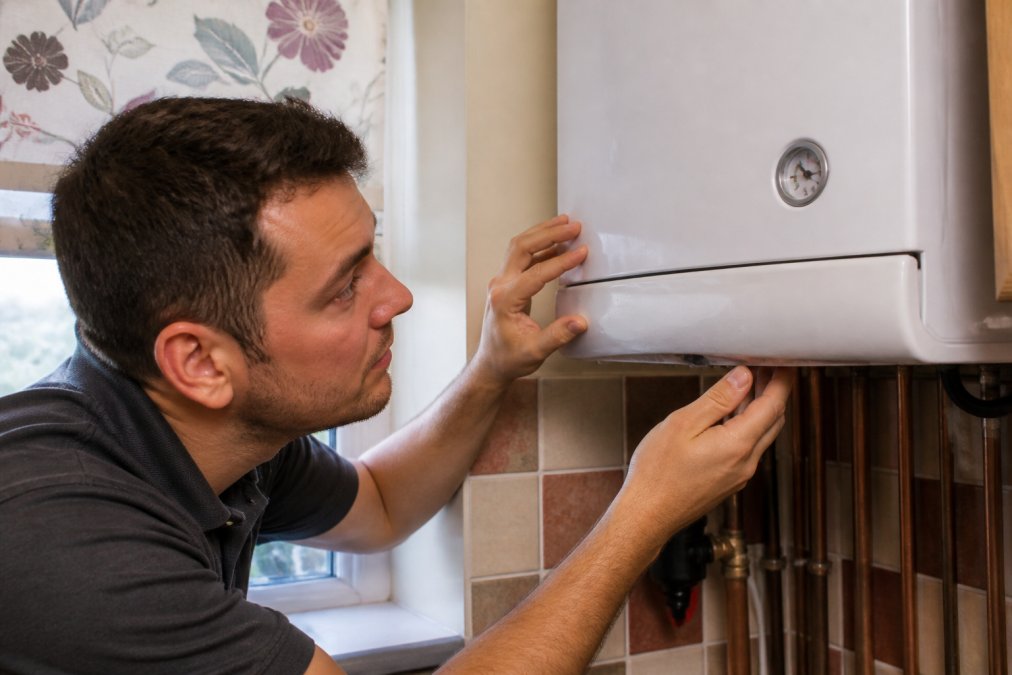
Start by looking at the boiler casing and the wall, floor, and cupboard around it. Water droplets, rust streaks, or a small puddle beneath the unit are the clearest early indicators of a leak.
Work methodically:
- Shine your torch along the bottom edge of the boiler, where water collects first
- Check the wall directly below and to the sides for damp patches or bubbling paint
- Look at the floor or shelf under the boiler for a puddle or water staining
- Smell the area. A musty smell suggests long-term moisture behind the casing
A dry water stain may be old; active droplets or a fresh puddle mean the leak is current. Note the location before you move on.
Step 2: Check the Pressure Gauge and System Pressure
The pressure gauge is your fastest diagnostic tool. On most sealed systems, the needle should sit between 1 and 1.5 bar when cold. If it drops below 1 bar and keeps falling after a top-up, water is escaping somewhere in the system.
A pressure drop with no visible water inside the house usually points to a leak in the pipework under floors or in the boiler itself. Top up using the filling loop, then check again 24 hours later; a repeated drop is your answer.
Step 3: Look for Damp Patches, Water Droplets and Corrosion
Corrosion is the slow-burn version of a leak and causes more damage than a sudden drip. Look for white or greenish crusting around pipe connections, rust on the casing, and damp patches on ceilings below upstairs boilers.
Pay attention to:
- White limescale deposits around joints, which indicate a slow, long-standing weep
- Rust-coloured staining on the casing or pipework
- Damp patches on walls or ceilings that feel cold to the touch
- Any gurgling sounds from the boiler, which can indicate air drawn in through a leak
Moisture left unchecked corrodes the heat exchanger, and replacement often costs more than a new boiler, so catching corrosion early protects your system.
Step 4: Inspect Pipe Connections, the Pressure Relief Valve and Condensate Pipe
Three components cause most boiler leaks: pipe connections, the pressure relief valve, and the condensate pipe.
Book a boiler repair or service →
- Pipe connections: Run your fingers (with the cloth) along visible joints. A damp cloth after touching a joint means a weep.
- Pressure relief valve: This valve discharges water through a copper pipe that exits the property, usually to an outside wall. If that pipe drips constantly, the valve is passing and needs replacing.
- Condensate pipe: Modern condensing boilers drain acidic water through a plastic pipe. In winter it freezes and backs up, causing water to appear inside the boiler. A frozen condensate pipe is the most common “leak” we see in a cold snap, and rarely a real leak at all.
Before you panic about water under the boiler, check the outside wall for the pressure relief discharge pipe. If that pipe is wet or dripping, the fault is the valve, not a burst pipe, and the repair is straightforward.
Common Causes of Low Boiler Pressure and Leaks
Low boiler pressure almost always means one of four things: a leak, a faulty pressure relief valve, trapped air, or a failed expansion vessel.
The most common causes we find on call-outs are:
- Corroded pipe connections weeping slowly over months
- A pressure relief valve that has scaled up and no longer seals
- A failed expansion vessel, which lets pressure swing wildly
- A pinhole leak in hidden pipework under floors
If you keep topping up the pressure and it keeps dropping, stop. Repeated topping introduces fresh oxygen and accelerates corrosion, so a professional assessment saves you money.
Signs of Carbon Monoxide Leak from Boiler: What to Watch For
A carbon monoxide leak is a different emergency from a water leak, and far more dangerous. Carbon monoxide is invisible and odourless, so you rely on physical clues and an alarm.
Watch for these warning signs:
- Soot marks or scorch marks around the boiler casing
- A yellow or orange lazy flame instead of a crisp blue one
- A musty or metallic smell near the boiler
- Increased condensation on windows in the room
- Headaches, dizziness, or nausea that ease when you leave the property
If you suspect carbon monoxide, do not touch the boiler. Open windows and doors, leave the property, and call the gas emergency line. A NHS guide to carbon monoxide poisoning advises seeking urgent medical help if anyone in the household feels unwell. Every home with a gas boiler should have a working CO alarm, tested monthly.
Emergency Boiler Repair Services: When to Call a Heating Engineer
Most guides stop at “call a professional”, leaving you next to a dripping boiler with no idea what to do while you wait. The practical gap is stop-gap action: what you can safely do to limit damage, and what you must never touch.
Immediate stop-gap actions while you wait
If water is actively escaping, your first job is to reduce the flow without putting yourself at risk.
- Isolate the water supply to the boiler. On most sealed systems there is a valve on the filling loop or the cold feed. Turn it clockwise until it stops, or isolate the mains stopcock instead. This slows the leak but does not drain the system.
- Switch the boiler off at the control panel, not the fuse spur. If water is anywhere near electrics, do not touch the boiler at all.
When it is a genuine emergency
What to have ready when you call
Never attempt to open the boiler casing or tighten gas-side connections yourself. Beyond the safety risk, unauthorised work can invalidate your boiler warranty and your home insurance cover.
Documenting the leak for insurance and warranty
Temporary Mitigation Techniques and Insurance Implications
| Situation | Immediate Action | Who to Call | Typical Urgency |
|---|---|---|---|
| Water pouring from boiler | Switch off, isolate supply | Emergency engineer | Same day |
| Gas smell or CO signs | Leave property, open windows | National Gas Emergency | Immediate |
| Pressure drops repeatedly | Note readings, stop topping up | Heating engineer | Within days |
| Slow weep at a joint | Towel and bucket | Heating engineer | Routine booking |
| Frozen condensate pipe | Thaw with warm water | Heating engineer | Same day in winter |
Visual Identification Guide by Boiler Type
Combi boilers
System boilers
Conventional boilers
Back boilers
Using fault codes to speed diagnosis
Take a photo of the fault code and the leak area before the engineer arrives. It helps with diagnosis and is useful for any insurance claim.
Frequently Asked Questions
Can I still use my boiler if it’s leaking?
No. Turn the boiler off at the isolator switch and close the gas supply if you smell gas. A leaking boiler is a safety hazard because water near electrical components can cause shocks, and reduced system pressure may damage the heat exchanger. If you suspect a carbon monoxide leak, open windows, leave the property and call the National Gas Emergency Service on 0800 111 999. Contact a Gas Safe registered engineer for emergency boiler repair services before using the boiler again.
How do I check my boiler for leaks safely?
Carry out a visual inspection only. Look for water droplets, damp patches, corrosion or a puddle under the boiler casing. Check the pressure gauge: if system pressure has dropped below 1 bar, note it but do not attempt repairs. Do not remove the boiler casing or touch pipe connections. If you see soot marks, scorch marks or smell a musty odour, isolate the supply and call a heating engineer immediately.
What are the signs of a carbon monoxide leak from a boiler?
Watch for yellow or orange flames instead of blue, soot marks or scorch marks around the boiler casing, a musty or burning smell, and gurgling sounds from the condensate pipe. Physical symptoms include headaches, dizziness, nausea and breathlessness that ease when you leave the property. If you notice any of these signs of carbon monoxide leak from boiler, open windows, turn off the appliance, evacuate and call the National Gas Emergency Service on 0800 111 999.
Can a leaking boiler cause low pressure?
Yes. Common causes of low boiler pressure include leaks from the pressure relief valve, pump seals, heat exchanger or pipe connections. When water escapes, system pressure drops, often below 1 bar. You may need to top up via the filling loop, but if pressure keeps falling, a heating engineer must find and fix the leak. Repeated topping up without repair can introduce air and cause corrosion in the central heating system.