







Table of Contents
- Why a Seasonal HVAC Tune-Up Matters for Your Home
- Annual Boiler Service Requirements You Need to Know
- Pre-Winter Heating System Checks
- How to Bleed Radiators Effectively
- Signs of a Faulty Heating System to Watch For
- Spring and Summer Maintenance to Prevent Autumn Problems
- When to Call a Professional for Your Seasonal HVAC Tune-Up
- Frequently Asked Questions
Last Updated: October 2, 2026
Why a Seasonal HVAC Tune-Up Matters for Your Home
A seasonal HVAC tune-up checklist for homeowners is your best defence against costly breakdowns and inefficient heating when temperatures drop. Regular maintenance keeps your boiler running safely and efficiently throughout the year, reducing energy bills and extending the life of your system. At Apex Gas & Heating Ltd, we’ve helped countless homeowners across Sussex and Surrey avoid mid-winter emergencies by catching small problems before they become expensive repairs.
Most homeowners neglect their heating systems until something goes wrong. By then, you’re facing emergency call-out fees and the discomfort of a cold home. A simple seasonal check identifies issues like leaks, worn components, and poor thermostat settings that waste energy and money. The difference between a well-maintained boiler and a neglected one can be significant in terms of unnecessary heating costs each year.
Schedule your seasonal HVAC tune-up in September or October, before the heating season peaks. This timing means you avoid the rush and any delays if repairs are needed.
Annual Boiler Service Requirements You Need to Know
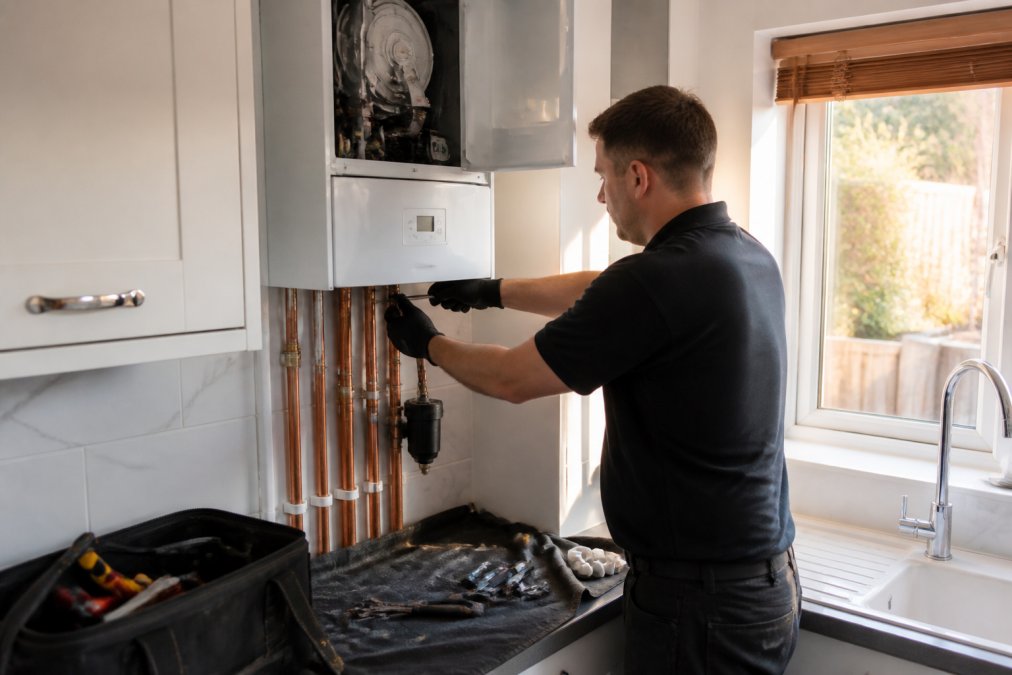
Your boiler must be serviced at least once every 12 months by a qualified engineer. This is a legal requirement for safety and a condition of most boiler warranties. An annual boiler servicing check ensures your system meets current safety standards and performs at peak efficiency.
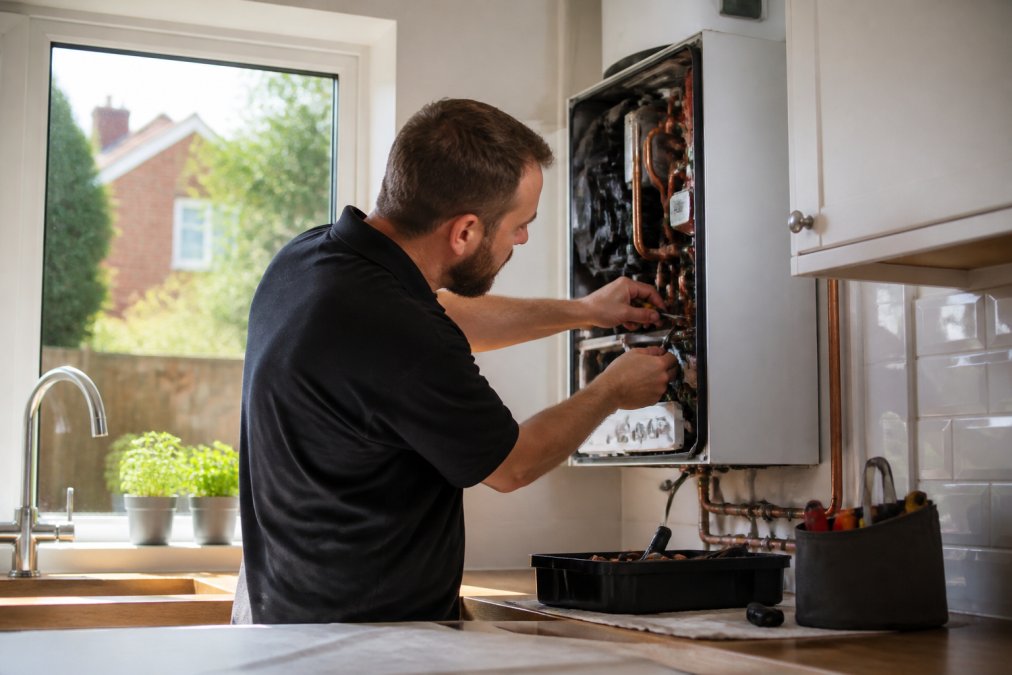
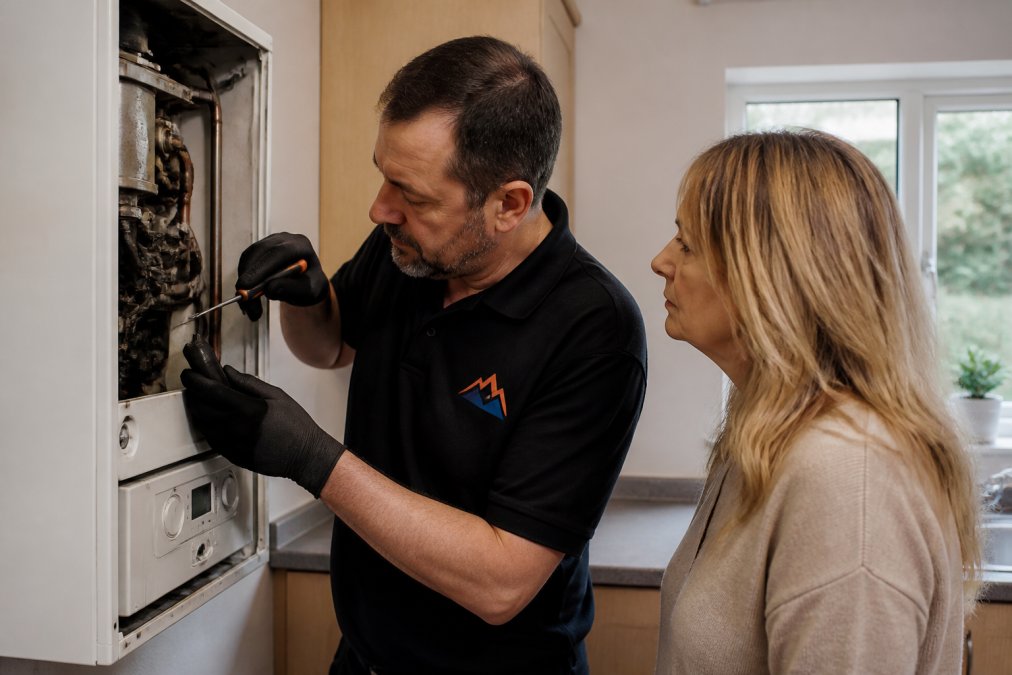
During a professional service, an engineer inspects the combustion process, checks for gas leaks, tests safety controls, and cleans internal components. They’ll verify that carbon monoxide levels are safe and that all electrical connections are secure. This comprehensive inspection is something you cannot replicate with a DIY checklist alone.
Many homeowners assume their boiler is fine because it’s heating the house. That’s a dangerous assumption. A boiler can appear to work while developing internal faults that pose serious safety risks. Regular servicing catches these hidden problems before they become dangerous.
Health and Safety Executive guidance on gas appliance safety
Skipping an annual service voids your boiler warranty and leaves you unprotected if a fault develops. More importantly, an unserviced boiler can develop carbon monoxide leaks that are silent and deadly.
Pre-Winter Heating System Checks
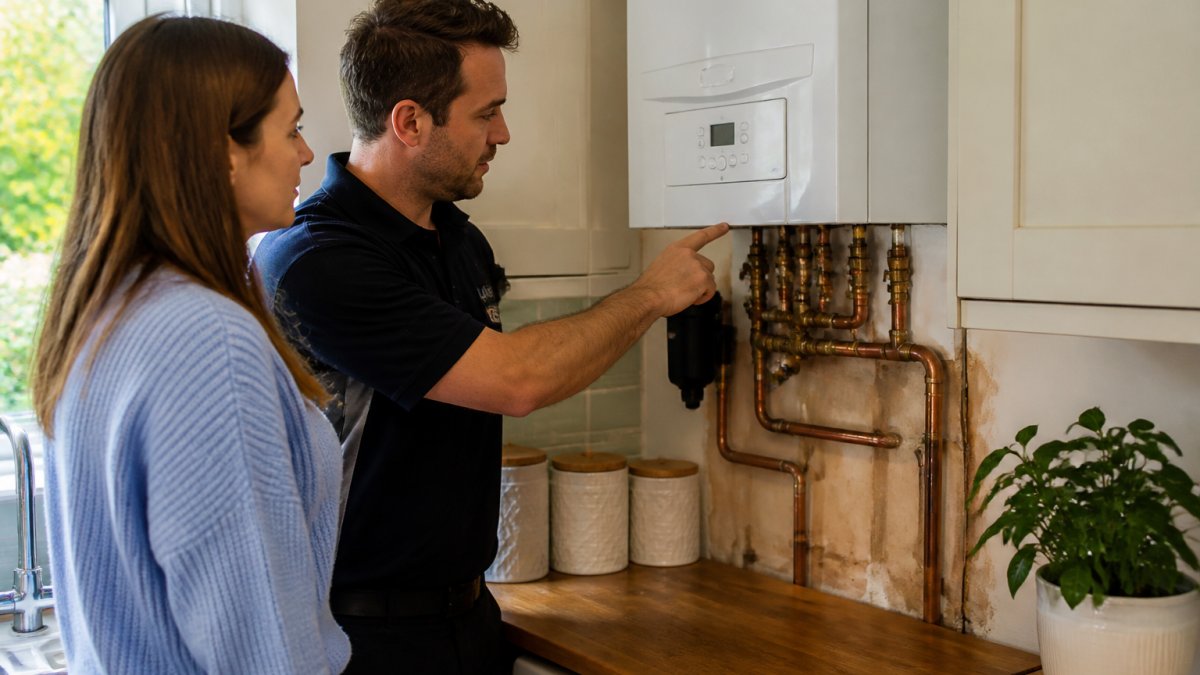
Before winter arrives, walk through your home and inspect your heating system visually. Look for obvious signs of damage, leaks, or rust around your boiler and pipework.
Listen to your boiler when it fires up. A healthy boiler makes a quiet hum and a soft ignition sound.
Test your heating by turning up the thermostat and checking that radiators warm up evenly throughout the house.
Visual Inspection of Your Boiler and Pipework
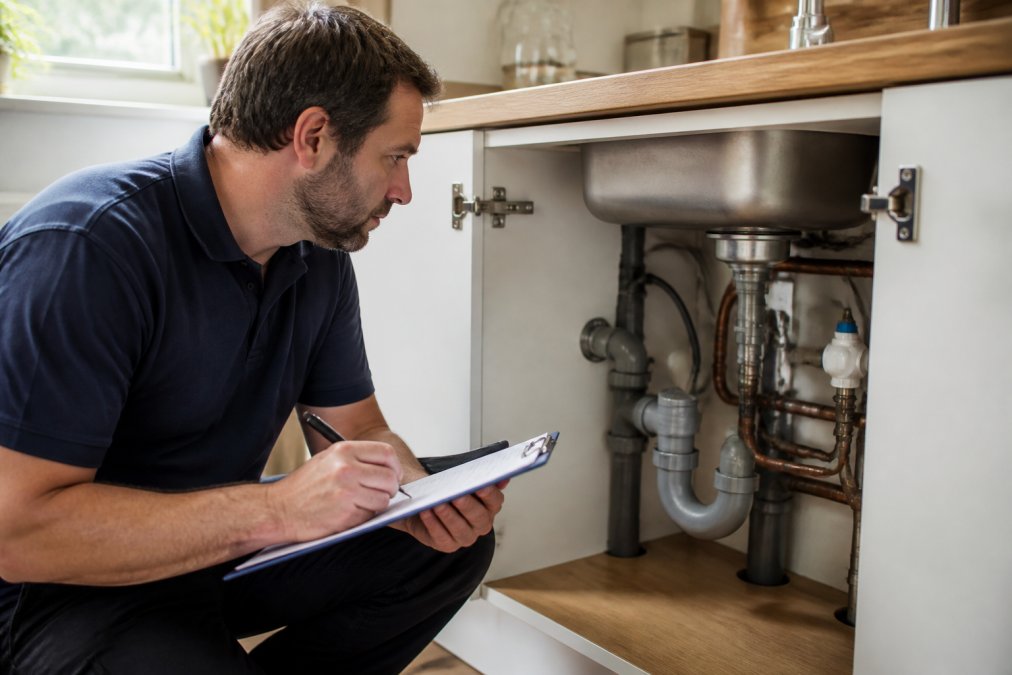
Start with a careful look at your boiler’s exterior and all visible pipework. Check for water stains, rust, or discolouration around joints and connections. Copper pipes should be bright or naturally patinated; green or white deposits indicate corrosion.
Look at the pressure gauge on your boiler. Most boilers operate between 1 and 2 bar. If the needle sits below 1 bar, your system has lost pressure and won’t heat properly. If it’s above 2 bar, the expansion vessel may be faulty. Either way, contact a qualified engineer.
Check that the flue (the pipe carrying exhaust gases outside) is clear and unobstructed. Debris, bird nests, or damage to the flue can cause dangerous gas buildup inside your home. The flue terminal outside should be free from blockages and positioned away from windows and air vents.
Test Your Thermostat and Controls
Your thermostat is the control centre of your heating system. Test it by setting the temperature higher than the current room temperature and confirming your boiler fires up within a few seconds.
Smart thermostats like the Honeywell Home T6 Smart Thermostat offer remote control and scheduling features that improve efficiency.
Check that your thermostat display is clear and responding to inputs. If it’s sluggish, unresponsive, or showing error codes, it may need replacement. A faulty thermostat can cause your boiler to overheat or underheat, wasting energy and reducing comfort.
A working thermostat is essential for seasonal HVAC tune-up effectiveness. Without accurate temperature control, even a perfectly serviced boiler will waste fuel.
How to Bleed Radiators Effectively
Air trapped in your radiators prevents hot water from circulating properly, leaving cold spots and reducing heat output.
Start by locating the bleed valve on each radiator. It’s usually a small brass nipple at the top corner, opposite the inlet valve.
Use a radiator key (a small square tool available from any hardware shop) to open the bleed valve slowly.
Work through radiators systematically, starting with those furthest from your boiler. Bleed them in order as you move towards the boiler.
After bleeding all radiators, check your boiler’s pressure gauge.
| Step | Action | Time | Notes |
|---|---|---|---|
| 1 | Turn off heating and cool system | 10 mins | Safety first, hot water causes burns |
| 2 | Locate bleed valve on each radiator | 5 mins | Usually top corner opposite inlet |
| 3 | Open valve with radiator key | 1 min per radiator | Stop when water drips out |
| 4 | Work from furthest to nearest radiator | Varies | Follow the logical sequence |
| 5 | Check boiler pressure | 2 mins | Should read 1-2 bar |
| 6 | Top up system if needed | 5 mins | Use filling loop if pressure low |
Signs of a Faulty Heating System to Watch For
Your heating system sends warning signals before it fails completely. Learning to recognise these signs lets you arrange repairs before winter peaks and emergencies become unavoidable.
Leaking water is the most obvious sign. Even a slow drip wastes system pressure and can damage your home. Locate the source immediately, it’s often a corroded joint, a failed seal, or a pressure relief valve releasing excess pressure. If you discover a leak related to your pipework or plumbing connections, plumbing services can help identify and resolve the issue.
Uneven heating across radiators or rooms suggests circulation problems.
Strange noises from your boiler, banging, whistling, or grinding, indicate internal problems. Banging usually means sediment buildup or water hammer (pressure surges in pipes). Whistling suggests a failing pump.
Reduced hot water output or pressure means your boiler isn’t delivering heat properly. This can result from low system pressure, a failing pump, or a blocked heat exchanger.
If your boiler shows a fault code on its display, write it down and contact a professional immediately. Fault codes indicate specific problems that only a qualified engineer should diagnose and fix.
Spring and Summer Maintenance to Prevent Autumn Problems
Don’t wait until autumn to think about your heating system.
Run your heating system for 10-15 minutes once a month during spring and summer.
Check your boiler’s external flue and ensure nothing is blocking it. Leaves, nests, and debris accumulate during spring and summer.
Inspect all visible pipework for corrosion, leaks, or damage. Small leaks develop into big ones over time. Corroded pipes weaken and eventually fail.
Test your thermostat’s summer settings if it has a cooling function.
When to Call a Professional for Your Seasonal HVAC Tune-Up
Some tasks require a qualified engineer. Knowing when to call prevents safety risks and ensures work meets legal standards.
Always call a professional for your annual boiler service. Only a Gas Safe registered engineer can legally service a gas boiler and issue the certificate your warranty and insurance require. This is non-negotiable for safety and legal compliance.
Call a professional if you discover leaks, hear strange noises, or notice reduced performance. Attempting to repair these yourself risks damaging your system further and may void your warranty. If your boiler requires urgent attention, boiler repair services ensure you’re never left without heat, even if a problem develops outside normal hours.
If your boiler is over 15 years old, ask a professional whether replacement is more cost-effective than continued repairs. Older boilers become less efficient and more prone to faults. Modern condensing boilers use significantly less fuel. A qualified engineer can advise whether new boiler installation is the right choice for your home.
Gas Safe Register for finding qualified engineers
When you need a seasonal HVAC tune-up checklist assessment or repairs, choosing a qualified, insured engineer protects your home and your safety.
Frequently Asked Questions
What is included in a standard seasonal heating system service?
A professional seasonal HVAC tune-up typically includes a full safety inspection of your boiler and gas appliances, performance testing to ensure optimal efficiency, checks for leaks or faults in pipework, and verification that all controls operate correctly. Engineers also clean components where needed and test carbon monoxide detection. Annual boiler service requirements vary slightly by boiler age and type, but a qualified engineer will assess your specific system and advise on any repairs needed before winter.
How often should homeowners have their boiler serviced?
Most manufacturers recommend an annual boiler service, ideally before the heating season begins in autumn. This schedule ensures your system runs safely and efficiently when you need it most. If you notice signs of a faulty heating system such as unusual noises, reduced heat output, or pilot light issues, don’t wait for your scheduled service, contact a Gas Safe engineer immediately to prevent breakdowns during winter.
Can I perform my own heating system maintenance?
Some tasks like bleeding radiators and checking thermostat settings are safe for homeowners to handle. However, any work involving your boiler, gas appliances, or pipework must be carried out by a qualified Gas Safe engineer. Gas work is heavily regulated for safety reasons, and DIY repairs can void warranties and create serious hazards. Always contact a professional for anything beyond basic checks and radiator bleeding.
Why is annual boiler servicing important for home safety?
Annual servicing identifies dangerous faults before they become emergencies. Engineers test for carbon monoxide leaks, check combustion efficiency, and inspect all safety controls. A well-maintained boiler is less likely to fail during winter and significantly reduces the risk of gas-related hazards in your home. Servicing also helps your system run at peak efficiency, reducing energy bills and extending the boiler’s lifespan.
A well-maintained heating system is the foundation of a warm, safe home. Regular seasonal HVAC tune-up work catches problems early, keeps your system running efficiently, and protects your family from safety risks. Get a quote from Apex Gas & Heating Ltd today and ensure your boiler is ready for the year ahead.