







Table of Contents
- What Is Power Flushing and How Does It Work?
- Signs Your Central Heating Needs a Power Flush
- Power Flush vs Chemical Flush: Which Is Right for You?
- How Long Does a Power Flush Take and What’s Involved?
- Real Benefits of Power Flushing Your Heating System
- Is Power Flushing Worth the Investment?
- Conclusion
Last Updated: August 26, 2026
What Is Power Flushing and How Does It Work?
Power flushing is a professional cleaning process designed to remove sludge, corrosion, and debris from your central heating system. Unlike a standard chemical flush, power flushing uses a specialized machine that forces treated water through your pipework at high velocity, dislodging built-up deposits that restrict flow and reduce efficiency.
The process works by circulating water and chemical cleanser through your heating circuit at controlled pressure, breaking down iron oxide, scale, and contaminants that accumulate over years of operation. The debris is captured in a magnetic filter before the system is refilled with fresh water and inhibitor to protect against future corrosion. A properly executed power flush can add years to your boiler’s lifespan by removing the corrosive deposits that wear down internal components.
Signs Your Central Heating Needs a Power Flush
Your heating system sends clear signals when sludge buildup becomes a problem. Cold spots on radiators are the most obvious indicator, when the bottom half stays cold whilst the top warms up, debris is blocking hot water flow to that section.

Listen for unusual noises from your boiler or pipework. Kettling sounds, distinct rumbling or banging, occur when sludge restricts water flow, causing steam bubbles to form and collapse inside the heat exchanger. Gurgling or hissing from radiators indicates trapped air and sediment blocking circulation.
Rising energy bills often accompany sludge buildup. When your boiler works harder to push water through a partially blocked circuit, it consumes more fuel to maintain temperature. Check your system pressure gauge regularly; frequent pressure drops suggest internal blockages if pressure remains stable whilst heating performance deteriorates. Discoloured water when bleeding radiators, anything darker than clear or light brown, indicates iron oxide and sludge in circulation.
Power Flush vs Chemical Flush: Which Is Right for You?
A chemical flush uses inhibitor-based cleaners circulated at normal operating pressure, typically taking 24 to 48 hours. It’s gentler and less disruptive but less aggressive at removing heavy sludge deposits. Power flushing forces water and chemical cleanser through your pipework at significantly higher velocity using a dedicated machine, typically taking 4 to 8 hours and producing noticeably better results in heavily contaminated systems.
Chemical flushing works best when:
- Your system shows only minor sludge accumulation
- You want a less invasive cleaning process
- Your pipework is older and potentially fragile
- Budget is a primary concern
Power flushing is the better choice when:
- Cold spots affect multiple radiators
- Your boiler makes kettling noises
- Energy bills have risen significantly
- You’re installing a new boiler and want to protect it
- Your system is more than 10 years old with heavy sludge buildup
The key distinction comes down to severity and results. A magnetic filter captures debris during power flushing, physically removing contaminants from your system. Chemical flushing relies on circulation alone, which works for light contamination but struggles with heavy deposits.
Critical: System Compatibility Check Before Power Flushing
Not every system is suitable for power flushing. The high-velocity circulation can damage older or fragile components, creating leaks that cost far more to repair than the original service. Before committing to power flushing, your heating engineer should verify:
-
Pipework age and material: Microbore pipework (6-8 mm diameter) installed before the 1990s can be vulnerable to high-pressure flushing. Copper pipework in poor condition, with visible corrosion or pinhole leaks, may rupture under aggressive circulation.
-
Radiator condition: Older cast-iron radiators or those with internal corrosion may have weakened seals at connection points. The force of power flushing can dislodge internal debris that then blocks the radiator outlet.
-
Boiler heat exchanger integrity: If your boiler is already showing signs of internal corrosion, power flushing can dislodge loose scale inside the heat exchanger, causing blockages or leaks.
-
System pressure history: If your system has a history of frequent pressure loss or visible leaks, power flushing may worsen existing weak points.
When NOT to Power Flush
If your system meets any of these criteria, power flushing poses genuine risk: pipework installed before 1995 with no recent pressure testing, visible leaks or persistent pressure loss, boiler showing signs of internal corrosion, cast-iron radiators with visible external rust, or plastic pipework of unknown age or condition.
In these scenarios, a chemical flush with a qualified inhibitor is the safer first step. Many heating engineers recommend power flushing as preventative maintenance when installing a new boiler, even if your current system seems acceptable. This ensures your investment operates in a clean environment from the start, maximizing its lifespan and efficiency.
How Long Does a Power Flush Take and What’s Involved?
A typical power flush takes between 4 and 8 hours, depending on your system’s size, complexity, and the severity of sludge buildup. Smaller systems might finish in 4 to 5 hours, whilst larger homes with multiple zones can take the full 8 hours or longer.
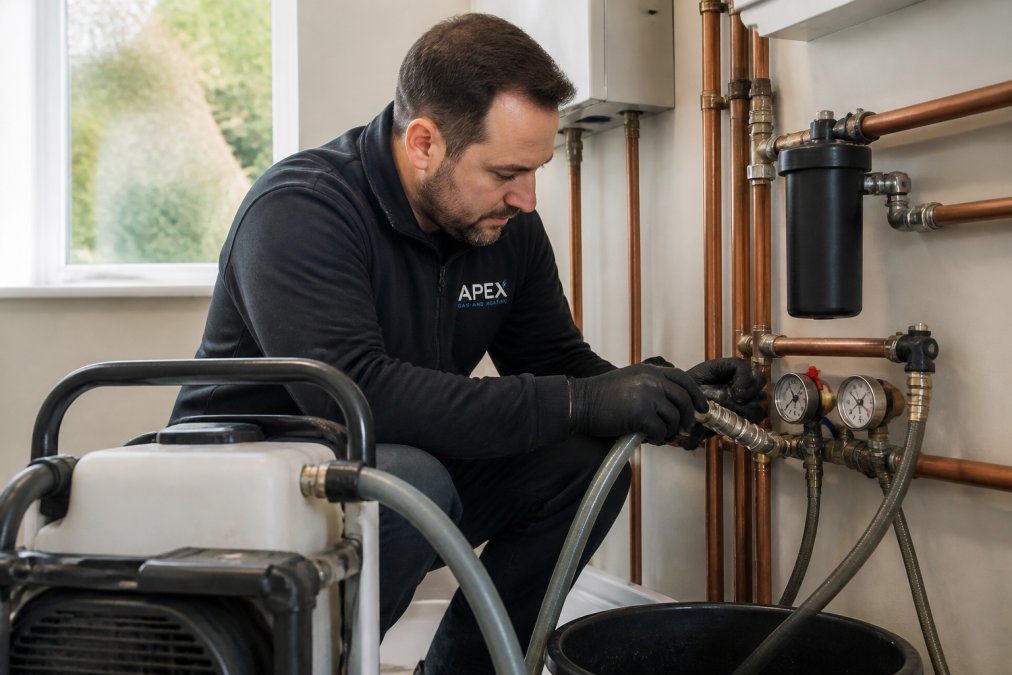
The process begins with your heating engineer assessing your system, checking boiler condition, radiator layout, and existing sludge levels. They’ll connect the power flushing machine to your pipework, typically at the pump or return line, isolating your boiler to protect it during the initial high-pressure stage.
The first stage involves circulating treated water and chemical cleanser through your heating circuit at elevated pressure. This aggressive flow breaks down iron oxide, scale, and corrosion deposits. You’ll often see discoloured water emerging from the system, brown, grey, or black discharge indicates debris being dislodged.
Next comes magnetic filtration. The machine’s magnetic filter captures ferrous particles and sludge as water passes through. A final rinse cycle pushes clean water through your system to remove any remaining debris and chemical residue. Your engineer then refills your heating circuit with fresh water and adds inhibitor, a protective chemical that prevents future corrosion.
System balancing comes last. Your engineer checks radiator thermostatic valves, adjusts flow rates if needed, and ensures your boiler operates at correct pressure. Before leaving, they’ll verify that heating is distributed evenly and that all radiators reach temperature properly.
Real Benefits of Power Flushing Your Heating System
Improved radiator efficiency is the most immediate benefit you’ll notice. Once sludge is removed, hot water flows freely through all radiators, and cold spots disappear. Rooms that previously struggled to reach temperature now warm consistently.
Energy consumption drops noticeably once your boiler stops fighting against restricted flow. When your heating system operates cleanly, your boiler reaches target temperature faster and cycles less frequently. This translates to lower fuel bills, a tangible saving that accumulates month after month.
Boiler longevity improves significantly. Corrosion and sludge inside your heat exchanger cause premature wear, leading to breakdowns and expensive repairs. Power flushing removes these damaging deposits, allowing your boiler to operate in a clean environment. System reliability increases substantially, with blocked radiators, kettling noises, and pressure fluctuations often disappearing after power flushing.
Quieter operation is another benefit many homeowners appreciate. Kettling sounds, gurgling from radiators, and boiler noise often stem from sludge and air in your system. Once these are removed, your heating runs quietly.
The Critical Aftercare: Magnetic Filter Installation
Power flushing alone doesn’t guarantee lasting results. Within weeks or months of flushing, new sludge can form if your system lacks magnetic filtration. This is why professional heating engineers now recommend installing a magnetic filter as part of the power flush service.
A magnetic filter is a small device installed on the return line of your heating system, typically near the boiler. It contains powerful permanent magnets that capture ferrous particles and sludge as water circulates. Unlike the temporary magnetic filter used during power flushing, this permanent installation continues working indefinitely, preventing sludge recurrence.
Without a magnetic filter, your system begins accumulating new sludge immediately after flushing because corrosion naturally continues in any heating system, producing iron oxide particles. Within 12 to 24 months, many systems without magnetic filtration show signs of sludge returning: cold spots reappear, boiler noise returns, and energy efficiency drops again (peer-reviewed research).
Once installed, a magnetic filter requires minimal maintenance. Your heating engineer should inspect it annually (ideally before winter) and clean the magnetic cartridge if it has accumulated particles. This takes 10 to 15 minutes and costs far less than another full power flush. The filter also provides early warning of system problems, if the magnetic cartridge fills with debris quickly, it signals that corrosion is accelerating, possibly due to inhibitor failure or a developing leak.
When evaluating whether power flushing is worth the investment, factor in the cost of magnetic filter installation and annual maintenance. This transforms power flushing from a one-time service into a complete system restoration with lasting protection.
Is Power Flushing Worth the Investment?
The decision hinges on your system’s condition, age, and heating performance. If your central heating system is more than 10 years old and showing signs of sludge buildup, cold spots, kettling noises, or rising energy bills, power flushing delivers measurable improvements that justify the cost.
Consider your boiler’s age and condition. If you’re planning a new boiler installation within the next year or two, flushing your system beforehand is a smart investment. It protects your new equipment and ensures optimal performance from day one.
Energy savings provide a financial return over time. Reduced fuel consumption begins immediately after power flushing, with many households seeing improvements in heating efficiency. These savings compound across heating seasons, gradually offsetting the initial investment.
If you’re experiencing frequent boiler breakdowns or emergency repairs, power flushing often resolves the underlying cause, sludge-related damage to your heat exchanger. Eliminating emergency callouts and repair bills represents genuine financial benefit beyond the immediate service cost.
However, if your system is relatively new (under 5 years old) and performing well, power flushing may not be necessary. A preventative chemical treatment with inhibitor typically suffices for systems in good condition. Your heating engineer can assess whether your specific system genuinely needs power flushing or whether a gentler approach is sufficient.
At Apex Gas & Heating Ltd, our heating engineers assess your system thoroughly before recommending any treatment. We’re transparent about whether power flushing will genuinely improve your heating performance or whether a less invasive approach would serve you better.
Conclusion
Power flushing is a worthwhile investment when your central heating system shows clear signs of sludge buildup, cold spots, kettling noises, rising energy bills, or poor radiator performance. The process removes corrosion and debris that restrict flow, restoring efficiency and extending your boiler’s lifespan.
If you’re considering power flushing for your property in Sussex or Crawley, Apex Gas & Heating Ltd can assess your system and recommend the right solution. Our approved heating engineers have the expertise to determine whether power flushing will genuinely improve your heating or whether a different approach suits your needs. Contact us for a transparent assessment, we’re here to keep your home warm and comfortable throughout the year.
Frequently Asked Questions
How do I know if my central heating system needs a power flush?
Look for cold spots on radiators, unusual noises from your boiler or pipework, slow heating response, or discoloured water when bleeding radiators. These signs suggest sludge buildup and corrosion inside your heating circuit. A heating engineer can confirm whether power flushing will help by inspecting your system pressure and flow rate.
What's the difference between a power flush and a chemical flush?
A chemical flush uses inhibitor solutions to dissolve scale and corrosion gradually, whilst a power flush machine forces water at high velocity through the entire system to dislodge sludge and iron oxide. Power flushing is more aggressive and effective for heavily blocked systems, but chemical flushing works well for preventative maintenance on newer systems.
How long does a professional power flush take to complete?
A typical power flush takes between 4 to 8 hours, depending on your system size and the level of contamination. Larger properties or heavily sludged systems may take longer. Your heating engineer will give you a time estimate before starting work.
Is power flushing worth the cost for an older boiler?
Yes, if your boiler is still functioning but struggling with poor radiator efficiency or frequent breakdowns. Power flushing can extend boiler lifespan by removing corrosion and improving heat exchanger performance. However, if your boiler is nearing the end of its life, a new boiler installation may offer better long-term value than repeated repairs.
Leave a Reply